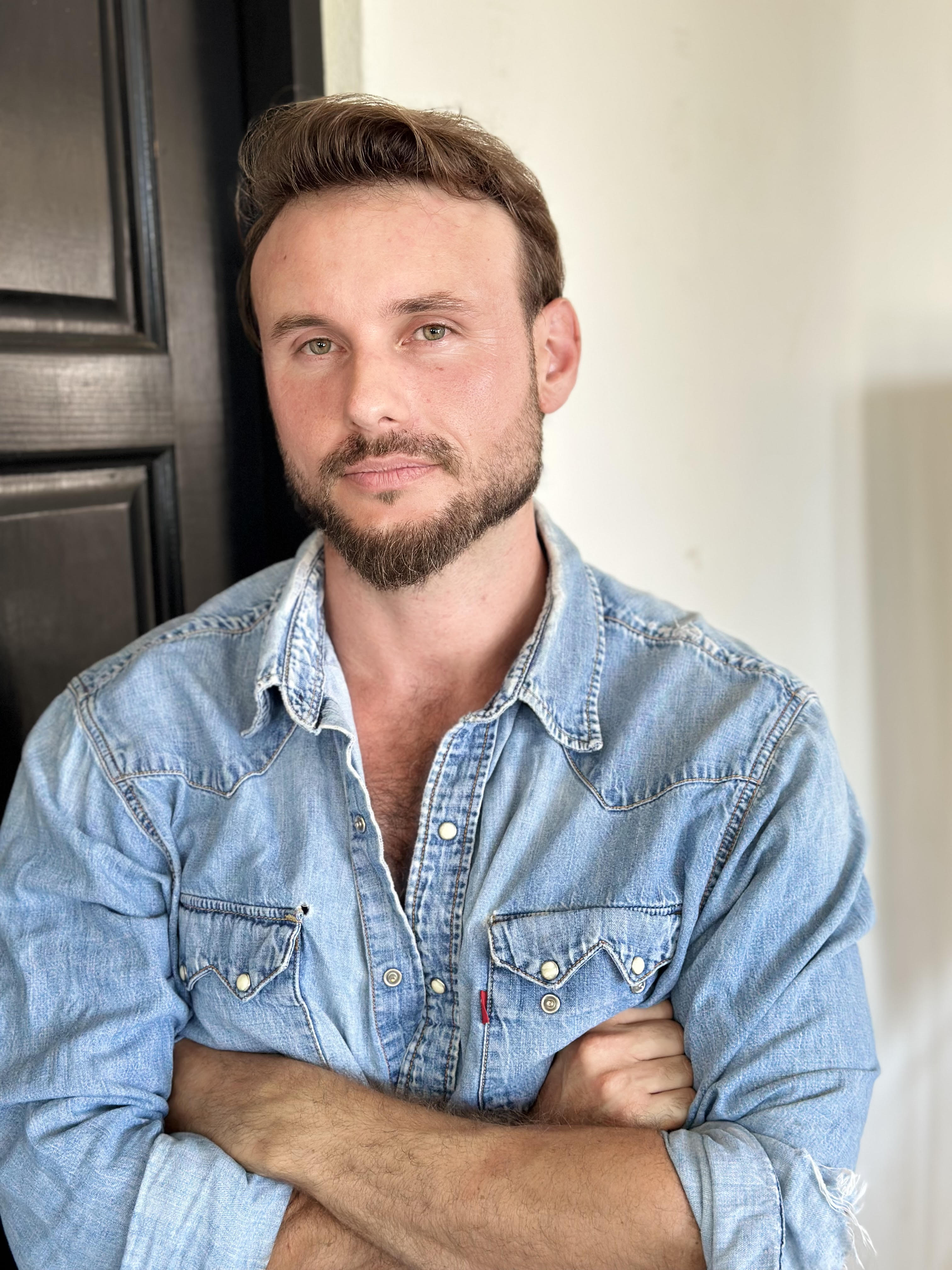
About this episode
Who are you when the roles that once defined you suddenly disappear?
In this episode, Zac Deane sits down with author and grief expert Alison Pena to explore loss, identity, wealth, career reinvention and what it really means to thrive.
Alison shares how losing her husband transformed her understanding of life, why grief can bring unexpected clarity, and the Affluence Code she created to help people reconnect with who they are.
Episode notes
- 00:00Welcome & Alison Pena introduction
- 02:02Alison’s three biggest breakthrough moments
- 03:14Quitting her career at 50
- 03:43Losing her husband and losing part of her identity
- 05:47The worst advice people give someone grieving
- 09:47Grief, money and struggling to function
- 11:44The friend who unexpectedly paid her rent
- 14:34Choosing to live “full tilt boogie”
- 16:32Why Alison performed while her husband was dying
- 21:06What grief teaches you about actually living
- 22:19Why AI can also represent a grief event
- 25:58Why nobody simply “bounces back”
- 26:35The tipping point between grieving and rebuilding
- 28:18How grief changes your boundaries
- 29:42The World Bank story
- 33:19Wealth, generosity and women having a seat at the table
- 37:32Dating again after losing her husband
- 38:52Three questions that changed her relationships
- 41:14Why leverage isn't only about money
- 43:50Buying an outfit specifically to quit her job
- 45:46The question that changed Alison’s career
- 47:04What is the Affluence Code?
- 48:25The Purpose personality
- 49:38The Love personality
- 51:09The Charity personality
- 54:57The six Affluence Code combinations
- 56:46Using your code to return to yourself
- 59:17Who Alison helps today
- 1:00:52Alison’s breakthrough challenge
Chapter titles and timings from the published YouTube description.
From the conversation
Excerpts from YouTube automatic captions. They may contain transcription errors. Play a timestamp to hear the original conversation.
Alison’s three biggest breakthrough moments
been three. The first was when I told someone when I was six that I wanted to be a multi-millionaire philanthropist because I knew some there were those kinds of people around my family and I thought generosity and leverage I love that. My second was when I turned 50. I was uh working at an advertising firm and I looked at my life and I said I was a medical liaison with Eli Liy between the advertising firm and Eli Liy uh medical editor and I looked at my life and I said is this what you were born ...
The friend who unexpectedly paid her rent
>> O, >> and I said, "I live in New York City. This is the amount you can back out." and she said, "No, >> I'll pay your rent." >> And the great gift of it was that she just offered, I didn't have to justify it. I didn't have to explain. Yeah. >> And the piece of advice that I I wrote in this blog post was if you are dealing with someone who's grieving, here's what you do because they can't make decisions. Really a problem for an entrepreneur or business owner if they can't make decisions after ...
The tipping point between grieving and rebuilding
that you are now being something now whatever that is and becoming in the future. So that is a piece of of history and a piece of love and a piece of life but it's not going forward with you. But at that point you can create At that point, life gets big because in the in the grieving, you figured out what really mattered. So, it's really really common for people who have lost a parent, lost a a spouse, had some great disappointment or transition of some kind to be it strips away all the compromises. You know, ...
Three questions that changed her relationships
down and all over the place. What I realized was that when I had a disproportionate reaction to something, what I needed to do was I needed to ask three questions. One, was it me? Was it him? Or was it us? The answer to those questions allowed me to know what to do. And it's not actually a bad set of questions for business either >> with teams. >> What a fascinating story. Absolutely. There's a lot of lot of this is this is uh such a great conversation. I'm just just in in uh waiting on the edge ...
The Love personality
don't care. Right? So the listening when you know what you are, what people around you are allows you to get things done much more efficiently. The next one is is um focus on one-on-one connection. I call that one love. And that one is a great team leader. So around this person um people are their best selves. So they just rise up. This person is a great team leader. They are fabulous in customer service. Um they struggle to make money very often because in a world that says what you do is you focus on the money ...
Read the episode transcript
YouTube automatic captions. Names, punctuation and wording may contain transcription errors.
Welcome back everybody to the breakthrough moment podcast where we interview successful entrepreneurs and investors and ask them what is their biggest breakthrough moment. That moment that changed everything and took them into the next level of success or impact or insight. And as they share that moment with us, us at home can have breakthroughs as well. I'm Zach Dean with Alice and Penna. Thank you so much for joining us. Where are you in the world? What time is it? I know it's late. I'm in New York City and it's about uh 10:30, 10:20. >> Amazing. You're committed. I love having conversations with super high achievers like yourself. Your story is is a a standout. So, I'm really excited to do this introduction and dive into things. Let me let me uh give everybody the the overview and we'll jump into your your breakthrough moment. Thank you for being here, Allison. So everybody at home, Allison Penna grew up inside a three generation investment banking dynasty. Her father built and sold a highle wealth management firm to Meil Lynch. She knew more about wealth than most people will ever learn. And apparently the head of the World Bank said to her, "Why are you so wise?" I'd like to unpack that story. [laughter] And then her husband died and she discovered that knowing about money and feeling safe with it after devastating loss are two completely different things. She is the best-selling author of The Bad Widow Guide to Life After Loss, a featured grief expert on over a hundred podcasts, and the creator of the affluent code, a methodology she built from both sides of the that experience, the money and the grief. Stick around to the end because Allison's going to share and reveal the affluent code with us on how to reconnect with yourself when loss has upended every part of your life. Allison, welcome to the Breakthrough Moment podcast. What has been your biggest breakthrough moment thus far? >> Um, well, there have been there have been three. The first was when I told someone when I was six that I wanted to be a multi-millionaire philanthropist because I knew some there were those kinds of people around my family and I thought generosity and leverage I love that. My second was when I turned 50. I was uh working at an advertising firm and I looked at my life and I said I was a medical liaison with Eli Liy between the advertising firm and Eli Liy uh medical editor and I looked at my life and I said is this what you were born to do for the rest of your life? And the answer was absolutely no. And I went uh and got clothes to quit in and then and quit. And then I began figuring out
what I was meant to do for the rest of my life. And I created the affluence code. Because one of the things that's puzzled me since I was a child is why everybody doesn't thrive. Because it's not money, it's something else. And so looking around, I looked at people all over the world, everywhere I went in the world, trying to figure out why people thrived and why they didn't thrive and what could make the difference. And so that's what I'm going to teach at the end of the hour. And then the next uh breakthrough moment was when my husband died and I was a wife for we were married almost 20 years. And then I was a widow. We were together 25. And if you're with someone that long, it feels like you lost a limb. And you don't actually realize the number of holes it leaves in your life. And because we as human beings, we connect ourselves with circumstances. What do you do? How much do you make? Are you a wife or husband? Are you a business person, an entrepreneur? And these are the things we identify ourselves as. And then when all of that blows up and someone dies, that all falls apart. Um, and so what I did was I figured it out. I looked around for resources and that's where bad widow came about. So I started calling myself bad widow because anyone grieving knows that people will give you lots of advice and usually it's wrong unless they've been through this. Um and so people were giving me lots of advice and bad widow came about as kind of a stand. I am grieving. You are telling me how I should be grieving, how long I should be grieving, how I should be behaving, and I'm going my own way. So, bad widow wasn't cuz I was bad. Bad widow was because I was not going to be dictated to by other people's ideas of how I should be grieving. So, those were my breakthrough moments. >> Amazing. Thank you so much for sharing. Okay, just on that last one. It's the Bad Widow. [laughter] I love the title. That is That's awesome. It's like a superhero, you know, Catwoman, the bad widow. [laughter] >> Yeah. >> So, what were some of those pieces of bad advice that you were given that you think no one should ever be given? Uh, and then what what's the good advice or is that something we're going to more unpack in the AFL code?
Well, the some of the bad advice was um people telling me so my my husband was an artist and he died I live in New York City which is very expensive. He also had a studio he had been in for 30 years very prolific. So there were hundreds of paintings in this studio and our apartment was 750 ft and it was a 500 ft studio. So over the course of the first two years over 500 paintings moved into our apartment. I had a rabbit trail to go down. >> Wow. >> Yeah. And so um people told me about his art, you know, how are you going to curate his art for the rest of your life? And I thought, what about me? You know, I [snorts] mean, don't I have a life and don't I have a legacy to leave? And so it was, you know, you need to take care of his art for the rest of your life. That was a bad piece of advice. Um, I had people do crazy things. A day or so after my husband died, someone called up this woman and she said, "Would you mind putting aside two or three of his shirts because I miss him so much?" >> That's That was my favorite. >> Oh my gosh. Read the room. Go home. Exactly. [clears throat] Go home. >> In insensitive. Yeah. >> Right. And and the experience of grief, especially early grief, is really rough. Your memory goes. So I had pockets in my memory. I remember my mom called me up to tell me she was going to come over and she told me when she was coming seven times and I couldn't hold it in my memory. I couldn't count on my energy. I didn't remember to eat. So, you know, eat good meals, get sleep. I had been waking up, my my husband died of cancer, pancreatic cancer. So, I'd been waking up every 2 hours for a long time and I still was not sleeping well. Um, energy, I couldn't count on energy. So I was a consultant for my business and this is how it comes around to entrepreneurs and business people. I was a consultant for my business who could not deal with people at all. It was really hard for me even to call people back. So people would call me and if I had no energy, I wouldn't pick up
the phone and then I would not necessarily remember that they called. And so what happens is people people then leave. They're like, "Okay, well it doesn't matter." And I guess what I would say to your audience is every call matters because what it does is it keeps people keeps people who are grieving anchored to the world at a time when all the all the lines have been cut. Um so bad advice. Uh move when I could barely get out of bed. Um, conditions on I I my husband left me all these paintings and the idea was I would sell them and I would be able to live. But every painting sold broke my heart. So my family helped me for a while and this is actually a great story. I started writing wildly about this experience because it was a way to sort of anchor myself because I would wake up and the memories would not be all in the same place. I literally didn't remember where my history lived which was really disorienting. And you you try and explain this to people and it makes no sense. And it doesn't I mean it doesn't even make sense to the person who's grieving, much less anyone else. And um so my family had helped me out with rent for a few months after David died and it was March 23rd and my landlord called and said, "Where's the rent?" And I said, "Oh, you know, it was taken care of across some months." And she's like, "It's all gone. Your rent's late. It's the 23rd of March." And I said, "Oh my gosh. I don't know what I'm going to do, but I knew that I am a resourceful person. So, I knew that I would figure it out. And my way of processing is to write. And so, I wrote a blog post called Grief, Brain, and Builds about this experience. And within 30 minutes, and this still honestly brings me to tears, within 30 minutes, my freshman college roommate, >> messaged me on Facebook, where she had been following me, I had not talked to her in years, and said, "I'll pay your rent." >> O, >> and I said, "I live in New York City. This is the amount you can back out." and she said, "No, >> I'll pay your rent." >> And the great gift of it
was that she just offered, I didn't have to justify it. I didn't have to explain. Yeah. >> And the piece of advice that I I wrote in this blog post was if you are dealing with someone who's grieving, here's what you do because they can't make decisions. Really a problem for an entrepreneur or business owner if they can't make decisions after someone dies. I said if you are encountering someone like me and something like this has happened, what you do is you listen to them. You make a suggestion of something you could do based on what they said and then you do it with guidance as needed. And I I thanked my friend 17 million times because it was just it was a financial gift, but it was also a gift to my heart. And she said, "I just did what you said. I wrote. It was clear. And in the face of not knowing what to do to support me, she just did what I said. It It was amazing. It was just incredibly moving because I was at that point begging for money to to eat, to pay my rent. I was a consultant who couldn't talk to people. I couldn't follow through. I couldn't answer the phone. Some days I could barely get out of bed. I was clearing out my husband's studio that he'd been in for 30 years. And I was beside myself and so what I what I began to do so my affluence code configuration and I'll explain all this at the end but mine is um focus on community first and so in the course of my husband's illness and in the course of after I became a widow It was self-expression and generosity that was what fed me. And so I was sharing all that was going on in the course of these really hard times. Um, and I kept doing that as a widow. And so like when my husband was sick, I had always wanted we we decided to live full tilt boogie until he died. Cuz if you think about the saying, what would you do if tomorrow was your last day?
In those last 11 months, there was going to be a day that was going to be his last day with me. And so we decided to just live it. just live full tilt with everything we had because when you are literally facing death or watching someone face death, there's really not that much to be scared of. Like the worst is about to happen and the worst did happen. And so there's kind of a boldness that comes from that kind of living on the edge of death. that's really interesting. So, I had on my bucket list to be in a group cabaret show. And I was like, I don't know if I can do it. I don't know if I'm dressed right. I don't know if I look like right. I could lose some pounds. You know, all the stuff in the course of my husband's before my husband passed, including the Tuesday before he died in my arms. Um, I was in a cabaret show and the reason I did it was because singing and speaking moved grief through my body. And if you're a person who's grieving, not allowing the grief to get stuck in you is really important >> because that's where you run into trouble. Um, and so I sang in a cabaret show. And the reason I did it was to remind myself that I was not just a wife. I would not just be a widow. And these are the roles that we attach ourselves to and we say we are this. I am this. But every person, every entrepreneur, every business owner, every person is much more than that. Is like themselves unique in all the world. And so the last show I did, I sang um I will survive Gloria Gainor and I sang uh everybody says don't because all the things that this living fully there were not there were people who were not in approval of what we were doing. My husband painted his last painting the Thursday before he died on the Saturday. He finished. But there were people who were like, "But you should be resting." And our thought was, "Why?" I mean, literally, the end is coming at us like a train. Why rest in this moment? Um, so those are a few of the things.
Don't know if I answered your question. >> You are so bold. You guys are so brave and courageous. It's bringing a tear to my eye of like, you know, maybe it's someone out there is in a similar situation or or maybe it's they know that an end of a friendship or relationship or business or something or part of themselves is ending, you know. There is no beginning without an ending. There's no ending without a beginning. Like it's it's it's this cycle and pattern and law of the universe that we're living in. Um and it it's it's it's [snorts] such a human experience. So this is so inspiring. You shared so many powerful things there. Whether it was just the questions of like how do you want to live living full tilt boogie? [laughter] I love that. doing cabaret like so what advice do you have and and I really like what you said about the community the generosity and things like that I couldn't agree more and there's obviously many reasons for that but what advice do you have for maybe someone who's who's wanting to create that list I guess it's like a bucket list or it's kind of like the full tilt boogie bucket list right it's like how do you want to because there's two parts that I'm seeing here it's not just you living your own life to the fullest It's also seeing uh having the people that you love or the person that you love see you do the things that you love which is very important to them. And then it's also seeing them do the things that they love. And and you know that's one of the best things on earth is to do the things that you love with the people that you love for as long as possible. So you guys just squeeze the lemon to uh a degree that I've never heard before. I love that he was painting on Thursday before he died on Saturday. That is unreal. Resting. You know, let's just rest before we die. No, let's go out there, ride the motorbike, jump out of the plane, paint the painting. Gosh, so good. So, what advice do you have for those who are going to create this full till boogie list? They know there's an ending. Maybe there there's not even an ending, but they just like they want to take their life to the next level and have that. That's a massive breakthrough. What advice do you have for them? Quick before we continue, a brief message from today's sponsor. If you're an entrepreneur wanting to grow your personal brand, authority, and business through podcasting, then check out find apodcast.io. As you know, the biggest entrepreneurs in the world, they book these massive podcast tours before a big product launch or an event or book because podcasts build trust faster than anything else online today. So, it's find.io. It helps you connect with a specific podcast in your niche. It writes the pitch, it follows up in this easy CRM. It truly does save time. So, you just show up, do the podcast, and your business grows. If you're curious to learn more, book in a demo at find
apodcast.io. Now, let's get back to the episode. I mean I would say um I would say recognize that grief I see grief as a in some ways a great gift because it brings so much clarity about what matters. So when you're really if you lived life like tomorrow is going to be the last day or tomorrow is going to be the last day with a person or doing something you love. What would how would you live? Would you really be afraid of anything? And so, you know, making the bucket list, these these bucket list items, they're usually for most people things that have been hanging around in the background for years. Well, I'll do that when I reach this level of success. I'll do that when I lose a few pounds. I'll do that when. And the bottom line is we don't know what's going to happen. I mean, David, pancreatic cancer is 6 weeks to 6 months and we had 11. But, you know, when you go in and there's a stage 4 pancreatic cancer diagnosis, they're like, "Make a will. Prepare to die." Is the underlying message. And the the amazing thing about it is it brings this sense of urgency to living. So parallel pathing grieving and living is extraordinary. And what I would say is to your point there's grief in the world everywhere. So AI is a grief event and an opportunity because it's shaking up what makes us valuable as human beings. And that's why I think in this moment the affluence code is so essential for people to get grounded in because if your worth is not what you thought it was and when I became a widow I had no worth as a wife that was over right. It wasn't my choice. And so there are lots of things that are nobody's choice. You lose a business opportunity. You get downsized. uh there's a divorce, there's a friendship breakup, there's a you know all kinds of things happen. Those are all grief events. Oh, grief of witness when someone else is diagnosed with an illness of some kind or you're watching your parent or your grandparent age and they're getting smaller, but they still feel as big as they were.
David, when he died, left me his mom, my mother-in-law, because there was nobody else to watch out for her. And she and I had a terrible relationship. Awful. She was 93. I cared for her until almost her 103rd birthday. And our health care system is awful. So me and one other person with me and one other person I managed to keep her in her home independent until a week before her 102nd birthday. >> Mhm. But the witness, the grief of witness of watching her feel inside as she always had, but falling more, having memory gaps and the balancing safety and autonomy, what is safe? And my pledge to my husband was as long as I would keep I could keep her safe, I would keep her home. And when I couldn't, I put her in a nursing home. Um, so there are all these different kinds of griefs and thinking about really appreciating life in the face of all the grief that we face on a daily basis. One of the things that's terrible about how our society, our world, and especially the Western world deals with grief is that there's an assumption about how long you get to grief. There's an assumption that you'll bounce back. The truth, nobody bounces back ever. Ever. Nobody wants to admit that. And the key to get back on your feet is to get to what I call the tipping point. So the tipping point until you hit this tipping point, you're looking back to what you long you still ha long to still have the life you had, the person you were in that life. The tipping point is where you recognize that that is no longer the reality that you are now being something now whatever that is and becoming in the future. So that is a piece of of history and a piece of love and a piece of life but it's not going forward with you. But at that point you can create
At that point, life gets big because in the in the grieving, you figured out what really mattered. So, it's really really common for people who have lost a parent, lost a a spouse, had some great disappointment or transition of some kind to be it strips away all the compromises. You know, when you um you meet someone and you're your best self and maybe the relationship continues on and you're your best self for a while and then those behaviors get baked in and maybe you wish they weren't. So, I love doing open mics. I do open mic singing. I do open mic um poetry and pros. Um and I love it. My my husband didn't. So as time went on, something that I love got smaller and smaller and smaller in our lives because didn't really say anything, but he didn't really want me to. And so there are pieces of ourselves that get shredded away by going along to get along. Grief is such a brilliant clarifier that it strips all of that away and people begin making choices that are way different than they might have before. So places where they were very agreeable and willing to just do stuff for everyone all the time at the sacrifice of themselves, they stop and around them people don't like it. As you can imagine, you're sharing some true words of wisdom. I really appreciate this and and it's definitely opening up my mind and you know I really liked what you said with every opportunity there is grief there's opportunity and there's grief because there's a letting go or there's change or disruption or the AI is such a great one. So before we go into the uh the affluent code [clears throat] [laughter] I really just want to backtrack for a second. There's a awesome little story you shared with me just prior which was the the head of the World Bank said that how did you get so wise? >> Yeah. >> Can you tell us a bit about that? [laughter] >> So, so Jim Wolfenson who was the head of the World Bank um went to business school with my dad and Harvard Business School and so he was a family friend. So, I have pictures of, you know, sitting on his lap and talking to him and um I had a birthday
one time and he said, "Uh, what would you like for a present?" And I said, "You know, I'd love a book." And he's like, "That's ridiculous." And I said, "Well, I'd love to go to South Africa and and do this expedition." And so, he paid for me to go to South Africa. Um, and he just I was talking to him about something. He my relationship with him was very funny. Um, I was talking to him about something and I said something and I was always saying things that were above my age, you know. Um, and he said, "How did you get so wise?" Another time we were on the phone and um I said I was complaining to him about boys being too slow and he said, "Well, would you like to go to Paris?" And I'm like, "No, that's too fast." [snorts] But he um so Jim Rolfson wrote a book and he was from Australia. his family were sheep farmers actually and um so he came to the US and he went to Harvard but he didn't really know how to operate in powerful rooms, wealthy rooms. It wasn't his background. And so my dad invited him to his parents' house on Long Island and he brought his best clothes. And when my grandfather realized that he didn't, just because he didn't know, have clothes that would work, he said, "We've decided to go casual for this dinner." There were no casual dinners. but he only had a tweed jacket and he would have felt uncomfortable and he would have stuck out. And so that generosity he wrote about in his book that he really learned something about um about one moving in powerful rooms and two the graciousness of bringing people up. you know, recognizing but not with criticism or shame, with lifting up and you know, he wound up with his own investment banking firm. He wound up the head of the World Bank. Um, so that was cool. >> I guess it worked. >> He knew what he was doing. >> Yeah. You've mentioned this a couple times, this generosity, whether it was from him or you mentioned at the beginning when you said you wanted to be a multi-millionaire at a young age or 6
years old and you you you said you just you wanted to be generous. You wanted generosity and you wanted leverage is is something that you said I think. >> What does what does that mean to you? And was the generosity was that inspired by that gentleman? Is that >> it wasn't? No, not really. Um it was it was a a family value. So uh generosity, philanthropy, um you know, we were wealthy and so we were it was in in on us to be generous. generous with our our who we were. Um I mean the interesting thing about that and this is what I'm digging into now with the work that I'm doing is that talking about money, talking about wealth is more common with boys and men than with girls and women. And so I grew up in this very wealthy family and I understand wealth to my bones. yet I didn't have a seat at the table. And so what I'm encountering now is lots of women who didn't have a seat at the table. And so then their spouse passes away. They inherit money. >> Mhm. >> Which comes with all kinds of very mixed feelings. For the most part, the person who died, you would not trade any amount of money if you could have them back. Not worth it. Not a not a tradeoff that anyone would choose. And yet here you are. And very often when you come into money, it's a windfall. It can change everything. It can allow for an expansion of a business. It can allow for buying a house. It can allow for just more ease, more fun, but there's kind of the heartbreak at the same time, right? So, you're parallel pathing the love and the grief and the money and the opportunity and the expansion and what grief does, which is who am I with this person gone? So, I lost my husband and I was a widow, not a wife. I lost one of my brothers and the world got very sharp and I was like he was my younger brother is would he have been more valuable in the world than me? Should it have been me was what I thought when he died. I was 25. I lost my mom in December. Um and that was like an anchor being
cut. this person who knew me for the longest time in my whole life and was honestly my champion. She was the editor for my book and then I lost my mother-in-law in March. So that was the last tie to my husband. And with each of these, there's different levels of um deep connection to yourself and to to life. Because when these things happen, you can see kind of who you are, what matters, what you want to bring to the world gets much more potent and much more clear. And so people will be much more forthright about what they want, where they're going. Much stronger boundaries tend to be set. And it makes for much healthier relationships. And it also breaks some because when you're accustomed to someone being a certain way and then they change and any transition changes somebody that's what happens. Um >> it's >> I'll give you one example from dating >> which is >> a little um so about 2 years after um David died I decided I wanted to start dating and I went on Bumble and I was I had not dated in 27 years. So, I was d I dated in my 30s. Now I was in my 50s. Terrifying. Terrifying. So, I went on Bumble because I had zero patience for your normal dating process. And I'm like, "Okay, I can swipe right and left and it'll be just much faster and more efficient." Because I didn't have much energy. So, I didn't have time to to deal with that. and I met the man that I'm with today and um I was a hot mess. I was moody as all get up and go. So, one week I told him that we should just break up cuz I was going into a very bad season. And uh then the next week I invited him to meet my mother. So, the poor man. And what I realized because I was I was really crazy. My moods were just up and down and all over the place. What I realized was that when I had a disproportionate reaction to something,
what I needed to do was I needed to ask three questions. One, was it me? Was it him? Or was it us? The answer to those questions allowed me to know what to do. And it's not actually a bad set of questions for business either >> with teams. >> What a fascinating story. Absolutely. There's a lot of lot of this is this is uh such a great conversation. I'm just just in in uh waiting on the edge of my seat for what you're going to say next cuz it's so real. It's so raw. It's life. It's death. It's it's it's opportunity. It's it's tragedy. It's all in one. It's just like wow. And what I'm really reflecting on is when you when when you mentioned to lose somebody and then what you said which was to find a part of yourself, the boundary, that passion, the bucket list, the the voice, the energy, whatever that thing is, the adventure. Again, it's so fascinating how we live in this world where, yes, there can be this wild level of loss and this incredible opportunity for finding something that's also incredibly pleasureful and and opportunity focused and it's just like they they go hand in hand sometimes. And uh yeah, that would have been Yeah, I'm just kind of like mind blown at this at this whole thing here. Um I I wanted to ask you another question as well. So yeah, the the reason we we went down that rabbit hole is because you're talking about generosity and leverage. Um and that was a family value of yours, the generosity. What about the leverage? Is that then also seeing or hearing not having a seat at the table? You would have done a lot of listening. Is that where you learned this this importance of leverage as well? Because that's a fundamental of uh wealth creation. >> Yeah. So leverage increases the scope of what's possible. I mean since forever I want to change the world. I will make no bones about it with the grief work and the affluence code work that I do. I intend to change the world. Um and that has been true all my life. And so leverage is you know money is leverage conversations are leverage. this conversation reaches out to audience, your audience, to to people I know that I share this with. Um, that's leverage. These ideas, if someone takes one of these ideas and it changes their life, their relationship, their business,
that's leverage. The the interesting thing about writing the book is I wrote the book and then the book went out into the world and then people took it where they took it. So it was mine but it was no longer just mine. And a conversation is like that too. >> And so leverages is all kinds of things. I mean, I find it honestly really exciting to spread ideas, to have these be on podcasts or have these conversations that go and I love the kind of conversation that we're having, which is kind of free flowing. I love that idea of the leverage because you're right. Yeah. this podcast is going to be playing breakfast, lunch, and dinner while we're sleeping. You know, that's leverage. >> Mhm. >> So, the other thing that's leverage are these questions that you shared today. These are I hope people are going to go back and actually write them down and and ask them to themselves and maybe people around them. you mentioned uh when you were doing the you were you were part of the medical liaison editor role and then you had that [laughter] moment which was is this what we're born to is this what I'm born to do is this what I'm going to be doing with the rest of my life or something along those lines my writing is a little bit rushed here I couldn't read at all and then you went and changed your clothes firstly um that question I hope people are going to write down maybe just if you can share that question again and why you you asked or or how that question came about. And then secondly, what did you change into when you put on your clothes to [laughter] go quit? [snorts] That's great. >> I I actually went shopping for an outfit to quit in. I mean, [laughter] I went I went to stores. I bought something to quit my job in. >> What did you wear? What was on your mind? How many outfits did you try to put on? If you have a business on Facebook or Instagram, you need to learn about this new amazing AI automation tool. The question is, is your personal profile or business profile manually messaging your target audience every single day? If not, I highly recommend you do this. There's a massive ROI on that. But if you are, there's a more cost effective strategy. So, this is a unique AI software. It runs for you your friend requests, the messages, the likes, even the comments 24/7 [snorts] in the cloud. So, while you're watching podcasts like this, or taking calls, or while you're sleeping, it's running there in the background. Some of these people are pulling in another 5 to 20 extra qualified leads every single week on autopilot. You can experience the podcast special trial and try it for yourself today. Check it out in the show notes below. Lord, I mean, I must have spent 4 hours in stores and I I I cannot
even tell you how much I hate to shop. So, it was I was committed. >> And what did you end up wearing? >> I think I got, you know, a nice pair of dress slacks and a beautiful shirt. Um, and I went in and I just I quit and I was so scared and so happy. And and that's what opportunity looks like, right? Scared and happy and they're kind of equal and you're just >> on your way. >> Yeah. And that question that you asked, can you share that again? And and what what made you ask that? Obviously, that was one of your breakthrough moments, but that's a question for everybody. >> Yeah. The question was, is this what I'm born to do for the rest of my life? And I was um it was my 50th birthday coming up and my brothers very helpfully called me and said, "You're a half a century now." And I'm like, "Thanks. That's so kind of you." But I really I looked at if if 50 is the mark between birth and 100, I was halfway done. and was I going to continue going on the same track that I was going and I liked what I did. I, you know, it was fine, but it wasn't what I was passionate about. It wasn't what was going to drive me and and give me joy and and life. And, you know, I just I was like, "No, this ain't it. medical editor liaison with Eli Liy. This is not it. >> What is the affluent code and why did you create it? How did you create it? Who's it for? >> So the affluence code is about thriving. It was born out of the question why doesn't everybody thrive? And the fact of the matter is that everybody has thrived in some moment in their lives. So, it's that moment where synchronicity kicks in. The people you need to meet just show up. The opportunity is here and and everything just works and you don't quite know why or how it happened. So, the affluence code was my answer to how do you make that happen on purpose? How do you literally flick on the switch that is how you work most effectively as a human being that is not dependent on any role, the business you do, the money you make, your health, your relationships, none of it. It is purely who you are and how you
operate as a person. So there are three lenses and everybody has all three. And so I'll explain the three and then I'll I'll use myself as an example. Um so one lens is called purpose. That's focus on work. So people who are this lens they like they operate most easily in companies. So they like numbers and goals and spreadsheets and sales. They're fabulous at getting projects done. Companies and teams begin to break down when the company promotes this person to manage people. They're not good at people. They're not good at relationships. So, this person's kryptonite is relationships. So, if you're promoted to manage a team of people, you're suddenly not doing what you're born to do in the way that you love to do it. So this person can manage bigger and bigger projects, more and more projects, but managing the people is not their superstar quality. So that has implications for what role should you be in? How do you communicate to a boss who likes to get their information in this way? So if you're talking to a boss who is purpose lens first, focus on work, what they're looking for is data. If you tell them anything else, they don't care. Right? So the listening when you know what you are, what people around you are allows you to get things done much more efficiently. The next one is is um focus on one-on-one connection. I call that one love. And that one is a great team leader. So around this person um people are their best selves. So they just rise up. This person is a great team leader. They are fabulous in customer service. Um they struggle to make money very often because in a world that says what you do is you focus on the money and the money comes. They don't care about money. They care about one-on-one connection. So, a lot of these are your your healers, your artists, these kinds of people. Um, but not universal. I mean, everyone is in all these different categories, but as a general rule, um, the way that they make money is they get their raving fans to send them clients because they have them. I was talking to someone who was um she
was selling a product into medical practices, network marketing business, and her upline said, "Okay, go talk to the doctors and then the doctors will distribute it." And she's like, "This is just not firing me up. It's not exciting to me." And I said, "Well, how about this?" But and she said, "But they get two free trainings of these products from me, and I will chase them down to give them those trainings." And I said, "Okay, well, how about this? You do a meeting in the doctor's office and train a bunch of their clients. You're not just dealing with the doctor. You're dealing with the people that you really want to serve. and then they make money, right? So, each has a different way. The last one is um focus on community. I call that one charity. Um so, love's kryptonite is struggles to make money because they're focused on money and they don't care about money. Charity is um so my first is charity. I can look at any system, any team, any situation, see what works, what doesn't work, and how to fix it. I'm a terrible employee because if I don't have autonomy to fix something, uh, I get very frustrated. So, as a medical liaison with Eli Liy, I was sitting in medical, legal, and regulatory meetings. And what I noticed, the medical people had to check our facts from studies every single time we put in an ad. And they had to do it every time. But sometimes what we had presented them wasn't changing. So what I did was I said, "Hey, would it be useful to say this hasn't changed so then you don't have to check it?" >> Made a huge diff difference to their lives and their time. because they were checking over and over and over again the same fact and it was ridiculous. Um but these people get very frustrated if they cannot fix what they see is not working. Um, so really bad employees also sometimes struggle to make money because they're the visionaries, the change agents and it is more difficult to hone in. I have 7 million ideas for how to change the world. And so getting myself to to go okay I am working with grieving women who have inherited wealth
and everything has been upended. Um so this person so this person as a boss wants context. They're going to be looking at what is the environment of the world? What are the markets doing? What is happening in the company in terms of morale? And so if you if you look at these three ways of being, you can see where people belong, where they fit. So I am charity, love, purpose. That means I nurture one-on-one connections to serve a thriving ecosystem. So purpose, the work one is deliver impeccable work. Love is um nurture one-on-one relationships and charity is serve a thriving ecosystem. And everybody has all three in some order. So when I accomplish something, I need to stop and savor it for a minute. My mom was charity, purpose, love. She was like, I would accomplish something. Okay, let's go to the the end goal. Charity tends to be really really efficient and able to get everything done, but when they're doing everything, they're not allowing other people to rise up into roles that they could fulfill. And so if they're not acting in accordance with their visionary nature, it's they're losing the opportunity to have a community rise up with them. So those are the three lenses. Everybody has all three in some order. So there are six affluence codes. And if you know the first, you have a pretty good idea of where you need to focus to thrive. So there's another three. >> Well, they're all they're all there are three lenses in some order. So I was I'm charity, love, purpose. My mom was charity, purpose, love. >> Um there's uh purpose, love, charity, purpose, charity, love. They're just a mix of these. So they interact with each other a little bit differently. But if you know you're first. I feel most myself when I'm focused on work. Okay. If you're grieving and everyone is saying stay home and you're this person, go to work. >> You'll come back to yourself faster. >> So if you know what you are, you know what you need to do to get back to center. And from center, you can make better decisions. Because grief whacks out your decision-m
ability. >> It it kills the confidence and that the trust in yourself and the trust in other people, the world in such a way that it's really hard to make decisions. >> Why does it why does it do that? Is there a scientific reason for that? Um I don't really know. I think it's it it shatters our world view. So So there is an I am, you know, I am a widow. I am a business owner. I am. So there is such a sense of who we are as connected to other things that we we don't stand alone. And in today's world there's a possibility that our doing which is what's historically been valued so much is going to diminish. Now the the the opportunity here and this is the exciting thing about the affluence code and about um all the changes happening in this world although they're very scary is that imagine if AI and systems and all of that are getting a lot of the doing the repetitive doingness done. How does that free people up to pursue what they're passionate about? If you unleashed all of human ingenuity because we were not doing so much stuff that doesn't necessarily need a human what would be possible cuz I think we could solve all the problems of the world. I really do. Ellison, you're sharing such words of words of wisdom and uh some amazing takehomes. I hope everyone at home has been taking notes for this video. I'm going to put all your links around here, but from who's listening, who should reach out to you and who should who do you serve the most? >> So, mostly I serve people who are um widows very often um because loss of a spouse is the biggest thing. I could serve anyone who's grieving and inherited wealth is the other intersection. So I work with people at the intersection of grief and wealth to move through it more quickly to just get solid in themselves. What what winds up happening after working with me is just a life of much more authenticity and truth. uh while it rides along with the grief.
So parallel pathing, grieving and living. And if you remember, grief sharpens appreciation for life. So if you look at it that way, it's awful. I'm not going to sugarcoat it. Heartbreak is not fun. And there's a way in which it opens the world in a certain way. Beautifully said, Allison, my final question is around how can you help, challenge, inspire, recommend other people or recommend something to other people right now to help them also have a breakthrough? Something they can do today, this week, this month. You've shared your breakthroughs and uh what can they do to also have a breakthrough? Any tips? Um, I would say what they can do to have a breakthrough is be honest with themselves. So really take an inventory of life and look at where the places are where they've compromised along the way. Where do they want to take back themselves? So those pieces of themselves that they've given away in the course of their lives, just take a look, look back into the history and see is there one thing like the open mics that they want to take back that would give them joy and everything. Love it. Love it. This has been such an awesome conversation. and you've got incredible words of wisdom and advice. Thank you so much. Everybody at home, what has been your breakthrough moment? Please share it in the comments below. And who do you know that would also benefit from today? We would really appreciate it if you share this with at least one person. That's how the podcast grows. And um any final comments, Allison, before we wrap it up? I just I so appreciate you and what you do and uh this has been really a wonderful conversation and wide-ranging and fun and I've I've thoroughly enjoyed it. Thank you so much. This is an amazing podcast and I will be sharing it widely. >> Thank you so much. I love it. Yay. Amazing. So good. Thank you for your time and everybody at home, we will see you next time on the Breakthrough Moment podcast. Keep having breakthroughs. Thank you Allison for your time.