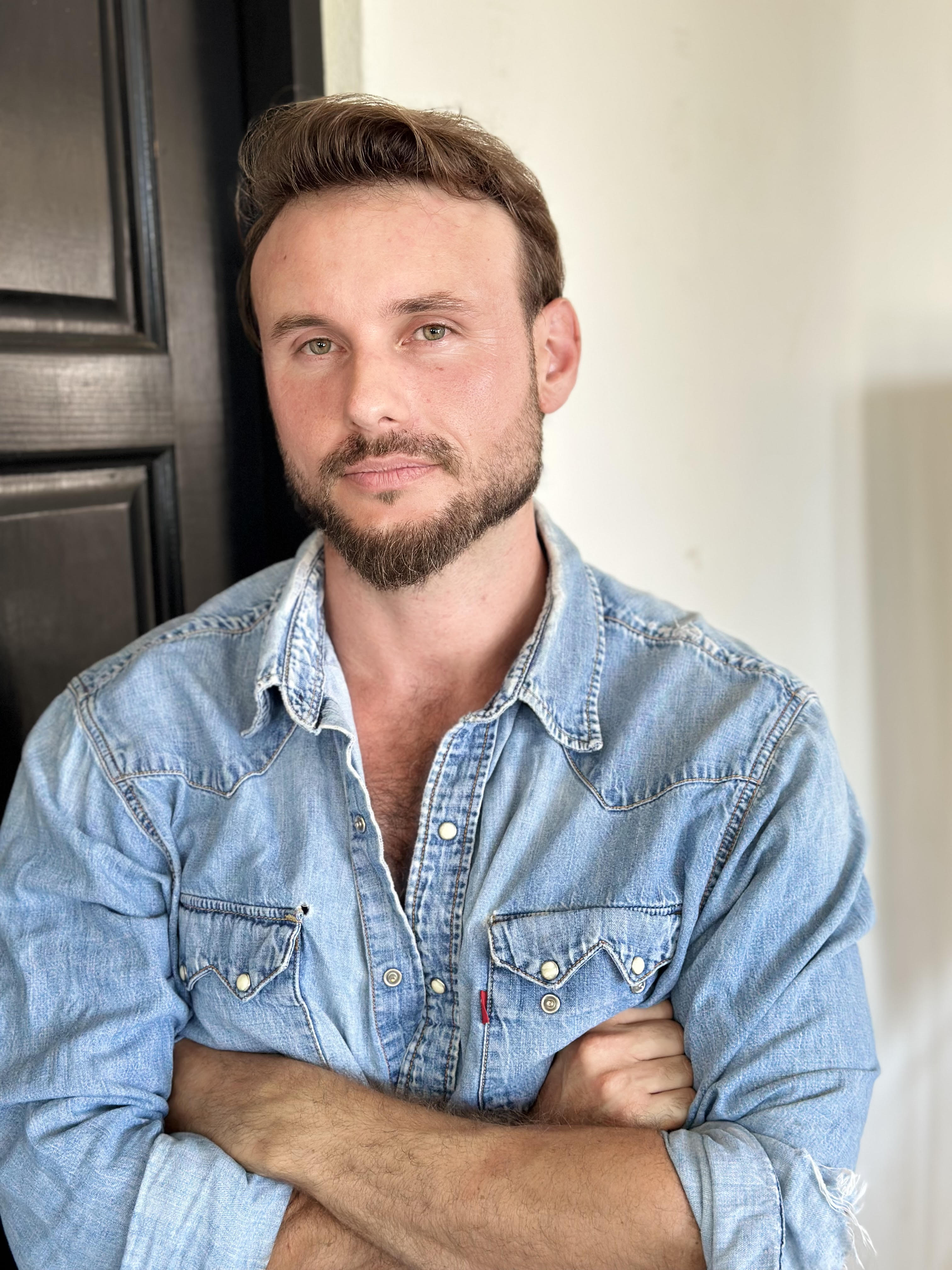
About this episode
Andy Mee spent 15 years helping men and women break the cycle of starting over with their fitness. In this episode he breaks down the dimmer switch method, the real problem with GLP-1 fat jabs, and why the one-off fix always sends you back to square one.
Episode notes
- 00:00Welcome and guest introduction
- 01:50Andy's breakthrough: from one-to-one training to online coaching
- 02:30How COVID forced the shift and why clients got better results
- 03:02Advice for fitness coaches wanting to transition online
- 03:25FindAPodcast.io sponsor message
- 04:13Why you sometimes need to step back to move forward
- 05:20What Andy would have done differently: going online earlier
- 07:23Starting from zero: what the first 30 days would look like today
- 09:50Social media is not dead: why consistency still wins
- 10:39How AI is changing the fitness industry and where it falls short
- 12:00Fake before and after AI scams flooding social media
- 13:04Why accountability is the one thing AI can never replace
- 14:27The biggest problem men and women face with fitness
- 15:30The dimmer switch: why on-off extremes always fail
- 17:44Why personalisation is the missing piece in most plans
- 18:39The moment Andy realised the dimmer switch was the answer
- 19:45How Andy went from ripped and miserable to balanced and free
- 22:00No good or bad food: the mindset shift that changed everything
- 24:12Why getting a coach is the fastest shortcut available
- 25:38Where the entrepreneurial spark and love of fitness came from
- 27:30Investing over 100,000 pounds in business mentorships
- 29:08Who Andy works with and what the HiLo method delivers
- 31:05Health is wealth: the real cost of ignoring your body
- 31:32The truth about GLP-1 fat jabs and who they are actually designed for
- 33:00Why most people are using them for the wrong reasons
- 35:00The muscle mass and bone density problem nobody talks about
- 37:00Zac's seven-day fast and the emotional root of overeating
- 39:50Sunlight, circadian rhythm, and why getting outside changes everything
- 41:08Vitamin D deficiency and what most people are missing
- 43:24Why fascia stretching is making Zac stronger in the gym
- 44:08What fascia is and how sitting all day is destroying your body
- 46:35Sitting is the new smoking: what we will realise in 20 years
- 48:07The breakthrough challenge: would you be happy if nothing changed?
- 50:00Nutrition is the answer to body fat and you already know the flaws
- 51:14Final message: take ownership, take the first step, get the result
Chapter titles and timings from the published YouTube description.
From the conversation
Excerpts from YouTube automatic captions. They may contain transcription errors. Play a timestamp to hear the original conversation.
Andy's breakthrough: from one-to-one training to online coaching
>> I guess for me my biggest breakthrough moment with business was kind of leaving like the one-to-one personal training which is where I entered the industry like 16 15 16 years ago working in a gym seeing clients one-to-one. My break break through really was to reach a wider audience work with people all over the world and enter the online space and for me online was like you know work with 20 clients or so max it was like 20% of my business say and then COVID in particular kind of forced my hand to do that as ...
Social media is not dead: why consistency still wins
>> So good. Like I think sometimes I get in my head around social media like social media is dead, it's too crowded, it's too much noise, too much competition. I'm like, oh. And then I'm like, I'm tired or I'm busy or like make excuses. But it really is from the guests I've been interviewing, it's like sounds like it's the game-changer that if you can just commit to it for 30, 60, 90 days, as you said what the strategy is, it can completely transform the trajectory of someone's business, right? Um super interesting. Obviously AI is changing ...
Why personalisation is the missing piece in most plans
>> It's such a uh fascinating conversation. I think it's such a personal journey, fitness and health, because as everyone has a different schedule, different commitments, different values, different uh belief systems, and expectations, and societal norms, and pressures they put on themselves. It's so interesting, but I think yeah, the one of the main things that I'm hearing is that the pressure of of wanting the end result tomorrow >> Yes. >> forces forces people to have these like, "Okay, I'm not eating or I'm doing like extra heavy weights." And that causes like extra binge eating, or like ...
Who Andy works with and what the HiLo method delivers
>> Yeah, I couldn't agree more. I've invested so much money, hundreds of thousands of dollars for sure in my own development and finding the answers. You can read a book and, you know, jump a timeline. You can read a book and your whole life like read 20 years of someone's life in one book in a week, you know, or a day and and just get into that mindset and make a shift. So, um I'll make sure I put all your links around here, Andy, for everyone to get in touch. What kind of Like I guess ...
Sunlight, circadian rhythm, and why getting outside changes everything
what I've learned about the mitochondria, you might know this as well, is our body's getting electrons for the mitochondria from food, from water, from from grounding, and also from sunlight. And it fills the mitochondria up with electrons to give us energy. Now, if we're indoors all the time, here in Dubai, it's so easy to be in inside. I work indoors all day. Air con feels super comfy cuz it's so hot outside, right? So I'm making an effort. And when I did that for a few weeks, I was eating more, I wasn't satisfied eating, and I ...
Read the episode transcript
YouTube automatic captions. Names, punctuation and wording may contain transcription errors.
Welcome back everybody to the Breakthrough Moment Podcast where we interview successful entrepreneurs and investors and ask them what is their biggest breakthrough moment in their career, the moment that changed it all, the moment that took them and broke them into the next level of success, impact, insight. And as they share that moment with us, us at home can have breakthroughs as well. My name is Zach Dean with special guest Andy May here in Dubai. How are you Andy? >> I'm very well. Thank you for allowing me to come on. I'm excited to have a good chat. >> I'm excited too and you know, a familiar accent. You know, it reminds me of being home, you know, English and Aussies hanging out all the time. So, you're here in Dubai, I'm here in Dubai. It's it's you know, using technology is just an easy way of doing it these days. The last podcast I had with a Dubai guest the missile alarm went off. So, let's let's make sure that doesn't go off today. But the show must go on if it does. So, let me give you a quick intro and then introduce you to everybody and uh some quite let's say powerful topics today and maybe some controversial topics. We'll see we'll see how we this unfolds. So, most people are not failing because they lack willpower. They are failing because nobody gave them a system that actually fit their life. Like personalization. No one gave them that system. Andy creates that system. So, he's the founder of the ultimate transformation for system for men and women across the world to achieve lasting body transformations and finally break the cycle of starting over. And if you guys stay to the very end, we're going to well, Andy's going to break down the truth and the dark side of these GLP-1s, also known as these fat jabs. So, I'm really excited to to bust the bubble burst the bubble on that as well. Welcome to the podcast Andy. Let's start with your breakthrough moment. What has been the biggest breakthrough moment thus far? >> I guess for me my biggest breakthrough moment with business was kind of leaving like the one-to-one personal training which is where I entered the industry like 16 15 16 years ago working in a gym seeing clients one-to-one. My break break through really was to reach a wider audience work with people all over the world and enter the online space and for me online was like you know work with 20 clients or so max it was like 20% of my business say and then COVID in particular kind of forced my hand to do that as in the UK gyms closed. I then worked all of my in-person clients online. I already had the a system in place and they loved it and in reality they they get better results because there is way more accountability and you know we're looking at every aspect outside of the gym how to optimize energy sleep. So for me it got clients much better results. It meant that I was able to scale further and then obviously for me I moved to Dubai about five and a half years ago and it's been the best thing I've ever done really for my own personal self my life my happiness. happiness they've being in a great environment. I absolutely love it here and I've got no plans to move. >> Oh you just muted Zach somehow.
>> Sorry guys. >> I can see why the the Dubai ecosystem has so many desirable parts to the lifestyle here. It's it's a lot of positives. >> Mhm. >> So I'm curious if you were to give some advice to say some other entrepreneurs maybe people in the health and wellness space fitness space that are trying to transition to more online what advice would you give them to really help them kind of launch that side of their business? Real quick before we continue a brief message from today's sponsor. If you're an entrepreneur wanting to grow your personal brand authority business through podcasting then check out findapodcast.io. As you know the biggest entrepreneurs in the world they book these massive podcast tours before a big product launch or an event book because podcasts build trust faster than anything else online today. So findapodcast.io and helps you connect with a specific podcast in your niche. It writes the pitch, it follows up in this easy CRM. It truly does save time. So, you just show up, do the podcast, and your business grows. If you're curious to learn more, book in a demo at findapodcast.io. Now, let's get back to the episode. >> I think sometimes you need to take a step back to take the two steps forward. Like for for most people that are maybe stuck in like a one-to-one PT environment, you know, you're paying the gym rent, you're trading time for money effectively. There's only so much you can deliver. Like I I was absolutely jam-packed. I had like 20 22 in a waiting list for the majority of time, but you're capped. Your earnings are capped. The amount of people you can help are capped. So, sometimes, you know, maybe actually accepting, right, I'm going to pull back here. I'm going to drop my hours down, and my income's going to suffer initially, but that will then give you the ability to then push the online aspects and build the systems and everything. And obviously, social media is your kind of your avenue to that, sharing content online to then attract people to to know, like, and trust you. And then obviously, be able to get online clients. So, I think sometimes it's a case of like you sometimes have to take a step back to be able to push for the long term, and rather than focus on the short term. But also, just to go all in. Go all in with it because if we half-ass it, we we're never going to really probably get that breakthrough. >> Very interesting. What would you say would be the one thing you would have done differently? Like if you could go back in time, start your journey again, you know, what would you do different? >> It would probably be to do it earlier. To to to focus on online earlier. It was very difficult for me, which is why COVID forced my hand. I dabbled. I got like 16 to 20 online clients at one point, but I was so overworked. I was doing 70-80 hour weeks. I I in the gym from 6:30 till 9:00 or 10:00 p.m. at night. In between would be like when I'm creating content and stuff. But for me I I posted like 5 6 years with no online business. It was simply just put I'd put a post out every now and again when I can for free information to help people.
This is before online coaching was really a thing. Um just on an old Facebook page business page and I didn't have online. I It was no motive there. It was just to share information cuz there was so much misinformation out there. Just happened to then obviously became a thing where some few people asked me. Remember guy a a girl in calendar Canada a guy in Australia and another guy in the UK kind of started saying, "Oh, you know, could you help coach me?" I had one girl travel literally 3 hours to the gym once a week to PT with me. And then online became a bit of a bit a bit known. So then like when these people reached out, I had a I didn't know systems. It was a case of I did just have a call with them every week. I would text them every day and create nutrition training plans all for like literally between 30 and 50 pounds a month. It was not worth my time at all. I was My hourly rate was probably about 1 pound 1 2 pound an hour. But it was helping them. Obviously back then it would have been a case of what I'd have done sooner would be to actually create that business and charge what I should have charged. Um and then you know, I could have been ahead of the game. Now everyone's doing it. Um I could have been maybe a bit more ahead of the game. And to dive into social media when social media and and fitness content wasn't so much a thing. And then I could have potentially grown exponentially and had a huge huge following and and a huge online business earlier. That would have been my probably If I could go back, I would have done that for sure. >> Cedric Carl. Yeah. Uh it's one of those things. Start earlier. Be the leader of the pack, right? But it's it's tricky. It's tricky sometimes and you know, but it's also perfect. It's kind of like we're late, but we're perfectly on time for for our own journey. And that's that's just where it's at. If you could start your journey like if you if you're if you could start fresh. So for example tomorrow you started with zero business, zero social following, you had like a 30 days to kick it back into gear for your business. What would you do? You know, I know you're omnipresent, you're on all socials, you're you know, you're sharing all these testimonials, but if you started with none of that, it just like reset. What would the first 30 days look like for you to kind of get to that next level? >> Yeah, I I would I would pick a certain person with a certain problem to fix. Um and I would create content. I would post probably three or four times a day fixing a speaking to a certain person about a certain problem and have a solution to their problem. So you know, if for example that that's me right now, someone that know doing the same thing I would I'm currently doing would be like right, this person, how do I fix how do I get them to lose body fat but actually keep it off and forgetting the fads like building like for me that's the high-low method. It's a flexible nutrition approach which allows them to still enjoy the social life, still enjoy all the foods that they love and for me so that system works incredibly well for people to lose weight, keep it off. So I would pretty much do what I'm doing now but talk to that type of person that's and their struggles they're facing, offer the solution and you know,
obviously charge for that you know, consulting coaching service and you know, ask you know, and probably help five 10 people for free to get and to get them results for free and then you're going to get some testimonials, people shouting about you and then obviously you can use those to leverage people then obviously see there's proof in the pudding that this works for people like them and then obviously go from there. So yeah, hopefully within 30 days you're then going to get paying customers. But you've got to put yourself out there cuz no one knows you exist in that in that area online unless you put yourself out there on social media. So I you know, if I had no income and I had to make X amount of money or build a business 30 days, constantly on socials and then probably pay for advertising to reach the demographic you're looking to towards. Um you know, throw some money into that so that your content reaches the the person you want to reach. >> So good. Like I think sometimes I get in my head around social media like social media is dead, it's too crowded, it's too much noise, too much competition. I'm like, oh. And then I'm like, I'm tired or I'm busy or like make excuses. But it really is from the guests I've been interviewing, it's like sounds like it's the game-changer that if you can just commit to it for 30, 60, 90 days, as you said what the strategy is, it can completely transform the trajectory of someone's business, right? Um super interesting. Obviously AI is changing the game, especially AI with I guess fitness planning, maybe like workout guides, just like changing, you know, every industry, not just fitness and and health and wellness. How has AI impacted you in the fitness industry, coaching, and uh how are you currently using it? >> So I I probably should be, but I'm not using it. Um I something that I definitely think is changing the world, let alone changing the industry, for sure. Like I don't know where it's going to go, but I do think that AI is going to be a big big part of the fitness industry and health industry. Um how exactly, who knows, but I do see there being certainly for people that are just selling something very very generic that doesn't have that personal accountability and and things like this, I think it can potentially kick them out of the industry because if you're just creating generic workouts, nutrition plans, you don't you don't need to have a coach for that. Where the where the coaching differs from from that is like having that accountability, having you know, conversations and like helping people through personal problems because yes, you can go and ask AI this stuff, but it realistically there is no accountability there. Um and anything like, you know, that is going to help your personal situation. But, I do think there's going to be apps that for people that maybe are a little bit more advanced, it's going to be very, very useful to show them the progressions. If they're tracking calories, it will probably give some good advice as to where to remove and add and where to put numbers. So, I do think that for people looking for a budget option, AI is probably going to be quite a good a good route to take when it comes to health and fitness, but I don't think it's going to be as
impactful as people think because without accountability and and stuff like that, like people don't follow through. It's too easy to let yourself down if you're only accountable to yourself. But, like I'm seeing so much AI on social media now, and I think the downside, I think we're going to see so many scams. We already are. Like I get hit constantly with the algorithm pushing it to me now because I'll see these fake before and afters that at the moment we can see, you know, that it is AI. It's like, oh, the divorce effect, and this man or woman is overweight, and then suddenly it it cuts, and then they're in great shape. They look 10 years younger, but it's fake, and people are falling for it, and then there's a link in the bio to get my system. I'm seeing it all the time. I'm going to create some content on it and show some of the examples. So, I do think that that there's going to be a downside there, and and who knows who's behind this page, but they're all just going to sell some cheap plan, and obviously it's going to Some of these posts have had millions of millions of views. So, I there's people clearly like going to be falling for this, and it's only going to get harder and harder to spot, isn't it? >> It is It is, and I think there's so great points there. The accountability, you can't replace accountability. That's the thing that's holding everyone's productivity back. >> Mhm. >> You can't replace a human for that, the human connection. AI will never have soul. It will never have spirit. It's just a carbon copy. And yes, there is so much slop. I heard a stat the other day, 60% of views are fake. >> Seriously, wow. >> 60% of views are AI generated. >> [laughter] >> You know, you have these like clippers. A lot of these You know what Andrew Tate did to go viral in those years? He had like all these people clipping reels and then promoting his um product online digital product 50% commission. You know, and that kind of pumped out this like but then there's just been all these different apps to come and like take up the market in terms of like you put in some content and it creates these reels with different writing. Some of them are really sloppy, some of them really good. Um but yeah, I think what's going to cut through is people are going to eventually get sick and tired of AI. I swear my AI is getting dumber and dumber. >> [laughter] >> It's not getting smarter and smarter or I don't have the settings on correctly, but sometimes it has like these these wildly obvious moments of like you it's ridiculous. And so um maybe that will disappear. Maybe not. Maybe we've hit a cap with AI and it's just going to be all this slop and then it's going to actually push people back to deeper connection, deeper con- content, valuable insights, more one-on-one time, you know, um coaching and things like this. I'm really curious, Andy, you work with men and women. What is the biggest problem men and women face when it comes to their fitness? And what is the biggest solution or the one thing that men and women can do to help them have a breakthrough? >> I'd say the biggest problem is being able to ingrain it as part of your life and obviously change habits. At the end
of the day, losing fat, getting in shape, improving health and fitness is a behavior change movement. We have bad habits and behaviors that one, some of them we're aware of and some of them we're not aware of. And for most people, ingraining that as a long-term change is is generally what holds people back. So, my ethos and then the whole obviously thing that we do within my business to coach people is like to try and get them to stop coming having this on-off sort of approach to it. Too many people are like they're all in or they're off because the all in they can't sustain. They're a bit too extreme with their approach, cutting everything out, trying to do maybe more exercise than they can really sustain, and at some point they fall off the wagon. So, I like to teach people rather than be this on-off switch to be a dimming switch because you know, there is times in life, a lot of them where you need to pull back to prioritize something else because fitness and health never needs to be the top priority and it's unrealistic to, but something has to give for something else to be prioritized. So, we need to just make it something which we can always prioritize enough to do it and not have periods that we fall off for weeks or months so that understand that we can just dim dim off at certain times and for example, Christmas, it's based around food and drink for most. So, yes, it's okay to have a step backwards and dim the switch down, and then there's other times that we have a little bit more of a clearer diary or we're leading up to a holiday and we want to just turn up a little bit and do maybe 6 to 8 weeks where we we're not necessarily doing a sustainable approach, but we're just going to get quicker results for that shorter period and then you turn it up a little bit. But, we're never deviating too far. Like this is the range, we just constantly go a bit more up and down here, and we're just never too extreme either way cuz I've been there. I've been there. I've been really, you know, from on both ends of those of that spectrum, and now I've been able to for quite a long time now sit in the middle. I never feel like anything is a chore. I eat what I want. I just and I include everything that I never feel like I'm restrictive to myself, and I've I'm in a shape which I never thought I would be back in the day. But, I've also been in much better shape, but again, that wasn't something that I could sustain. I was, you know, not going out to eat. I was not enjoying food day-to-day. I was very restrictive on myself. So, finding that middle ground is easier is than done, but that's, you know, realistically what we have to if we're going to keep the results. If we can't see ourselves doing the approach in 1 year's time, in 3 years time, then at some point we're going to slip and revert back to our old habits. And if we all we know is the approach and behaviors that keep us out of shape, then we're always going to be drawn back to that. So, what we have to understand that if we're going to get different results, we do need to change some of those flaws, but we just can't be extreme with it cuz extreme will never last. >> It's such a uh fascinating conversation. I think it's such a personal journey, fitness and health, because as everyone has a different schedule, different commitments, different values, different uh belief systems, and expectations, and societal norms, and
pressures they put on themselves. It's so interesting, but I think yeah, the one of the main things that I'm hearing is that the pressure of of wanting the end result tomorrow >> Yes. >> forces forces people to have these like, "Okay, I'm not eating or I'm doing like extra heavy weights." And that causes like extra binge eating, or like bad sleeping, or injury, and that this creates this perpetual problem as well. So, how do people start to I guess get into the mindset of realizing that it's important to have this dim switch? >> Mhm. >> Like like your mind you know, I I I'm a big believer that our mindset and our belief systems shape how we see reality. And so, what is it about how you see the dim switch? I totally agree with that. I think it's such a great way of explaining it and kind of easing into these different things rather than on and off. >> Mhm. >> But yeah, take us into your mind around that. How did you realize that? Is there Was there a specific moment? Maybe take us to that that moment where you realized, "Ah, the dim switch is actually a really great way of of helping people realize this." Was that like a challenge you had, or maybe coaching someone? >> Yeah, I'd say that was a challenge I had. So, I I had one of the worst relationships with food of of anyone you'll ever meet. Like it wasn't an eating disorder, but it was certainly disordered eating. I would binge. I would you know, I was super busy. Even as a personal trainer, I had to you know, I had Funny that actually because most people with poor relationship with food are actually coaches and you know, [clears throat] people that compete and stuff like that. So I I did compete in like fitness physique competitions where you have to go to extremes which obviously then really doesn't help because that actually is what gave me probably disordered eating. I was out of shape. I went to extremely good shape, but that really really ruined my relationship with food and I was looking at food as good and bad and if I didn't have this ripped six-pack, I didn't feel good enough personal trainer because I should lead by example. So for me, I would you know, get to Friday night, Saturday night. I'd sit there it's the only time I'd turn the telly on because it's the only evening I didn't work and there I couldn't associate watching television without eating. So for me that was a trigger and I would eat and eat and eat until I was so stuffed because it was like you know, I was extreme. I was that you know, binge mode or restrict. Binge, restrict. So for me it got to the point where like I just thought I've got to do something about this. Like this is not fun anymore. Like I have so much food guilt. I'm rebounding and from one extreme and then obviously severe punishment around food. I'm not eating this anymore and then the next week comes, I do the same thing again. And on the outside, I'm ripped to shreds. I've got a great body. Looks like I've got it all all fixed, but I haven't. Beat down. So for me, it was a case of right, I know that I need to stop kicking in the middle here. And uh this was back in my I mean I'm 38 in a in a couple of weeks. This was back in my early 20s when I got into the industry. I'd left university. Um and I'd gone on my own journey, but you know, like I said, my own journey from being out of shape to really in shape actually gave me a worse mindset around
food and everything. So my realization was there is no good and bad food. There are just foods that are more calorie dense and more volume dense for the same amount of calories. And it it is just the overall that matters. So, it's okay to eat chocolate, ice cream, crisps, all these things that we would deem as not being ideal and bad. It's fine because it's a numbers game. Like fat loss and how much body fat we have is an energy balance equation. It is calories in versus calories out. It's just not simple as it sounds because there's psychological and physiological things that make that difficult. If we are in a deficit, we generally going to as a byproduct move less. Subconsciously, we're going to then increase our cravings and appetite because our body, you know, if it's fed less food and energy, it then obviously that is our unit of energy. So, it's then going to increase your appetite physiologically to want to eat more. So, we're always fighting against it in some ways. So, but I what changed for me from a mindset point of view around food is like it is a numbers game. I can eat this I can eat this chocolate bar in front of the TV on a Friday night and the share bag of crisps all to myself. But, you know, it might be 800 calories, but at the end of the day, if my weekly deficit is still met, I will lose weight and I will lose body fat. If my if I'm at maintenance overall for what I've expended, then I will maintain. And for me to stop demonizing certain foods was a groundbreaking thing. Um it you know, I was able to then understand and not associate this food takes me backwards. It's just my averages over the course of time. Um you know, what we do on average is what's going to determine um our body the shape and everything like that. It's not going to be that heavy weekend. It's not going to be that holiday. It's not going to be those Christmas days. It's going to be what we do between, you know, New Year and the next Christmas that makes the difference, not what we do between Christmas and New Year. That type of analogy. So, for me easier said than done. It took me a while to understand this, but the more I educated and and then, you know, did nutrition courses and everything as I was learning that the industry and how to help clients, the more I then understood that this is realistically like not going to damage me if I just you know enjoy food for a while. But it it's it as soon as I stopped that that binge eating cycle and I was able to get more of a positive relationship with food, it just made my whole life easier. I wasn't concerned about going out to eat with friends and family, having drinks at the weekend, and I didn't go into the Monday, you know, demonizing all these foods and and and thinking that I've got to then be super restrictive. Um but also the acceptance that the body I used to have and being that lean isn't sustainable. So I've had to accept I'm not going to be in my best shape I've ever been in from a body fat point of view and leaner doesn't necessarily mean better because now I'm still in great shape. I'm just not the most ripped person you're going to see on Instagram. But that that for me my energy was lower and everything like that. So now where I am, I'm high energy. Like I eat out three or four times a week. My girlfriend, you know, sitting and eating ice cream in front of the TV on the
weekend, but I just know now where my limits are and I know how to maintain this and how many calories I need. And so I guess education for everybody and understanding that is going to be the key for them, too. >> 100% and getting a coach, that's the quickest way to learn this stuff, right? It's easy you know, we can do it and it's easier said than done, but having a coach for that accountability as you said, I I think at any level that we want to break through and go to that next level, a coach is definitely number one. Um I I really like what you just said there, you know your limits. I think that's perfect. I think they say good judgment comes from bad judgment. Yeah. You know, we've had to go through these trials and tribulations and issues and ups and downs and crashes and breakdowns to then find the breakthrough and the silver lining and the edges there as well. It just takes some time and the more time you do it, the more consistent you are, the more you can have a coach to reflect, the quicker that breakthrough is going to really land as a as an embodied habit that will then continue on. Some people realize the habits earlier on, some people never realize them, right? It's like how fast and then we get to choose. There's so much access to amazing information out there. We get to choose what level we want to get to, what mentors we learn from even through AI learning so much stuff so fast. And then it's just about, okay, it's that choice, making that decision. But then as you said, it's easier said than done. It's the mindset that sways us along the journey. >> Yeah. >> Um I want to know, Andy, like your your mentors, who were your coaches? Your parents? Were they health and wellness focused? Did you, you know, inspired by pumping iron, Arnold Schwarzenegger growing up? Like what what allowed you to have a high value on fitness and and health growing up? >> It's a good question and I'm not really sure. So my family are not fitness orientated at all. I come from a farming background. Both sides of my family are arable farmers, like so grew up on farms, like there's the crops, it was like harvest time, busy, etc. Um I've definitely like inherited a um a good work ethic from my parents. Like, you know, my mom and dad always worked very hard. Um in terms of fitness, what got me into fitness, I don't even really know. It was probably just being a bit out of shape. When I went to university, um the university lifestyle caught up with me pretty quick. I stopped my sport. I was always very sporty, so I got into fitness in that through sport, just from loving sport. Um football, cricket, golf, tennis, I played everything growing up. Um so that was kind of what led me to then go and do sport exercise science at college and then university because I didn't know what the hell I wanted to be. I didn't actually want to be a farmer. So I kind of like looked and went away from what maybe should have been my natural path to go and do that. But I was sporty. I was like, I want to coach sport. Um and then that obviously led me to kind of not necessarily go into that, but to go into when I uh engaged in my own body transformation at university and well, from second year university after getting pretty fat in the first year, I then went on my own journey with that and obviously then started getting really passionate about
understanding the human body and and obviously you know, how to grow muscle, how to lose fat, uh, had a real passion for nutrition. So, we'd then go and obviously do these courses and stuff. Um, so I then went down that path and I want to help other adults do this while I've been kids sports coaching or something like that. I I want to I want to do that. So, then I sort of yeah, I had the business mentors and and did different courses in nutrition, uh, exercise science um, and then uh, became a personal trainer through Virgin Active the the chain in the UK. So, I've yeah, I've had business mentors uh, over the course of time. My first couple were were were um, known in my industry anyway, Phil Learney. I did pretty much every course he ever did and would go to visit his seminars and then Phil Graham was part of his mentorship for coaches for about 6 years and then just you know, dabbled in different different mentors around obviously from a business point of view and then yeah, once I got to the point where I felt like I've I there's not too much more for me to learn around exercise science, fitness, nutrition, it was more than right, well, how do I lean into help with the business side of things because we don't get taught you know, how to how to run the business. We get taught how to you know, about nutrition and training and that's all well and good knowing that for us to then get clients and obviously build a business out of it like we need to obviously learn the business side of things. So, then I you know, since then I've spent uh, well over 100,000 pounds on business mentorships and things like that um, ever even since obviously university and stuff uh, cuz it's not a cheap thing to do, but you know, generally it pays off in like what you said earlier. If we if we invest in getting help in areas that we don't know, then in the long run it pays off, isn't it? Like coaching. If we are struggling with something, there's a reason why we haven't been able to achieve it yet. So, you know, whether that be coaching for your health and fitness or it be growing a business, it generally if we reach out to people that will help us that are been and done the thing, then it's going to help us obviously get further. So, I don't know if I'd be where I am from business point of view if I hadn't have invested in those mentorships which, you know, are not cheap, but in the long run, yeah, they they they pay off. >> Yeah, I couldn't agree more. I've invested so much money, hundreds of thousands of dollars for sure in my own development and finding the answers. You can read a book and, you know, jump a timeline. You can read a book and your whole life like read 20 years of someone's life in one book in a week, you know, or a day and and just get into that mindset and make a shift. So, um I'll make sure I put all your links around here, Andy, for everyone to get in touch. What kind of Like I guess while we're on it right now from from who's listening, who should reach out? Men and women who are going through X, who who do you really specialize in helping? >> Yeah, if you're if you're say a a man or woman that is struggling to get that proper balance and find a long-term solution to your health, your fitness, and you know, be able to control your body weight so that, you know, you're carrying less body fat, and you want to still be able to enjoy your life at the
same time, you still want to be able to enjoy your food and social life without having to give it that up because maybe you've tried that numerous times and every time you've done it, you felt like you had to over sacrifice, and then as soon as you stop, you rebound back. Like, you know, what we do is we specialize in helping you do that and then give you a long-term strategy. When it comes to what what I call the high-low method, which is our unique nutrition system, it's understanding when you can have these lower days, when you can have these higher days, and that's got kind of calorie banking so that when you go out to dinner and you're having a much larger calorie dinner, or you might have a few alcoholic drinks, whatever, then you've buffered for that. And then obviously, yeah, having a system that you can feel like you can do forever, and it isn't just a 6-week fat loss, like shred up, and then you just go back to your normal ways because anybody listening that's probably done that has probably revert back and regained the weight. Now, the real win is losing the weight and then keeping it off for good. And you know, living life on a higher energy so you can be that better parent and you know, ultimately just have have more fun and not feel like this is something which is complicating your life. It's more comple- complementing. >> Yeah, 100%. So important. Health is our true wealth to begin with, right? Without health, how are you going to make wealth anyway? So, I'll put all your links around here everybody. Please reach out to Andy. I've got a couple amazing questions to ask you. So, you know, you said at the beginning um around educating people on the I guess the hidden side, the dark side, or maybe what's not spoken about for these GLP-1s, also known as these fat jabs, which I just heard about the fat jabs from your story and I was like, "Oh, that's such a funny way of putting it." Um so so, you know, I'll just frame this up like it's weight loss is an incredibly emotionally charged time. Because as a kid, I struggled with my weight, yo-yoed, and even just you know, this time last year, I think I was probably 15 kilos heavier than I am today. And I think there's so many pieces of the puzzle that need to be considered. The emotional side, the mental side, the physical, the nutrition, the sleeping, the people, our work, our spiritual connection. These all have a part to play in losing weight. And it's one of the things that unfortunately, society puts so much pressure on men and women, particularly women, but also a lot with men on on having this super high standard of like we need to have 10% body fat or this type of a booty and this type of a bit waistline. And especially here in Dubai, there is a high high standard for how you should be seen at and obviously in the entrepreneurial space, it's seen now that if you are healthy and you are ripped, you know, there's a level of respect and honor that someone's respecting their body. If they can respect their body, they're going to respect their business and their team and it ripples out like that. And so, I just wanted to frame that like, you know, from what you're going to share, I'm sure it's going to be quite, you know, abrupt, but at the same time, I think it's so important. I've had a few friends that have had their whole appetite in for 6 months. They lost their appetite doing these for just 1 month. Uh and I don't know if that's healthy. I
don't know if it's good long-term. There's maybe not enough science, maybe there is. And what's in these these peptides? Are these are or these jabs, are they pharmaceutical? Where are they from? China? Like, are they toxic? Maybe they're fine, but I think it's really important to start the conversation on it. So, yeah, give us the rundown. >> There will there's there's no doubt that this is a big big movement at the moment and obviously you can't open up Instagram without seeing all this stuff, like I'll I'll start with the fact that these are suitable and a good option for some people. Obviously, they're they're being created for pretty much type two diabetics. Um people that obviously their health is in a poor position, high-risk situation from just carrying the amount of body fat they are and being morbidly obese, that the side effects from the jabs probably are less than the side effects and, you know, risks with health of being overweight, obese, etc. So, for those people and this probably is the right solution for them. The problem we have now is that anyone just thinking, "Right, yeah, I'll just jab myself with this needle and, you know, my website goes, "No, lose that 5-10 lbs I can't do." But we're we're kind of like putting a a a I don't know, a plaster over an open wound rather than addressing the actual root cause and the problem. There's a reason why we're over-consuming calories and we're carrying this much body fat because of the relationship with food and our standard behaviors. As soon as we come off them, the evidence is showing that people are regaining the weight four times faster than, you know, a normal standard diet, which it doesn't have great data behind fat anyway. So, the fact that this is four times faster, in layman's terms, all it's doing is reducing the appetite to pretty much non-existent. So, therefore, you have no want and need for food. Um and it's obviously but as a byproduct, stopping people over consume. Um for for those people that the reason they're overweight is because they literally are eating too much, they are they struggle to cope with appetite and food volume, then that really really works. For those that don't eat a great deal, but they eat a lot of the wrong things, really calorie dense foods, there's people that are doing them and they're not even getting great results or much result at all because over consuming wasn't really the main problem. It's being inactive, not exercising, and just making, you know, very very poor decisions um around food. So, the the the issue being is that this isn't a long-term fix. And like you said, there isn't really long-term data on these things yet. You know, there's a lot of peptides for different things and people are not you know, researching it. They're just jumping willy-nilly and they're not really thinking about the potential long-term side effects. Like another one that that's that's shared as well is like really helping recovery. Um BPC 500, I think it's called. And the the the thing is is it's really helping increase and send, you know, increase cells to fight um and and help recover from injury and stuff. The issue is is like it's not just going to focus on that one area. It's going to increase cells if you've
got cancer cells, it's going to they grow [ __ ] rapid rate anyway and it's sometimes it's too late unless it's discovered super early. If you have them and you start taking that, it might literally kill you. Like I'm not exaggerating. And people are thinking, "Oh, I've got an injury or I'm struggling to recover from this. I'll just take that." And they're not thinking about the the side effects or and you have to get them from a reputable place as well. People now are just selling them, you know, in the gym or like on the on the street or on social media. Who knows what you're taking? Who the hell knows what you're taking and putting inside your body? And like I think that is a really scary game to play. Um so my advice is if you're thinking about the GLP-1s to help lose lose fat, to try and do it properly first. I know a lot of people will have tried that. We're all It's human nature to want the quick easy fix to to to to get the quickest easiest route there. But these things aren't cheap either. They pretty much cost the same as a coach. Whereas you can get one-to-one help from a coach and that's really address these these issues, do it in a healthy way, um and therefore you're going to get the the results for long term and the knowledge to how to do it. Um because the other obviously downside to these drugs is that you are losing a great percentage of lean body mass as well. Um and even it's looking like bone density suffers, but you know, you're you're losing roughly 50 to 70% of muscle mass. Because of how low your calories are, you're not consuming a lot of protein. The last thing you want to consume is lean meats and stuff like that. You just don't have appetite for it. So you know, it's people's energy suffers because they're not eating the right micronutrients and things like this. The last thing you want to eat is fruits, vegetables, and and lean meats and fish. You just you just can't stomach it. You look down at it not wanting it. Um you just really have no desire for for much. So I just think it's a dangerous game to play for a game we don't need to play if we have the right system. >> Look, I I I joke about it, but if I was to be on these I Look, before the last few months I've been on through a really deep like mental emotional cleanse in my own mind around food and eating and and life and perspective and things like this. But I don't know. A lot of my life I've eaten and I've had I wasn't hungry at all. >> No. >> Like I'm You know what I mean? Like I'm I'm the number one overeater in the whole world. I will overeat anybody under the table. And it was something that I always felt ashamed of as a kid. I'd always go get seconds and thirds and fourths and fifths or I used to wake up in the middle of the night and eat food. That's how like messed up my hormones and my blood sugars were, things like this. And [snorts] that's I was vegetarian growing up. Um I didn't eat enough protein. I was having too many carbs. I was doing too much sugar. Like my light equation, circadian rhythm, playing computer games was all out of whack. So it wasn't just food. It was my whole lifestyle. Plus emotional stuff. But yeah, I you know, I joke if I was to have these, I would still want to eat. But I don't know, man. Like I did this 7-day fast
recently. And after doing that fast, I it shifted something in my mind. I think I was able to like see a part of a a trauma or an emotional an emotional like desire for that overeating. I was able to like confront that part of me through this fast. And have that moment with that part and complete whatever that unhealed trauma, that loop was, that whatever that wherever it came from, doesn't matter. And then since then, I have been eating way less. I've been eating and I'm feeling more full than ever. And I've never done peptides. I've never done any of these jabs or anything like this. And it's I think a lot of it's mindset. I think a lot of it's lifestyle around sunlight. I get a lot of sun. Between 10 and 2, I'm out in the sun. There's And what I've learned about the mitochondria, you might know this as well, is our body's getting electrons for the mitochondria from food, from water, from from grounding, and also from sunlight. And it fills the mitochondria up with electrons to give us energy. Now, if we're indoors all the time, here in Dubai, it's so easy to be in inside. I work indoors all day. Air con feels super comfy cuz it's so hot outside, right? So I'm making an effort. And when I did that for a few weeks, I was eating more, I wasn't satisfied eating, and I felt like I was putting on a bit of weight. I was like, "Hang on a minute." I was looking at the scales. I was like, "Oh, no, I'm going I'm going back that way." And I started getting up earlier, seeing the sunrise, eating my food in the sun, getting as much sunlight through the day, sitting in just getting sweats, regardless of how hot it was. And then at night time, going for a walk and stuff like that for sunset. And since I get more sunlight, I feel full quicker. I feel less hungry. And it's it must be the circadian rhythm. Maybe, you know, give us an idea on your perspective. But the more sun I get, the less hungry I am. And I'm like, "Why don't people start the get a coach, as you said, same price, start doing these healthy habits, do this for 30 to 60 to 90 days, and then if that's not working, maybe try them." You know, I just don't think it should be the first on the list, right? Yeah, it should be the last resort, obviously. And as you said, like we we're not designed to be sitting and staring at these screens all day. Every day. Like we're meant to be out there, moving in the sun. And you know, people will probably like understand and and reflect that when I was feeling my best, I was most energetic and everything like that, it was when I'm moving more, I'm exercising, I'm eating better, and I'm doing the things that we're basically like you know, back 50, 100, 200 years ago we were doing. It's too easy now to just order in food, eat this processed food, sit staring at the screen, scroll, and just not move our body daily. will literally go days and days barely moving, doing like a few thousand steps, if that. And then wonder why their energy's on the floor, and like you're at like they're eating poorly, they've got no drive and desire, and no libido, and anything like that. We we've got, like you say, we we need sunlight. Most
of the most of the world is deficient in vitamin D because of that reason. Um so again, that's something that most people need to supplement. Vitamin D3 in particular, you can only get from sunlight, and there's no way that you're going to be out there for 20-30 minutes bearing your whole body to it on a daily basis. So, things like that need to be supplemented um because, you know, we're not going to get that stuff from food or the the sun anymore um from from the standard diet. >> It's a tricky one because it's like we live in this world and, you know, we've been marketed to around supplements and around food and protein and fitness and gym. Like, the only thing man, the more that I just get sunlight, and the more that I just like sit in the sun even though it's uncomfortable, the better I feel, the more muscle I put on, the better I sleep. That's where my testosterone's through the roof. Like, it's all these things that we're looking for from these like quick fixes of and and I guess the the injection is like the ultimate quick fix. It's like it I could just quickly have this thing. And I think if people Yeah, as you said, changing that dimmer setting, that belief system around that, man, that's I want to um ask you, you know, you've been training for a long time and a lot of other people, for myself and maybe for the entrepreneurs out there as well, a lot of entrepreneurs I have like neck pain, right? It's been there for many years, and I've recently started doing some fascia stretching. Just some like movements, really basic, backwards and forwards, arms, you know, like sweat Just like basic stuff, but like 50 times, 100 times. You know, like and and it's lymph, it's moving the lymph, it's and it's stretching the fascia. Um can you help me understand why it's working so much? I literally feel like I'm even getting stronger in the gym as well. Like, I feel like I can do more pull-ups. I'm able to do more dips. These things that would typically be more challenging to do. Like, I swear when I have tight muscles and it's like this, I'm weaker, you know, and all this fascia stuff. So, uh how do we how do I Yeah, maybe for everyone at home, maybe break down what is the fascia and and how how can uh people and why why is it important to focus on that? >> It's certainly important because you know we spend like you said we spend too much time sitting and we're constantly going to have our head down looking like this whether it's our phone whether it's a desk. So we've got to obviously stretch the the upper back the neck everything. We should be stretching our body all the time and I'm as guilty as anyone for not really doing that. And but yeah if you're going to put the body we're constantly then going to just keep those muscles in a shortened position. If we stretch them we stretch the fascia we're just letting that you know letting them get to their full range of motion and then you know if we're in the gym for example or whether you train at home you're strengthening the upper back the posterior chain which people neglect then it's going to massively massively help you know. We're generally going to see people with tight hips tight glutes cuz they're sitting a lot and then yeah tight upper back neck shoulders get tightness when you feel like God I really need a massage because you've just constantly been in that compromised position too much. So you know even if you know you're at a desk
most of the day get up and just do two minutes stretching or on the desk put your elbows on the desk and go into a sitting position and then you really sort of stretch your your spine to be more like this so you really stretch your spine stretch your neck and then sort of do that cat stretch and where you know you round and arch your back things like that because otherwise we're we're just going to get too tight and then that's going to it's probably going to stop you going in and moving and then when you do exercise you're even more uncomfortable cuz you're stiff and tight. So yeah it's super important like moving the body in any way is going to be beneficial you know. If you just go for a walk get blood flow it's going to it's going to help but like we we we spend so much time sitting and some people literally go to bed they let spend all time laying down they get up they commute to work or they go straight to desk sit and then they sit to eat and then at the end of the day they'll even they might even go to the gym and sit on an exercise bike and then they go home and they sit in the on the on the sofa or lay on the sofa watch telly then go to bed and lay down again and like it's a constant rinse and repeat. Like they're they spend such little time stand I'm standing now. Um like because otherwise I'll be 12 14 hours sitting down at the desk. So, I'm standing now. I'm going to go to the gym later. Um the more I can stand and move, the better. And certainly the more energy I have. And so, we've got to try and get to the get our body to move how it should do or we get to 30s, 40s, 50s and we we we sort of see that decline um and all that effect that that it's had over decades of of doing that. So, yeah, the more we can move, stretch, work our muscles, the better. >> They say sitting is like the new smoking, you know? It's like people are just waking up. Who Who's going to smoke to get healthy these days? It's just like people, you know, it's just culture, conditioning, brainwashing from social from like television and doctors back in the day. That used to be the healthiest >> crazy. >> [laughter] >> It's crazy. And sitting down at an office under fake light in air conditioning. Like, we're going to realize another 10, 20, 100 years and like, that was the dumbest thing ever. Who just sat down all day, stared at a screen, didn't go outside in air like Oh, it's so fascinating. But, you're right, you know, as you said, getting to 40, 50, um I think time flies. Time flies and I look back on it and it's about these little things that we do every day. As you said, just a few movements. I'm trying to get I'm trying to catch myself morning, doing it in the morning, sunrise, doing it at lunch, and doing the afternoon. Just these movements for like 5, 10 minutes. And I just feel like it's kind of like when I watch the kids here. My friend has kids and his brother has kids and they're always moving, right? They're always moving and spending and picking and throwing and like they're always moving. And they their fashion must be so relaxed. Anytime they fall over, they don't get injured, you know? Like, when we get older, are we stuck and they people fall over and they break a hip. You know, it's like, if we don't move it, we lose it. It It sounds like
>> But yeah, the fascia stuff, man. Yeah, the fascia stuff, man, has changed my life. It's been so good. >> Good. >> I'm just I'm just yeah, I'm pumped to share about it. It's good to chat about health and fitness and stuff. It's It's super cool. Um so, uh one of my final questions is just, you know, the idea for this podcast is around the breakthrough moment. >> Mhm. >> We want people to have a breakthrough today. You've shared everything, you know, tips for men and women, fascia, and um fitness and eating and habits and um these fat jabs and things like this. What do you What What would you suggest or challenge the audience with today to help them have a breakthrough today, this week, this month, this year? >> I would say to to ask yourself now what area of your life you're kind of thinking about, but ask yourself like if nothing changed for 1 year, for 3 years, if you're in exactly the same position in 1 year or 3 years' time, would you be happy? And if the answer is no, then you need to take action now. So, whether that be to change your body, like understand that your situation, whether it be your career, your job, your financial position, your body health, is all your own fault. It is all a byproduct of your actions or inactions. So, if you want a different result, you have to do some something differently. So, focus on right what can that first step be? Don't think that you have to have a complete overhaul because the first It all starts with that first step. And if we focus on too much and too much of an overhaul and big change, um it's like trying to juggle five or six balls, you're going to drop all of them. Whereas, if you just focus on one or two, you're going to be able to control them and focus and do those very, very well. Um so, you like if we're talking from a health and fitness point of view, understand that if you're carrying too much weight, the main thing is that you are consuming too many calories. It is your diet. So, what Start looking at where am I consuming too many calories? What faults do I have that I'm fully aware of? And what can I do that is going to improve that? You know, for some people it might be snacking. If some people it's the weekends go OTT or there's a little bit of an unhealthy obsession with alcohol and every weekend you binge drink and then you rinse repeat and then you feel [ __ ] and then you you do the same thing every time cuz it's an escapism. It might be that you just snack between meals. Like you know, can you switch that and eat more fruit instead of the crisps and chocolate? Lots of different things. Every client has a slightly different flaw, but if we focus on what's the main flaw and what's the best thing we can do about it, your your health and life is going to change dramatically. Um for most people they want to look better and body fat is is is you know, denting their body confidence. So understand that yes, you need to move more and exercise and that's going to be a a huge game changer in your health, fitness and everything like that, but nutrition's going to be the answer to the body fat. So you have to accept that you know, you're an adult. You're the one putting the food in your face. You need to address where those extra calories are coming from and what can you do about it? And if you really have struggled for a long long time, then yeah, maybe it's time just to get help from somebody and get some accountability and get the answers you need because once those habits and better habits and behaviors are ingrained, it will be second nature
to you. It's just hard right now to do that because your habits and behaviors are pulling you in the wrong direction. Um so yeah, you got to take ownership that you have to do something about it. If the results aren't going to come for themselves and no one's going to come and save you. You've got to do it yourself. >> So good. Responsibility. >> Mhm. >> Brilliant. Love it. Well, I couldn't agree more. These have been pearls of wisdom. Andy, thank you so much for your time. Everybody listening, please share your breakthrough moment in the comments and who do you know? Who do you know who would benefit from listening to today's breakthroughs? Uh there are people out there right now finding searching for solutions in the wrong place. This podcast can definitely help inspire them. Check out Andy's work on Instagram, get in touch with him, get some coaching. This can be your breakthrough year, right? Let's not get the quick fixes. Let's figure out the dimming switch. Go chat to Andy. Um this has been awesome, Andy. This is yes, I've got a page of notes. Um yeah, exciting. Let's go train in Dubai, hey? Let's go Let's go to came to catch up in person. >> No, that'd be great. Thanks for having me, Zach. It's been uh it's been great to to to chat, and hopefully it's been insightful. And like I like I said before, like I even if it's not for coaching, I share daily stuff, free tips and advice on the on my Instagram. So, go and check that content out. It's @andymwe with uh two e's, mwe. And uh yeah, just follow along, and I'll I always try to answer questions daily. If anyone wants to drop me a message and and get some free advice, I'm happy to help. >> Brilliant. I'm going to put all your links around here. Everybody, click and follow Andy right now. Send him a message that you listened to the Breakthrough Moment podcast and have a breakthrough. Um thank you for your time, everybody. Thank you, Andy. We'll see you next time. Breakthrough Moment podcast.