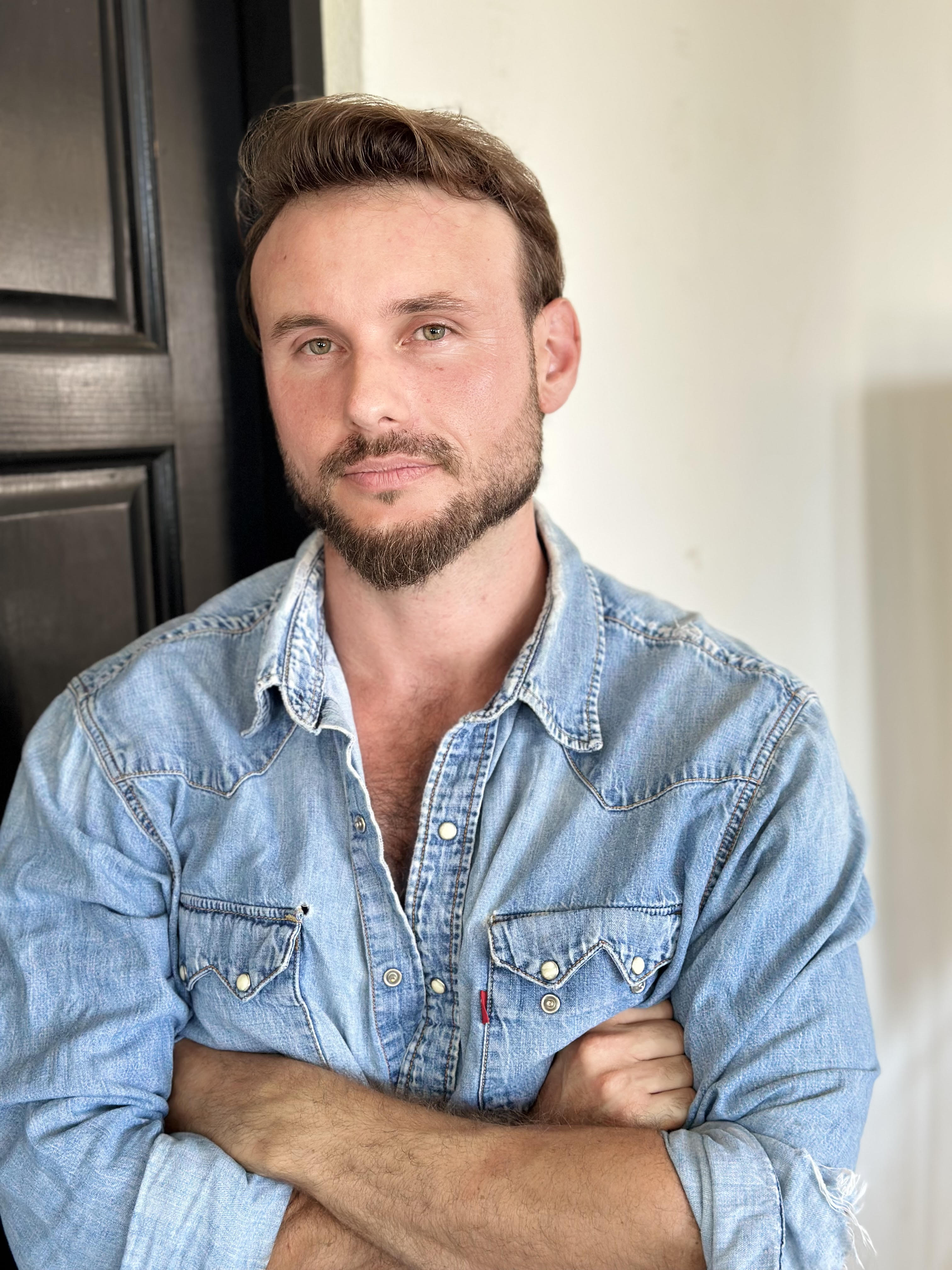
About this episode
What separates people who command a room from those who disappear into it?
In this episode of The Breakthrough Moment Podcast, Zac Deane sits down with performance coach Robert Galinsky, who has coached everyone from 50 Cent to TEDx speakers and young people at Rikers Island.
Robert reveals how presence, preparation, creativity, and stepping into discomfort can transform the way you communicate, pitch, perform, and lead. He also breaks down his Creative Credo: “Never deny, always reply, never ask why.”
Episode notes
- 00:00Welcome to The Breakthrough Moment Podcast
- 02:17Robert’s biggest breakthrough moments
- 04:33The biggest lesson from coaching 100+ TEDx talks
- 15:30What highly successful people do differently
- 17:15How to develop powerful presence
- 20:43Why thinking can kill your performance
- 32:42Why doubt can actually move you forward
- 34:47The incredible story of coaching 50 Cent
- 40:00Observer vs. absorber: stop judging yourself
- 43:45Using creativity to become more confident
- 50:23Robert’s Creative Credo
- 1:00:02Why your breakthrough is hiding inside discomfort
Chapter titles and timings from the published YouTube description.
From the conversation
Excerpts from YouTube automatic captions. They may contain transcription errors. Play a timestamp to hear the original conversation.
Robert’s biggest breakthrough moments
>> That's such a hard question because there's so many breakthrough moments that happened. I but I would say um one of the bigger breakthrough moments was working with meeting Nile Rogers who's an an incredible music producer and um watching how he operates in a world from art to commerce and being able to uh work with him co you know coaching and co-creating over a 100 TED X talks we TEDx teen was sponsored by Nile Rogers and the we are family foundation and uh those I spent 10 years being the executive speaker coach for TEDx teen. ...
What highly successful people do differently
>> Three words. In the room. in the room. Are you in the room? And that really comes down to what what is presence? Presence is being in the room. So, like right now, I showed up to be in the room with you. I'm not 5 minutes ago. I'm not 20 minutes ago. I'm not 3 days ago. I'm right here right now with you. I'm not 15 minutes into the future. I'm not a day in the future. I'm here with you. So, I'm in the room with you. And that being present with you is key because ...
Why thinking can kill your performance
>> absolutely my one of my greatest mentors J Sanders, he's a brilliant actor. Um, >> this is when you fly unconsciously. >> You fly unconsciously. You've prepared. It's in you. You fly unconsciously. Now, every time I've ever gone to a concert and seen the singer, you know, leave the room and bring us along with them, they fly unconsciously. They're not doing what you what you said you don't do. When you're act, you don't think. You don't. Thinking is the killer. Do not think. My my youngest students love that. I mean, when I go in with ...
The incredible story of coaching 50 Cent
guy named 50 Cent and, uh, he's a rapper and he has an audition with Robert Dairo and Alpuccino next month and we looked at your head shot from when you came in and you look a little bit like Robert Dairo. Would you want to come in and maybe read with this guy? And I'm like, hell yeah, of course I would. Right? So, there's one thing, one lesson there, which is no opportunity is wasted. Right? Three months ago, I went in, auditioned, left, nothing happened, forgot about it. That headsh shot was still there. It came into ...
Using creativity to become more confident
>> Well, yeah. And when you practice that, when you do that in practice as your in your coaching sessions, then you know what to bring back to the presentation. There are things that we would do in the coaching sessions you never bring to the presentation, but you you are you'd land somewhere where you're now more confident with what you know you should do in that presentation. So, I'll have people sing sometimes. I'll say, "Sing the pitch." And they be like, "Are you crazy? Sing the pitch." And they sing the pitch and they're not going to ...
Read the episode transcript
YouTube automatic captions. Names, punctuation and wording may contain transcription errors.
Welcome back everybody to the breakthrough moment podcast where we interview successful entrepreneurs and investors and ask them what is their biggest breakthrough moment in their career. The moment that changed it all and took them into another level of success or impact or insight and as they share that moment with us at home have breakthroughs as well. I'm Zach Dean with Robert Galinsky. How are you? >> I'm great. Great to be here. Thanks for having me, Zach. >> Yeah, I'm excited for this. the more that I learn about you, I'm more blown away than ever. Where are you tuning in from today? >> I'm in Manhattan. I'm in New York City, right down in the Lower East Side. >> Okay. I was there um October, November last year before it got cold. I love New York. So much variety. What's your favorite thing about New York? >> Just the pe people. Like you can see more people in 20 minutes than some places it takes a couple weeks. So, people watching, riding the bicycle, >> and people watching. >> Oh, I love the ebikes all through the park and things like that. That was so much fun. That subway, that's something else. My gosh, that's a whole another podcast. >> Uh, yeah, I've gotten used to that subway. So, [laughter] >> well, let me do a quick introduction and let everybody know why they should tune in, which everybody at home, please tune in. Grab your pen and paper, sit down. This is going to be an amazing podcast. Everybody at home, Robert coaches or coat has coached 50 Cent. Yes, 50 Cent and NFL Hall of Famers. Then on other days of the week, he walks into Ricker's Island jail and teaches teenagers to find their voice through writing. Same coach, completely different worlds with one mission. He is a Giuliard guest lecturer and one of the only Americans chosen for the 2025 Muhammad Ali Face of Compassion of America award. And for those of you lucky enough to stick around, Robert's going to reveal and teach the creative credo that unlocks a creative a creative process used in any industry. So, if you want to be more creative and bring that into your work, stick around to the end. Welcome, Robert, to the Breakthrough Moment podcast. What is We'll start here. What has been the biggest breakthrough moment thus far? >> That's such a hard question because there's so many breakthrough moments that happened. I but I would say um one of the bigger breakthrough moments was working with meeting Nile Rogers who's an an incredible music producer and um watching how he operates in a world from art to commerce and being able to uh work with him co you know coaching and co-creating over a 100 TED X talks we TEDx teen was sponsored by Nile Rogers and the we are family foundation and uh those I spent 10 years being the executive speaker coach for TEDx teen. So we had the opportunity to
work with over 100 speakers and the diversity in that decade was incredible of all the different types of people who came in with stories and things to say and different ways to say them. That was one. And then another one was um being told that go ask for some money. you have a great idea, go ask for some money. And learning that when I ask for investment now, I'm never going in thinking I'm a burden, a labor, or asking a favor. I go in with the mindset I'm giving you a compliment because I'm coming to you. You're the one that uh I believe believes in me and what I'm doing. And if you can invest, great. If you can't, understood. No problem. And I liken it to, Zach, like when somebody walks up to you, a good friend of yours, and says, "Look, I need to borrow $50 or whatever, you know, $25. I need to borrow $500, something simple that's not too taxing." To me, I never am affronted. I'm always like, "Oh, well, they came to me in a time of need." All right, cool. So, it's a compliment, a breakthrough in the thinking. >> Two amazing stories there. I'd like to just go back to the first one with TED X. um you know what is the main thing that you wish everybody knew about that experience or preparing that they just don't know about? there's some big like challenges that people face that you just wish they knew something like yeah I'm really curious >> I would say it's relax it's the the biggest thing was always ending up it's coaching the person to just relax you know what you know don't doubt it just go out and and tell your story you know and understand that especially in TED audiences people are just sitting there hungry for something valuable and interesting they're not judging being so harsh. I think that one of the places where people judge the most where there's an audience listening is a stand-up comedy club. That's it. I mean, that's to me that's the only one. It's like you walk into a standup, if you're going to do standup comedy, the audience is saying, "Make me laugh. Make me laugh." Right? Other than that, everybody else at TED X is saying, "Please feed me, feed me, feed me." Um, even when no matter when you go to any of these conferences and symposiums, the audience is not saying, "What do you got?" They're saying, "Feed me, feed me." So if that's a mindset you can adapt, go feed them. >> Wow. No, that's a good point. Was there a specific moment that that became the realization or was it just an accumulation of being, you know, in that space for so long or it was just a pattern? >> Good question. Um, it's both. I I'll tell you, Chelsea Clinton uh was a co-host with me of one of the TEDex conferences and she was nervous backstage. Another person was Jiza from the Wu Tang Clan. You know, Jiza was backstage nervous and I was like, Jiza,
you've performed in front of hundreds of thousands of people. How can you be nervous? He goes, "Yeah, but I've never done this. You know, I've never talked to an audience about science." Um and I just said, "Look, man. Just think about all those other concerts you've done. It's the same thing. You're just going out there. I looked both of them in the eyes. I was like, "Do you believe in what you're saying? And do you believe why you're here?" And both said, "Of course we do." Well, I said, "Look, you just put your game face on." You went, "Of course we do. Of course I do. That's the accords I do. Go out there with that. You just believe in what you have to say. Don't worry about what what the audience is thinking. They're more your friend than you think." >> Huh. I find sometimes there's topics that I know second nature. They're things that I love, my high highest values. There's certain things that I geek out on and when I talk about those, I feel like I'm confident in that and then I'm confident in how I express. But if if you had me talk about like the life cycle of, I don't know, marine algae or something in front of I have no idea. I would feel so unprepared, so unconfident, and wildly nervous. Do you think there's a correlation between like knowing your stuff? >> Absolutely. Yeah, you just nailed it. You just said I would feel so unprepared. Right. But if somebody gave you parameters and said, "Hey, Zach, you have one hour to study whatever you can do in the after that one hour, come out and talk to us about it." Then you know, you just work within the parameters you have. If somebody says you've got a year to go study that algae, well then you got a year to go do it, you know, and you and you can take some time. So it's really preparation and repetition. It's preparation, repetition. >> Interesting. Super important. Uh, and then where did this I guess art form come from? Were your parents creative minds or were they educators or h like were you did you have a mentor? Like how did this spark happen for you? Quick before we continue, a brief message from today's sponsor. If you're an entrepreneur wanting to grow your personal brand authority and business through podcasting, then check out finderodcast.io. As you know, the biggest entrepreneurs in the world, they book these massive podcast tours before a big product launch or an event or book because podcasts build trust faster than anything else online today. So, it's find a podcast.io. It helps you connect with a specific podcast in your niche. It writes the pitch. It follows up in this easy CRM. It truly does save time. So, you just show up, do the podcast, and your business grows. If you're curious to learn more, book in a demo at find a podcast.io. Now, let's get back to the episode. Parents were super loving, awesome parents. My father, uh, my mother was a homemaker mostly. She had five sons, so she had a lot of work to do raising that. That was an incredible job she did. and they both were of children of immigrants um and two different
cultures, religions. So, and my father was a science teacher, a math teacher, a pharmacist, a justice of the peace, a town councilman, notary of the public, chairman of the board of education. My father was a real civic-minded person and owned a pharmacy and just taught us through his actions. and she too that uh everybody matters and everybody counts and and he owned a pharmacy on the edge of the of Hartford, Connecticut. And I worked at every every one of us worked in that pharmacy and I believe at looking back on it now the wild array of people who came into that pharmacy. My father's pharmacy was not only, you know, prescriptions, but was hard liquor, beer, cigarettes, lottery tickets. So, you got every vice plus the, you know, prescribed medication. So, the people who would come in would be the most diverse, interesting, quirky people. And I think that was part of watching, you know, a a wild array of of uh personalities come in. and and my grandfather was a public person um serving people and my uncles all were teachers. I got in trouble a lot as a kid. I acted out a lot and um I stumbled into a poetry reading um and it the reaction I got from the audience just changed my life. And that was the moment where I realized, oh, okay, I can do all this crazy stuff that I get in trouble for, but I can do it and not get in trouble because I can do it on stage and I can speak about it and break rules without hurting anybody or myself. >> Oh my gosh. You hurt other people by speaking up in the [clears throat] past. You got you're >> I mean, I was doing some stupid things as a young kid that were, you know, borderline juvenile delinquency. I'll I'll I'll keep it sanitary. >> Interesting. And now you're paying it forward, you know, it's comes full circle, right? It's super interesting. >> And you know, and yeah, and going through that, seeing the world through that lens, um, and looking at what young people go through right now, that has helped a lot. >> And so, you know, I'm always fascinated by as I travel and I walk the streets, I love just getting lost. You know, when I travel, I I I'll put a map on or sometimes just walk in a direction and just try and get lost because I'm trying to figure out my bearings and just you always there's always things I stumble across [snorts] and I'm always fascinated by these old shops or the old architecture of you know the city council hall or like the police department like all these like old school b businesses and I think about these have been here for a hundred years or like maybe 200 I don't know it's like some of these places in Europe are so old. What do you think has been um and I guess the reason I say this is business,
you know, back when your father had the the shop and the pharmacy, how do you think business has changed? You know, I think of business today being a lot on social media, a lot of techie, it's like probably a lot of bombardment of advertising and things like this. Whereas back then maybe our nervous systems would have been a little bit more chill. We're able to like listen and educate ourselves. I don't know like what do you see as like the biggest change in business from from your experience? If you have a business on Facebook or Instagram, you need to learn about this new amazing AI automation tool. The question is, is your personal profile or business profile manually messaging your target audience every single day? If not, I highly recommend you do this. there's a massive ROI on that. But if you are, there's a more cost-effective strategy. So, this is a unique AI software. It runs for you, your friend requests, the messages, the likes, even the comments 24/7 in the cloud. So, while you're watching podcasts like this or taking calls or while you're sleeping, it's running there in the background. Some of these people are pulling in another 5 to 20 extra qualified leads every single week on autopilot. You can experience the podcast special trial and try it for yourself today. Check it out in the show notes below. >> I think the core of business is personality and it that that hasn't changed. I'll start there. You know, when you walked into his store, it was because part of the reason you would come back was because he was a kind person and you knew what you would get. Um, and I think that's the case with a with a lot of places today, right? you go back to these places where there's dependability, reliability, there's friendliness. So, I think personality is a big part of it. Now, it's being manipulated through social media. Um, and when you look at some of the corporations that are operating now, they understand that that's what we're doing here. We're praying on the fact that people are warm to our ethics and our personality. So, how do we put that up and make that feel good for them? Um I I don't think obviously everybody is um pure in their intention with their business but ultimately when I see people entrepreneurs working and they love what they're doing and they want to share that love. I mean it's so basic sometimes people get really try to get tricky with the language. Every entrepreneur that I see out there hustling their hard is because they love what they created, discovered or are collaborating on and they want to share that thing because of that love. And yes, if they can make the money, that's a great thing, too, right? They can live a life that they've dreamed of. How what what's better than living the life you dreamed of by doing what you want to do?
>> Nothing better. It sounds like you've been around a lot of great minds and you've been in the rooms with some incredibly talented people. What would you say is that thing that they have that say the others don't? Is is it really a spark? Is it is it some kind of way of seeing the world, a mindset, an energy? Like what's the difference between those who maybe make it and then those who don't? >> Three words. In the room. in the room. Are you in the room? And that really comes down to what what is presence? Presence is being in the room. So, like right now, I showed up to be in the room with you. I'm not 5 minutes ago. I'm not 20 minutes ago. I'm not 3 days ago. I'm right here right now with you. I'm not 15 minutes into the future. I'm not a day in the future. I'm here with you. So, I'm in the room with you. And that being present with you is key because you and I now can connect as deeply as who knows where we go. What that also does that means that everything I have lived and every intention I do have going forward also is in the room with us as well. Right? So now when I uh my you know I recently not recently but we did a radio show and there's a guy named the mighty sparrow. He's the king of calypso. And he walked into the room, everything changed. Every I mean, everybody just put down what they were doing. And this guy's energy and it was because he was present. He looked at every single person in the room when he walked in. He said, "Hello." And everything that this guy has lived was breathing right there in front of us. I I remember many [clears throat] years ago doing some acting classes and we were watching videos of some of these amazing speeches and the the moment before as they're coming out on stage and their presence and the pauses everything's intentional and it had this like weight and everyone's just anticipating and like oh what is what are they going to say? But there's a way of doing it. So like how do you co is that coachable and they born with it? Yeah, >> it's a mixture. Yeah. I mean, some people can tap it quicker than others and some people need to cultivate it um because they've been putting up blocks or they've been living in repeating in living in environments or repeating behaviors that, you know, keep putting up walls. Um but you look at every great athlete, every great musician, what do they do? Like you just said, before they go out on stage, before they go play the game, they do all the warm-ups. They physically warm up their instrument. They get themselves uh their blood flowing so the oxygen's flowing so their brain is firing at a higher rate. Um they check the their instrument so they're the maintenance is there and they're fluid. Then they take a breath usually or they get before they
take a breath they get crazy. They might look in the mirror, do the old bang the head on the locker and get excited and remember why am I here? What is my goal? Excitement energy. And then most every single one of them takes a takes that breath. And that breath is either just a breath or is five minutes alone to remember why this is sacred to remember why this is important. And you do this before you go into pitch meetings as well. Go in before looking for a promotion. Um going into a a meeting to try to raise some money. You know, everything gets organize, execute, enjoy. That's it. you get everything organized in that is repetition, rehearsal, uh stretch, get your instrument ready, and then um get excited and then take that breath and calm down. It's all sacred. It's all precious. And then here's the other I think real big key. Then you step on the stage. Then you step in front of the potential investors. Then you step in [clears throat] front of the judge. Then you step uh on the playing field or basketball court and you forget everything. F-word. You say, "Forget it." That's the f word. You drop the fbomb. Forget it. I did the preparation. I I I respect it like nobody's business. Now f it and get out there and fly unconsciously. It will all come out. It will all flow. Now you've got to be in the room. your presence is there and everything will come out of you naturally. >> Getting shivers as you're talking and it's like wow it's on the edge. It's like the edge of of the uncomfortable unknown but wildly prepared and wildly trusting of of the moment >> that was one of the things. >> Yeah. >> Well yeah great interpretation. Yeah. And I feel like this when I got into acting many many years ago, that was the thing that I loved about it the most is because in that moment of that scene with action for that few minutes, the only thing that was important was my connection with the other person. It wasn't on my own inhibitions and what what happened today and blah blah blah and social media and distraction and life. >> I was so locked in. >> And I'd finish those scenes and some people they'd be like, "So, how did you feel?" I'm like, I don't even know what happened sometimes, you know, like I just forget. >> But I think that's a beautiful thing is to kind of be so in the moment that there is no recollection kind of bit worrisome sometimes. But yeah, like that's >> absolutely my one of my greatest mentors J Sanders, he's a brilliant actor. Um, >> this is when you fly unconsciously. >> You fly unconsciously. You've prepared. It's in you. You fly unconsciously. Now, every time I've ever gone to a concert and seen the singer, you know, leave the
room and bring us along with them, they fly unconsciously. They're not doing what you what you said you don't do. When you're act, you don't think. You don't. Thinking is the killer. Do not think. My my youngest students love that. I mean, when I go in with young kids, I say one of the rules of our classroom is you're not allowed to think. And they're like, "Why do you this guy's crazy. Everyone, every teacher's think all day long." are like, "You do not think in this class. You trust your gut. You trust your instinct. You trust the story." And every year that you've been alive. And some of them are like, "Well, I'm only 13." I'm like, "That's 13 long years." Like, you know, you some days you wake up and or you can't get what you want. You're like, "I'm 13 years old. Life sucks." That's a long time, right? Well, don't think. Trust. >> Wow. To trust. Wow. That's so important in business and in relationships and in our own health journey, spiritual jour, you know, to trust. Is there a strategy on that? You know, because it's it's pro Yeah. Like how do you if the kids are like, "Okay, so how do I trust? What's um the the creative credo, which we'll touch on later on, is a can opener for that." >> Yeah. >> Okay. Okay. Okay. >> There's a lot of little things. There's a lot of little things along the way, but and like you said in business when look I've raised money for movies. I've raised money for off Broadway shows. >> And when you're in that room and you are passionate in the moment talking about what it is you're pitching, that's when they'll give you the money. They're not going to give you the money. They're going to check your business plan and all of that, but the very first thing they want to know is like what is so exciting about what you're doing that I need to be involved in? excitement at the end of the day. They're buying the excitement. Hey. >> Yeah. It's Yeah. >> Yeah. Go ahead. Go ahead. >> No. >> Well, yeah. That that excitement, it's energy. It's like they say sales is a transference of energy or a feeling. And so, yeah. And it's those people and I want to ask you, you know, this flying unconsciously that you mentioned or your mentor mentioned, why do you think people are so magnetized by that? because we will pay money. We will travel the world to go see artists. We'll travel go we'll line up for days to get, you know, access to people. What is about what is it about flying unconsciously that's so magnetic? Just quickly before we continue, if you're an entrepreneur out there or a high performer who wants more clarity and direction in life or maybe you're going through some kind of turbulent transitional phase, I want to share with you something that I co-built. It's called the life blueprint system. It's an AI powered goal setting process that helps you create a personalized life blueprint kind of like an architectural plan or a business plan but for your life. And so it allows you to take and capture those big ideas, those those amazing thoughts you have and to turn it into a proven plan of action. And so if
you want to stop guessing and start building your future intentionally and consciously, go to the lifebloopprint.io to learn more. Let's go back to the episode. >> It's an intangible It's not something that you can really you can you can't really put it in a jar. So, it's in the moment, you know, it's ethereal. It comes in that moment and you can remember it and feel it when you go home. Um, but that is that moment that is not you you can't come back to. Uh, it's also, I think, watching another human being liberate themselves in front of you is super exciting. Watching another human being lose themselves and not be, as we we just said, not conscious really. Um, and still be in an environment where nobody's getting hurt. Then we because then we get back in our car or back on the plane or on the train and we're in the real physical world again. And that's cool. But I think that I'm only come up with this answer while I'm with you right now is like, you know, what are we seeking quite often are out of body experiences. Whether it's music, food, whatever it is, it's like something takes us out of this reality. And I think someone's reality daytoday because of the rep the can be mundane or repetitive. I think people are looking for anything. And I guess we get a lot from social media now. We get it from you know the news banks on it with with drama hooking and like urgency and fear. It takes us out of that and it's even though news is so confronting and causes cortisol response in my body for sure. It's it it people gravitate to it because it's like out of and I think really when I think about the creatives or the greats and people like the dancers, the singers, the artists, you know, or just entrepreneurs who are inventing in that visionary state, it's their authenticity to be themselves regardless of the conditioning as you said that regardless of the world and people want that and I think we're so stuck in a box sometimes, you know, me included that. >> Yeah. Yeah, that that box is about being safe, right? If you if you watch Shark Tank, if you watch Shark Tank, you may not like the person's product, but that that person is in the zone of showing you how much they care and love their product, their invention, and why they're so passionate about it. I mean, there's got to be a statistic that probably says, you know, the majority of the wins for people on Shark Tank are based on passion alone. You hear those you hear those uh the panelists every so often will say you know I never really was interested in hair dye but god the way he talked about it you know um and that's that passion you're talking
>> it's so interesting and I think about the moments where I um people would uh would kind of compliment me with some of the stuff I used to do a lot of videos on YouTube and recipes and I genuinely get excited for food you know I'm a foodie I love taste of food and differentar varieties and especially when I make something and then it tastes good. It's like one of the best feelings ever. I'm like that's the like so glad it tastes good and I would get so excited and people would be like I've never had that smoothie before or that kind of health thing but I'll try it because you're so excited by it. Um so that's a really really interesting point. Yeah. Yeah. I could chat to you about that forever. I think improv and and acting and arts and uh even if someone doesn't want to be an actor, I think it's such a great way or for an entrepreneur or a professional to get out of their comfort zone to stretch the range of their emotions cuz I feel like a lot of people are playing like a piano, the piano of life, but the sound is kind of only on a couple of notes and people get wonder why they're feeling bored or anxious or they're not living. They're in that box. And so I think going to the going to creativity, maybe it's singing or dancing or arts and things like u painting allowing us to experience the range and the different keys of the instruments of life is so fulfilling. >> Well, you you you know what what you're saying is what I think is makes my coaching distinctly different than a lot of other coaching. doesn't come out of the corporate um the the the insights of the corporation. It comes from theatricality and entertainment. And so like when we were doing our our biggest challenge with TEDex with TED talks and our biggest challenge with Giuliard is people know what they know and they're great at it. So, if um if I know how to make a sensor device that will indicate how close I am to furniture, um I can explain if I'm that scientist, I can explain that to other scientists. No problem. But if I have to tell the regular world, the lay person, I often don't know how to do that. like and and that's what we came across with TED experts in certain fields but how do you get them to be able to explain it to the non-expert so we understand it so that we can actually get excited about it too then up at Giuliard I'm working with the jazz musicians right now because they can play their instrument like you said the pianist amazing but in jazz you have to introduce the songs and you have to outro the songs it's part of the concert and that's storytelling has nothing to do with playing the piano. So the person who's virtuoso on piano then has to get out of their comfort zone and start speaking about the song they're going to play next and they freeze because they haven't been trained to speak but they
can play the piano like nobody's biz. Same thing with business. Like what is mo you know at some point when people are going in to do their pitch they're they go over their uh budgets they go over their projections. They go over operations. But then if they don't go over and now how are we going to make this exciting in the room when we explain it? That's the acting that's the drama. That's the playing the music. And that's critical because you might have a great idea, but if you can't communicate it in an exciting way, it's not going to go gonna land anywhere. >> Do you think there's a difference in in like mindset or belief from from those that you've worked with say like 50 Cent? You mentioned you work with 50 Cent. You helped him with a role. Well, maybe if you can take us on that journey of just sharing that story for for everybody, but also like, you know, linking I like I really like this how you're linking it to entrepreneurship and raising capital or business meetings and things like this. I I from my point of view, I feel like there's those that are entrepreneurial, uh, they're more risk that they invite more risk. It's kind of like there's this um they have a high tendency to to risk more where but people that aren't entrepreneurial, they don't have that and and it's really how they then perceive reality. They could be seeing raining outside and be excited as an opportunity to buy rain jackets and sell it as a business. Someone could see rain and be like, I'm not going outside. This is the scariest thing ever. So, it's all to do with their mindset. Have you have you noticed any distinctions with your work? >> Pause before we continue. The first way we as entrepreneurs introduce ourselves when we walk into a room, it's our energy, right? People feel that. And secondly, it's our face. How healthy do we look? So for the entrepreneurs out there who care about how they show up, I'd love to share with you personally, I've been utilizing some Korean skincare products now just for over a month, and I had no idea about them um up until, you know, even just two months ago. But it's by far one of the best investments I've made for my skin. I feel it's literally making me look younger and it has this like glossy super fresh look. And so this is the number one exported Korean beauty brand and skincare line in the world. The ingredients are second to none. Even pregnant pregnant women can utilize them because out there there's so many products that have toxins in them that really make our face not healthy over a long period of time. And so if you're out there and you want to match the energy that you output with how healthy you look, you can try all these products risk-f free for 30 days. If you don't like them, send them back and get all your money back. If you're out there, if you're curious, check out the link below to learn. Let's get back to the episode. Yeah. Um the the you uh you can't be afraid. I mean, that's that's the bottom line. I used to say this all the time. I hear it all the time now. Step into your fear. Whatever you're afraid of, as long as you're not going to burn your hand on the stove,
literally step into your fear. Every breakthrough that ever happened was u through through fear. Um or doubt because sometimes doubt appears without fear. I'm working on a oneman show right now called Could you patent the sun? And it's about Jonas Sulk, the scientist who created the polio vaccine in 1955. He didn't take the patent. Could have made5 billion dollars back then. He didn't take the patent. He said, "This is for the good of the world. I'm not going to take how can I profit off of this. Let's save lives." Right? But in everything I've studied about him, doubt was his best friend. He said, "Doubt is what moves the work forward." And when you're afraid, and that phrase has stuck with me, doubt moves the work forward. And if you're afraid, then you are less apt to question and live in doubt because you want certainty. So you are not moving forward as adeptly as you could is if you say all right there's doubt. I doubt that. Let's go in and look at that. It might the answer might suck. I might be afraid of what comes out of it. But that's where all the breakthroughs happen. And you can't can't be safe. I mean that's the bottom line. the 50 Cent. Going back to the 50 Cent, there's a little there's a there's a little story to this. So, uh, at the time I was really pushing acting and I was had my going out on auditions. And so, I had auditions for something. Never heard back from them. And then like five months later I get a call, hey, remember you came in to audition for us for that movie? And I was like, yeah. Oh my god, did I get it? Did I get it? They No, no, you didn't get it. Look at that. Then why are you calling me? Well, um, because we got a call about a guy named 50 Cent and, uh, he's a rapper and he has an audition with Robert Dairo and Alpuccino next month and we looked at your head shot from when you came in and you look a little bit like Robert Dairo. Would you want to come in and maybe read with this guy? And I'm like, hell yeah, of course I would. Right? So, there's one thing, one lesson there, which is no opportunity is wasted. Right? Three months ago, I went in, auditioned, left, nothing happened, forgot about it. That headsh shot was still there. It came into play, right? So, they called me up. I come in and I read with 50 and the director. And it was for the movie Righteous Kill. And it was his first feature film acting role. And um we have a 20-minute read. That was it. Boom. It's over. Got paid a little money. And as I'm walking out, he pulls me aside. He says, "Hey man, you were really good. do you want to coach me? Do you think you could coach me? Because I got a a couple weeks to go. And I said, "Sure, let's do it." So, he hired me to coach him. So, I went to his studio a couple times and one time I was in his studio on 31st Street, 9th Avenue by Madison Square Garden. And um we're in the we're in the room and I I'm
suddenly starruck. I'm suddenly going, you're you're you're alone in a room with 50 Cent working on acting. And so I said, he didn't he didn't know any of this. I goes, 50? I I got to run to the bathroom. Take a second. She says, "Sure, go." I go to the bathroom and I like grab myself. I'm like looking in the mirror. Get it together, man. Get it together. What are you kidding me, Starruck? You earned this. You deserve this. Let's go. And this guy needs your help. So again, presence in the room, right? It's like, what am I there for? I'm not there to be like, "Oh my god, I'm with 50 Cent, you know?" No, I'm there to serve this person. I'm getting paid. So I slapped myself around for 30 seconds, came back out, got buckled down, started working with him again, and it got to the point where he wasn't really going there. And so I I said, "Look, this script, we're yelling at each other. That's the dialogue is a cop and him arguing with each other. I said, "Look, let's go off the book. Let's drop the script and let's just argue." And and I He's like, "Fine." I said, "I don't like the nword, but can I use the n-word? It's in the script, too." He's like, "Go ahead. Use the nword." Whatever. So, now I'm screaming face to face with 50 Cent alone in his studio. outside there's two more studios and all of his guys and his team are all out there and we're going at it for like three or four minutes and like like he's ready to pummel the out of me and um all of a sudden doors burst open. Seven of the guys in the other room come running in ready to like jack me up thinking it was real soon as they did that. And he was like, "No, no, no. It's cool. It's cool." And then I go, "That's it. That's what you want. You nailed it. There it is. There it is. You got into the zone. You flew unconsciously. You didn't care about the words. You didn't think about am I getting the gig? Oh my god, I'm going to re, you know, audition with Dairo. You weren't, we weren't none of that mattered anymore. It was the character Spider in the movie talking to this cop. And it was the echo of every youth in over time fighting this cop. That's what that was. And those guys bursting in. That was it. and we laughed and had a ball. And then uh the next day he went in, he auditioned and he got the part. >> Wow, what a story. As you're sharing that story, I'm just like listening to everything you said. The power of story is so powerful. Obviously, so powerful. Uh that's why we're here, you know. It's this and that's what you got paid to do. And that's that's so so interesting. Wow. So then how how do you then how did you then connect this to business you know to then go from that field to then to business is a big jump or or was it not
for you? >> No it wasn't because I was doing this simultaneously. I was doing it simultaneously. Um and again like uh every you know Gray Advertising is a big huge advertising company here in and um in the city and they brought me in to work with employees again to get them to free themselves up to use creativity to free themselves up so that you it connects to business in in so many different ways. You enjoy things more. You're not looking over your shoulder as much. There is so much cutthroat um environment in business which is legit. It is what it is, right? You're trying to meet a bottom line and make some money so you can pay bills and enjoy life. Um, and that's the setup. So, what can a person do to be happier and more comfortable and take more risks, smart risks, educated risks, and that's where this creativity comes into it. Um, so when I work with clients like that, I'm I'm working with somebody right now who is a head of um one of the uh I can't I can't really say exactly what it is. Um, but she's the executive director of a multi-million dollar educational um program and institution. Let's say that. and she has to be giving tours in the next month or two to potential investors because they're doing a $60 million upgrade on their facilities. And she knows, I mean, this woman knows everything like when it was founded, what percent of of the business is coming from there? You know, what is the light bulb electricity cost, you know, in this facility? It's like incredible every question. And she's still going, I'm not sure if I'm doing this right. And it's like now it's time. Okay, I'm not telling. I'm not training you on statistics. I'm not telling you what you need to include. I'm I'm going to watch for that. But what my job is to say to give her the confidence and the ability to know that like if she stumbles on a word, big deal. Before we started, she stumbled on a word, she'd apologize. And I'd say, "Look, here's the thing. You stumble on a word, you just keep going. You stumble on a word, you you apologize. Now you are doing what I say what I call observer versus absorber." I have this phrase, you stay absorbed in what you're doing. Soon as you start observing, you're now hovering above. You're editing, you're judging, you're critiquing in the middle of what you are doing. That slows everything down. That kills your momentum. That that breaks your focus. That points out mistakes that nobody else might have even noticed. And now you're no longer flying unconsciously. you are now sitting in judgment of yourself in front of the people that you're supposed to just flow the information out of. So, um I'm not even sure what your original question was, but the point was >> Yeah. It's it's you know, how did you transition from the creative to then this Yeah. >> Yeah. And so there it is. It's like um
every business person that ever was successful again stays in the room, is present in the room and has practiced enough that they are now a lot less afraid. They are zeroed in on what they're committed to and what their passion is and now are more able to communicate that. And again going back to my my differentiation point is because I come from the world of theater and live performance I bring an element of that in that most corporate trainers don't have because they are in that world so much. So that's the extra dynamic when people leave my clients and and from their presentations and whatever they're doing and go that was really special. I'm not sure, you know, what was extra about that, but that was pretty and it's because the person understands a little bit more about theatrics and performance from athlete to artist to business person. >> So interesting. It's, you know, there's a bit of a theme that you're sharing which is flying unconsciously. Forget it. It's then the the absorbed, you know, so absorbed and with what 50 Cent and you did with 50 Cent was just let him go, let let him break loose. It's it's Yeah, it's really stepping outside of the comfort zone slightly rather than being socially acceptable. You know, it's so interesting. We're trying to be domesticated, socially acceptable, but actually what what we really want is this like full expression powerful human just going there. And yes, it can be crude or yes, it can be uncomfortable, but that's that feeling or wow. >> Well, yeah. And when you practice that, when you do that in practice as your in your coaching sessions, then you know what to bring back to the presentation. There are things that we would do in the coaching sessions you never bring to the presentation, but you you are you'd land somewhere where you're now more confident with what you know you should do in that presentation. So, I'll have people sing sometimes. I'll say, "Sing the pitch." And they be like, "Are you crazy? Sing the pitch." And they sing the pitch and they're not going to go sing the pitch. when they do the pitch, but there is something now in the pitch that has a lighter spirit or maybe there's a musicality in one of the one section where suddenly there is a musicality to it that that is sublime to the listener and is that magic where they go, I'm not sure what it was, but there's something about that. And I notice it on the podcasts because, you know, a business podcast, investing podcast, you know, people like to be in this box. They they keep themselves there because, you know, it can create authority and it's their credibility. It's their face. It's public, you know, it's like, but it's the moments where people just open that door for a minute moment, put their head out the the the
window and just breathe a, you know, share something or shout at a friend or what, you know, it's like this expression that's outside of the box. I'm like there like keep going. And it took me a while for me to kind of realize it cuz I jump on podcasts too or when I'm with friends or when I'm presenting and doing my thing. It's like oh that that that moment was really good. Like do that again. I'm like oh I thought I was just ranting. I was just talking Like I was just ranting. They're like do that again. I was like what? >> So >> we're flying unconsciously. You're like what moment? What moment? Right. And when that and that happens in the debrief, you go back and you debrief after you're like, "Oh my god, that was great. We executed X, Y, and Z." Oh, and that moment where you did the thing where we didn't plan that, that evolved out of practice, repetition, and being comfortable with what you needed to deliver. So comfortable that you could then step into doubt, and something great comes to work, move forward because you stepped into doubt. >> Step into doubt. And I love what you said before, doubt is the your best friend. And uh it moves the work forward, the doubt. Because if everything was perfect, it's like living in that >> what what was that? >> Yeah. I don't know. It's like if we lived in a world where everything was perfect and there was no negativity to anything, it would be boring. Like we need to have that variety and that spice of life. And if if we were 100% certain on everything, why would we need there would be no doubt, then how would you improve something? You would be completely happy with where it's at. You wouldn't want to improve it. Yes, the doubt makes a lot of sense. Ah, so great. So great. Um, credo. Let's let's touch upon that. I will just say, Robert, for those listening, right, who should reach out to you? I'm going to put all your links around here. I can really see and feel your work and the importance of this and you know it's not just about like I really see that entrepreneurship is is kind of like an Olympic sport. I think we should all treat it like that to look after our mind and our body and our and our you know so we can perform and execute at the high level because it can be very draining. It's more than a job. It's up earlier and staying up late when you're doing entrepreneurship. It's crazy at times. Um, and so what what you're really giving people is is that extra it's like a secret weapon. It's really helping people step into their own secret weapon, their own secret source. Because if someone can tap into their own secret source and authenticity, you can't duplicate that. It's unique. It's going to stand out and it's going to help them close the deal. It's going to help them raise the money. It's going to help them, you know, get to that next level. So move the room, all the things. Yeah. Who who should reach out to you? >> Um who should reach out to me? Well, anybody. I think uh if you've got a really powerful pitch, if you're looking for investors, then I can absolutely help
with what that presentation looks like. You know, um I've helped create from ground up two people walking in with what they have saying, "Watch this. Let me know what I need to do." um that it's it's going in front of somebody who is judging you and that it's not a negative thing. You know, they're judging your material, your approach. With the Broadway shows, a lot of times they know they're not going to get their money back. A lot of Broadway and off Broadway shows, they you said it earlier on, it's like, what am I getting involved with? It's a journey. It's a little bit of a club. Is this going to be fun? And there are enough people out there who have enough money when they invest in uh Broadway musicals and they put in $2 million, three million, they know they may never see that money again, they have enough money that it's not bothering them. So why are they doing it? Because they want to be involved in something interesting with good people and have some fun, right? So that's part of this as well. And that's what this coaching does. that like liberates some of that stress from you as you're going into these pressure situations so that you can be the fun expressive person that you want to be and that you are. Um but when you get into high pressure pitches and meetings and you have to bring new ideas to the table, there's a lot of pressure. So this work helps that that particular person. Um, you know, I'm I'm opened up a new lane by accident, but I'm now coaching young uh basketball players, teenage boys and girls whose parents are like, "My kid is really good at basketball, but their confidence level is shot when they when they don't do well out there." So now I'm doing um confidence and um strength of presence training with young people as well. Um, so yeah, I think anybody who's, you know, developing, uh, any entrepreneur who's developing an idea, there's no question what I do adds to the success of that. And then people who are working with young people in any capacity. >> Yeah. >> Creative credo. >> Yeah, please. And everybody at home want to connect with Robert, I'll put all his links around here. Yeah. It's ready to rock. We're warmed up now. very excited for this. >> So, um, this was taught to me when I was 17 years old and it's been it's out there in different language, different ways. So, it may be earthshattering to some, and it may be a review for others, and that's okay. Um, it was taught to me by a guy named Jerry Diner, and I have to always give him credit because it changed my life. Jerry passed away a few years ago, and I even when he was alive, I would always say Jerry Diner got uh gave this gift to me. It's three principles. They're guidelines. They're meant to understand them, study them, work hard with them, and then again obliterate them, test them, doubt them,
push the work forward. Three principles. It rhymes. And he never called it the creative credo, but over time I realized it was for me the creative credo that has led me on on my professional life as a coach and as a performer and an artist, but also just as a human being off stage and in in the world at large. Never deny, always reply, never ask why. Accented with a horn. I don't know if you heard that. [laughter] M never deny. Always reply. Never ask why. Never deny. Say yes to everything. Now this is based on improvisational theater. And improvisational theater to me is the essence of life. We improvise every day. We lead an unscripted life. We're improvising every day. We're writing the script. It writes itself for us sometimes. So these principles are about life. Never deny. Say yes to everything. Everything is a gift. Every It's a phrase I use all the time. Everything's a gift. So now I will tell my students, we're in a studio. We're in a classroom. You can say yes to everything because we agreed on that. In real life, you can't. Outside on the street, you can't. So, we have the glorious luxury of in our studio being able to say yes to everything in our brainstorming sessions in the conference room. Put that on the wall. Say yes to everything. Never deny an idea. It goes back to Napoleon Hill in the mastermind. Every idea is valuable. So, um, a quick example of it was I was teaching chronically ill, terminate, terminally ill children through the We Are Family Foundation, and all these kids, um, showed up into this giant um, in this hospital uptown, Columbia Presbyterian, has this giant um, meeting space. And so all these kids who are chronically terminally ill, which means some are never going to get out of the hospital. They're going to pass away, and they're only children. Some are in and out constantly all the time. Um, so some showed up in wheelchairs, some had their machines hooked up to them, some were one was in a bed, but we didn't want them to miss this opportunity to to wa we watched a movie and then we made poetry out of it. And so I put giant post-its all over the walls and had a marker and I said, "Start yelling out words. We're going to make a poem about." And somebody yelled out a word. Boom. So I'm running around the room writing all these things down. And this one kid who's just like barely uh you know breathing looking at uh being conscious and I said give me a word. And this kid looks at me like are you like are you kidding me? I'm dying literally dying here and gave me this really like you got to
be kidding me. Look. So I move on. I start yelling to the other kids. But I don't I don't take no for an answer. Right? So I go back over to a kid and I go, "Come on, give me a word." Thinking my enthusiasm. Second time around, he looks at me again and he goes, "Cough." I write cough on the wall. The whole room erupts. All the kids start applauding. He contributed with the cough. Didn't say a word. Never denied. I did not I didn't go, "Oh, that's a cough. It's not a word. I need a word, kid." Say yes to everything. He smiled, which took energy for him because he was really in bad shape. Never deny. Say yes to everything. Always reply. Ignore nothing. The kid coughed. I replied. I'm using it. Reply to everything. The horn went off. Use it. I was doing a oneperson show. Uh I was doing my show that actually is now a film, which is very exciting. just finished wrapping this film, but I was doing a film in a venue in New York where you could sometimes hear the noise outside. That's how it is in some of our some of these little theaters. And so I'm sitting on a bench as if in this play as if I'm outside somewhere. And I hear somebody outside yell and I look up midcene and I go, "Yeah, yeah, yeah, I agree." And the whole room, WHOA, HOW'D HE DO THAT? You know, it's because I'm I'm in the moment. I'm conscious and I reply and more magic happens. Never deny. Always reply. Never ask why. This is a this is tricky one. Everyone loves the why. What's your why? What's your why? You need to know your why. But here here's how it goes. When you are brainstorming with people, when you are performing, when you're in the middle of your pitch, you are no longer asking why. Why analyzes things, takes you into the spiral of analyzing, which is important. So, you do the why before. Why are we putting the pitch together this way? Why are we using Keynote instead of PowerPoint? Why are we not using a projector? Why are we using a projector? Why do we have um Bob come in halfway through to bring in da da da? Why are we why why great after the pitch or the performance? Why did it work? Why did it suck? Why did they laugh? Why did the guy pull his check out checkbook out immediately? That was great. Why did they say, "Well, think about it. Why did the PowerPoint battery die? Why didn't we check the freaking battery on the clicker after during?" There is no why. There is fly unconsciously. So, if you prepare great ahead of time, do all the why, all the prepping and rehearsing and practicing and repetition, and then you go in now, you can just go fly, deliver everything you plan to live and more, and then it's
over. And then you go debrief. Now you go well why did it work or not? So these are super key these are such key elements to um presenting speaking in public and also the brainstorming sessions. I when we do brainstormings we post that on the wall. Never deny always reply. Never ask why. And we make sure that we're they're visible and we know because sometimes somebody might say why. And it might be the right time to ask why, but it also might be the right time to just say, "Let's just keep exploring it." Why stops the action, right? And in in a presentation, the same thing happens. Why stops the action? And we want to keep it moving forward. And that's why when they ask questions in the presentation, you say, "Well, anybody have any questions?" Why would you blah blah blah? That's a hard those why questions suck. instead of like usually it's like the good questions are what because what's are sort of like fact-based you know well that percentages are right here what you know the numbers are right here um but why is a little bit different because now you have to there's some conjecture and you have to kind of you know make it up figure it out as you go along so um that's a that's a very powerful thing I call it creative credo >> oh that's fascinating and it's so great that there's so many different applications ations for it wherever you're going. It's and we can practice it. I guess even in a conversation with someone or just, you know, on a on a in a meeting or on stage or a pitch, you go to you go to the movies, you go to a horror film, 20 minutes into the movie, somebody yells out, "WHY THE HELL ARE YOU going in there?" It's like, >> "Shut up. Let the process answer the why." Sometimes you have to like let the process answer the why. Be patient. The why. So yeah, it's not it's not the it stops action. It takes you out of the moment. It's great for preparation and debrief, but when you're in the moment, low super interesting, super cool. I love it. Absolutely love it. And uh this has been a great episode. This has been one of my favorites for a long time, Robert. This has been so entertaining and and practical and uh got a page of notes and I'm definitely going to listen to this again. I hope everybody at home will listen to it as well. We'd love to know if you've had a breakthrough moment from listening today. Please everybody comment in the comments what was your breakthrough moment. And uh yeah, I've got one last question for you, Robert, if that's okay. >> A surprise question. Look, I [laughter] got a list of every question you gave me earlier. No, >> but why? So the you know you've shared your breakthrough moment and uh or a couple you had a couple breakthrough moments. Now the idea is how do we help other people have a breakthrough in their own life today, this week, this month? What would you suggest or what would you challenge people do to also have a breakthrough?
That goes back to stepping into your fear. You know from the smallest thing to the largest thing. Whatever is making you nervous is where that is where everybody else in the world had their breakthrough is because they stepped into that place. So my suggestion is uh whatever is uncomfortable is a good place to be because on the other side of that there's some power there. There's some revelation there. And that's something that um will serve you and you can share with others. >> Brilliant. Follow the uncomfortable. Step into the uncomfortable. It's where the magic happens. Hey. Yeah. Super cool. >> And the more you do it, the more the more you do it, the more at ease you are with it. >> It's like a muscle. Hey, you can get you can develop that. Takes time, but you can really develop that. and coming to get coaching from you. Please everybody, you know, if you've got that if you've had that breakthrough that this is your next breakthrough, chat to Robert, right? If you've had that aha moment that, oh my gosh, >> if I really practice some of this stuff and had the right coaching with a worldrenowned coach, >> yeah, it's going to take your game to the next level. So, this has been like I I love these podcasts. I'm learning so so much and I can't wait to everybody to check this out. Um, >> you're a great uh interviewer. You're a great prober and you are also in in the room because like you you stayed super present and clear and I really appreciate it because it helped helped me made me better at being able to answer my your question. So, thank you. >> Thank you very much. I love doing this and I really enjoyed today. Any final comments before we wrap it up? >> Have a have a super day and I s really appreciate uh this time. Normally, I would not go back and watch one of these of myself, but I'm gonna I think I'll go back and watch this one. Yeah. >> There we go. Yes. Amazing. >> Well, everybody at home, thank you for watching. And Robert, thank you so much for your time. We'll see everybody on the Breakthrough Moment podcast next time. Over and out. >> Zak. Bye, everybody. Thank you.