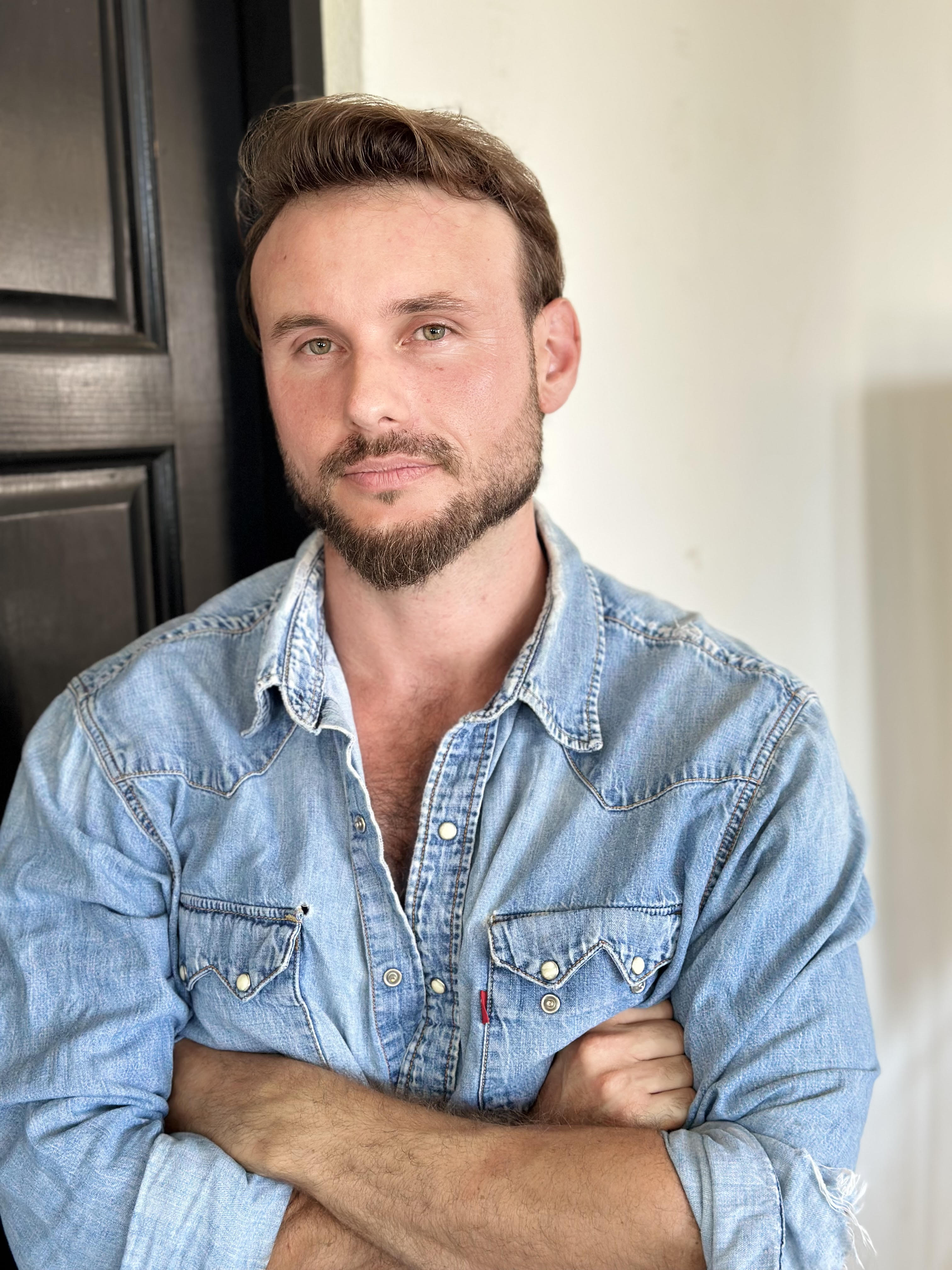
About this episode
Zac Deane interviews circadian biologist Zaid K. Dahhaj, who shares his transformative journey from aspiring professional soccer player to health educator. Zaid discusses the pivotal moment of losing his father, which shifted his focus to health and wellness, particularly circadian biology.
Episode notes
- 00:00Introduction to Breakthrough Moments
- 01:33Zaid's Pivotal Experience: The Loss of a Father
- 04:57Navigating Grief and Developing a Growth Mindset
- 09:31The Journey into Circadian Biology
- 11:53Circadian Biology: The Foundation of Health
- 13:34Understanding Mitochondria and Their Role
- 18:56Mitochondrial Dysfunction and Chronic Diseases
- 22:34The Emotional Body and Health
- 25:24Holistic vs. Reductionist Approaches to Health
- 26:12Understanding Systems Thinking
- 27:36The Journey to Content Creation
- 29:58Philosophical Shifts and Personal Growth
- 32:21The Creative Process and Writing
- 34:15Daily Routines and Family Life
- 36:25Health and Wellness Practices
- 38:37EMF Awareness and Safety
- 42:11Connecting with the Audience
- 45:09Challenge: Cultivating a Healthy Relationship with the Sun
Chapter titles and timings from the published YouTube description.
From the conversation
Excerpts from YouTube automatic captions. They may contain transcription errors. Play a timestamp to hear the original conversation.
Zaid's Pivotal Experience: The Loss of a Father
Let's dive into it. What has been your breakthrough moment? what what is what is it about that moment that really I guess allowed you to step into who you are today? >> So, this is something I reference often, but I think it's arguably the most important and like transformative experience in my life and that was the passing of my father. Uh, so I was 18 at the time and I was pursuing soccer professionally. that was a childhood dream of mine or football for those who were outside of the US and you know I I traveled ...
Circadian Biology: The Foundation of Health
how do you explain >> Yeah. Yeah. I I think you explained it very well. I think it you know circadian biology is really the bridge that connects um or it's the unifying point that connects every you know connects everything else from nutrition. I mean, if you look at the the human body as a as a circadian system, every aspect of the human body is built around circadian biology, whether it be light sensing proteins or mitochondria, um, you know, how melanin and so when I start to go down rabbit holes of nutrition, okay, obviously food is ...
The Emotional Body and Health
>> I think it's interesting the last few years, you know, I've been studying a lot of the circadium stuff for maybe 5 years or so. Before that, I was big on nutrition and fitness. Um, and then I was like, there's something missing. This is the circadium stuff. And I'm like, this is such a great piece of the puzzle. But I feel like the emotional side has a massive part to play as well. How do you see the emotional state of someone? You know, obviously the stress is part of that. Um whether it's the cortisol, but ...
The Journey to Content Creation
>> No, believe it or not, I I I can't recall always being creative. I think I was just more of like this uh this athlete type archetype growing up. I think that it was around 2017 2018 when I first got onto Twitter when it was called Twitter before it was called X. And I found uh I don't know if you're familiar with Alexander Cortez on X. Yeah. He he basically talks a lot about fitness and nutrition. He's he's got a very interesting character. He talks a lot about this work comprehensively. He's starting to get into ...
Daily Routines and Family Life
quite dialed in right now, especially with a baby in the house. >> Yeah. Well, I mean, >> is that the red light on at the moment? >> Yeah. I mean, if I were to to push this all the way, it would be kind of intense. But yeah, it's just a red light panel for infrared red, just as a way to supplement those longer wavelengths inside. Um, but yeah, I mean, the routine is it's pretty consistent. I'm not really somebody who likes to go out too much. I have my moments, you know, I don't travel that ...
Read the episode transcript
YouTube automatic captions. Names, punctuation and wording may contain transcription errors.
Welcome back everybody to the Breakthrough Moment podcast. Today's special guest is Zade the Circadium Biologist. Thank you for joining us today, mate. >> Thank you, brother. Excited for a fun conversation here. >> Me, too. Me, too. So, let me do a quick little intro and let's dive into this. Super curious about your breakthrough moments. For those of you who are joining the podcast for the first time, the breakthrough moment is all around sharing successful entrepreneurs, influencers, content creators, pivotal moment in their their their life that broke them into another level of awareness or insight that allowed them to help more people, make more money, and really uh take their lives to the next level. So, I'm really excited to have you here as a special guest. Let me do a quick little intro. For those of you who don't know Zade, he's a circadium biology educator bridging sunlight, biopysics, and lifestyle designed to help people realign their biology with nature's rhythms. Through his work, he simplifies complex science, challenges modern health myths, and teaches pra practical protocols rooted in light, timing, and ancestral wisdom. And what I'll say about your content, I got connected to your content on Instagram. I see it every day. I'm always sharing your content. And I'm like, this is so practical. It's so easy to digest and for such a big concept that we talk about quantum and light and mitochondria. You really make it uh easy to digest. And so really, thank you for for simplifying it for people. I've learned a lot. I've shared it with so many people. I think it was like over 50 of my friends that follow you as well. And uh I just really curious to interview you. Thank you for your time. Let's dive into it. What has been your breakthrough moment? what what is what is it about that moment that really I guess allowed you to step into who you are today? >> So, this is something I reference often, but I think it's arguably the most important and like transformative experience in my life and that was the passing of my father. Uh, so I was 18 at the time and I was pursuing soccer professionally. that was a childhood dream of mine or football for those who were outside of the US and you know I I traveled to different countries and and tried to to pursue that in many different means didn't end up working out in the way that I wanted to wanted it to but I think everything happens for a reason and so um my father actually was he he experienced a second heart attack and then went into a coma while I was overseas and so that that was definitely something that I was grappling with there's this kind of isolation that I had at the time because I didn't have any family or friends around. I was doing my own thing halfway across the world and that was something I definitely had to work through. But eventually his um that heart attack went into a coma led into his passing and that's what really shifted my mind in terms of moving from athleticism and focusing on soccer to just being obsessed about health more specifically and then eventually finding things like circadian biology which you know I really focus a lot of my work on today. So it's it's been a very pivotal experience for me. I think that ultimately it's the experience that allowed me to transform to go from a boy
to a man. Um I I think that's one of the initiation rituals that men need to go through if if they want to really unlock masculinity in its full capacity. It's just that going through that death of a of a parent, but more specifically a father, I think, is is very difficult. But I think it's, you know, it will be necessary over time to to cultivate the man that you are today. >> I already hear that. And uh, of course, that would have been a massive massive pivotal moment for you. Um, I've never had a parent die, but I've had friends and friends of friends die, so it's it's very shocking. Do you have any, I guess, support or advice for anyone who might be going through something similar at the moment? I mean, look, I spent a lot of time going inward, as like cliche as that might sound, but just essentially thinking on concepts like mortality and and what life is about and what direction do I want to take my life in after this traumatizing experience, for lack of a better word, at least in the moment. But I think the biggest thing that people can do is to try to just digest the experience as much as they can. Sit in silence if you if need be. I think everyone's different in the sense that some people will move away from loved ones for a short period while others will move closer to them. I think that's all natural. It just depends on how people cope. But um trying to adjust the expectation or the experience in your mind to where you kind of want to think of it as a as a growth experience as opposed to something that's completely devastating and offers no value. I think that's the the biggest and most important thing in my mind because growth mindset is is crucial for me. I I don't see how I could have made it out of an experience like that without a growth mindset. And it's interesting because even during the time I knew that I would get something valuable out of that experience, whether it's a piece of wisdom or just more experience, uh a story to tell. So yeah, just kind of keeping your mind in in that like line of thinking I think is is really key. Yeah, you touched upon the importance of like a growth mindset, you know, rather than rather than seeing it as like, oh, this is happening to me, you're seeing it like this is happening for me or kind of on the way and sort of in the way. >> Who who helped you develop the growth mindset? Cuz I think that's also maybe a big key to the puzz what you're doing. >> I don't think there's any person that actually allowed me to to help facilitate that. I think it's more so the focus on sport at a young age that really helped me in massive ways. is I mean I started playing soccer at the age of four and I did not stop until I was like 25 26. So it was a true pursuit of mastery for me. I'm also very big on mastery and I think that comes with the expectation that you have a growth mindset because you're going to go through ups and downs. You you're actually going to spend a lot of time on the plateau where it seems like nothing's happening and it seems like no growth is occurring. But I think learning to get comfortable in that space and continue to work the process is is very key. So I just think it comes naturally with being a you know competitive athlete at a young age
>> for sure. The community having people around uh allowing us to have healthy competition to stretch ourselves in our mind is super cool. How do you define mastery? I'm curious. >> Oo that's a good question. Um, I would probably define it as the dedication to one thing. I It's It's Yeah, I I think it would be that simple because when I think back to how I approached soccer, when I think back to even how I approached the circadian work, it's a real obsession. So, actually, that might be a better word, obsession. you have a complete and overwhelming obsession about one thing and you really orient your mind and life around that given subject and so it's complete dedication um giving yourself totally to it I think is is one of the most one of the most um key pillars to mastery in general for sure >> this is such an important topic that I chat with some of my friends and my inner circle about and it's you and mostly my my homies my male friends who are going through. We're all going through something different. You know, some are succeeding in business, some are struggling, some are refining themselves, some are family orientated, and um I think it comes back to what you mentioned, obsession, one thing, focus, and yeah, killing that boy inside versus and then that allows the man to kind of to transform us to transform into the man. >> So, this is this is super cool. Um, and and sorry to interrupt, but by the way, people think that obsession is like it's a word that's tossed around a lot in the personal development space and at large in society, but I do think that there's an element of unhealthy of of unhealthy tendencies that go along with obsession. I mean, if you look at the greats in history, they always had some sort of maniacal or or tendency or obsessive tendency that ended up creating some sort of negative health outcome. And so what I'm learning to do is is balance that is find that balance because if you focus too much on a given thing, you can be consumed by it. And I mean that's ultimately why they call it an edge, right? Because it can cut you and because you can actually get hurt by the edge that you have. So that's an important important nuance that I want people to understand because it's not all, you know, rainbows and butterflies. I mean it's it's something that's very difficult to go through and it it's almost like you are it's almost like you are pursed with a blessing if that makes sense. It's a very weird paradox. One of my mentors actually said yeah it was called he called it the affliction. It's like it it's there's a there's a level the passion you know there's it's pain and pleasure. It's not just all sunshine and rainbows. That's >> no. >> Um and what did Bruce Lee say? He said don't fear the man who has a thousand different kicks. fear the man who's perfected one kick a thousand times >> and so like it just leans on that philosophy but as you said the disadvantage of of mastery is lack of balance and I think that's one of the biggest challenges I notice >> among some of my entrepreneurial friends
or f um I guess this world we live in is is definitely geared towards uh work work you know 9 to5 or even if you're an entrepreneur 9 till or like you know 7 until 11 just non-stop growth. And so that's why I think this Aadian biology stuff is so so important. So give people an introduction of like you went through what you went through going through the loss of your father. How did you then stumble across the circadian biology, philosophy, and science? >> Well, after that experience, it's kind of like a a switch flipped in my mind. I mean, I it was kind of crazy how obsessive I became about studying health in general. So, you know, I would go down the rabbit holes of nutrition or or hydration, supplementation, detox, all of these things were kind of put together over time in terms of my study. And there there was a weird period where it was like a year, an entire year after my father passed where I was just like completely isolated into myself and just really dedicated a lot of my time and energy to studying health in general. I mean to the point where I would wasn't I don't I I I it's hard to say that I was depressed. I was more just taking it all in. It was like an extended um extended phase of just considering what all of this means in my life. And so I would spend hours walk piecing around the house, headphones in, listening to different health podcasts, like that kind of that kind of lifestyle. And ultimately it led me to uh circadian biology through the work of Dr. Jack Cruz as you mentioned and my first time listening to him with Andrew Cuberman, Rick Rubin on the tetetrogrammatin podcast was really awesome because that's what shifted my mind into another gear to where I was like okay circadian biology is the thing that I have to focus on essentially for the rest of my life because it just had a gravity to it and you know my my soul resonated with it and so from there it's taken on a life of its own and I'm very grateful for that because it's given me a new perspective on health. It's given me, in my opinion, a first principles root cause perspective, which allows me to help help myself, my family, and many different people around the world through this this style of education. Really, >> that's really interesting because you said you said you had to figure this out. You had to go all in on figuring this out. You you'd studied the nutrition, the supplements, the detox, the hydration, the the fitness stuff. Yet, this was the missing piece of the puzzle. this was like the the core root of of everything. And so like why like did you when did you have that moment of like hang on a minute this is this trumps or this is the foundation of everything else because I think that's the decision. That's like the realization I had when I started realize getting into this work. I was like oh everything else has a place but this is the the nucleus of the equation type thing. I don't know how how do you explain >> Yeah. Yeah. I I think you explained it very well. I think it you know circadian biology is really the bridge that
connects um or it's the unifying point that connects every you know connects everything else from nutrition. I mean, if you look at the the human body as a as a circadian system, every aspect of the human body is built around circadian biology, whether it be light sensing proteins or mitochondria, um, you know, how melanin and so when I start to go down rabbit holes of nutrition, okay, obviously food is a manifestation of photosynthesis. So there we go. Sun and circa and light and dark cycle and circadian principles takes a higher um step above nutrition in the hierarchy. When it comes to exercise, various aspects of exercise are controlled by circadian mechanisms. Sleep architecture is basically one and the same with circadian biology and circadian architecture. So all of these things have their nexus point I guess and and they ultimately connect to the circadian mechanism as the most foundational aspect of health. And it goes a level deeper because a lot of people think about health as a a game of biochem a game of biochemistry. But that's not actually the deepest layer. Biohysics is the deepest layer to where we begin to study the quantum phenomena in the body, how physics interacts with various aspects of the human body. And so to me, it just it makes sense. I don't think we can go a level deeper outside of that. >> Super cool. That's like that's what I try and you know wake people up to. It's like guys like yes, what you're doing is important and there's a deeper level and there's there's more to this equation. Like this is so important. So just some things that you threw out there that maybe some people don't understand. what help people understand mitochondria? >> Uh so for me mitochondria are circadiancont controlled light sensing and electromagnetic organels. Sounds like a mouthful but I think ultimately we have to understand that mitochondria are responsible for many different probably thousands of different of different roles and they are central to your health. Meaning that if if you look at any part of the body, if you look at the eyes, let's say, and you have defective mitochondria that do not work as they should in that area, then you're going to have some sort of ocular or eye manifestation um that is negative. So, you could have floaters, you could have you could be blind, you could um suffer with myopia or something of that nature. So, the mitochondria are essentially the the key to whether any part of the body is going to function optimally or suboptimally. And for me, I do think that there's this intricate relationship between mitochondria and the light and dark cycle. I think they need bright days outside under full spectrum sunlight and dark nights after nightfall using very minimal circadian friendly lighting like candle light or incandescent. Um, and so there's a lot of incredible things to understand about mitochondria. Like for example, they're responsible for steroidenesis. All of your sex steroid hormones come from the mitochondria first. um you know they they produce ATP which is your body's energy currency. There's a lot to it but I think they're they're very very crucial for the for human health. >> Amazing. >> Yeah. H how I kind of understand it is
that the the mitochondria are the engines to the cells. Is that right? >> That's right on I think that in in one part that's correct. Yeah. But it doesn't encapsulate the entire story. So it's kind of like a you're looking at the the tip of the iceberg, but there's a lot more underneath the water that can be explored with mitochondrial function and how they work. >> And so what would be the the you mentioned light during the day for the mitochondria. This is helping steroids in the body or our sex hormones and things like that. I'm guessing other processes throughout the body like and then darkness at night. So light and dark. What else can we do to support the mitochondria? >> I mean getting cold is a is a good way to do that. Um, Cruz has talked about how mitochondria kind of act like carno heat engines, meaning they just become a very efficient, stunningly efficient engine when they they get hot. And so when your external temperature or when your external skin gets cold, mitochondria compensate by getting hot. The hotter they get, the more efficient they become in producing energy. So definitely get cold by whatever means. You can just go outside in ambient air temperature. Take your shirt off, wear shorts. Uh, if you want to do an ice bath or a cold shower, by all means. I think that that helps if you are prepared to do that. Outside of that, exercise is able to stimulate mitochondrial biogenesis. So, the production of new mitochondria, which is pretty cool. And um what else? Fasting definitely helps to some degree. Um nutrition, just full spectrum high quality nutrition from magnesium intake to zinc to copper, all that stuff is very important. And um sleep of course, I think it comes down to all the fundamentals. Like a lot of people like to focus on the biohacks. The biohacks are not going to come as close to the fundamentals of human health as it relates to evolutionary circadian biology. >> Got it. I always heard that uh the mitochondria took in electrons and the electrons came in from food that we eat, the ground that we stand on and uh the Yeah. From what? Light, grounding, and food. Is that right? They're the main areas we're getting electrons >> pretty much. I mean, food for sure. Um grounding for sure. your your body's actually designed to take in free electrons through the the negatively charged earth surface. I mean, even it's incredible. Even your feet and palms have these things called errine sweat glands, which are semiconductive, allow free electron flow. I mean, that's a rabbit hole in and of itself. The the more interesting one, and I think the more hotly debated one is whether sunlight, full spectrum sunlight in of itself can create free electrons. I do think that's true. Um the the main part of the discussion is melanin. I think melanin is the bridge between that because uh of a process known as the photoelectric effect. And so the theory is when sunlight hits melanin on your skin and within your body, you're able to produce free electrons as a result of of some sort of state change. Um yeah, I mean I I think the literature can support that, but there are some areas of that that are hotly debated. So yeah, >> super interesting. I think you the reason I'm asking is like how can people
just become practical with their health? How do they integrate this into their lifestyle? I'm in New York right now and people are inside a lot of the time around a lot of Wi-Fi um wearing shoes, not grounded. You know, I'm trying to go to the Central Park in in the morning and at night to ground. But you re I really have to be conscious of oh I need to do that little bit more compared to being in Australia living next to the beach, right? I was so so grateful to live near the beach. are different. But in in doing that, say living in a city, um not grounding, not getting a light, not getting a tan, not having your food in check, what actually happens to the mitochondria? And then h how does that relate to say the heart disease that your dad had or people's dementia which is an Alzheimer's which is skyrocketing or people's diabetes and cancer. Is that inevitably what happens when the mitochondria is say depleted? It leads to those types of illnesses and disease. >> I do think so. I think if you look at at all chronic disease states today, whether it be cancer, autoimmunity, heart disease, they they can all be traced back fundamentally to mitochondrial dysfunction. And so the the way that you get mitochondrial dysfunction over time and the way you destroy mitochondrial colonies in your body, because keep in mind, we have trillions of mitochondria. So there there's the question of why does it take 20 30 40 years for people to to manifest some sort of disease that eventually leads to their passing. I think that's just because of the sheer resilience involved with the human body in terms of how how many mitochondria we have. Human body is extremely resilient and it's kind of shocking to to see especially in this day and age. But with that being said, I think if you move away from nature and you move away from the circadian alignment that we're talking about, you are going to get the destruction of mitochondria over time. And so what does that look like? If you are in a city, let's say you you live right next to a cell tower. Well, that's going to be, you know, releasing frequencies that are not designed that your body are not designed to receive. For example, mitochondria actually evolved to sense natural EMF or electromagnetic frequencies. So they're designed to pick up on geomagnetic fields and Schuman resonance from the earth and that sort of thing. But when you start to introduce man-made foreign frequencies in the form of 5G, Bluetooth, Wi-Fi, all that stuff, that does cause second and third order consequences to mitochondrial function. For example, it will actually open up voltage voltage gated calcium channels and allow an influx of calcium into the cell. And that has, you know, host of problems in and of itself. But um you know if you're living under isolated blue light, blue light in and of itself is considered part of the electromagnetic spectrum. So that is going to have a detrimental effect on mitochondri mitochondria. If you have nutrient deficiencies, you know, chronic sleep deprivation, all of these things play a fundamental role in causing that kind of change in your body. And I mean there's a lot more to it outside of mitochondria, but I do think that they are about about as root cause as you can get. >> Gosh, there's so many rabbit holes there
that you I could dive down, but I just want to keep it really practical and really simple for people. So, and then what's the correlation between, you know, what do you think was your kind of hypothesis on how did how did that end up impacting your dad? Did he have a similar lifestyle that you might have traced back to having a malfunction in mitochondria or was it something else related? >> Um, I think it is number one, chronic stress was a big thing that in and of itself can definitely take a person out. Um, nutrient deficiencies. I would not be shocked if he had some sort of nutrient deficiencies. We never did any stud like deep dive into blood testing or anything like that. He was never focused on health to that degree. Um, even though he was very physically fit at the age of 51, you know, he was actually my physical education teacher, so I learned a lot from him in that respect. And he could run around mo most 20-year-olds these days for sure. But it just points to the idea that it's not just about nutrition and exercise. That's that's not going to be your saving grace if you want to prevent disease these days. you have to be more holistic and comprehensive about how you approach this. And so, um, that coupled with the fact that he probably didn't get enough sun, too much time under isolated blue, sleep deprivation that is caused by chronic stress and late nights under blue light, um, maybe eating late at night, maybe some some lifestyle habits from, you know, his early 20s, 30s that, uh, I wasn't aware of. All of these things I think play a a key role. Um, but when it comes to heart disease, I mean, I I have some very interesting ideas on that nowadays, but I I do think it it does track back to his lifestyle fundamentally. >> I think it's interesting the last few years, you know, I've been studying a lot of the circadium stuff for maybe 5 years or so. Before that, I was big on nutrition and fitness. Um, and then I was like, there's something missing. This is the circadium stuff. And I'm like, this is such a great piece of the puzzle. But I feel like the emotional side has a massive part to play as well. How do you see the emotional state of someone? You know, obviously the stress is part of that. Um whether it's the cortisol, but you know, there's lots to say from like Chinese medicine and certain emotions of like sadness being kept in or or anger being kept in the liver and you know, grief being stored in the lungs or something like this. So, how do you see emotions coming into play with this? Because I feel like sometimes someone's emotional state from something that might have happened externally or internally can shut their whole system down regardless of how much sunlight, you know, and good good healthy stuff they're doing. >> Oh yeah. I I think it's just as important as anything physical. I think that the emotional body is a very interesting subject. There is a book called The Body Keeps the Score. I forgot the author, but it's a a really fun deep dive into how essentially the body stores emotional trauma and then quite literally holds on to it physically and then spits it out in terms of like physical manifestations. So, I I do think that plays a a key role. I think that if you're somebody who doesn't know how to relate to your emotions, that's a big problem. That's something you you really have to work on. And it's a lot of people focus on
exercise and building more muscle and training in the gym, but you do have to build, you know, the the the emotional muscle as well. You do have to understand how to navigate the that realm in terms of its nuance in terms of how you're reacting to different people in your life. That's something that I learned dayto-day. Um, especially with my wife and my child. Like I, you know, you have to be very careful about certain habits that you have or emotional habits that you've picked on from you've picked up on from uh early life. Like that's a very real thing. And it's not to say you have to like go through your entire life situation or trauma with a fine tooth comb. I think there is a point to where that becomes more detrimental than helpful. But there are some very basic things and questions that you can do and ask yourself that would help you to develop a healthier relationship with your emotions. And so even just acknowledging what a certain emotion is in the moment like okay you feel angry tell yourself you know what I feel angry just labeling the emotion in of itself can have a very therapeutic effect and just being aware of the triggers as well like what actually triggers you I think that can teach you a lot about yourself and how you you grew up around your your family there's a lot to it but I think that that's kind of stuff can help >> you know no wonder this health equation is so complex right it's just like food movement lifestyle, in the house, out of the house, internal mindset, you know, gut health, >> cuz it's all the same. It It's all one. There's no distinction between any of them. >> Tell me more. >> I It's just it comes down to how like you you either fundamentally have a a view of of the world as a reductionist or as someone who appreciates holism. And so I love to make this distinction-c because let's say for example a lot of centralized medicine views the body from a reductive lens meaning they only look at one isolated part of a system and they completely ignore the other parts and they completely ignore how all of those parts interact with one another. There's a an interconnectedness that is involved with the human body and also life at large. And for me I love to make this distinction between reductionism and holism. Um, holism is, you know, thinking about life and human health from more of a systemsbased type of thinking. So, when we understand systems thinking, we understand that you can't just recklessly throw an input into the system or else it creates a backfiring mechanism. You have to appreciate the complexity involved with systems. Uh, you have to study the system uh from a very comprehensive angle. And so, there's a lot that goes into it. There's also a fantastic YouTube channel, a guy by the name of by the name of Leo Gura, actualize.org, and he has some very cool topics on on this. I mean, systems thinking and emotions and basically personal development at a very high level. So, definitely suggest anybody to check them out. >> That's awesome, man. Yeah, this is holism. I've actually never heard of that. So, that makes total sense. I'd like to think that I'm a holism advocate for sure. And a lot of people like they they don't like the word holistic because it kind of gets attached to the new age hippie-dippy like you know
health scene nowadays. But it's a I I think it's a shame that it's been bastardized. >> So then you started learning about circadium. You started the pieces of the puzzle together for your dad, for yourself, now for your family. And then you started making awesome content. You've got this cool podcast as well, the 2 a.m. project. um and your reels are like so addictive to learn about. If you like learning about this type of stuff, guys, check out his Instagram. I'll put the link around here. But um how did you then transition to then creating content? Have you always been creative? How did you make that jump? >> No, believe it or not, I I I can't recall always being creative. I think I was just more of like this uh this athlete type archetype growing up. I think that it was around 2017 2018 when I first got onto Twitter when it was called Twitter before it was called X. And I found uh I don't know if you're familiar with Alexander Cortez on X. Yeah. He he basically talks a lot about fitness and nutrition. He's he's got a very interesting character. He talks a lot about this work comprehensively. He's starting to get into the circadian stuff, but he um he did these live Periscopes back in the day when Periscope was still a thing. He talked about all sorts of different subjects like training and he had some pretty witty answers to questions and he was also talking about content a lot and that kind of got my mind mind jogging on a path to where I started to make my own content. And so if you look at my my archives on Twitter, I mean I was talking about I was posting tweets about personal development and death and life and all this stuff and it kind of evolved in a in a certain way to where you know I got into the health stuff and circadian biology and then I changed my account towards that. But it it's been a very cool process. That along with learning how to be consistent online, learning how to make more money online as a result of your labor. I think that's very key. And then kind of scaling that in a way to where you can support yourself off the internet alone, which I think is a really incredible opportunity these days in 2025. But yeah, super grateful for everything. And I think that started in 2017, 2018 around there. >> That's so interesting. what my kind of realization to jump into online because I started with YouTube was Gary Ve's Crush It book. >> Yeah. Yeah. I remember that. >> This energy of like turn your passion into profit. Like you could do this. So what was it about what Alexander said that you were like oh like I'm going to start sharing more because I think a lot of people have a lot of fear, judgment, self-criticism and they have some amazing things they should share. And maybe some people shouldn't share things, but like those people that really want to, I guess, amplify their story and message. How do you what what allowed you to have that >> uh that switch flipped for you? >> You know, to tell you the truth, I think it was my my father's death. I think that really shifted my mind to think in a more philosophical way, uh, believe it or not. And I think that naturally comes when you start to think about things like life and death. I mean, your your your ability to expand into different realms
is just a given if you go through something like that. And so, it added a lot more flavor to how I think it um it started to get my mind to think about different subjects and kind of, you know, have this eclectic mind to where I merge a lot of different concepts. But starting out making content, I mean, I was I was your average, you know, quote dispensing type of character. I mean, I I wasn't creating authentic content in the way that I am now. But I think there is a growth phase to all of that stuff. And I think that it's uh it's it's a teach. It's you learn a lot. You learn a lot through the journey. And for me now, it's just about evolving how I actually make content. And so, if you've seen my content in the past five or 6 months, there's a real element of beauty that's been added to it, whether it be the the Instagram covers or how I'm making reels. Um, and that's all stuff that I'm proving improving upon, but yeah, I think the the death of my father definitely expanded my mind in a way that nothing else can. And then I don't know what your stances on these subjects, but you know, I threw in a little bit of psychedelic therapy and, you know, used psych uh used psilocybin mushrooms, used LSD and all these things to kind of just experiment and whatnot because I've I've been learning a lot about that. And I think that changed my mind in a certain way as well for the better. I think there's a lot of propaganda and demonization of those compounds. But either way, all this stuff comes together to to kind of lead me in the path that I'm in now. >> Sure. I'm a big believer in uh intentional uh psychedelic use for sure. I've seen some amazing transformations. Uh I think unconscious psychedelic use is not >> um anything unconscious actually is is not so good. So um yeah that's that's So do you create your own content um purely? Do you have a team? Like what's your creative process? Are you do you like set some time aside for writing? Do you read or meditate or like how I'm so curious? >> I mean just myself really it's a oneman show. Uh I I think writing has been instrumental to the process. I think that's kind of the unifying skill kind of in the same way that circadian biology unifies nutrition and all these other health subjects. Writing for me has been central because it's allowed me to bring in the circadian work. It's allowed me to bring in, you know, stuff from the 2 AM podcast, a lot of different things that I do. And it's given me the ability to express in a way that I couldn't have previously because I just didn't have that skill of writing. And so, this is something I forgot to mention, but I started on medium.com. I started writing around that 2017 2018 period. And the one thing that I took away from Alexander was that I needed to commit to a one year of writing, one post every single day non-stop. And I think I got to around 300 days of just posting one article a day. And that that was something that helped me immensely, not only to to develop the consistency, but also to improve writing and and go forward with that skill. So yeah, it's a oneman show. I use Canva a lot for um my my content.
Uh, I do have chat GPT as a an assistant. I want to be very clear that I see a lot of people writing their content with chat GPT just full-on copy paste. I am not a supporter of that. I think it it harms you more than it helps you. And I do think it's a valuable research tool to uh to just dive in and give you a different perspective at the very least. So outside of that, um, yeah, I mean, life experience is something that I rely on, uh, you know, being a father, my my son's two now, so that's pretty cool. That's informed my work in in various ways with the circadian stuff. And, yeah, I just like to rely on life experience as well to try to to gain an edge from the the content perspective. >> Well, so this is really valuable stuff. Thanks for sharing, man. So, um, couple more questions. So, I'm curious. You've got a baby now. You got a family, which is awesome. There's not just the health equation in terms of your own personal gain. It's now like how can it help your your family and now obviously online you've got this global kind of community and family building. But can you give us a rundown of like what is your morning routine, lunch routine, evening routine, sleep routine. I'm sure it's probably quite dialed in right now, especially with a baby in the house. >> Yeah. Well, I mean, >> is that the red light on at the moment? >> Yeah. I mean, if I were to to push this all the way, it would be kind of intense. But yeah, it's just a red light panel for infrared red, just as a way to supplement those longer wavelengths inside. Um, but yeah, I mean, the routine is it's pretty consistent. I'm not really somebody who likes to go out too much. I have my moments, you know, I don't travel that much, so my mind my lifestyle is pretty simple and oriented around family and work nowadays, but I wake up generally about 10 to 20 minutes before sunrise, so a little bit after daybreak. and I immediately go outside, let's say 10, 15 minutes, I'll just sit on the patio just to allow, you know, that that light signal to get into my eyes and onto my skin to start the day. And, you know, I'll just start to warm up for the day. I'll start to think about different ideas. Um, right now, my my son and wife are waking up a little bit after me. So, um, it gives me some time and space to to write or to, you know, think about what I want to create content wise and whatnot. do podcasts like these in the early morning and then from that point, you know, early morning breakfast. I like high protein, highfat for the most part. I'm typically skew lower carb and then I'll just go for a walk, you know, skin in the game, sunbathe any way that I can, be out there for UVA rise, be out there when UVB comes out. A lot of this stuff is very intentional, might sound overwhelming to to people who don't practice the circadian stuff, but you start to develop a routine around it and it becomes second nature at a certain point. And then um yeah, I mean the middle of the day looks different depending on on what I do. Sometimes I'll take my son for a nap. You know, he'll he'll nap in the car while I drive. I'll listen to podcast. Um I'm a
big football fan, so I'm big Arsenal fan as well. So I'm big on on, you know, keeping up with the team and whatnot. And then uh hang out with friends towards the night time. That's where I think I go dark mode for the most part 80 to 90% of the way. And I'll use the incandescent. I'll use the the red incandescent fire light. We have sconces all over the house where we can put candles and just light them up. It's a pretty cool thing that we've added. You know, early to bed, early to rise. I don't think there's a combination that beats that. Yeah. Just try to fit in whatever I need to do during the day. >> Sounds so simple, but I'm sure like people are going to have so many questions. How like do you recommend any products? Like what's the best red light? What's the best candles? There's bulbs out there. Like I can't >> It's funny because my wife like I call myself a simple man, but my wife thinks I'm a very complex person, but I think the lifestyle component is super simple. I I I don't like complexity from a lifestyle perspective. Um even though you're going to have some some of that inevitably, but in terms of things that I use, I mean this I have a Midolux sunlamp from the company Midolux that I just like to add as supplemental red and infrared. If I want to use UV off of this, I can, but I typically 80% of the time I go for sunbathing outside to get UV. Um, for very specific reasons, but products outside of that, I mean, Methylene Blue Tallow Bomb, the Moro Moo is really great. It's a combination of of beef tallow and methylene blue, really great for the skin. Um, Chromolux in terms of incandescent bulbs is really fantastic. And then I mean if you're in California, the the candles that I have are are from Busybees Candle Company. So just a few recommendations if that helps. But again, super simple. >> What about blue blocking glasses? >> Yeah, I have the um I have the ones from Midwest Red Light Therapy. Really high quality, super cheap, around $40 a pair. I suggest that people get either the orange or the red. The red is intense. I mean, even intense for me to where I can't see at night because it's just such a an overwhelming color that blocks all blue and green. And so, go for the orange ones for I think for most people that's the best option because then you can drive potentially at night if you need to do that. Use the blue blockers. Some people might get a little bit too tired. So, just be wary of that. Experiment. Um, and yeah, I think the the the clear blue blockers are completely useless. Don't use those cuz they don't actually block those wavelengths. The yellow ones are decent for daytime, but I don't really use them. Um, that yeah, that's kind of the the hierarchy, too. Blue blockers. >> And what about EMF? Like I know when I'm set up in my house, I'm traveling at the moment, so it's really tricky. I usually do Ethernet, Ethernet to my computer, Ethernet to my phone. Are you do you do that, too? >> I'm not as good as you when it comes to the Ethernet. That's something that I'm going to explore. Um, to be honest, I should be dialed in on that end, but there's some simple habits that I have. Like, I mean, I almost never have Bluetooth on. I never put my laptop on my lap. Never put my phone to, you know, my skull. I have the the wired headphones with the the bead to reduce
um the electromagnetic, I guess, power from it. I I haven't studied these beads. I just really bought them from a recommendation from a friend. And um LTE does go on when I'm outside cuz I do need connection, but again I I try to keep my phone as far away from my body as I can. Um never have the phone in my pocket. The the home environment is interesting. I think that, you know, you can have Wi-Fi and whatnot, but I think just trying to limit use as much as you can, turning it off when when you don't need it. Uh but I think the most important thing for me is just making sure I'm aligned with the light and dark cycle from an EMF standpoint. So sunrise, midday sunbathing, building more melanin, which has both been shown to have a protective effect to a great degree against non-native EMF. And then the darkness at night, I think is key. So you know, not making sure to making sure to avoid sleeping next to an outlet, leaving things unplugged, um not having the phone on blue after nightfall. That stuff I think is is important in my mind. >> So good. You mentioned one thing, not having your phone on you or in your pocket. Why is that? Is that even with flight mode off? >> I do. Yeah. Yeah. I do actually turn airplane mode on if I if I do put it in the pocket. I'm very strict about that because there's a phenomenon known as the inverse square law. Meaning that whatever the source of either native or non-native EMF, the um the strength of those frequencies drop off exponentially the farther you get from the source. And so this works both ways. It's two-way street. So the reason why grounding is so powerful is because you're directly connected to the free electron free electron surface of the earth. Um the reason why uh you can protect yourself pretty easily from let's say the Bluetooth on your phone is because the the farther you move the phone away the more exponential the drop off of that frequency. And so that actually simplifies a lot of the work. distance is the the most important thing to protect yourself, which is why I don't want people living right next to a cell tower or putting the phone to their skull or wearing AirPods and having Bluetooth headphones which directly transmit right into your co inner cookia and then right to the brain. Um that's a key thing that I think is is very important for people to understand. >> It's so interesting. There was um this uh friend of a friend, they were trying to get pregnant, a couple trying to get pregnant and she had tried everything. He had tried everything and then they were like, "This isn't working." And they like giving up. And then someone said, "Oh, have you tried turning your phone on flight mode when you put it in your pocket?" And so he goes, "No, I haven't tried that." 2 weeks later after they he had started putting on flight mode every time it was in his pocket, she fell pregnant. >> Wow. I mean, there there's very real effects. Even in the like early 1900s, there's a lot of this work has been done. If you go to the 1950s and60s, the work of of Robert Obecker on studying um limb regeneration as it relates to EMF and all that stuff. Very very interesting rabbit holes. >> That's another rabbit hole we should uh we'll dive into another time. But uh I'd really like to know before I ask my last question, the best question of the the
interview. Uh how can people get in touch with you and um who is it that you help? Like who if they're listening, who would you like to be working with? I know that you do coaching. So yeah, give us an overview of that. Yeah, I work with pretty much everybody. I mean, I don't discriminate between men and women. I think that um some people focus more on men, some people f focus more on women, but I have learned to kind of just welcome everyone so long as I feel like I can help them. If somebody has a very severe ailment, like I don't treat chronic disease. I don't do any of that. Um I just make sure to help people with a preventative approach using the circadian lens applied to all the health fundamentals. And so, um they can find me on pretty much all platforms. I mean X Instagram. Um the 2 AM podcast on all platforms as well, but Zade K dah z a d k d a h aj is where you can find me essentially everywhere. And then uh the substack is pretty cool. That's a very unique deep dive. The circadian classroom is what the publication is called. So that's where people can find me. >> Cool. So was that your course? Is that what you just mentioned? >> Uh so that that's the substack. The course is separate. That's called the 8020 course. And if somebody wants that, they can just DM me. I don't have a landing page or anything for that. Marketing is I don't think it's my forte to be honest. Um, but that's something that I have to work on. But either way, they can just DM me on any platform and I can get that to them. >> What's What's the 8020 course about? >> It's a video course. >> It's it's all written. I do have videos on it, but I just chose to really make it a PDF and make it as simple as possible. And so it it uses the Pareto principle, the idea that 80% of the results come from 20% of the effort, but it's applied to circadian biology and and light, um, water, electromagnetism, but a lot of it, most of it is focused on the circadian piece, whether it be, you know, understanding how to tan properly, how to sunbathe babies, um, understanding the fundamental concepts involved with how the body works from a circadian perspective, sleep, all that stuff is is included there. So, it's a it's a very easy way for people to digest a lot of this work. >> That seems super important because one podcast, one article, listen to this, listen to that, you know, someone disqualifies this and says this is the right thing, this is the wrong thing. It's just like so confusing, right? So, if you've got a nice process and it's written down, that's awesome. So, that's really great. Everyone at home, please check out the links. I'll put them around the video. Um, last question. If you could challenge the audience today, whether it's a daily challenge, a weekly challenge, a month, a yearly long challenge, what would be that one challenge that you think would really support uh people the the most? >> Um, I would challenge people to develop a healthier relationship with the sun. I think that's a big one that people just I mean if you look at most people in this day and age they they truly fear the sun and they believe in the centralized recommendations because they don't do a deep dive on you know
all these things and and they don't educate themselves to a a good degree. So you know start to implement some of the things that we're talking about. Um I would challenge people to start sunbathing in the morning time first. You're not going to burn there and you're only going to allow your body to work properly from a circadian timing standpoint. and then micro dose midday UV. Just learn to develop the skill of sunbathing with intention. Avoid burns, of course, and that that'll differ depending on the the person and their skin type, but just learn to cultivate a healthier relationship with the sun because I think it's ridiculous that people are walking around in in existing while also fearing the very thing that essentially gave them life. Just doesn't make sense to me. So, definitely do that >> and make it dark after nightfall. So, start having a a deeper relationship with the sun, specifically the morning, getting that morning sunlight, sunlight, it's not going to um burn us as much because it's a different frequency. Is that right? >> Yeah. So, so anywhere between sunrise to about 8 or 9:00 a.m. depending on your latitude, there's technically no UV. So, there's no UVA, UVB, so you're not going to burn at all. That's where you get mostly red and infrared, which are very therapeutic light wavelengths. And um it it's going to allow you to prime your skin for the upcoming UV as well. >> It just makes so much sense, right? God created this environment where the more that we match with the environment, the healthier we are. The more that we mismatch and we think that we are God type thing and we can bypass and stand, you know, go against these as you mentioned first principles, it just backfires. So it's like get into that alignment, get in that matching with uh with the environment, right? >> Yeah. That's all it is. It's, you know, the science can get complex, but the the action steps are a lot more simple than people would like to make it out to be. >> Secondly, with a challenge, get more dark, turn the lights off, look at your electricity in your room and things like that. But guys, this might sound complicated or it might sound simple for you. Regardless, reach out and uh, you know, get get some of these resources. He's got some epic stuff here. So, any final comments, man, this has been an awesome awesome chat. I've got a page of notes and like so many rabbit holes to go down, but I think I'm going to have to get some of uh that that PDF at least. >> Yeah. No, I'll I'll send it your way. Closing thoughts, just, you know, I'm super grateful to be on podcasts like this, super grateful to to interact with people such as yourself. And uh I think that's what life is really all about, just forming connections and relationships and and sharing a message that's needed to a world that is fundamentally sick and in need of it. Can't get better than that. >> Thank you for your time. Thank you for your work that you do. Like your desire for mastery is definitely showing and uh I look forward to seeing what's coming next for your content. Actually, any sneak peeks? What what what's coming in terms of content? >> Um you know, it's it's really hard to say to be honest because it's my mind just kind of like randomly thinks about an idea and I just run with it. But I'm trying to think if I can create any sort of uh maybe short ebooks on on how to
maybe sunbathe properly, something like that to to really get to the people because I think that's that's a subject most people are kind of overwhelmed with. But my mind is jogging nonetheless. >> That's awesome. You got to and just keeping it simple for people to start in integrating it. I think as literally sometimes where I get out of sync with the sun and and sunrise and I start, you know, the first day, the first two, three days a little bit tricky, but then I naturally start getting up earlier and it just snowballs and my whole day. I feel like I've got three days >> because I've got so much more time, you know? I feel like I'm more productive. It helps me in so many different areas. So, thanks again, Matt. Appreciate your time. >> Of course, brother. Thank you.