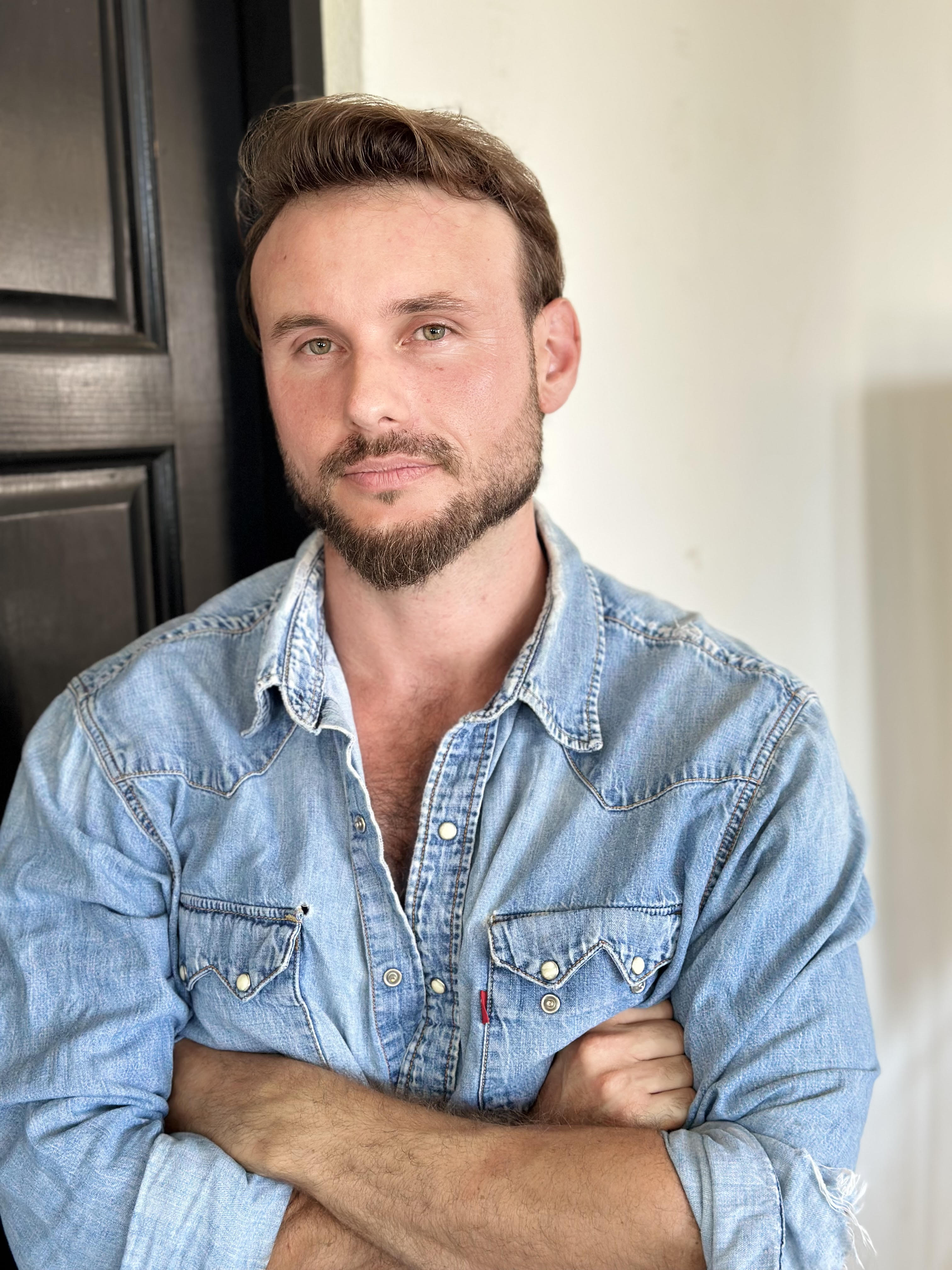
About this episode
What separates profitable traders from people who blow their accounts?
In this episode, Zac Deane sits down with Crypto Calls co-founder Cheyne Kupfer to unpack the lessons he learned from crypto, trading, entrepreneurship and building a business.
Cheyne shares his approach to taking profits, managing risk, finding the right mentor and treating trading like a skill rather than a lottery.
For educational purposes only. Nothing discussed in this episode constitutes financial advice.
Episode notes
- 00:00Welcome & Cheyne Kupfer introduction
- 02:42Cheyne’s biggest trading breakthrough
- 03:22Turning $50K into roughly $1.2M
- 04:43Why you can't go broke taking profits
- 05:55Setting an exit before entering a trade
- 07:21How a 55% win rate can still work
- 10:04Where Cheyne’s entrepreneurial mindset came from
- 14:08His first “business” at seven years old
- 17:19Are entrepreneurs born different?
- 18:59The lesson that helped Cheyne become a speaker
- 23:26The different approaches to crypto trading
- 27:32The mindset beginners need
- 28:45Why finding the right role model matters
- 32:00Why Cheyne believes mentorship is essential
- 35:01The risk-management lesson every trader should know
- 36:10Cheyne's 1% risk rule
- 38:37The 25-trade validation method
- 42:43How teaching one friend became a business
- 44:53Cheyne's long-term vision
- 45:52His biggest business breakthrough
- 48:20The one-brick-at-a-time breakthrough challenge
Chapter titles and timings from the published YouTube description.
From the conversation
Excerpts from YouTube automatic captions. They may contain transcription errors. Play a timestamp to hear the original conversation.
Cheyne’s biggest trading breakthrough
>> Oh, well, mate, my biggest breakthrough moment I've got one for trading and I've got one for business because I always thought that they would be interchangeable. Like what you learned in trading, if you got into a trading business, uh you'd be able to transfer. That's not really the case. They're different kettles of fish. So, biggest thing for me as a breakthrough as a trader is no one ever goes broke taking profit. Now, that sounds, you know, just of course. Instantly, you sit there and you go, "Well, duh." But, here's what that means. When you ...
How a 55% win rate can still work
>> Maybe excuse my ignorance, but having a 50-something percent win rate, is that low? Is that high? You know, is that Yeah. Help help unpack that for people because I guess it's better than being 40%. Yeah, is Is even good? Let's be real, but I guess maybe it makes sense long term and how being consistent ends up paying off. Yeah? >> Of course. So, you think about it. If you win just over half the amount of trades that you go into, all right? And let's just say for instance it's about 55%. All right? It bounces ...
The lesson that helped Cheyne become a speaker
well >> [sighs] >> look um he [clears throat] just said he said to me he's just like you love to talk. So you got it and you're you're a bit funny. So you need to string those together and you need to somehow make what you care about, which is crypto and business, and you need to somehow make it informative while also a bit funny. So, I got up there and cuz I'm a bit of a quirky person and I just I attempted to educate in a way that wasn't boring. And I'm quite animated, so it ...
Why Cheyne believes mentorship is essential
>> Yeah. Literally everyone can win. And honestly, I think that's the same for all endeavors that are worth pursuing. There has been someone that's done it. You just need the right mentor, which is It's why at Crypto Calls, we don't have a course as per se. Um, we we have educational modules, but every single one of our offers is built around group coaching, all right? Short rooms filled with 20 people either in person or not, or coaching just like this where we'd hop on a call and let's just say, you know, I was your coach, ...
How teaching one friend became a business
>> Mate, look honestly, I just I had this friend, right? And he was in the mines with me. And I always refer to him as patient zero, guy named Ben. And basically he's just like, "Ah, can you teach me this?" And I'm like, "Yeah, I I suppose I can teach you this. That's fine." And I taught him how to buy his first few coins. And this was back in 2017, right? So this is when I was first first having my first set of wins, right? So I think I took my $2,000 investment up to 250, ...
Read the episode transcript
YouTube automatic captions. Names, punctuation and wording may contain transcription errors.
Welcome back everybody to the Breakthrough Moment podcast. We interview successful entrepreneurs and investors and ask them what is their biggest breakthrough moment, that moment that changed it all and took them into the next level of success or impact or insight. And as they share that moment with us, us at home have breakthroughs as well. I'm Zach Dean with Chain Coffer here. How you doing, mate? Where are you tuning in from? >> Mate, I'm doing absolutely fantastic and I'm tuning in from Brisbane City, Australia. >> Go Aussies represent. It's been 2 years since I've been home. I'm over in Bali. I'm pretty close, but still still deciding to stay on this side of the world as as long as possible. What's it like in Brisbane today? >> Well, mate, if I look out, it's stormy, cloudy, a bit of like London-like weather. So, you're not missing much. Hey, honestly, I'm actually catching a plane to Bali in a month's time anyway. >> Really? Oh, we're going to have to catch up. I'll still be here. Perfect. >> Yeah. >> All right. Super cool. Well, look, let me do a quick little intro for you and let everybody know to listen up, grab their pens and papers and dive into this. This is going to be an amazing podcast. You've got some incredible things to reveal at the end of the podcast, too, which I'll let everybody know about. And we'll dive into your breakthrough moment. So, everybody at home, most people get into crypto, they either get burnt. That was me. Or they get they buy a course that they never end up following. That's me, too. >> [laughter] >> Is it also you? So, Chain looked at that and looked at the industry and decided to build something completely different. So, he's the co-founder of Crypto Calls in Brisbane, where he helps people escape the 9-to-5 through trading. And I'm connected to some of the other co-founders and the people working behind the scenes and I'm a big fan of your organization. And I'm really excited to pick your brains on all this because I've got some personal horror stories around crypto that I'd like some clarity on. He's also a co-founder of Vima Trader and consults other founders in on building and scaling their own companies, a TV presenter and finance speaker who is as candid about the hard days as he is about the wins, which is important. Everybody stick around to the end. Shane is going to reveal how to manage risk properly so you don't blow your account and you don't go into debt. I mean risk management is number one here. I wish I probably listened to this podcast sooner. I've lost a lot in this space. >> [snorts] >> So, welcome to the great breakthrough moment podcast, Shane. Let's start with your breakthrough moment. What has been your biggest breakthrough moment in business thus far? >> Oh, well, mate, my biggest breakthrough moment I've got one for trading and I've got one for business because I always thought that they would be interchangeable. Like what you learned in trading, if you got into a trading business, uh you'd be able to transfer. That's not really the case. They're different kettles of fish. So, biggest
thing for me as a breakthrough as a trader is no one ever goes broke taking profit. Now, that sounds, you know, just of course. Instantly, you sit there and you go, "Well, duh." But, here's what that means. When you have a coin, and we've all had a coin in our portfolio that's performed exponentially well, and instead of taking that money out and paying the tax and doing all the things we should do and, you know, buying ourselves and our loved ones something nice or investing it into the next trade, you just keep holding on to it. I turned around 50 grand into about 1.2 million dollars. All right? And it was me and a few other of my friends invested in that, right? Um so, it wasn't just my 50 grand. I think I put in about I would have put in 5 grand. We didn't have much faith in these coins. There was one launching every day back in the 2021 bull run and yeah. So just off the back of COVID and I remember I turned that and I had about 100 grand in the pool all up. I took some profit out like I well and truly 10x my investment and took some stuff out. But I look at it and I just had this thought in my head like this is going to be the next thing. It was called PulsePad for anyone that knows that project and basically went to the moon. I took out a large amount so profited quite handsomely but I left so much on the table that if I had to take that out and just put it into the next four five positions I was working on, I'd be a [ __ ] side better than I was today. So it was one of those catastrophic learning experiences. Mhm. >> I've heard the saying before you can't go broke taking profits. But it's easier said than done. It's like one of those things like oh we should all go to the gym or we should all eat right. It's like easier said than done. So how what advice do you have for people out there who who know this but are not actually implementing? >> Quick, before we continue a brief message from today's sponsor. If you're an entrepreneur wanting to grow your personal brand authority and business through podcasting, then check out findapodcast.io. As you know, the biggest entrepreneurs in the world, they book these massive podcast tours before a big product launch or an event or book because podcasts build trust faster than anything else online today. So it's findapodcast.io and helps you connect with the specific podcast in your niche. It writes the pitch, it follows up in this easy CRM. It truly does save time. So you just show up, do the podcast and your business grows. If you're curious to learn more, book in a demo at findapodcast.io. Now, let's get back to the episode. >> So, I have a free training on just this. And
then when you go into this free training, it's a 15-minute video. It's a pretty expanded concept, right? On limiting your risk. And we also have a fuel PDFs and checklists that we like to hand out. So, if you'd like I can um if you'd have me attach the free training to the bottom of this video, and then people can just go through. But the short end of it is you want to make sure that you have your preconceived out point. And it's just that's your hard point, right? That's the simplest boiled down version. It's I will get out at a 5% profit in some trades, a 10x trade, a 5x trade. >> [snorts] >> For instance, one on my trade plan is if I get something and I get a 10x return, I do not care what that is, I exit immediately. There's no thought needed. And have I missed out on 30x, 40x, 50x? Of course. But that pays for my next 10 trades. And I know with my win rate, which is, you know, in the mid 50%, then I'm going to have a very, very good time profitability. Another one is if a trade invalidates. So, if I get in for a reason and then the market just starts doing weird things, I will I'll jump out real quick. >> Maybe excuse my ignorance, but having a 50-something percent win rate, is that low? Is that high? You know, is that Yeah. Help help unpack that for people because I guess it's better than being 40%. Yeah, is Is even good? Let's be real, but I guess maybe it makes sense long term and how being consistent ends up paying off. Yeah? >> Of course. So, you think about it. If you win just over half the amount of trades that you go into, all right? And let's just say for instance it's about 55%. All right? It bounces between 54% and 57%, but let's just say it's 55%. So, if every time that I lose, which is 45% of the time, I'm losing 1%. So, 1% out of 100, all right? And every time that I win, I'm winning 3%. So, if you look at that and you just go through the odds and you just ran through a random allotments of wins and losses and that's let's just say it's 100, all right? And if I have, you know, 55 wins, 45 losses, I've lost 50 I've lost 45%. All right? But, on average, I've gained about 150% if you take into account fees. >> Numbers at the end of the day. Are you a numbers guy? Were you good at math growing up or is it something that you learned as a result of valuing finance and valuing money and things like that or are there certain mentors that taught
you the numbers and and how to get your head around that because a lot of the time I think before I got into a little bit of trading I was like, "Oh, it's so complicated. There's all these numbers and I'm not not good at math." I kind of told I talked myself out of it. >> Mate, I'm not really a numbers guy. I just understand the very, very clean ratios. Like, I suppose I am a numbers guy cuz I know more than looking at just a simple ratio will get you. Like, if you understand how often you need to win, and there's tables for this. So, you don't necessarily need to be a numbers guy. In trading, I certainly didn't start off a numbers guy. I think my love for numbers came from my love of business, which is most of my occupation at the moment, and learning how those type of maths work. That's uh that's a really, really difficult line of math, but trading's very simple. If you are working at your win rate, and you're targeting three to ones, it is very difficult for you to have a bad time trading. >> You mentioned your love of business. Was this something that you have had for as long as you can remember? Were your parents entrepreneurial, into business? Did you have a mentor, or anything like that? One of my mentors used to call the entrepreneurial spark the affliction. And I was like, "What does that mean, the affliction?" He's like, "Well, you can't not think about business. You can't not be a problem solver. You can't not, you know, want to innovate and create something for the world." It's like it's like an itchy can't can't fully satisfy, or like a quench you can't fully fully quench, you know? Like Is that something that you were born with, do you think, or it's developed over time? >> Mate, for me, it was pretty much from day dot. So, I come from a very interesting household. So, my mother, God bless her, she's destitute, right? Like, she's never had any money whatsoever, and has always worked a job. And my father is the guy who does a million side hustles. Every single side hustle you could possibly think of. Um he just he's in. I've seen him sell wood. I've seen him sell soil. Uh he runs an earth moving and demolition company. But, the thing is, with his earth moving and demolition company, if you look at his actual list of services, he'll lop trees. He'll do concreting, you name any miscellaneous contractor task, he's found a way to do it, he's found a guy that'll do it for you. And I remember watching and he would sit there and he'd break down all the different margins on what that would have. And so, I guess just come from my dad, my entrepreneurial side. >> Mhm. Interesting. What was your first business? I'm sure you've you've been or you've tried a few different times over the years.
>> Yeah, first business as an adult or like first first business as a child. >> Oh. >> [sighs and gasps] >> Yeah, let's go back. Let's go like I remember the first moment I wanted to exchange something in exchange for value. I was at primary school and there was the guys, the boys uh we were playing like we had this uh stick sharpening business. So, we would sharpen the sticks. And the girls would go up and pay us these leaves and then exchange for these sharpened sticks, we'd get these leaves, right? Um and so, that was like one of the very first memories of me wanting to create something of value and exchange it. And it was just this this creative way of playing a game, you know, growing up. Or I remember playing um Payday uh the board game and also Monopoly as well. And I think I remember yeah, one of the first books I read was think um was uh Rich Dad Poor Dad and he was talking about the cash flow as um and the rat race or something as the board games. But yeah, that was kind of before before I started my entrepreneurial journey. Um what about you? If you have a business on Facebook or Instagram, you need to learn about this new amazing AI automation tool. The question is, is your personal profile or business profile manually messaging your target audience every single day? If not, I highly recommend you do this. There's a massive ROI on that. But, if you are, there's a more cost-effective strategy. So, this is a unique AI software. It runs for you your friend requests, the messages, the likes, even the comments 24/7 in the cloud. So, while you're watching podcasts like this or taking calls or while you're sleeping, it's running there in the background. Some of these people are pulling in another five to 20 extra qualified leads every single week on autopilot. You can experience the podcast special trial and try it for yourself today. Check it out in the show notes below. >> So, my first entrepreneurial business came at the age of seven. So, I should probably mention for the pretext of this story, my dad really, really loves to drink, right? And he's a construction worker. He's always had it under control, but at the end of every single work day at 5:00, he would leave site and he'd come to our local pub in a Sunshine Coast town, Yandina, and he would sit there and he'd continue to drink till around 9:00. And I'd get home cuz it's a school night. So, here I am having to work out what to do while my dad drinks and laughs about construction things that I don't particularly find interesting. So, he taught me how to play pick the ace with his friends. And basically rigged the hands so that they would be, well, less of the time they would pick the ace. How to tilt the odds in my favor. And
here I am, seven. So, my dad taught me this and then across the road, um, there was this little IGA and I worked out that with duct tape, scissors, and those plain golden, um, black and gold matches that you'd get, you could pull off the flints of the matches, tuck them around the heads, and then duct tape the whole setup back together. And then when you throw these little taped matchboxes at the wall, they would ignite the matches inside, pressure would blow up, and it's basically like a tiny little firecracker, not all that impressive. But, to the other kids at the pub, and to all the dad's friends who just wanted to throw a flaming matchbox at their mate while they were heavily drinking on a Thursday, um those things were worth five bucks. So, I'd make them for 78 cents, and then I'd sell them for $5. And it got to the point where, cuz you know, there's a lot of other kids that were going to that pub because of um their parents were bar bar flies. So, I had like a whole little assembly line at the back of the pub. Someone would go get them, someone would assemble them, and I'd sit there selling them around, and it was just funny. >> That is genius. That's super cool. I I've done some wild things with matchboxes, and we used to have those those things you throw at the floor and they pop as well, and I was I was obsessed with blowing stuff up. Whole another story, or side personality I'm not going to share here on the podcast, but that's super cool that you turned that into a business. That's that's really exciting. I'm curious, knowing what you know now about business and entrepreneurship, and knowing that, you know, there were other kids in the same area, maybe the similar age, maybe even knew this as well, but they didn't take action on that as a business. What do you think it is about the entrepreneurial mindset and how we see the world that's different from say the employer mindset or those that aren't entrepreneurial? Because, you know, we've got books like Think and Grow Rich or As a Man Thinketh or, you know, a lot of the personal development space is all around the perspective and how you change your perspective, you change how you see everything, and it changes everything. So, what do you think it is about the entrepreneur and their perspective that that is different from everyone else? I've heard really good question. Like you know going back to that story just before none of those are normal behaviors in a child. Like if I saw my son doing those things I'd be proud but I'd look at it and I'd go there's something off about you. And I think it's just a personality trait. I think like how some people are quick to fall in love, some people are quick to anger, some people they really like the idea of the gym. They like lifting heavy things. I think it's just something that's in you. Like me I love to talk. The whole reason I became you know a finance speaker is because you put me up on that stage it is the happiest I've ever been. Where that comes from is beyond me. It's just
something that was in me. I went to a class got taught 30 minutes by one of the best coaches in Oz a guy named Ethan Donati. He's fantastic. Um and basically I just jumped on his stage five minutes later and was just able to just talk on par with some of the best people in the room. People have been doing it four five six years. So to answer the question an entrepreneur I just think you're born with it. Like I think you're genuinely built different to be an entrepreneur because the highs are amazingly high and there's no better feeling in the world than when you crack a business and you get momentum and the lows are or it's like staring into the void. >> Totally. Totally. So what the heck did he share with you on that 30 that 30 minute little segment that helped you get on stage? I can't pass that up. Anything you can share? >> Um well >> [sighs] >> look um he [clears throat] just said he said to me he's just like you love to talk. So you got it and you're you're a bit funny. So you need to string those together and you need to somehow make what you care about, which is crypto and business, and you need to somehow make it informative while also a bit funny. So, I got up there and cuz I'm a bit of a quirky person and I just I attempted to educate in a way that wasn't boring. And I'm quite animated, so it was something that's it just sort of come naturally. I don't know whether it's something that he said, although he is one of the greatest coaches and there was a lot of improvement lessons after that day. But, I think you're just built different to be a speaker and or to be a business person. It's not like trading where anyone can trade. Like, you can if you have skill, like I've taught people that are single mothers, architects, engineers. It doesn't really matter. People have all walks of life, but I truly believe entrepreneurs were chosen to bring in something good into the world and it's never apparent what that something good is, but I think if you have that inkling, sooner or later down the line, you're going to bring something into the world that needs to be here. Like, we're the messengers and you know, I'm not particularly religious, but if you were, you know, a Catholic, a Christian, right? It doesn't matter my religion for the sake of this, but I believe you bring forth things as an entrepreneur that are brought up from a higher power, whatever it is you call that. Like, you're the messenger from above bringing good things into the world when you use it right. >> I agree 100%. I just got shivers down my spine as you said that. I was like, "Whoa." And that's one of the reasons I started this podcast is because I want to help to amplify those God-given or those spiritual purposes that we have on in conversation, you know, to amplify that, to help bring people's dreams and visions to life. That's my dream, you know, what what great day it is. Every podcast I do at the end, I'm like, I can die happy. This is such a fulfilling day, you know?
But, I think the the key thing that you said is about public speaking is connecting something that you love, the crypto, with an identity of part of who you are, which is the humorous part, and then like teaching, which is I guess the contribution element and like wanting to give back, combining those, but also having someone that it sounded and just reflecting on that experience that you shared. Having someone at who's that coach, a mentor to you, and said, "Hey, you can do this. Step into that. Step into that. Step into that." and be on stage and then you nailed it with the with the mic. You know, if someone's if he had said to you, "Talk about Talk about like the the life cycle of like s- >> [snorts] >> the microbiome of of a of an animal or something." and you'll be like, "I I don't know that." And it's like, "Well, be in and and tap into another part of your personality." And you're like, "I'm not really feeling." Then it would be wildly um like for me, if someone says to me, "Talk to about something I don't know about." I go I have wild levels of anxiety. I would not be able to talk. I would just be feeling like like very low confidence. But if you ask me to talk about entrepreneurship or my story or health and wellness and travel, these are things that I can naturally talk about, you know? And I think public speaking, if you talk about something that's interesting, someone's highest values, for example, they just start to become a public speaker. So, um but yeah, there's there's some people that just have that energy and that spark on stage, which just sounds like you do. Um help me understand some of those key like lessons around crypto and trading. You mentioned that anyone can do this. How is that How is that possible? Is it cuz there's a system? >> Just quickly, before we continue, if you're an entrepreneur out there or a high performer who wants more clarity and direction in life, or maybe you're going through some kind of turbulent transitional phase, I want to share with you something that I co-built. It's called the Life Blueprint System. It's an AI-powered goal-setting process that helps you create a personalized life blueprint, kind of like an architectural plan or a business plan, but for your life. And so, it allows you to take and capture those big ideas, those those amazing thoughts you have, and to turn it into a proven plan of action. And so, if you want to stop guessing and start building your future intentionally and consciously, go to the lifeblueprint.io to learn more. Let's go back to the episode. Well, there is there is a system to trading. Now, there is hundreds of thousands of systems, right? Now, I've tested a lot of them. Very, very few work, but I've found that the greatest method for trading is once you nail risk management, cuz any good system has risk management built into it. Any person taking gigantic risk and having these gigantic wins, well, they're just one loss away from you know, failure in a catastrophic sense. Now, um if you have your risk management nailed down, you need to work out
exactly how you're going to trade. And at Crypto Calls, we've really put it down to a few key elements. So, we have people that are commodities traders. Uh and they trade with prop firm capital. This means that they don't want to trade with their own money. Psychologically, it messes with them. So, um we teach you how to trade with someone else's money. There's firms that fund this, and I can go in that a bit later if you find that interesting. Um but, then there's spot traders. Um so, one of our best people, he came to us um $10,000. That's all he had. Um just off the back of a bankruptcy. Uh and he spot traded his way to just under a million dollars. And he now is absolutely killing it, earning multiple six figures a month. But, we built him up from 10K. Now, spot trading is buying and holding the asset. So, it's like when you see people, "Oh, I've just bought uh 50 shares of Microsoft or Exxon Mobil or XYZ. All right, so spot trading is another one. Now, the next thing is leverage trading. Being able to trade on 100x of your own money. So, if I have $1 and I'm at 100x, I can trade with $100. It's not so simple, but that's the basic mechanics. Now, that leverage can either be an amplifier of really great behaviors or it can be an amplifier of absolute ungarded stupidity. So, you do got to watch that. And we teach how people do that. So, from there, you can then either turn to be a long-term trader with leverage or you can turn to be a fundamental trader. So, everything else is just variations off that. And then there is some side things like decentralized finance, which is banking in the crypto space, but those are the six ways that people actually make money uh in trading and in crypto as a whole. There's not really any other secret side pockets. And once you identified your vehicle, you have to then really really work out that it's your vehicle. You know, you'll know pretty quickly. For example, some people they want to be scalpers. This means I'm in a trade in 1 minute, I'm out maybe 5, 10, 15 minutes later. Or even if you're scalping on a very very low time, you might be out in 30 seconds. This is not for everyone. It's 0.011 of the personalities who ever traded with. And that's just statistics from my community, but if you look it up, you can probably find professional traders versus how many scalpers there are. They're rare and few between. But uh once you picked your vehicle, uh it's just about systematizing it. And you know, none of the people that we have as coaches are particularly the great people, but they're not educated savants that just came out of some uh silver spoon background. They're regular people. Like my best guy is an ex-frontline infantry person. All right? And my other best guy is an ex-security
guard. Like he was a bouncer for a nightclub. And the other one's a lawyer. So, three diverse backgrounds. None of them are particularly, you know, overly educated, but they just worked really hard at it. And it's a skill that can be learned. And much like how you can learn how to play tennis. Or how you can learn how to ride a bike or a horse. It kind of sucks at the start, and there's a lot of nuances, but once you learn it, anyone can do it. >> What would you say is the key mindset shift that maybe someone's out there and they're considering learning about trading and maybe choosing one of these types of strategies. What do you think is is the mindset shift that needs to happen? You know, for example, I know that from when I used to work 9:00 to 5:00 and trading my time for money, you know, 1 hour equaled this amount of income, and if I could work this amount of hours, then I could, you know, eventually save up for this. And that's why I got out of having a job for for early on because I was like, this doesn't make sense. This is not going to fund the life that I want with this hourly income or salary. And so, I looked at entrepreneurship, and I got, "Oh my gosh, the leverage and the possibility, but the risk." But what is the mindset shift that you'd really like to impart to the everyday person who's wanting to get into trading to give them more belief. Is it something around like this is going to save them more time or give them more possibility or that anyone can do it? Like what is that reassuring belief that if you could install in these new beginners' minds would really help them? >> Look, a lot of my students say reassuring isn't really my strong suit, but I'll give it my best crack. So, when I look at any endeavor, whether this be trading, business, fitness, which tend to be the only three things, actually no, four things, being a good dad, the only four things I genuinely give a [ __ ] about, I look at it and I look at someone who's done it that's like me. Like when I first got into trading, there was a guy and he's still really big in the space, a guy named Michael Sloggett, right? And he grew up in a similar background to me, right? A lot of people don't like him, still didn't back then. He was the guy that when I was at the bottom of my life at that point, I looked at him and I was like, "Oh, yeah, if he can do it, I think we're from the same background. Maybe I'm just a teensy-weensy smarter." So, I then went and chased to be every single thing that I could do to replicate that person's effort that was just like me. Because if there's someone like you that's done it, then that means it's doable. If like in business, right? If you um I'm in this group right at the moment with this guy Jeremy Haynes, right? And he's like this American in Miami and he's just
a bit of like the American version of a bogan, but he's just freaking killing it, like million-dollar months. And I look at that and I'm like, "Okay, well, if you can do it, I can do it." So, I think what that all boils down to, right? And the same sort of thing comes through for trading, for business, for fatherhood, for fitness. We all need that one person who's like, "Hey, I'm kind of like that person. That means I can do what they do with enough time, effort, and suffering and sacrifice." So, pick a role model, uh ideally pick a mentor and in whatever you choose, and chase that mentor down to the ends of the earth and find out everything they've done and replicate their efforts because success leaves clues. There's no person that's ever got successful that hasn't left a trail of clues wittingly or unwittingly in their path behind them. So, you're able to very very quickly work out what one of those clues for you is worth picking up. >> Yeah, and the more that I interview people, the more people actually more willing to share these tips and clues than I thought. People are genuinely wanting to help and give back. They've been through the the trials and the voids long enough that they're like, oh, I don't want to have other people go through that pain as well and actually willing. So, yeah, having that mentorship and those beliefs of like, if you can do it, I can do it. I learned that in network marketing. So, some of my background's network marketing and I got to see these people on stage making so much money per month and I was like, what are you talking about? This is just an average normal person, but what they did that's extraordinary is have more of the conversations and they did the they followed the strategy and they followed the system and they just put in a lot of flipping work, you know? And then anyone can do this. And that sounds like trading is a similar thing where if you have the strategy and the right mentorship, can everyone win? >> Yeah. Literally everyone can win. And honestly, I think that's the same for all endeavors that are worth pursuing. There has been someone that's done it. You just need the right mentor, which is It's why at Crypto Calls, we don't have a course as per se. Um, we we have educational modules, but every single one of our offers is built around group coaching, all right? Short rooms filled with 20 people either in person or not, or coaching just like this where we'd hop on a call and let's just say, you know, I was your coach, you'd come through and you go, "Oh, mate, I've made a Barney of myself this week." We look at your data and then I sit there and I give you your marching orders for the following week. And that's why I truly think mentorship and everything. Like there is no endeavor in the world where you shouldn't have a mentor. It's a shame they don't mentor people on fatherhood. I feel like that would be a booming business. Like cuz I got a son, he's eight.
>> [laughter] >> I mean, I'm trying to be a good dad, but if there was like a father fatherhood mentor out and he was selling a course, I'd instantly be like throwing my credit card from across the room. Give it to me. >> [laughter] >> Sign me [clears throat] up. Send me a link. No, for sure. Well, that's it. The most important things aren't shared to us during the schooling educational years, right? We're learned to be a a cog in the system and part of the economy. I think there is more people coming to the awareness that the school system, especially with AI now, right? It's like, well, what's going to be relevant? What skills are the most important for the future? Um it's not just the Industrial Revolution anymore. In the information age and the AI age, it's changing so so much. But yeah, health, we're not taught health, we're not taught parenthood. When you know, I think it's easier to for me to go get like in Australia, it's easier for us to go it's harder for us to go get a snake as a pet at the house or like a a pet spider than it is to have a kid, right? There's kind of no rules and regulations around setting yourself to be a parent. It's just figure it out. So, and then money. The whole conversation around money and uh you know, unfortunately, people have no idea about the crypto space and the investment space. But also, that's the opportunity as an entrepreneur. You've seen a gap and you've seen an opportunity and possibility and you charge for it and that's why you guys are able to and then you get great results and it creates a business, right? So, with every every disadvantage, there's an advantage and possibility, and that's the the mindset of the uh So, this is might be a great little segue going into the risk management. What were the some of the key points there? And then I want to circle back to that personal breakthrough that you mentioned at the beginning cuz I know we didn't we didn't cover that. So, give us a bit of a rundown on the risk management and um how that is uh is and why that is so important. >> Yeah, sure, mate. So, risk management. Now, this is a bit math-driven, so forgive me. I'm going to grab my phone so I don't misquote anyone, and then we have the Facebook fact-checkers, as uh I like to call them. >> [laughter] >> So, uh when I first got into trading, one of the biggest um issues was people, and you'll hear this in the trading niche. I've blown my account. Oh, I've blown my account. Uh my account has been liquidated. Basically, what that translates into, I have lost all of my dinero. Money gone. And I sat there and I go, "Well, why does this happen to so many people?" And I learned a rule from uh my mentor at the time, and he's just like, "Mate, just risk 1%. Always 1%." I'm sitting there going, "Oh, 1%? 1% of 10 grand, which is the account I was trading with at the time. That's that's 100 bucks." And he's like, "Yeah, it is. But, when you have a 4:1, you've just won 300 bucks back for 5 minutes work. You build that up over a few years.
This isn't a freaking lottery. This is a profession. If you want quick results, go to the mines. You'll be suffering, and you'll come back with a decent pay, but you'll be suffering. Things take delayed gratification. Now, the 1% rule, why is that so important? It keeps you in the game longer. It would take, and I've got this math down, 688 straight losses in a row to lose your principal capital. I've never seen it done. Been in this game since 2017. I've never seen someone genuinely liquidate their account with consecutive losses. All right? Because usually what you're doing when you're trading is when you have a stack of 25 trades. I like to call this a validation stack, all right? You've got 25 trades. If you've been following your trade plan, it's valid. If you haven't, go do 25 more. Um Got a great trade plan and I'll put in the training docs later. But uh essentially with this stack, all right? You go through these 25 trades and you'll find the reasons that you're not winning. So, if you lose all 25, which I'd be shocked. I'd be very shocked. You'll find the reason um why you're winning on some trades and you're losing on others. It's just data. It's the tuition you have to pay for actually learning, all right? Like um That's a lot of losses. So, if you start with amount of money that you're willing to lose, 5, 10, hell even 1,000, or if you're someone that's actually big baller, 100k, you might want to start with. But uh you should be able to be pretty fine. All right? And that comes to anything. Every single endeavor worth living requires suffering and sacrifice. It's the rules of the universe. Things can't be brought brought into the world without sacrifice and delayed gratification. >> And this is so tricky to kind of like figure out by yourself, right? And this is the importance of mentors. You can literally shrink the the the timeline of Yes, you could go out there and learn that yourself and figure that out, but you'd need to do Oh my gosh. To figure that out would be so challenging. And this is why most people blow their accounts. They get the prop firm or they put their money in and then they blow their account. They just don't know their risk management. So, it's great that this is number one. Um but I didn't know, just those numbers. 25 trades? What do you say? 25 trades for the trading plan? >> 25 trades will be a validation stack and that's where you can really sort of see it's a good sample size to go, "Here's where my problem is." And provided you've only risk 1%, that shouldn't cost too much. Right? Um since with just a little bit of basic knowledge, you're hitting some wins in there, right? But um you've actually be able to see where you've gone wrong.
Very quickly. >> Interesting. Super cool and we can put that trading plan in in the notes below, guys. And this is a perfect little, you know, moment. So, based on who you serve, Shane and the team and everything like that and and based on uh what you guys offer, from who is listening right now, who should reach out to you? I'm going to put all your links around here, these downloads, etc., etc. But who should be reaching out immediately after listening to this podcast? >> Look, the people that should reach out the most are people that are the small business owners. We work best with small business owners cuz you understand the structure. Secondary, I was a FIFO um miner prior to getting into this, so we tend to have a large success with uh FIFO um people as well. But then, a lot of people that are stuck in these 9-5s and they want more. So, the business owners, the 9-5ers, the FIFO, this is where we're able to really, really get some quick wins for. I mean, ultimately, anyone wanting to make money and not be stuck in a job should reach out to us, but those are the three subsets. Like, that seems to be our people. Over 10,000 students, we uh analyze every student and it was like 89.5% of them or 88.5% fell into one of those three categories. And that's just all the ads that we came in. >> Yeah. Yeah. Well, it's so important. Money, as we mentioned, and the most important parts of life are not taught. There's not enough mentorship. And you guys are but a system, you've got a community, you've got the the road maps, you've got the downloads and things like that that really support. And that's why we wanted to interview you because I know that you guys are doing it right. And there's so many people out there, these cowboys doing trying to take people's money. I've been scammed. I got scammed a Bitcoin's worth of of, you know, income, you know, money a few years ago. And that was a very traumatic experience. Let's put it that way, especially when Bitcoin keeps going up. I'm like, "Oh my god, I gave it away." Um there's so many scams out there. So, it's great to see that you guys are doing it right and actually creating that sort of you know, crypto calls. So, if you guys are out there, reach out to Chain and the team. Um get connected. I want to just flick back here. I'm super curious, Chain, cuz like from someone going from putting 5K in with his homies, putting it on some coins, getting the 50K, 100K, and then you I think you said you got up to 1.2 million. How did you then go, "Ah, actually, I want to help other people do this." That sounds like a bit of a breakthrough moment there in itself. Pause, before we continue, the first way we as entrepreneurs introduce ourselves when we walk into a room, it's our energy, right? People feel that. And secondly, it's our face. How healthy do we look? So, for the entrepreneurs out there who care about how they show up, I'd love to share with you personally, I've been utilizing some Korean skin care products now just for over a month, and I had no idea about them up until, you know, even just 2 months ago. But it's by far one
of the best investments I've made for my skin. I feel it's literally making me look younger, and it has this like glassy, super fresh look. And so, this is the number one exported Korean beauty brand and skincare line in the world. The ingredients are second to none. Even pregnant pregnant women can use utilize them because out there there's so many products that have toxins in them that really make our face not healthy over a long period of time. And so if you're out there and you want to match the energy that you output with how healthy you look, you can try all these products risk-free for 30 days. If you don't like them, send them back and get all your money back. If you're out there, if you're curious, check out the link below to learn. Let's get back to the episode. >> Mate, look honestly, I just I had this friend, right? And he was in the mines with me. And I always refer to him as patient zero, guy named Ben. And basically he's just like, "Ah, can you teach me this?" And I'm like, "Yeah, I I suppose I can teach you this. That's fine." And I taught him how to buy his first few coins. And this was back in 2017, right? So this is when I was first first having my first set of wins, right? So I think I took my $2,000 investment up to 250, right? And then back down again. Ben sold out at the top. And he was able to buy some cool things. And I had this idea and I was just like, "Huh, you can really make a difference in people's lives." So as I really become, you know, a master of the craft as the years started to go on and I started to really really dive into anything that I have an interest in, which uh you know, just diving into things is really important and getting that down to a science. I just had the desire to teach people. And then I taught one person, they liked it, taught a few more, and then a few more. I ended up getting like a a job at a network marketing company where they literally just had a product of teaching people how to trade. So I was a big part of that and I liked what they did and then after working with them for a long time, I decided, well, I could do this myself. I like uh I like the way I do things, you know, I have particular way, and that constant inner improvement, that's sort of just a journey, you know, you help one person, you help a few more, and then suddenly it's a business. >> Amazing. And how many students have you guys helped now? >> May it be nearing 10,000. >> There's a difference between I have got a hobby, I've done some cool stuff, and you know, I'm going to teach a few people, and then there's a difference between I've now gone on to impact 10,000 people's lives. It's insane. So, that's awesome. What's the vision? Where are you guys taking this? Where do you see this over the next, you know, 5-10 years? >> I want to get a million people free of the 9-5, or their small business, or their 5-0 grind. I literally want to
make it to the point where they can pick up, you know, 120, 150k USD every year, in as little as an hour a day, right? And that's what's possible with the systems with trading, if you really, you know, really knuckle down and get into it. So, I want to make sure that a million people have that, and then obviously that legacy will bleed on to what they'll go and do with that money, but just setting people free of that modern-day slavery that we've seen. >> The world is waking up. The world is waking up. What an amazing moment that will be. And so, please let me know when you achieve that. We'll do another podcast, for sure. Um mate, I want to just quickly jump over to your personal breakthrough, and then I've got a couple other questions, uh really really fun questions to ask you before we wrap it up. But, you mentioned the the personal breakthrough moment. What was that one? >> Numbers. So, trading very different, the riding a bike metaphor, but to be an entrepreneur, you got to know your numbers. You got to know them down to a science. I actually build a lot of AI tools just for internal use and then for a few clients. We'll track everything from if you get 100 leads, you know, 11 of them might turn into this category of sales, four of them might turn into this. But if you know that over a stack, you can build your business like an engine. And this will sound really, really weird to most people that haven't looked at MRR, but obviously you got fixed costs running a business, right? Like if it's 100, 200k, 300k a month, there's your fixed costs. You need to have some form of recurring revenue matching those fixed costs so you'll break even before the doors don't even open, cuz that makes you exit ready. Which means if you ever want to sell that beautiful baby you brought into the world of business, and you are break even before you have any other sales of whatever units that you're moving, well, you're exit ready then. So, MRR is everything matching your outgoing expenses. That's That was the one. >> It's these little things, right? And it sounds like as you mentioned like math, numbers. Really, if we think about it, and I I met a mathematician on a plane once, and he was talking to me about math, and I was like, yeah, life is math. Everything has a mathematical equation associated to it. And the the deeper you look into it, the more fascinating it is, whether it's the pyramids and pi and the, you know, golden ratios of how they created and constructed pyramids, however they constructed them is out of this world, or whether it be the finance, whether it just be our bank account, or the crypto stuff that you do, it's so important. And as you said, success leaves clues, so why not study these numbers? If we want more bank If we want more numbers in our bank account, I think it's important to appreciate numbers and math a little bit more. So, this is really interesting, mate. Very, very cool. So, the podcast is all around the breakthrough moment, right? You've shared a couple of breakthroughs that have allowed you to be who you are, so I appreciate that. Definitely got more of an insight into who who you are and why you are the way you are, which is
fascinating. And I want to put all your links around here for everybody reach out. But if you were to challenge the audience to have a breakthrough today, something they they should do today, this week, this month, that's going to help catapult them into a breakthrough for themselves, what would you suggest or challenge for them? >> So, my original mentor had a really, really great saying that no doubt a bunch of people have said before. I find in the personal development world we all pinch each other's sayings, that's for sure. And I'm no better quoting him. So, um the best way to eat an elephant is one bite at a time is what he used to say to me. And that wasn't See, you've heard it, too, right? No doubt definitely not from the same guy. >> [laughter] >> But anyway, so what I >> It was taken from someone else. >> Yeah, exactly, right? It's It's shaded shared. >> [laughter] >> Anyway, so the biggest thing would be look at your 5-year journey. Where do you want to be in 5 years? And where do you want to be maybe 10 years if 5 years is too close for you. Some people prefer 10, I prefer 5. And then look at everything that that needs to be. And then work out what you'd need to do. Because the thing is obviously there's a great Let's just say you want to have X, Y, and Z. It might be a huge thing, but if you really break it down, you break it down into what is your goals to have by 4 years? What is your goals to have by 3? By 2? By 1? And then you break that into 52. If you snap one yearly goal that is a solid goal into 52-week blocks and you just lay a brick every single day against that giant wall that is the goal, sooner or later you're going to reach it. And I hope you reach it in 5 years or I hope you reach it in your 10, but if you just get up every single day and you just keep putting down a single brick in the way of that goal, you'd be surprised the amount of huge things you can accomplish. All it takes is the will of a single person. Yeah, free will and a choice, you know? It's easier It's It's these things these habits is to be great takes time and it's the little things that add up every single day. Just like doing the brick. So, epic advice, mate. Thank you so much for sharing your pearls of wisdom with us. I know that there's a lot more there. So, everybody at home, uh reach out to Shane. I'll put his links around here. Reach out to the team. Have a chat with them. Um and if you've had a breakthrough moment, what has been your aha moment, everybody? Please put it into the comments. I'd love to read them and who do you know who would also benefit from today's message? Maybe someone who's starting their investing journey or crypto or maybe they've been in a bad state with their investing and they're looking to get back into it with the right systems and and and structures and team. Please send the podcast to them. We appreciate it. This is how the podcast grows is is through referrals the most. Any final comments, mate, before we wrap it up? This has been an epic chat. Mate, it's been an epic chat. Um no, no.
So, that'd be all for me then, hey. Yeah, over over and out. Over and out. From Brisbane to Bali. Well, see you soon, mate. And um thank you so much for your time and everybody at home, we'll see you next time on the Breakthrough Moment podcast. Over and out. Thanks for your time, Shane.