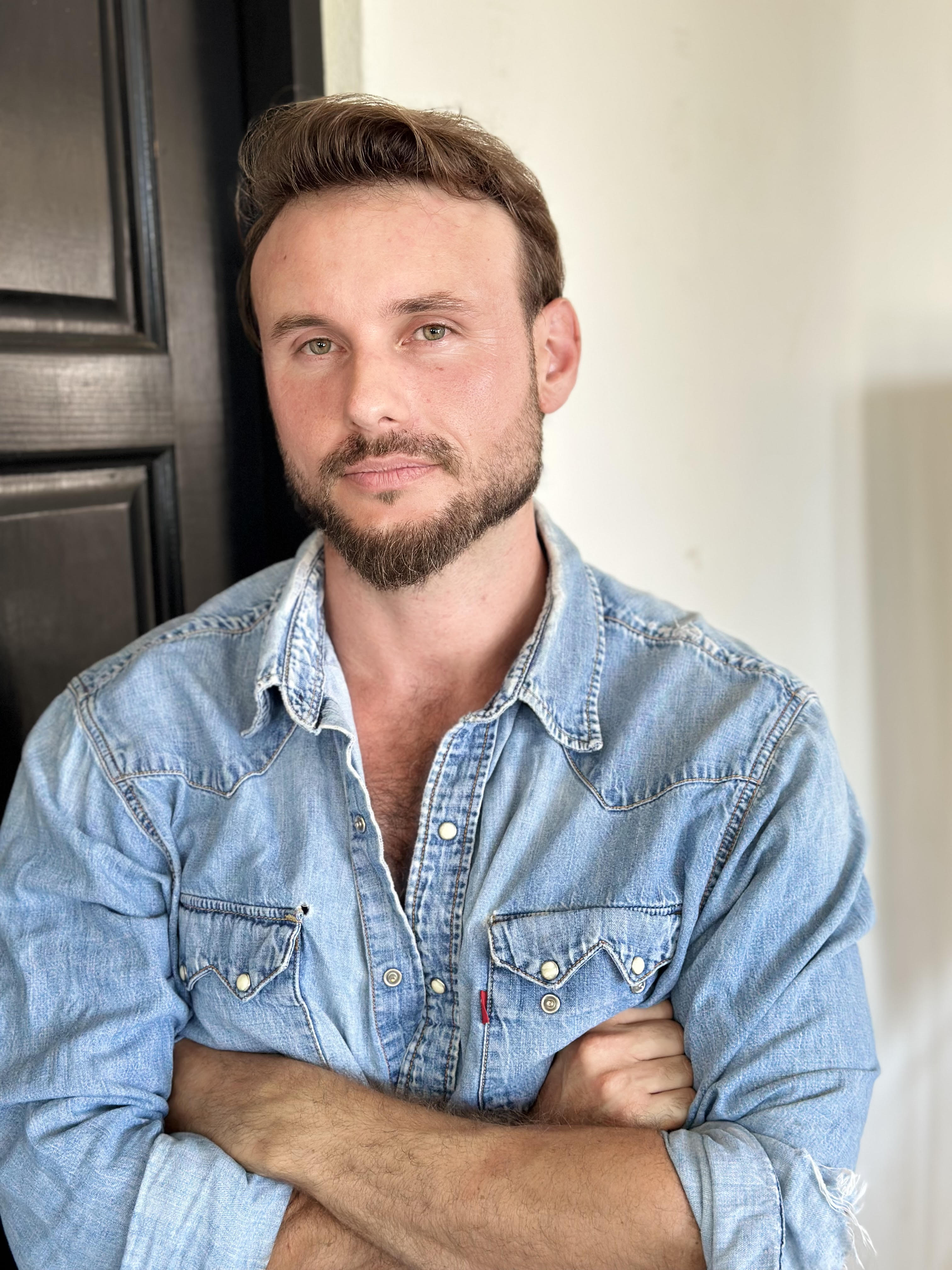
About this episode
What can 80,000 cold calls teach you about business?
In this episode of The Breakthrough Moment Podcast, Zac Deane sits down with fractional CRO Dan San to unpack the mindset shift that changed his career, the biggest mistakes founders make when scaling, and why successful sales is less about pitching and more about understanding problems.
Dan also shares lessons from generating over $28M in revenue across SaaS, AI, data, and technology companies.
Episode notes
- 00:00Welcome to The Breakthrough Moment
- 02:55Dan’s biggest breakthrough
- 05:10Should you become a fractional executive?
- 09:02Where Dan learned entrepreneurship
- 11:55How cold approaching changed his career
- 14:45The lessons behind 80,000 cold calls
- 21:13Breaking into the startup world
- 23:40Going from almost zero to millions in revenue
- 29:30Why Dan chose the fractional path
- 33:30Why startups struggle with positioning
- 36:20Building a repeatable growth engine
- 43:17Biggest obstacles facing early-stage founders
- 45:25The biggest misconception about sales
- 50:00How to build a scalable sales team
- 56:43The mindset shift that changed everything
- 1:00:45Dan’s challenge for entrepreneurs
- 1:03:29Resilience, failure and maintaining your energy
- 1:08:17Who Dan helps today
Chapter titles and timings from the published YouTube description.
From the conversation
Excerpts from YouTube automatic captions. They may contain transcription errors. Play a timestamp to hear the original conversation.
Dan’s biggest breakthrough
>> Thank you, Zach. It's a pleasure to be on and yeah, I'll say my It's been quite a few, but I'll say my biggest breakthrough moment was the moment that I realized that I am my own business in a sense, right? Like I can control my career in the direction of it in a way that isn't always traditionally espoused. Um you know, especially in the tech startup world. So, when I first got into tech startups, which was very serendipitous, I was originally the panel on the military trying to become an officer, got into sales at ...
How cold approaching changed his career
right? So, I got into a bunch of other colleges, but that was really the main one I wanted to get into, so while I was filling out the next steps of my path, you know, still focused on military, I I transferred to Brooklyn College for a bit, and then at Brooklyn College within just about a week or two of of being out there, is when I first got exposed to sales. And I keep in the back of my head I was a bit open to other possibilities in my life, you know, such as in in ...
Going from almost zero to millions in revenue
than a week in, he said, "I want to hire you." I'm like, "Amazing. Awesome." And then I started as an intern, became like VP of marketing at some point like and then head of sales and then head of sales where I mainly stay focused on. And the company was super early stage. It's another thing. I don't I don't always recommend people ask me, "Hey, how do you recommend breaking into startups?" I'm actually always recommend the power of I said cuz I joined super early stage. Like people talk about, "Oh, yeah, when I joined, they're only ...
Biggest obstacles facing early-stage founders
Is that >> Yeah, hey. >> Yeah, sorry about that. >> the internet, man. >> Yeah, I think my connect I don't know I don't know what just happened. It said reconnecting. I looked I I I had connection, so I'm not sure. >> What What I'm going to do is uh start the question again, uh just around the the biggest uh obstacles around growing a startup. Is that cool? >> Yeah, absolutely. >> Awesome. So uh at the beginning of the podcast, you mentioned some of the the key elements you wanted to share today in terms of ...
The mindset shift that changed everything
overlooking all sales, marketing, and customer success in their role. So, it goes far beyond that and typically, yes, they have a sales background, but I would recommend when it comes to hiring and recruiting CROs, they should have ideally knowledge and understanding around digital marketing, marketing, too. Because they're they're their role kind of bleeds into that. So, that doesn't mean they have to be a digital marketing expert, but that that all kind of flows together. These are things that people don't commonly know cuz some of these people don't even know what a CRO is, right? They're ...
Read the episode transcript
YouTube automatic captions. Names, punctuation and wording may contain transcription errors.
Welcome back everybody to the Breakthrough Moment Podcast where we interview successful entrepreneurs and investors and ask them what is their biggest breakthrough moment in their career, the moment that changed it all. It took them into the next level of success or insight or impact. And as they share that moment with us, us at home have breakthroughs as well. I'm Zack Dean with special guest Dan San tuning in from New York, was it? >> Yep, Brooklyn, New York. >> Brooklyn, New York. How's Brooklyn, New York today, man? >> It's good. It's hot today though. It's almost 100°. So, it's more of an indoor type of day, but it's good outside of that. >> I got to spend 5 weeks there at the end of last year just before it got cold and I love New York. I love the park. I love how much variety is there. There's a thousand and one different gyms to try. What's your favorite thing about New York? >> I I would say honestly the cultural diversity. Just the fact that I can meet, you know, a person from each part of the world in the same night. Try food in each part of the world in the same night. Speak four or five different languages in the same night. Just all sorts of crazy experiences. So, yeah, I would say that's honestly my favorite part of New York. >> You know what I really liked was the those e-bikes. Being able to go from one side of the city to the next like I thought it was wildly illegal. I was like, this is so dangerous, but it was so fun. >> [laughter] >> Yeah, they are dangerous and all that, but they are fun. Yeah. >> Yeah, yeah, yeah. >> [laughter] >> Well, thank you so much for your time. Everybody listen up. I'm going to do a quick intro for Dan San and why you guys should hear him out because he's doing some big things and I think you guys are going to have a huge breakthrough by just listening. So, everybody at home or wherever you are in the world, Dan made over 80,000 cold calls. That's a lot. And he out-hustled, out-dialed, and out-pitched everyone in the room. And then he realized it was all wrong. Don't don't don't. When he moved into the enterprise B2B sales, the whole game changed. The biggest deals were not going to going to the going to the slickest pitch. They were going to the person who understood the customer's problem well enough to help them navigate the decision. So, he stopped obsessing over the solution and became obsessed with their problems instead. Dan is a fractional chief revenue officer based in New York over $28 million in revenue generated across AI, SaaS, data, IoT from SMB all the way to enterprise. So, stick around to the end where Dan's going to share his mindset shift that changed everything for him as well as some of the biggest obstacles in starting a startup these days and growing and also some big misconceptions around sales in the marketplace. So, Dan, welcome to the Breakthrough Moment podcast. What has been your biggest breakthrough moment so far? >> Thank you, Zach. It's a pleasure to be on and yeah, I'll say my It's been quite a few, but I'll say my biggest
breakthrough moment was the moment that I realized that I am my own business in a sense, right? Like I can control my career in the direction of it in a way that isn't always traditionally espoused. Um you know, especially in the tech startup world. So, when I first got into tech startups, which was very serendipitous, I was originally the panel on the military trying to become an officer, got into sales at 18 and then I kept selling at it, loving it. Health and fitness products at first and realized I was passionate about technology. When I got into technology, which I've been in now for over 10 years, you know, the a lot of the mindset around starting a business and I'm sure any entrepreneur out there, uh you know, whether you're in tech or not is familiar with this concept of uh it is, you know, raising venture capital, going to the moon, hiring as many people as you can, and you know, just focusing on that big exit, whether it's an IPO or getting acquired by some PE company, or whatever it may be. And that just from a principal and value standpoint never really fully resonated with me, because there are some things in that that people don't always see, you know, from the outside that affect, like for example, there'll be these companies growing like crazy, their valuation is going up, but they're not profitable, and they're not solving a super useful problem. It's just really hype. That never made sense to me. Or let's say there is a company that is doing really well, but they're not getting the funding they need, or they're being neglected over some other area that's hype. So, I was like, "How can I take control of my career, but also kind of design my path where I because I'm big on autonomy and agency." So, the biggest breakthrough for me was when I transitioned from being a startup sales leader. I rose up quite quickly in startups from an intern to a head of sales at a company where we grew from zero to $10 million a year in revenue, got acquired by NetApp in 3 years. Uh then becoming a head of business development and like leading, you know, at a marketing agency. Basically realizing I could continue doing what I was doing, but doing it as a fractional executive. So, being independent solopreneur, where I'm able to set my own hours, choose which companies I work with, work with multiple companies, so I can expand my skill set more rapidly. And And that played a big role in changing my life and direction of my life. So, I'd say that's uh my biggest breakthrough. >> That's huge. That's a big That's a big breakthrough. So, for those out there who are maybe in a similar position that you were, and maybe they're thinking about, "Oh, should I make the jump? Should I start doing my own fractional work?" What advice would you have for them? >> Yeah, that's a great question. And, you know, obviously I'm biased, because I I enjoy it very much. So, definitely I would advise if someone's thinking about it to seriously consider it and maybe plan it out, but also know the pros, the cons, what comes with it. So, I'd say, "Yeah, honestly, I would only recommend this path for someone who has at least been in their field for 5 to 10 years. Um obviously it varies depending on what they're doing and or how much intensity they put in those five or 10 years. If they really went crazy if in five years they could still be I would say an expert, but ideally when you want to have both some expertise, repetitions, experience in your space. Um, particularly if you're going to be a
fractional executive or fractional expert, whatever it may be. Um, know your niche, know your lane. A lot of times when people build their career, they kind of hop around jobs and that's fine, but if you have like if you had like four different jobs, you're a generalist. That could be useful in some areas, especially as a founder, but when it comes to being let's say a fractional executive or fractional leader, it's a little bit tougher because typically you're going to have a strong background in that. Like for example, the more common known roles aside from fractional chief revenue officer are fractional CTOs probably very popular one, right? Chief technology officer, someone who leads your technology, you know, your technology department, your building your product team, all that. Um, fractional chief financial officer, right? So, if you have a background being an accountant, you have a background leading finances for companies, you can do that for multiple companies and want to make double, triple you were making, have way more freedom, and be way more creative about how you market, brand yourself, you know, package your services. Um, so there are definitely pros and cons to this type of lifestyle, too. I would say if you're going to consider this pathway, understand that you're essentially operating as a solopreneur who builds a portfolio of businesses that you work with and uh so part of that means you're going to have to keep selling yourself, you're going to have to build systems around generating business, and you're going to have to really learn how to position your expertise and your credibility in a way that resonates and connects with your uh ideal client profile, your the audience you're trying to reach. Right? So, I would definitely say know your niche, make sure you have expertise, and um be ready to sell yourself because it is you're not going to have a machine you. You're not going to be a CFO or CRO or head of sales, whatever you may have been. Within a machine, you're going to be the become your own uh fully agentic. You know, people like talking about agentic AI is about agentic humans, right? Cuz a lot of times we're just going in these rhythms. We're not really thinking about what path we're carving out. So, that's what I recommend. If you want to carve your own path, you want to take control of your income, control the upside, have freedom, it's a great option. Uh just know what comes with it, you know, certain things, you know, like having to promote yourself, sell yourself, uh know how to package and learn you have to learn how to package your services, how to protect your scope. So, there's a whole whole shebang that comes with it. >> It's It's a different mindset. It's a different lifestyle. And like all things, there's pros and cons to everything. And I guess it's not for everybody, but for those out there, it's it's possible, you know, and you're living proof. You You as you mentioned, you live in one of the most diverse uh multicultural global cities in the world. Where did you learn entrepreneurship? Where did you learn business? Obviously through your experience, but did you grow up? Were your parents entrepreneurial? Did you have mentors? Were you a big reader? You know, how did you um did you start young like this or is it's more just learning on the job with with some of the businesses you're
a part of? Quick, before we continue, a brief message from today's sponsor. If you're an entrepreneur wanting to grow your personal brand authority and business through podcasting, then check out findapodcast.io. As you know, the biggest entrepreneurs in the world, they book these massive podcast tours before a big product launch or an event or book because podcasts build trust faster than anything else online today. So, with findapodcast.io, it helps you connect with a specific podcast in your niche. It writes the pitch. It follows up in this easy CRM. It truly does save time. So, you just show up, do the podcast, and your business grows. If you're curious to learn more, book in a demo at findapodcast.io. Now, let's get back to the episode. >> That's a great question, Zach. Yeah, so I mean, to give you an idea of how I got into entrepreneurship, it was definitely kind of serendipitous. I mean, my mom was a bookkeeper for 30 years, my dad was a truck driver. He did eventually have some businesses like a tire shop, um a truck business, you know, a trucking business uh for transport. Um but I never even really realized it was entrepreneurship until later looking back and I'm like, "Okay, so this is entrepreneurship. I get it now." But um I never even really thought about actually entrepreneurship as a career path when I was younger up until I was around 18. So, the way that I had for me, I was actually focused on the military. I was trying to become a Navy SEAL. I begged my mom to go to military school in Roswell, New Mexico cuz that was the only one we could afford. And I ended up going out there, you know, she ended up supporting me taking out some small loans at first cuz we we weren't very well-off family. And I ended up getting scholarships quite quickly there, and I started getting paid to go to school. It was a high school and junior college, so I started taking college while I was in high school. I started getting paid to go to high school, I mean, to go to school. And I was about, this is actually pretty cool. And I enjoyed it cuz I was challenging myself learning. Uh I became president of Semper Fi Club. We brought that back back. That was like a Marine Corps club with the original founder who's a who's a retired lieutenant colonel. And you know, got involved in all sorts of different things. So, I I I actually loved it. I know a lot of people that say about military school, they're like, "Oh, my parents forced me to go there. It's not for me." It was the opposite. I wanted to go there. I begged him out to literally go there. Uh and so, I think that kind of resonates throughout my career, right? It's like I wasn't uh originally in uh planning to be an entrepreneurship, but I've always been the type of person who's who follows my passions and my curiosities and who looks to challenge myself. So, that's how I naturally we into it is through the military school, try to get into the Naval Academy. I got my Congresswoman Nydia Velázquez to nominate me, which you know, you either have to get someone in Congress, a senator, or the president to personally nominate you just to even try to get into the school, right? And then you have to have good grades. So, I got the good grades, I got the nomination, but I didn't take school seriously for the last couple years, so I didn't get into my math and science being just shy of the requirements, which is devastating, right? So, I got into a bunch of other colleges, but that was really the main
one I wanted to get into, so while I was filling out the next steps of my path, you know, still focused on military, I I transferred to Brooklyn College for a bit, and then at Brooklyn College within just about a week or two of of being out there, is when I first got exposed to sales. And I keep in the back of my head I was a bit open to other possibilities in my life, you know, such as in in I was thinking about, you know, media, or you know, and it was first like media can mean a lot of things, like is that journalism and I feel, you know, whatever, like is that I definitely know I was known that I like to be able to communicate ideas, and learn from people, and and and just explore the world. So, it's opening my mind. I got exposed to direct sales on the college campus of Brooklyn College. Um I I I looked at it as a side opportunity thing at first that I would do on the side while I go to classes. That's how it started, right? Direct sales for health and fitness product. I had some tall guy approach me. He used to be a basketball player. Is it okay you're looking at are you open to other ways of making money? Which can sound sketchy to a lot of people. I was like, oh, well, I'm open, always open to learn more. mind. So, long story short, I ended up doing quite well, man. I would go I would cold approach people. That's where I started getting comfortable with the cold approaches and cold calls. I would cold approach people for two reasons. First, to sell the product to help It was a weight loss, or basically a product that helps you lose weight or gain muscle, like a meal replacement shake. And I got my first customer in 7 days, $300 a month, literally through cold approaches in front of Madison Square Garden. I was cold approaching people. Um and it was it was a Fox News anchor out of all people. Some random guy who works at Fox News. Not an anchor, sorry. Fox He's like in the production team at Fox News. I don't even watch Fox News, but I just randomly bumped into him and and I we helped the guy lose weight, right? He signed up to the program, lost like 20 lb. And it felt amazing. I was like, "Wow, I just met a random person on the street." I sold them a product or service that helped them solve a problem, and they were so happy. And I like It just felt like a rush, felt amazing. And I never even thought about sales or focus on it. And I started to imagine, "Okay, if if I keep going this path, what will my life look like? If I go 4 years of college, you know, do whatever, become an officer. Or what if I give this a chance, learn sales, mastered it, what would my life look like in 5 years, right? What would be the possibilities? I could then craft my own direction versus letting the military craft my direction." Cuz as much as I love the challenging aspects of the military, you know, the Navy, eventually I was going to go actually focus on the Marines. The Naval Academy does both, and Navy and Marine Corps, cuz they're both part of the Navy. Um I realized I'm like I I also I'm kind of I also kind of want to be creative and want to have freedom. And And the military That's one of the few things, you know, the military has a lot of pros, in my opinion, in terms of different things, but that's one of the things where it's not really so great is you got to fall in line and in rank. There is no meritocracy. There is no like room for like, "Hey, you have a better idea." Like, so that that's something that kind of opened my mind to sales, entrepreneurship. And so I took that bet. I took that gamble of my life. I dropped out of college, right? Which it wasn't it wasn't like something I just magically did. I I was already percolating, thinking about it in the back of my head. I was like, "I could
always go to back to college later, right? I mean, you're not There's no time limit in college, right? So it ended up working out very well for me, right? So I dropped out. I was doing direct sales with a small team of people out here. And then we actually ended up moving together, living in a house in Los Angeles. At first, though, we were living in a car, so we were homeless for like 2 weeks. We're all young. I was 18. They were like 21. You know, they were immigrants, who a lot of them were like from Belarus. So, I'm like, "What about you immigrants living basically like a first generation immigrant lifestyle?" Went out to Los Angeles. We all got jobs to do full-time or we did our business part-time, the direct sales. But, everybody else got jobs as waiters, waitresses, you know, cuz you get tips and all this. And I was like, "No, I want to get a job that's going to grow my skills." So, I did I got became a telemarketer, right? And they were like, "Why are you doing telemarketing? That sounds so stressful." I'm like, "It can be, yes, but I was learning a lot." So, that's where the 80,000 calls cold calls comes in. And I have to give credit to the auto dialer, right? I wasn't picking up a phone and doing the calls without it probably take a lot longer to get that many calls. It was a auto dialer, so it was like "Boop." You hear someone, "Hello?" And and you know, and here's the thing that helped me excel. I became out of a a group of 100 telemarketers is home improvement solar panel telemarketers in Los Angeles West Hollywood. Uh Presidential Home Designs. Out of those 100 telemarketers, I became one of the top five in literally just a few weeks. Only because I was already doing cold approaches on the street. Only I didn't realize how that that mindset shift, that experience would help me excel in this type of job, too. But, I became very comfortable with cold approaching people. I learned to never take I never take personally, which is an advantage. I realized it give you a big advantage cold approach or cold calling. Never take it personal if somebody ignores you or tells you off or whatever. Cuz first of all, they don't owe you their time. They're they're doing their own thing. They're focused on their own thing. I never looked at it one like, "This person owes me owes me their time or their attention." I just looked at it like, "Hey, I'm just trying to start a conversation with that person." I would always start with asking, "Excuse me, can I ask you a quick question?" And just see what you know, from there go, you know, I would have like prepared kind of way that I would approach the conversation, but it it I always looked at it like this is just exploration, having a conversation, not, you know, I expect a sale or I expect this. So, that helped me with telemarketing, too. I did the same thing. I'm like, "Hey, I'm meeting new people. Maybe they're going to tell me, "Eff you." as soon as they pick up, but but it's fine. I don't take it personally cuz they're having their own day. So, that that helped me preserve my energy and and and my curiosity of people and interested in connecting people make that made it easy to help me build rapport, to get the information I needed to get those calls and then set up the appointments with the salesperson department for the solar panel home improvement setting appointment. Um and so, that was a great learning experience, you know, and I did that for about a year while part-time. When I wasn't doing that, I was cold approaching people at college campuses to recruit team members to do sales and and also cold approach people to sell the product and know wherever I went. So, I was just always in this mode of like learning sales, rapport building, and my communication skills significantly
improved, right? Like I learned how to cold call people, how to cold approach people. So, it wasn't just about sales. It's like, how do you meet strangers? I got really good at just meeting strangers and that's a skill that I still have to this day. If I'm in a room anywhere, anywhere in the world, I feel confident as long as I know the language, which is another thing. I'm just keep learning languages, you know, there's always a few that I plan on mastering, but I can I feel confident I can go up to someone. Of course, I get nervous, just like everybody else. It's not like I don't feel nervous. I feel nervous, I feel scared at times, too, but when you know how to approach someone and how to start a conversation, how to ask good quality questions, it doesn't just change your career in sales, it changes your life. Changes the way you build relationships with other people. And so, all these things just carried forward with me from that experience even to this day. And the way that I got into tech startups was I realized that uh you know, as much as I enjoyed the sales stuff and sales marketing, I was learning about building websites through marketing and all that at the same time as 18, 19, uh just turning 19, I was like, "Okay, I want to figure out how can I align this sales skill with something I'm passionate about? What am I interested in?" So, I looked back what I was interested in uh in my life and my you know, growing up. And there was two main things that kind of came to mind, which kind of played a role in the direction my life took in tech, and entrepreneurship, which is technology and uh music and the arts, right? So, technology in the sense of like high-tech, you know, futuristic tech. I don't know if you've ever heard of Michio Kaku, the the the physicist, uh or type one civilization. So, that for me was like a big motivation cuz I I grew up watching Science Channel and and Michio Kaku. So, he's a physicist who he he he's a um he's an astrophysicist, theoretical physicist. He's co-creator of string theory. Long Long story short, he tries to figure out how the universe works. And he he explained this concept of humans becoming a type one civilization, which we're on track to become by 2100. So, just to give you an idea, right now we're type zero. We're not even on the spectrum. It's a scale made by Nikolai Kardashev, uh a Soviet physicist. He passed away long ago, that created a scale to measure how advanced a civilization is based on how it harnesses and produces energy. So, type zero is where we're at. We use dead animal juice, oil, gases, all this stuff to fuel our society. A type one civilization has unlimited clean renewable energy, but they can also do things that sound crazy, like sci-fi stuff that control their own weather, or you know, uh live very long lifespans. But, we're actually well on track to get us to that point regardless by 2100. So, when it came to technology for me, I like to have a mission. I like to have a a a north star. And for me, when I thought about what I would want to do technology, what what motivates me, why I've been this career path so long, is I want to help humanity get to that point uh by assembling great engineers, great uh scientific minds, eventually forming a lab. Um and so, that's actually still still my goal, but that's an issue what drew me into this. Okay, I I didn't just look at myself as, okay, I'm a salesperson going into tech. I look at myself as someone who is building a foundation of skills and resources to then be able to
create this lab and move towards that goal. And so, I just Basically, what I learned is when it comes to building a career path, you want to kind of find this nexus between your uh talents that you could build upon, uh skills that you're willing to build, right? Because skills you have to build, you're not going to start with skills, but if you have an interest or an acclimation towards certain areas. Like for me, obviously, it's sales, communication, things like that, leadership. Lean into those and try to match them with interests or things you're passionate about, and that'll give you unlimited energy and ability to focus and excel and become the top 10% or 5% of what you do. I I truly believe that cuz that's pretty much what I did. So, I was interested about, okay, combining those things, right? Technology, sales, okay. And then eventually, I did combine the music, too. I'll get into that, too. But that's actually how I got to my first startup. I wasn't sure, you know, I was doing my building my own music like software, uh SaaS startup for independent artists. I ended up going to different meetups. I don't know if Are you familiar with meetup.com? Meetup? >> Yeah, I'm familiar. >> Okay, familiar. Okay, great. So, I love meetups, too. I haven't used it in a minute. I'm going to be honest, but it played a big role in shaping the beginning of people I've met. I actually met the founder, too, crazy enough. He's from out here, from New York. I saw him speak at NYU about the story about how Meetup started, which is interesting. But long story short, I go to Meetup, I I see a panel speaking about the intersection of art technology art and technology. One of the panel speakers was the founder of this new company called Meural, a digital art canvas where you can hang in your wall put paintings, photos, you know, video, digital art. But the the paintings, photos are super realistic. You actually see one behind me. I have my background blurred, so it looks like a blurry screen right But it looks super realistic. And um I liked the idea. It was similar to what I wanted to do for music artists. I wanted to build a platform for independent music artists. And but they were doing it for the visual artists. And um so, I approached him, you know, I I asked him if I could learn more. Um and I basically Once I saw the product, I was blown away. I'm like, this product is awesome. Like, this is so cool. You could It literally looks like a Van Gogh in front of me, but it said digital the digital screen. It doesn't look like a TV screen. It has motion sensors. So, this is so cool. And uh I offered basically to do consulting for free, marketing and sales consulting for free for the first, you know, week or so, you know, just give them a trial of what I could do. And since I already had those couple years of working experience, I was only I was only 21, but I had those three years of working experience, you know, primarily in sales and marketing. The time I spent outside of that reading well over 100 books, you know, all my all that experience kind of condensed. So, by the time I started the consulting with the founder, he was like, "Whoa." He was he was kind of blown away. He just wrote me a check at a certain point. He literally wrote me a check. And like in the less than a week in, he said, "I want to hire you." I'm like, "Amazing. Awesome." And then I started as an intern, became like VP of marketing at some point like and then head of sales and then head of sales where I mainly stay focused on. And the company was super early stage. It's another thing. I don't I don't always recommend people ask me, "Hey, how do you recommend breaking into startups?" I'm actually always recommend the power of I said cuz I joined super
early stage. Like people talk about, "Oh, yeah, when I joined, they're only 30 people." When I joined, I was the sixth person. The total revenue was like $20,000. And that was I was and it was a $500 product. So, that was almost all entirely from the investors and family and friends buying the product. Like we no one knew who we were. We the category we were selling in didn't even exist. Like people were like, "What even What even category is that? What even is that?" Right? It's like you're inventing a new thing. No one knows who you are. You're in a small little co-working space with a few other people in in in Manhattan. That and that That's how we started. And so, this is part of why I love startups versus this path. You get to be creative really. You're building nothing uh uh uh nothing into something. And so, I read this book called Traction by and highly recommend for any founder of your tech founder read this book Traction by Gabriel Weinberg. I'm trying to remember the name of the other author. There's two authors. Cuz people often confuse this book for the Traction EOS system, which is for more established businesses. This is not the same book. This is a different book specifically for startups to help them figure out how to create traction. Now, which is going to be a big thing we talked about, I guess, in this episode by growth, all that. But, long story short, I I followed the principles in that book, things I already learned. I was combining different seeing what's working, what's not, and started setting up three traction channels at a time test and experiment. You know, I was doing affiliate marketing, which actually worked for us. We got our first affiliate bought in 100,000 uh our first year out of the 500,000 we did total revenue. Like as revenue started to grow, I started to get online drop shippers, you know, and resellers. And then eventually, once we started to get enough traction between, you know, traffic to our website, driving sales through the affiliate, through the affiliates, through the online drop shippers selling our product, getting, you know, more attention on our product, our category, which we kind of had to establish, the digital art canvas category. Uh we started getting some attention from retailers, and I ended up eventually closing a deal at Adorama, which is one of the biggest camera stores in America. They're based out here in New York City. The biggest one is B&H, actually, but we eventually closed them, too. So, that's all another thing, but started with Adorama, you know, uh they became a million-dollar-a-year account uh short, you know, within about a year or so after that. They're about spending a million dollars a year with us. Uh started closing other other retailers, eventually international distributors in India, in Japan, China. And this is all within a couple years. And we grew to a point where we're doing uh close to 10 million by the time that I left in revenue, and my distribution network is was doing a good chunk of that, um about 60% of that. And um and then we got acquired by Netgear, right? So, we probably kind of saw it coming. Netgear invested in our I think it was our series A. Um and uh I'm trying to remember. Actually, I think we did the series B, too. And I I By that point, you know, uh the founders made a decision to sell the company. And this This my first like startup exit experience. Now, keep in mind I had actually just angel invested about a year before this into the company, which is my first angel investment as well.
And so, it was cool to, you know, see. And then I look at the sheet, I look at the angel investors, I see Eric Ries's name right next to him. And I'm like, "Wait, that's crazy. The author of The Lean Startup." Who, funnily enough, I ended up meeting and who just recently sent me a copy of his new book, Incorruptible, which uh I'm also I have to give a shoutout to Eric Ries because his philosophy of Lean Startup also him is just a person like he's definitely one of the people I look up to most in the tech startup world because of his honor, his integrity, his character, and his his philosophical mindset. And it's just really impressive. So, that was kind of like my introduction to startups, you know? And and after that, you know, I ended up um I ended up getting invited really right after that to become a head of business development at a marketing agency called Juice. That was also growing rapidly, hit a million dollars its first year uh in business, bootstrapped, which is very impressive. And, you know, I was friends with the founder. He called me up. I was like, "Okay, I'm down." And it it was great. I was learning a lot, but at the same time part of me in the back of my head shortly after joining I was like, "You know what? I want to stay in tech startups, right? Like this is a marketing agency. I could go down this path for 2 years, 3 years, 4 years, however many years." One thing I've learned too, and this is something I want to I hope the listeners take away too from this, is when it comes to designing your not just your career but your life, be very intentional. Look at when you're making a decision, don't just look at this week, this month, this year, the next year, two. Look at what direction your life is now going, right? Cuz every decision you make creates a different branch of possibilities and directions that your life then takes, right? Like um how I met my wife, for example, right? I was having a I was having a a meeting with a friend, funnily enough, a business meeting with a friend. But actually I just spoke to him the other day just caught up with him the other day. This was all the way back in 2015. He has a SEO business. We're having a meeting, actually enough about at that time Miro, him maybe helping a Miro and we found out there's like a network of medicine going on downstairs. Turns out it was like a dating event. And at that dating event I ended up meeting my wife who I've now been with for over 10 years, but it wasn't planned. It just kind of serendipitously happened in the in the process of following, you know, combination of interests and just naturally things you were doing. It's the same thing with career, right? We can fall into careers. We can fall into different things. So, my challenge to the listener is and especially if you're an entrepreneur, don't just fall into the type of business you build. Don't just fall into the type of career you build as an entrepreneur. Really be intentional about how you build your career as an entrepreneur. Do you want to be get good at fundraising? Do you want to raise venture capital? Do you want to be a bootstrap? Do you want to be something in between? And you may not know in the beginning, that's fine. I recommend do it trying them. Same as like I have experienced VC backed, bootstrap, you know what I'm saying? Like solopreneur and I've tasted all of them, got my own preference locked in, but, you know, that will probably change and evolve over time, but you really have to listen to your instinct. And so, you know, to my outside of people looking at me, they'd be like, why would you leave a marketing issue going that fast? You had a business development all that and then they're growing also $10 million a year for a few years as well. And the reason why is because you only
live one life and I decided I wanted to I wanted to better myself and also continue to pursue my passion working with technology companies. So, that was, as I mentioned, the biggest breakthrough moment is having that realization that I could take control and command of my career and I can I can uh work with multiple startups, not just one at a time. And at the time it was actually still a newer concept, right? During that like 2019 when I first doing that, being a fractional executive. You've probably heard of more now, fractional you know, uh chief executive or sometimes even fractional head of sales. It's basically a fractional head of sales consultant. And started working with more startups cuz I had other startups reach out to me, how do we grow our sales? How do we build a sales team? How do we think about and approach these things? Uh I realized that I want to have more agency over my career and that's kind of been like a I I would say like a a recurring theme is that uh taking control of the direction I'm going and then also um making it so that whatever I'm doing is aligned with my interests and my skills and values. Which obviously there are trade-offs to that, right? Too, like I'm not saying every entrepreneur should do this, but what I can tell you when it comes to having breakthroughs, right? And this is kind of going to go even beyond business a little bit philosophically, really again thinking about the type of life you want to live and you want to build and try to use reverse engineering, right? If you're going down a certain direction, let's say you're an entrepreneur like, "Oh, you know, I just want to make as much money as possible." And that's fine. There's nothing wrong with that. I'm saying there is, but just know there are always trade-offs, right? Like, "Ah, I'm just going to raise money, get the valuation up, whatever." Um you know, that's fine. You know, you could raise raise rounds for your company. Maybe it's profitable, maybe it isn't. In the tech world, somehow these companies are still getting crazy valuations. Maybe you'll have an exit. Reality is a majority of people in tech do not have an exit. And out of the ones who do, right? I think it's about what was it, like maybe 10%? Uh 10% actually make money back. So, a vast majority of startups don't exit, right? Uh and out of the few that do exit, a vast majority of them the founding the founders and the founding team don't really make anything or much because first, and this is something a lot in this, you know, I'm going to give you a little bit of startup school to your viewers, when it comes to raising venture capital or money from angel investors, they have uh preferred shares, which means that when there's a liquidation event, the company goes public or you know, there's an acquisition by, you know, a larger company, whatever it may be, a private equity firm, the investors get paid first. And usually there's a liquidation preference number, so it's usually at least 1x, so they'll get 1x whatever they put in first, then the money split up. Right? Sometimes it's 2x. So, let's say the investors put in 50 million, sometimes they'll get a 100 million first, then the money split up. So, a lot of times people in our startup world, they don't When they look at startups, they don't understand this. So, they don't understand how these things work. They think, "Oh, that company just sold for 100 million. The founders must be rich." Founders might have walked away with nothing. If they raised 50 million and they have 2x liquidation preferences, then and the founding team didn't make any money from exit. All the money was in investors. Now, that's another thing
I go down a you know, rant about. I'm not crazy about that model. I don't really agree with it, but that is actually how it is in the world of tech startups, right? So, keep in mind that if you do want to take the VC path, that's realistically, you know, what it's going to look like. And let's say you do have an exit, statistically, you're probably going to, you know, an exit that isn't going to be very profitable, but you'll learn a lot and you you at least you won't have to go into your own pockets funding your own business and learning lessons and surviving. You could have a stable salary. So, it's almost like kind of like you're an entrepreneur, but you I don't want to say work for someone else, but you have like that security blanket this investor money, right? To grow and to pay yourself, um which can be helpful, but it also sometimes stifle creativity or cause you to go on to bad habits. So, there's something I've seen. Um so, I encourage you as a listener, we entrepreneurs, really think about how you want to structure your business, how you want to structure that around your lifestyle, and how you want to structure that around the way you grow, right? Financing. Are you going to raise venture capital? Are you going to raise from angels? You can do hybrids. You can raise some money from angels, bootstrap. For those watching, you're probably familiar with what bootstrapping is. That's when you fund your business using revenue from your pockets and from customers that you generate from from selling to customers. So, I ended up leaning more towards the bootstrap path and and doing this sales leadership fractional sales leadership path. That's kind of like the individual path I took, but a lot of companies I work with are venture backed. Not all of them, but a lot of them are. And so, in that process, what I found is a lot of times founders struggle with similar things. Startup founders, entrepreneurs, what they typically struggle with when it comes to sales and growth is they don't have clarity around one, their positioning. So, who they are, who do they serve, who's their ICP, their their ideal client profile. Um what is the unique problem they solve? And what is the edge that they have over, let's say, other competitors? Do they solve it faster? Do they solve it cheaper? Do they solve it on a bigger scale? Right? Um and and then in that process, so if you're you know, whether it doesn't matter what business you have, this the these principles will sure apply. Figuring out what does your business do, who does it do it for, why should they care, right? And that means also knowing your niche, right? So, there's there's that that corny saying the riches are in the niches, but there's a reason why it exists because if you try to be everything for everybody, you're never going to get anywhere, right? So, that's the first thing I recommend is clarity. Who do you serve, right? And what I mean is like, what industry vertical, what size, like what exactly do you do? Like, I'll give you an example. But, let's say if you're CPA firm, we we're a CPA firm that serves mid-size tech startups, you know, who are looking to raise, you know, go from like, you know, a series B or or, you know, a series A, series B to series C. This is giving an example like, the more niche and specific you are, the better it is because now, when someone's out there in the in the ether sphere in the marketplace and they're looking around trying to figure out a solution to their problem, when they see, let's say they're looking they're a series A startup, they're trying to get to series
C, they need more robust accounting finances as they scale up, they're looking for a CPA firm that specializes in that. Ideally, most CPA firms are just like, "Okay, we're CPA firm." Right? So, they're okay, this is just a CPA firm. But, when they see yours, they're like, "Oh, this is the CPA firm we need to work with. They They know how to solve our problem best." Right? So, it becomes a marketing thing, a positioning thing. That's where it all starts, your branding, your positioning, uh the category you're in, right? And then from there, when it comes to actually getting more in front of the right people you want to get in front of, that's where the traction channels I mentioned earlier come in, right? So, there's 21 different traction channels. Obviously, it depends on the industry you're in, other things, your skill set, your background experience as a founder, your founding team, what you guys are what your resources are. Like, for example, starting with paid ads isn't always the best idea, you know, because costs money. You need to do it at scale to get real data first. So, if you're bootstrapping or if your if your background isn't in that, what I'd recommend starting with that. So, you want to use a combination of your resources you have, your skills, your background as a founding team to figure out and and what sales traction channels you should focus on first. Experiment with max three at a time. Then, once you start getting repeatability in them, let's say it's you find that, you know, I mentioned retail or affiliate, whatever is working for you, whatever channels are working, going to events, whatever may be, cold outreach, whatever you can repeatedly do, you measure that, you measure it, you start creating a repeatable process around it, and eventually that's how you can start bringing people in, right? To plug in. Ideally, they have experience doing that, and in some cases as a founding as a founder, they're going to be more experienced than you are and know way more about that. And then that's when you step out of the way and let them have agency and lead that and do that. That's another important component of scaling a startup that goes beyond your sales. And I've also just seen many times that sometimes founders get in their own way. They hire an expert cuz really when you're a founder, you're not the expert. You're the person leading the experts to execute the mission. That's your job. Your job is to set a vision. Your job is to get the resources necessary to execute that vision, assemble the team, and let those experts, you know, work together with them, lead, you know, make sure everyone's working together, but let those experts do their job and listen to them because they know, for example, if you're a founder and you bring on an AI expert to help you build your AI buildout. Let's say they're an Emma, uh uh AI engineer, LRM engineer. Listen to them and let them lead it. Don't try to be like, "Oh, well, this is I think we should like if they say, "Hey, no, this is how it's what's possible. This is You got to work with them within the parameters." And that's how you grow faster, too, as a startup. And um fortunately, as a sales leader, I haven't had that many issues that people do to but it does help because I'm I know how to influence and persuade people like explain my points in a way when they hear it, it makes sense and they understand and it's it's diplomatic like, you know, there's a lot of soft skills that go into these startups, especially working with executives because executives, founders, and you know, uh and entrepreneurs out there, you know, I would say there are a lot of entrepreneurs that have big egos, right?
Because you're maybe you just raised $10 million. Maybe, you know, you're on this magazine or, you know, you got to be sometimes a little bit delusional or crazy to pursue these goals or these types of career paths. But, um it's important that when you're assembling these teams as a founder, you you get people who are smarter than you around you and who are good at doing what they do. You can set a vision, but let them kind of like get granular with that specific area. And so, fortunately, I've had a good experience with that where a lot of times working with that that has been the case. Not always, but usually has been the case. And it becomes very smooth, right? But, I encourage don't just do that yourself, leader. Do that with everybody, right? Be technical leader, whoever. So, you know, that's that's my big thing, too, is also leadership, right? So, and that kind of falls into how you scale up an organization anyway, right? Your leadership, the systems you put in place. I mentioned the traction channels. And one of the biggest lessons I want founders, entrepreneurs to take away from this is that when it comes to scaling up your revenue, you need repeatability. You need a repeatable way to get in front of your ICP. You need a repeatable way to get them to want to either get on a call, a discovery call, a phone call. I already said buy from me. If you have a smaller product, how do you get them to go to your website to do some research, to maybe consume some content, and then purchase your product, right? Building a repeatable system with measurable points that you can then drive more and more people into and then that's how you create scalability. Otherwise, you're going to be winging it like a lot of entrepreneurs do hoping you know, getting referrals and I've seen so many businesses where their entire business is just built on referrals and entire business is just built on, you know, then you know, just random happenstance versus a repeatable machine and engine. And so that's essentially the main thing that I help founders and entrepreneurs with is how do you build that repeatable engine? How do you scale it up? How do you also build the infrastructure so that when you scale it up, it works smoothly and doesn't break. Right? That's another thing. So, I would say that's kind of like it's kind of like a high-level. I know there's a lot I can't bring in in my career. I should have done this where I'm doing now and then also advice that I'm going to give an entrepreneur is but yeah. >> That was a mouthful, bro. Well done. That was a bunch of great advice and and some incredible insights. You definitely are a practitioner, you know, this is unconscious competence. You're just oozing knowledge and wisdom from uh years and years and years of of trial and error and I put on here obsession. You have an obsess- it sounds like you've got incredible obsession with wanting to add value and do it the right way, you know, it sounds like you really grew up with some great ethics and morals and in a world where especially in a city where there's so much temptation or potential I guess risks and shortcuts, it sounds like you've really done it the right way. So, it's really really cool to hear that. Yeah, you covered a lot there from everything from string theory to ancient civilizations to to startups and raising capital and sales and everything in between. >> And then the other one was the obstacles that typically face right when we're
wrong. So, I guess we start with that. So, kind of talking to what I was sharing before about giving an idea like how do you build that initial traction when you're super early stage and then how do you build repeatability, right? And so now now I can talk about some of the more common mistakes and errors that I see founders make. So I kind of touched on some of them. So one is sometimes you become the bottleneck, right? Your recruiting or your micromanagement or other things get in the way of stifling an entire department or leader within an organization. That's a common mistake. Don't do that. Like I said, like give give If you hired someone, you vetted them well enough, now you have to trust them to execute. You will know in time whether or not you made the right choice, but that's just part of this life, right? It's like you're not You're not You're not No one has a crystal ball, but odds are, you know, if you hired them, you hired them for a reason. Let them do their thing, learn from them, and and and uh create repeat- repeatability around that over time. But in the earlier stage, connection's dropped in here. Is Zach still there? I think my connection is Uh is it my connection or is it yours? Is that >> Yeah, hey. >> Yeah, sorry about that. >> the internet, man. >> Yeah, I think my connect I don't know I don't know what just happened. It said reconnecting. I looked I I I had connection, so I'm not sure. >> What What I'm going to do is uh start the question again, uh just around the the biggest uh obstacles around growing a startup. Is that cool? >> Yeah, absolutely. >> Awesome. So uh at the beginning of the podcast, you mentioned some of the the key elements you wanted to share today in terms of helping the the business owners and startups out there. There are so many obstacles that maybe the beginner entrepreneur or startup entrepreneur should know about. To give some perspective with, you know, the years of wisdom that you've got in front of people, what would you say are some of the biggest obstacles facing the the early stage entrepreneur? >> If you have a business on Facebook or Instagram, you need to learn about this new amazing AI automation tool. The question is, is your personal profile or business profile manually messaging your target audience every single day? If not, I highly recommend you do this. There's a massive ROI on that. But, if you are, there's a more cost-effective strategy. So, this is a unique AI software. It runs for you your friend requests, the messages, the likes, even
the comments 24/7 in the cloud. So, while you're watching podcast like this or taking calls or while you're sleeping, it's running there in the background. Some of these people are pulling in another five to 20 extra qualified leads every single week on autopilot. You can experience the podcast special trial and try it for yourself today. Check it out in the show notes below. >> Those are good questions to ask. So, definitely So, uh I kind of touched on some, but just kind of to go elaborate a little bit further. So, one is, like I mentioned, the the funding, right? The financing. How are you going to fund your venture? And so, there's venture capital, bootstrapping, and there's a hybrid approach. So, you know, be mindful, careful how you approach it. Obviously, you don't want to think about it all day. Eventually, you're going to have to pick a path. But, be mindful if you're going to be bootstrapped, you're probably going to grow slower. Not always, but you probably are unless you're really good at free organic marketing, you know, or figure out how to get good at that. If you're going to raise venture capital, make sure don't just spend it all right away. Be mindful about how you're going to deploy it. Make sure you have enough run Try to use that runway to get to profitability. To first you get to product market fit, then profitability cuz that profitability is what's going to allow you to sustain, to raise more money, and to survive and get and and keep going as a business. Otherwise, you know, everything else doesn't matter cuz you're basically you're building on shaky foundation. So, make sure you keep that in mind. And then the next thing I kind of touch on, too, is founders don't get in the way of your talent. Don't micromanage people. Don't think you're the expert at everything cuz you're not. Uh uh uh You are like it's like an orchestra, right? So, if you can imagine the conductor in an orchestra, you're operating as a conductor. You don't know how to play the violin. You don't know how to play all these other instruments. Let each of the instrument players play their instrument and focus on conducting, and your business will really start to take off. So, that's another thing. And now, in terms of some of the common obstacles when it comes to sales, revenue growth, and all that, I'll say the first The first one of the first things I've noticed is that a lot of founders, especially technical founders, don't always know what to look for in sales, and unfortunately, due to I guess maybe media, Hollywood, just like common these weird common like tropes, people Some people have this idea that sales is somehow this thing that you either magically know or you don't know. Like some people just have the gift of gab. That is not true at all. Um I don't know where these ridiculous ideas have come from, but it's like saying someone just magically knows how to code. Like they just came out of the womb and like, "Yeah, they're just great at coding." No, they had to learn how to code. You know what I'm saying? Maybe you have natural acclimations that help you learn faster how to code or learn faster how to sell or do whatever skill may be, but the reality is you're going to have to put in time to learn the skill set, and you don't have to be extroverted to be a good sales person. You can be an introvert who has terrible communication, and then learn how to be a better communicator, or learn how to use your introversion as a skill as a way to sell. You don't have to be this like Hollywood persona, which to be honest, I hate, and and it gives sales people a bad rap. So, sometimes there's
there's also a misconception, too, is that like, you know, the used car salesman or this or that. So, it's like basically, what I found is that at the end of the day, you already are a salesperson. If you're a business person, you're a salesperson by default. You're selling products or services. Odds are, you were the first salesperson. You are a salesperson. So, that's where it's like, understand like sales is a skill you have to build and that your sales people. So, when you're recruiting, you're looking for sales people, you should be looking at people who are learning and building those skills, right? Not just seeing, oh, who who sounds charismatic or who else is a good fit for that? That's a It sounds like a dumb and ridiculous thing for founders to do, but you'd be surprised how many of them are just like, well, that guy's, you know, he's good at meeting people and relationships or schmoozing people. Let's say someone does not like schmoozing people. What even is that? I hate that. Like, like schmoozing people is not a good thing. It's like saying like, you know, trying to like flattering or something. No, just look for people who are passionate about solving problems, uh ideally about your solution, who are open and curious learning and and and who are open to building or already have been building their communication skills, relationships. Those people will crush it. Now, that's one of the first mistakes they make is they recruit the wrong people and then they wonder why they're struggling because they're recruiting based on Hollywood tropes versus on actual skill set. That's the first thing. Then, let's say, okay, you do find someone who has a coachable mindset or who has a skill set or both. Great. Make sure to also look at, ideally, you know, and this depends on the stage you're at. If you're very early stage, it doesn't matter as much, but if you're like even have some traction and foundation, you know direction you're going, try to ideally find a salesperson or a person with a background that has experience that lines up with what you're currently selling. So, if it's SaaS, someone who has sold software before, SaaS before, or who knows how to do B2B sales, go through the decision-making. If it's a consumer product, ideally someone who has experience with that. That doesn't mean they have to have that experience, right? But what it does mean is that they're going to have to learn that skill set, they're going to have that experience, right? Cuz selling a consumer product for $50 is different than selling a $100,000 a year complex solution to an enterprise, right? For a software, right? It's two different things and two different skill sets, which I've learned both skill sets, but I can tell you that there is, you know, separate skill sets that come with that and sub skills that fall into each of those. So, make sure ideally they have experience, if they don't, they have the right coachable mindset to learn quickly and they're open and eager to learn what they need to learn. That's even honestly sounds even more important cuz if they're not coachable, let's say they have experience, that could still be a problem because you're going to always have to keep learning new things and no matter what your career path, but especially something like sales, marketing, even, you know, coding, whatever may be. Um so, pick the right person with the right mindset and or right experience. And then when it comes to actually growing the team, first typically the founder is going to be the one doing the selling. So, you're essentially going to be kind of that initial sales leader. And when you start bringing on sales people, there's a few different approaches. I recommend bringing in at least a few at a time, two or three account executives at a time, founder and account executives. Um
you know, basically this way you create a way where people are actually feel like they're working with a team, they're not just carrying all the sales on their own. There could be some healthy competitiveness. And when it comes to sales leadership, I personally recommend promoting from within. Most companies what they do is they they actually recruit from outside, which is sometimes a better choice, too. But when you can, I recommend promoting from within if it's a startup because you have someone who's been with you super early on, the early stages, they've seen everything. Uh you know, promote them from within if it makes sense, if they have the right skill set and leadership skills to be a sales leader within your organization. Um so, those are just some tips I'll say. The biggest things that typically get in the way, like we mentioned now, fundraising, you know, or the funding structure, or sometimes that that also includes a business model software, like your business model is not making enough profit, so now you're just kind of stuck. Another thing is founders egos getting the way and like them not letting the people lead, you know. Uh and that just go past all departments, not just sales. And then going to how to recruit the right person, right background, knowing the difference between B2B and B2C sales. Even if you're in the content business, you know what I mean? You're in the podcast business, there's media buying, there's there's sponsorships. There's always some sort of sales and business model in the background. So for example, if let's say someone wants to find some sponsorship sales, ideally find someone who's done sponsorship sales before or maybe is passionate about, you know, podcast or YouTube, whatever it may be. There there those are there some kind of rules that I would recommend for when it comes to growing and recruiting. Now when it comes to the nitty-gritty, the actual operations and structure, I mentioned kind of like having those initial people. Eventually, you're going to want to get to a point where you're documenting things, right? So you're going to want to have a documented sales process, that repeatable motion I I mentioned before, sometimes there'll be a few different ones depending on the channels. And you're going to want to have a clear criteria of how you measure the performance of your sales people, right? Like uh are they warm lead or they cold lead? Do they know about you or not? Are they qualified? That's something qualification is important. Make sure your team's qualifying. So what does that look like? And measuring the performance of your sales team, right? So for example, how many leads are they talking to? Like how how are you generating leads? What is your marketing department doing? How many leads is your sales team talking to? Out of the leads, how many are they qualifying? How many are they moving on to a qualified meeting, sales meeting, right? And then from those sales meetings, what percentage of those are actually moving on to proposals? And as proposals that are sent out, I mean what percentage of those are actually being closed? And you'd be surprised how few businesses actually do this. They're tracking their P&L and even sometimes they're not doing that, right? But they're tracking their P&L. They're like, "Okay, this is how much money we're making, how much we're spending, this or that." But they're not tracking the engine that fuels their P&L. Like, how many leads are you getting? How many Because that you can reverse engineer measure that and know what direction your company's revenue and growth is going into. You can actually project forward once you have those numbers. You can plan how you're going to recruit and scale up. If you know
what the average capacity of a salesperson is, X amount of leads, X amount of deals per month, you know the typical sales process length for your business is, let's say if it's if it's uh uh small, you know, if it's consumers, you could sell within like a day, a couple days, a week. If it's mid-size, you know, it'll be, you know, anywhere a month, 2 months. If it's enterprise, it could be 3 months, 6 months, sometimes even 12 months, depending on the skill set, depending on the deal size, depending on who you're selling to, right? Like, that's something when it comes to an enterprise, you want to sell to power. So, you want to sell to executives. People are at the highest level, where decision makers and build and instead of selling to one person, now you're building buying committees. You're building committees of decision makers within an organization to implement a complex solution, and that's where consultative skills and other things come in. So, these are all things that I'm trying to condense all this experience, but basically what I could say is that the number one thing is if you're a founder entrepreneur, understand that sales is a skill set, just again a skill set that you build upon. You can You can use that to then vet help you better vet and recruit the right people. What skills do they have? Do they Are they are the type of person who measures their their performance or execution? And so, these are all things you should measure them against. They should be measuring their performance against their execution. They should ideally have experience selling into whatever they're selling to or a passionate interest in learning it. And um and this, you know, I hope this can give founders entrepreneurs a better idea of how to actually look at those things, why they make sense, right? Um and and again, when it comes to building and growing a team, you're eventually going to want to have a structure come into place. So, eventually you'll have like, you know, in the earlier stages a head of sales and then eventually you'll have a CRO, a chief revenue officer. For those who don't know, an AE is an account executive. You you you have a few different levels. You have SDRs or BDRs, sales development representatives, business development representatives. They're ones who basically they go out, they set up meetings, they get leads. The account executives, they close the deals, right? They're the sales people primarily. Then you have the sales managers, they're leading teams of account executives making sure they're hitting their quotas, their targets. A quota is just a set number or goal of how much revenue you want a sales person to hit. And then you have the head of sales who's typically leading a team of sales managers, AEs. Um this can vary depending on the company and the size and stage where they're at. Uh by region, there could be a head of sales for certain region, for certain country, whatever. And then you have the VP of sales, there could also be multiple VP of sales and then they're leading, you know, multiple regions um or a whole entire region depending on the size of company. And then you have this chief revenue officer, which is basically they usually work directly with the CEO. They're leading all sales and marketing for the organization. Most people think that a CRO is just some sales person who leads sales. They're actually overlooking all sales, marketing, and customer success in their role. So, it goes far beyond that and typically, yes, they have a sales background, but I would recommend when it comes to hiring and recruiting CROs, they should have ideally knowledge and understanding around digital marketing, marketing, too. Because they're they're
their role kind of bleeds into that. So, that doesn't mean they have to be a digital marketing expert, but that that all kind of flows together. These are things that people don't commonly know cuz some of these people don't even know what a CRO is, right? They're like, "What's a chief revenue officer?" Chief revenue officer is a person who's leading at the intersection of They're leading the revenue generation of your organization, period. Right? So, the sales, marketing, customer success, they're making sure the team is on point. They're making sure they have clear projections, direction like how much revenue you want to hit, how much you want to grow your business. And so, they play a very critical role in in your in your business. You know, part of why I enjoy doing it is because I love working directly with founders, CEOs, CTOs typically I work with and figuring out how to get them unstuck, how to grow, how to get to the next level. Um and that's really what you know, what I love about this type of work. >> I can see, man. I can feel it. Your passion, your energy, your dedication, you're such high standards, you're a super high achiever and I can just see that anyone that hires you, their business, their whole operations are going to go through the roof. Just a couple of last firing, you know, short fire kind of questions to wrap this up. You mentioned at the beginning uh to share the number one exact mindset shift that changed everything for you. What was that? >> Just quickly before we continue, if you're an entrepreneur out there or a high performer who wants more clarity and direction in life, or maybe you're going through some kind of turbulent transitional phase, I want to share with you something that I co-built. It's called the Life Blueprint System. It's an AI-powered goal-setting process that helps you create a personalized life blueprint, kind of like an architectural plan or a business plan, but for your life. And so, it allows you to take and capture those big ideas, those those amazing thoughts you have, and to turn it into a proven plan of action. And so, if you want to stop guessing and start building your future intentionally and consciously, go to the lifeblueprint.io to learn more. Let's go back to the episode. >> That's a really good question is it's tough to pick just one because I've had I've had a few. Yeah, I would honestly say it was realizing that that it's easy to to fall into like I said, basically you can you can customize your pathway in the way that you build your path as an entrepreneur and the way you build your business. Right? Like I mentioned in tech startups the typical way is just raise VC, there's a but now and you maybe even see this too, right? There's kind of like a renaissance of how people approach their business, how people approach uh startups or whatever it may be. People realize, "Oh wait, I can be a solo founder. I can be a solopreneur." You can now launch multiple apps from home, build a million-dollar business with just a couple people, sometimes even just one person. And these are things that probably wouldn't have been possible uh just 10 years ago, but this is things that like I saw the possibilities in 2019. I read a book called The One-Person Million-Dollar Business by
Elaine Pofeldt, who's uh an award-winning journalist for Forbes magazine. We also met met Uh maybe we can interview her too, actually. Her story is pretty interesting, but she she's pretty cool. So, um it became a New York Times bestseller, but when she wrote that book, One-Person Million-Dollar Business, it was like kind of a crazy idea. And this is only 2019, right? Now, fast-forward to 2026 with the proliferation of AI and personal technology, now you see this new type of entrepreneur is sprouting about. Like there was already solopreneurs, but now these solopreneurs are making millions of dollars a year and or doing things scale, right? So, they're applying these methodologies of scale. So, my point is my biggest breakthrough is realizing that you don't have to you don't have to go the standard path, you know, just like with a job. You don't have to go the standard path with a job. Part of what a lot of people come entrepreneurs for freedom to be creative, to pursue challenges. So, my challenge to you is don't just don't just, you know, be creative. Don't just go with like the standard typical path like just because that's what you were told. See if it makes the most sense for you. Maybe, like I said, you could raise funding in a way that's hybrid, not just venture capital straight away, but some angel investor money, some bootstrap money. You retain more ownership, but all depends on your foresight too, right? Where do you want to go? Right? So, get clear on where you want to go. Don't be afraid to be bold. Don't be afraid to be creative. And um I would say that's that's played the biggest role in my career and my life is that I wouldn't have had the ability to work on such fun and awesome projects had I stayed afraid of staying in a lane, you know, of like just um, being afraid to pursue my interest and combine my interest with my skills. You know what I mean? So, you'll you'll figure out a way. Maybe at first you find, okay, it's not this venture or this this area I want to focus on, but it's something else, but eventually they just kind of bleed into gather and you create your own signature style of operating and existing and executing them entrepreneurs. So, that's where it's like build your entrepreneur DNA and and don't be afraid to to think outside the box. So, I would say it's the biggest thing. >> For sure, right? Cuz if we get stuck in the box, if we judge our current life circumstances and our current so-called reality to fuel our actions or to fuel our mindset, it can be tough. It can be hard. The rejections, the no's. What if that person What if that leads Zanker never said yes, you know? I'm sure you got a bunch of no's before you end up getting a yes there, you know, cold approaching. If we let the external circumstances dictate our internal weather and our emotional state, then obviously it's being human, but to get stuck in that gets uh, puts a lot of pressure on us and we get, you know, held back, but it's about, as you said, thinking outside the box, holding the vision, thinking about tomorrow, you know, and um, it's that consistency and taking action on that. Final question for the podcast, man. Uh, challenge. What is the challenge you'd like to impart today to help other people have a breakthrough? You've shared your breakthrough. Now, what can
people do at home to have a breakthrough today? Sure question. Honestly, I would say my main challenge is this question. Question everything you've been doing and why you've been doing it and uh, for what reason, right? And I think that that will tell you a lot, you You a lot of times I feel like that's the main question people would write is like I said, you know, I noticed one of the many entrepreneurs a lot of times I realize if they go entrepreneur, they're bold, they're doing their own thing, but there is a lot of them are also on autopilot. Maybe they're doing it because they just, you know, they just kind of fell into it and then they raised some money and they just had this idea, but they're not even thinking about why they're doing it, what they're working towards, and they just kind of came in the same hamster wheel as everybody else just mentally. Right? So, I would say definitely every once in a while look back, question what what you're doing, why you're doing it, the direction you're going to maintain a high sense of agency over your life. And and that applies just as much to entrepreneurs as it does to say all employees don't have control over their lives. Yes, they do. They can move, they can do this and that the same as an entrepreneur, but entrepreneurs do the same thing. A lot of times they get comfortable and they just kind of let like their path be kind of structured by circumstance and just like these random things without actually kind of thinking, you know, what direction do I want to go into? What what do I want to lean into? They just let the wind blow them in whatever direction. So, that that's honestly the biggest thing. If you want to have a breakthrough, you have to be looking for breakthroughs. And to find a breakthrough, you have to start asking questions. And I think that's the hardest question people to ask is who am I, why am I doing this, and where do I want to go? Um so, why for me is the biggest question. It's helped me stay online, you know. Mission oriented and and it it gives you the energy too, honestly. At least it does for me. So, I don't know. It gives me the energy to to keep going, to keep learning. Um and yeah, you know, that's what I would encourage. Question what you're doing and and uh don't be afraid to look at the ugly parts too. If you see you're you're messing up or you're going the wrong direction, don't get caught up in sunk cost fallacy thinking, "Oh, you know, I have to keep pursuing this venture. Oh, I have to Don't be afraid to change, you know, but just be real with yourself and question things. >> As you're talking, I'm just super curious to know what are some of the non-negotiable What's one of the non-negotiables for you that helps you maintain your energy? You know, you have such an incredible energy. It seems like anything that would be a negative or or a downer or some kind of failure would just roll off the back like a you know um >> [laughter] >> What do they say? It's like like a duck it would just like kind of flick off you type thing. It seems like you got such a great mindset. What do you do to maintain that energy or that hustle? Is there a certain belief system? Is it certain like gym workouts? The pull-up bar behind you on the on the wall there that you mentioned like what is it? >> I appreciate that. Definitely. >> Pause before we continue. The first way we as entrepreneurs introduce ourselves when we walk into a room, it's our energy, right? People feel that. And secondly, it's our face. How healthy do
we look? So, for the entrepreneurs out there who care about how they show up I'd love to share with you personally, I've been utilizing some Korean skin care products now just for over a month. And I had no idea about them up until you know, even just 2 months ago. But it's by far one of the best investments I've made for my skin. I feel it's literally making me look younger and it has this like glassy super fresh look. And so, this is the number one exported Korean beauty brand and skin care line in the world. The ingredients are second to none. Even pregnant pregnant women can use utilize them because out there there's so many products that have toxins in them that really make our face not healthy over a long period of time. And so, if you're out there and you want to match the energy that you output with how healthy you look, you can try all these products risk-free for 30 days. If you don't like them, send them back and get all your money back. If you're out there, if you're curious, check out the link below to learn. Let's get back to the episode. >> I'm glad I'm glad you brought this up here because I I uh It's funny cuz a lot of people they get the impression you're like oh, you know, this is all self-serving. And and that is true to an extent. So, I actually have issues with depression, right? Which you like like pretty bad depression, which I've learned how to manage. So, part of it is just learning how to manage depression, right? Which sort of happened at a younger age. Actually around that time when I was in LA, it was the first time I had depression. So, learning how to manage it, but it also shifted the way that I view things like cuz depression can shift the way you view things in a negative way, but when you learn how it's distorting your mind cuz it's not just depression, any mood can distort your mind. Even if you don't have depression, you could still there those failures, those doubts like you said stop people because they create a story and a meaning around that that then changes how they identify themselves in the world around them and then changes how they behave and how they show up. And not more often not always a positive way, right? So, it's like learning how to reframe how to look at things objectively and how to maintain your inner locus of control. And for me, I had to do it out of necessity because depression can really throw your whole life off course. And so, I had to learn how to not only manage it, but also how to focus on the positives and also things that matter and kind of just regain control. So, I would say in a weird way, actually helped me become more resilient, stronger as weird as that sounds. So, there there's that. But then also just being a highly mission-oriented person. So, for me if values, principles are like a reason why matters, right? Like why am I starting this business? Why am I taking this free product? Why am I going to instruction? What what am I trying to do? And so, because I I've taken the time to to think through think through that and invigorated myself with a mission, passion. And then I have you see this tattoo on my hand? This tattoo actually represents basically following your passions like it is what it represents, right? So, in my case represents the table and civilization thing I mentioned, but it also represents in general the fire, the passion, the ring is eternal and it just keeps burning, keeps growing because you you have that clarity and when you combine that clarity of direction with an engine that is able to overcome the obstacles, you become unstoppable.
I have issues with depression. I have ADHD, something like that. I've had multiple failures. I mentioned, you know, after I started my sales consultant sales consulting in the first year, I started my own SaaS, the the independent music artist platform that I was talking about that I was planning to build years back before I joined Miro. And although we did have some success, I will say we did get users, we did generate revenue, we did a bunch of classes and all that. You know, it was bootstrapped and then it ended up failing and I ended up losing a lot of money, right? And and really being stressed out about that. You know, the and this is why I keep going back to the mental and the philosophical because I really feel like that is the core of everything. More than our circumstances, right? More than anything. Is is basically being able to take any failure and instead of looking at it like, oh, this defines who I am, this helps give you feedback on where you can improve or what you can do better. Cuz sometimes the failure is you, it's outside, sometimes it's this, it's that, it's a combination. Look at in that, what could you do better? What can you improve on? But what should you not have done? What did you do that didn't work? And just take all that information and use it to help you grow to the next level. Obviously it could be easier said than done, but the easiest way to look at it is that don't attach your identity and who you are to a failure. Look at a failure as feedback that you're getting from the universe. And yeah, sometimes it is also your short your own shortcomings, but it's also just feedback of what maybe a different direction to take or how you can improve how you're doing what you're doing. So look at it, instead of looking at it as a setback, look at it as an opportunity to help you improve. I'd say that's one of the biggest things, looking at it as an opportunity to help you improve. And remember when your your your perspective is shaped by so many things in your subconscious, your biases, how you grew up, what you've been exposed to, if you have depression like me, when you're in depressed state, it can affect how you literally look at yourself in the world. So remembering that you are not your brain, I don't want to go into like neuro science too much, like psycho-cybernetics, I don't know if you've ever heard that book, but it was written by actually a plastic surgeon who noticed that people's behavior changed after they got surgery or when they got an injury. Like the top salesman who who he started doing terrible after he got in an accident. He got a cut in his face. People still love working with him, but in his mind he was not the same because like I said, basically all this is all psychological. So, let your values, your principles, your mission guide you. That will I feel like get you through anything and it's it's gotten me through so much. >> Brilliant. This is awesome, Dan. Thank you so much for your time. Everybody at home, please if you've had a breakthrough, share your breakthrough moment in the comments. Share with us who should reach out to you. From who's listening, who's the person that you can help the most. I'll put all your links around here. >> Absolutely, Zack. Absolutely. So, if you're watching, I'm a fractional chief revenue officer who primarily works with SaaS, AI, and data companies. So, technology companies, mainly with CEOs and CTOs. If you're trying to figure out how to grow your scale up your startup, your company, have repeatable revenue, to get into the millions of dollars of revenue, to get to an exit, contact me.
I would love to help you see if there's a good fit. You know, we'll typically do a discovery process first and we can take it from there. You go to my website, siliconvalleyconsulting.com and you can find me anywhere on social media, Dan San. It's d a n space s a n. >> Super cool. Thank you so much for your time and everybody, please get in touch with Dan if you're out there and you're looking to have a breakthrough with your business, get in touch with him today. I'll put all the links around here and we'll see you next time on the Breakthrough Moment podcast, everybody. Thanks, Dan. >> Sounds good. Thank you, Zack. It's a pleasure.