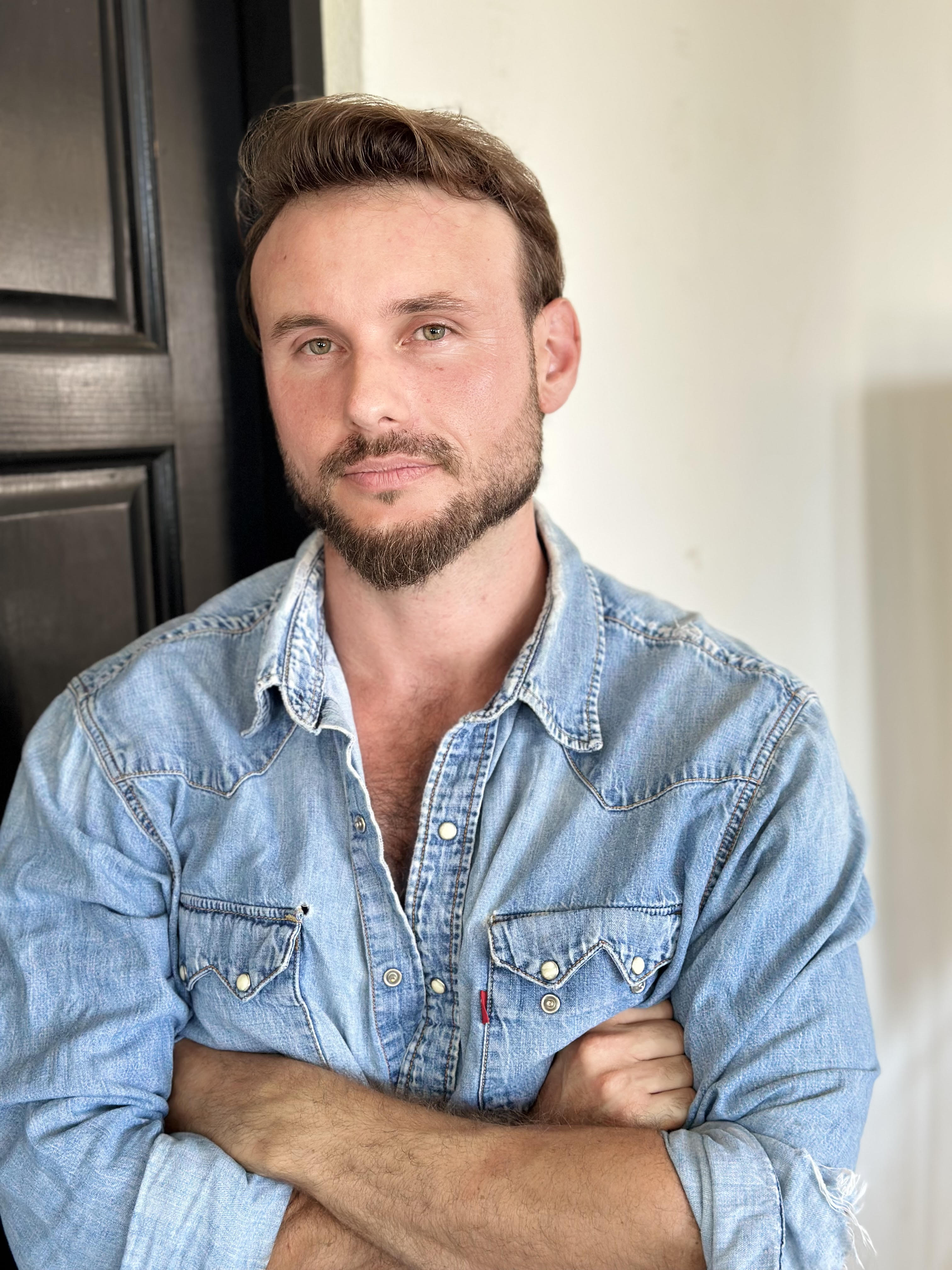
About this episode
Daniel Burrus (1.2m followers on LinkedIn) predicted the iPhone, streaming video, and digital photography decades before they happened. He wasn't guessing. He had a method. In this episode he breaks down the exact framework that built six companies, five profitable in year one, and how you can use it in your business today.
Episode notes
- 00:00Welcome and guest introduction
- 01:56Daniel's first breakthrough: the fear of regret vs the fear of failure
- 04:30Selling four companies and the forward-only principle
- 06:10The year of research and the epiphany that changed everything
- 07:05How to break through fear and learn from failure fast
- 07:53FindAPodcast.io sponsor message
- 11:01How Daniel became an entrepreneur without a business background
- 13:34How to use the future to launch a business with low risk
- 15:30Hard trends explained: future facts you can bet on
- 17:10The aging population example and how to build around it
- 20:45Exoskeletons for seniors and how to innovate with what already exists
- 22:50Demographics as a hard trend category
- 24:10Technology as a predictable hard trend
- 25:45Soft trends and why you can change them
- 28:10How to create your own list of breakthroughs
- 30:10Where hard trend methodology came from
- 32:00Why agility is not enough and why anticipation wins
- 34:30Why Daniel is optimistic about the future
- 36:45Is there more chaos now than ever before? The honest answer
- 40:30Noise vs tectonic shifts: how to tell the difference
- 43:00The aircraft landing lights metaphor
- 45:00How six companies became national leaders in year one
- 47:10The Skip It Principle: your biggest problem is not your real problem
- 50:00Why Daniel does what he does: a calling not a career
- 54:05How to create your own breakthrough moment right now
- 56:00Your future view shapes the future you
Chapter titles and timings from the published YouTube description.
From the conversation
Excerpts from YouTube automatic captions. They may contain transcription errors. Play a timestamp to hear the original conversation.
Daniel's first breakthrough: the fear of regret vs the fear of failure
moments and I think each one has their own lesson into it. One of them was I started out teaching uh biology and physics and I was doing well with it but I had an idea for an airplane design and uh I actually went ahead and built it test flew it and wow it was amazing. However, I'm now leaving education and starting business. And there was the fear of failure cuz I was already successful in education. But I had the fear of failure. And then I had something that created a breakthrough. Uh because um you know, ...
How Daniel became an entrepreneur without a business background
list. I want to know this framework for sure. Before I ask that, how did you learn entrepreneurship? You know, were your parents entrepreneurial? Did you have mentors? You know, I think a lot of the time people might have the thought of entrepreneurship, but sometimes it's just a thought. you know, it's maybe just a passing by. But there's others that have this affliction. My one of my mentors called it this like this this like unquenchable desire to create and build businesses and like help people make an impact. Is that something that you were born with or ...
Demographics as a hard trend category
aren't seeing it. You need to step back and think much bigger about your future because you could biggest build a small future for yourself. Why not a much bigger one? All right. Now, I have talked about hard trends right now. And what do hard trends do? They give you certainty in an uncertain world. And there are thousands of certainties. Not just 10, not just five. I just gave you some examples. Once you get good at defining them, certainty has low risk. When you have certainty, you have confidence to make a bold move. When you're uncertain, ...
Why agility is not enough and why anticipation wins
is and as I travel and so am I optimistic or pessimistic? totally optimistic about the future. I'll tell you exactly why because a lot of you aren't right now. I know you aren't. Let me tell you why I am. Some solid reasons. One of them is that those piano keys I told you about. We have infinite opportunities right now. But bad news sells and good news doesn't sell. And if there is no bad news, they give you the anniversary of bad news. You're missing all the good stuff. That's why I have a newsletter. That's why ...
How six companies became national leaders in year one
together with you changing how all of you think without telling you what to think. See, I don't have the right to tell you what to think, but I can change how you think about the future. I can change what how you think about being an entrepreneur. I can change how you think about uh risk. I can change how you think about opportunity. Um, well, I would like you all to go forth and spread the word. >> Brilliant. Well, you've broken it down into some easy digestible concepts. I can these I'm excited for your new book ...
Read the episode transcript
YouTube automatic captions. Names, punctuation and wording may contain transcription errors.
Welcome back everybody to the breakthrough moment podcast where we interview successful entrepreneurs and investors and ask them what is their breakthrough moment in their career. The moment that took them into another level of success, impact or insight and as they share that moment with us, us at home can also have those breakthroughs as well. I'm Zach Dean with special guest Daniel Buros. How are you today? Where are you tuning in from? >> I am doing great today. I'm from my office in Milwaukee, Wisconsin. I've got an office in San Diego. So, I'm here right now. >> That's where we connected a few months ago and uh I was like, "Oh, that's the same background." But you travel with the same background, too, which is excellent. >> Right. Right. I took a picture of my San Diego office window and brought it to my office in Wisconsin because people are familiar with seeing me this way when I happen to be in Wisconsin. >> Smart man. Smart man. Well, I am really excited to introduce you every to everybody on the podcast. This has been a few months in the making and everyone please listen up, grab a pen and paper. This is really going to change how you see the future of business. So, let me give you a quick introduction, Daniel, and then uh we'll dive straight into it. So, most leaders react to change, right? But Daniel helps them see it coming before it arrives. A New York best-selling author and one of the world's leading futurists, Daniel has spent over 30 years accurately predicting technological change and advising Fortune 500 companies including Google, Microsoft and Deote. He is the creator of the hard trend methodology and a specific framework that turns that turns disruption into competitive advantage. His message to every entrepreneur listening today is to stop reacting and start anticipating. Daniel, welcome to the Breakthrough Moment podcast. What has been your biggest breakthrough moment thus far? >> Well, I've had several breakthrough moments and I think each one has their own lesson into it. One of them was I started out teaching uh biology and physics and I was doing well with it but I had an idea for an airplane design and uh I actually went ahead and built it test flew it and wow it was amazing. However, I'm now leaving education and starting business. And there was the fear of failure cuz I was already successful in education. But I had the fear of failure. And then I had something that created a breakthrough. Uh because um you know, I realized, hey, I got more fears than just one. Why don't I lay all my fears out? And that was a real key here because I laid all my fears out. And I saw the fear of regret meaning if I was in my late 90s looking back and I didn't do it that I feared more than failing in uh starting that business. So the fear of regret was more powerful than the fear of failure allowing me to move forward. And by the way I ended up with 37 national locations in the first year on that
business. It was profitable in the first year. I ended up starting four more companies and they were doing well. And then I had another breakthrough moment because I said there were several, right? Uh so the next breakthrough moment happened when I did something really powerful. I was about to open a West Coast manufacturing plant for one of the businesses and I stopped myself and I took myself out to the future. Now this is important. I want you to all consider doing this. I took myself out to again late 90s. I'm looking back asking myself if this is what I did for my professional life, am I happy? And the answer was no. So I knew I had to sell all four companies. So I s because I saw the future and that wasn't it. And I sold those companies and I wanted to go back to teaching because I really enjoyed that. But I also enjoy business. And I uh didn't want to uh go back because I think you can never go back. I ride a Harley-Davidson motorcycle. One of the things I love about it is there is no reverse. You see, you can only go forward in life. So, what I did was another principle I'm teaching everyone, take your biggest problem and skip it. So, what I did is I looked at all the things about education that I didn't like and skip them. For example, I didn't like the limitation of the size of the classroom, how many students were in there. So, I decided to make the classroom planet Earth. By the way, I've given speeches in over 50 countries and my books are in multiple languages. Obviously, that worked. I didn't like the uh politics and all of the problems of an educational institution. So I decided not to work for one. I'll just start my own company. So I skipped all the things I didn't like and started my main company today which is the third and final big breakthrough I'll share with all of you. And that is I decided u I was always interested in technology new innovations in technology its future impact. So I spent a year doing research, researching all areas of technology, lasers, robots, fiber optics, artificial intelligence, neural networks, all of that stuff long ago existed in its infancy, but I knew it would get bigger. So I spent a year deep diving into it. And towards the end of that year, I had even more than a breakthrough, Zach. I I had an epiphany. And uh I mean it was a true epiphany because I had been spending 12 15hour days researching six seven days a week for a year of all these technologies and all of a sudden I saw the future and this was decades ago. I saw the iPhone and beyond. I saw streaming videos and beyond. I saw digital photography and beyond. I saw the whole thing. And what am I going to do? Run out in the street and say, "Hey, I saw the future." Uh so that isn't going to work. So what I started doing was since I now saw the future and had a methodology, I started speaking and writing about it. And I've
given over 3,000 speeches uh globally. I've had over 30 languages uh translated in a single speech. My biggest audience has been 20,000. But I've also spoke to the Joint Chiefs, which is a the Department of Defense, which is a small group. So all different sizes, all different industries over the decades. So, what you have to realize when it comes to a breakthrough moment, since that's how you set this up, Zach, is that windows of opportunity open, but you have to recognize that it's a window of opportunity. And secondly, that window will shut again, and it's up to you to walk through it. So, there you go. There's a couple of big ones for you. >> They are some, I can see, some life-changing breakthroughs. The first one was around fear and this fear of of missing out or regret. What advice do you have for other people out there who are maybe on on the fence and they really just want to like break through their fear after everything you've learned after all the technologies? What is the best way to break through fear so to speak? Real quick before we continue, a brief message from today's sponsor. If you're an entrepreneur wanting to grow your personal brand, authority, and business through podcasting, then check out finderodcast.io. As you know, the biggest entrepreneurs in the world, they book these massive podcast tours before a big product launch or an event or book because podcasts build trust faster than anything else online today. So, it's find a podcast.io. It helps you connect with a specific podcast in your niche. It writes the pitch. It follows up in this easy CRM. It truly does save time. So, you just show up, do the podcast, and your business grows. If you're curious to learn more, book in a demo at find a podcast.io. Now, let's get back to the episode. The re I'm going to give you the really big truth reality of it. And that is when you face your fear and walk into it and through it, it disappears. Because the fear is a bail barrier and there it's all you. You're the problem. It's not the thing that you're fearing whatever it is. Um you know the biggest barrier to our success can be found by looking in the mirror in the morning. It's not somebody else. It's not other situation. It's not that you don't have any money. It's not that you don't have this or that. Actually, it's all about your mindset. So, uh breaking through is about confronting again those fears. And again, it's more than one. I suggest laying them out. And then here's something else. Fear and failure and problems all kind of go together. So, let me ask all of you watching this right now a rhetorical question, meaning I can't hear your answer, but I want you to answer in your mind. All right? And that is, were your greatest insights that helped you move forward? Did they come from your successes or did they come from your failures? I already know
the answer. They didn't come from your successes because what do you say? Hey, great. And then you move on. Now, you can learn from those successes. Absolutely. And you should when things are going really great, you should step back a second and ask, why are they going so great? What am I doing to make them go great so I can keep doing those kind of things? However, failure is where you get the biggest lessons. But a lot of us are so caught up in the emotion of failure that we fail to do the most important part. What did I learn from that? what is going to help me to go to the next level because of it. So failure what you want to do um again you know I started uh companies without having a business course never had a business class which might have helped me and uh what I did was I had two things number one um I didn't really know how to compete I was an educator we didn't compete so I didn't know how to compete so what I did is I made sure I didn't compete because if I competed I might lose so I made sure that I looked at what my potential competition was doing so that I did not do that. I did what they weren't doing really well because I don't want to compete. Secondly, uh and really importantly is that uh I couldn't afford to fail slow. Let's face it, I started business without any money. I was a teacher, so I couldn't afford to fail slow. So, I had to learn how to fail fast. But the key about failing fast is to learn faster. So, if you aren't learning from it, you blew it. You blew that failure. Uh so make sure that you've always got a lesson that's tied to a failure. So when you know that failure is actually another window of opportunity for you to grow and for you to learn and take yourself to the next level, you're less fearful and you'll take uh do more. And then I'll let you ask me some more questions, but I do have my methodology that lets you manage risk and reduce the potential of failure dramatically, which we can get into whenever you feel like it. >> Definitely, that's definitely on the list. I want to know this framework for sure. Before I ask that, how did you learn entrepreneurship? You know, were your parents entrepreneurial? Did you have mentors? You know, I think a lot of the time people might have the thought of entrepreneurship, but sometimes it's just a thought. you know, it's maybe just a passing by. But there's others that have this affliction. My one of my mentors called it this like this this like unquenchable desire to create and build businesses and like help people make an impact. Is that something that you were born with or did that develop over time? >> Well, that's a great question, Zach. I uh I never really had a formal mentor in this. My parents and uncles and aunts, they weren't [laughter] entrepreneurs. So, uh, but I think it was just instinctual. I, uh, I actually when I was in college, I put myself through college playing lead guitar in a rock band and we were very popular and we actually made money and I ran the band. Now, I didn't think of that as being an
entrepreneur, but I was good at doing it and doing contracts and building it and making it happen. I don't know why. I just was able to do that. And I never even thought of that as a business even though actually it kind of was. And then when I started the first business again I didn't know about it. I didn't know how to be an entrepreneur but I saw the opportunity. I saw that window of opportunity open and I decided I needed to walk through because the fear of regret was there. So I never really had formal lessons in it and as I said uh I didn't compete. I learned how to fail fast and I didn't go back. I kept moving forward. >> Super interesting. Super interesting. I'm always fascinated by people's stories. And I think a lot of the time we learn through example, you know, having people around us or books or television, whether it's uh seeing, you know, Arnold Schwarzenegger online and feeling or on television back in the day and feeling inspired to go to the gym or maybe an entrepreneur online and social media or Shark Tank these days. Now, that's really that's really interesting. um thinking about today and for the entrepreneurs out there that are really wanting to bring their idea to life, right? They might have this idea, a business, they might have a passion or something like this, but they're wanting to figure out the best way to do it in today's day and age. As a futurist, how can people prepare themselves for the future and launching businesses? Like what what advice do you have for them? Well, the key is to be looking at the future. I call it the visible future. I'm going to show you all how to do that in a minute. So that you can see if what you're planning on doing is going to be growing even if you didn't do it. In other words, the area, the industry, the category that you're wanting to uh be an entrepreneur in, that you want to get a business in, is that something that's growing or shrinking? Is it going to get more powerful and bigger over time even if you weren't involved? uh well that that means you're heading in the right direction because if it isn't actually you're heading in the wrong direction. You don't want to be doing that. So there's a methodology that actually is quite simple but amazingly powerful that'll help you to do that. And as I said you start by looking at the future. The problem is most people don't spend a lot of time looking at the future or reading about trends because there's so much uncertainty. I mean, everything's changing on a weekly basis, almost a daily basis to now with AI and the war is on, the war is off, the war is on, the war is off, tariffs are on, tariffs are off. I mean, how the heck you plan anything? And the answer is you surely can't because um uh like I said, there are trends. The problem that everyone has is which trend will happen because not all of them do, and when will they happen? Well, I solved those two problems for you in a very simple, powerful system. All trends fit into one of two categories. They're either a hard
trend based on a future fact that absolutely will happen. Now, by the way, the litmus test to bounce it off yourself is can it be changed? And if it can't be changed, it's a hard trend. Let me give you a United States example. In the US, we have an aging population. By the way, there's an aging population in China. There's an aging population in Europe. There's an aging population in Canada. There's not an aging population in Mexico. There is not an aging population in other parts of the world. But in the Western world, the advanced civilizations from the past all tend to have an aging population. So, in the United States, there are 10,000 people every day turning 70 years old. Let that sink in for a second. 10,000 a day. By the way, now here's here's a category of what I call hard trend demographics. Where are they going to get chronologically younger? No. They're going to get older. Hard trend. They're not going to get younger. They're going to get older chronologically. So that means we could predict a lot of future problems and pre-solve them. We could predict a lot of opportunities that are going to be there. And let me give you an example. Let me give you an example so you see what I'm talking about. A lot of people love to go boating. They love to go fishing, but uh as people get into their late 80s and 90s, it gets kind of hard to launch the boat. So, why don't one of you develop the easy launch trailer for seniors and design it really well? Would you have a growing market every year? Well, yeah, absolutely. By the way, you could take those numbers to a bank and get a loan because they're solid numbers. They're future facts. Wow, we got a future facts here. Uh that's a lowrisk being entrepreneur in a lowrisk category. Uh would we know what countries to export that product to? Well, yeah. I'm going to export it to the aging populations, not the young ones. Again, low risk. There is no easy launch trailer for seniors right now. I want you to in your mind right now, raise your hand if you think to yourself, here's the question. Raise your hand if you think we'll never see one of those. Put your hand up. Now, none of you put your hand up. I know why. Here's why. Because if it can be done, it will be done. If you don't, someone else will. What I just showed you is how to create windows of opportunity for yourself. How to create them based on hard trends. If you don't do it, someone else will. Let me give you another one. Maybe uh you have seen um exoskeletons. These are things that you put on. They have little batteries, electric motors, and they go along your arm or along your legs, and uh they assist you in walking or moving. For example, a 95 lb nurse can lift a 180 lb patient into a bed by herself with an exoskeleton on. Well, what happens once again, let's take the aging group. We could take younger groups with demographics, but let's stay with the demographic category. When you get late
80s, '90s, um, a lot of people fall and they break a hip, which can be deadly or very expensive and painful. Um, why do they fall so much as they get older? Well, one of the reasons is their muscles get weak. See, when you're young, like your age, Zach, I can tell if you tripped outside, you know what? You wouldn't fall. You would poop. You're you're up. No problem. I'm sure you've tripped before. You did not fall. Boom. Flat on your face. No. A 90-year-old. Boom. Flat on their face. Why? Their fa their muscles aren't strong like they used to be. So, here's what I am going to predict. Why don't we create an exoskeleton for seniors that goes around their ankles up to their hips? Now, they can go up steps and down steps as if they were 20 even though they're 90. Uh, now they can walk along with the muscles of a young person. And, uh, and by the way, you could build little gyroscopic things in there to help them stay upright. I mean, so you don't have to invent something. Exoskeletons already exist. No one's ever made them for seniors. So now I'm going to ask you all a question. Raise your hand if you think, "Well, we're never going to see one of those." I know you did not put your hand up. Why? Because when you hear the future truth, you know it. Oh, in other words, the future is far more predictable than you thought. And being an entrepreneur is much easier with much lower risk. Once again, if you all of you don't make that exoskeleton for seniors, someone else will because you don't need new physics. It already exists. It just hasn't been applied to that. See, what I'm doing is I'm showing you how you can innovate with low risk. All right? Demographics is a huge area. And it isn't just about old people. You've got all sorts of different demographics. Uh Gen Z, Gen Y. All right. Uh all the different demographics. Each one uses technology differently. Each one's responds differently to different things. Each one has a little different mindset. So, a lot of companies are having trouble attracting new talent and attracting it employees. I know this cuz I've worked with companies all over the world. They're all experiencing this. Most of them have a one-sizefits-all way to attract new talent instead of having a different way to attract each demographic because each demographic uses technology differently and would respond differently. As an entrepreneur, I could have a customized system to help companies do that and attract the right talent within the right demographic by using my system. By the way, a system like that doesn't exist today. It will. Maybe one of you will start it. As a matter of fact, I'm listed in dozens of patents because of me doing things like I'm doing with you right now. I mean, I can't invent the whole future. I'm I'd be too busy. You can do it. I'm showing you how. So, demographics is a category. And let me give you another category of hard trends and then I'll show you the other kind of trend soft trends. So we can really learn how to be low-risk entrepreneurs. Um that is technology. Technology is amazingly predictable.
Wireless technology. We went from 3G wireless to 4G wireless. We got 5G wireless. Is that it? No. We're going to have 6G followed by seven. All right. By the way, when will 6G and 7 come up? What's the time frame of these things? Well, that's another thing I defined years ago. You look at the exponential curve of digital technology. You have time here, power here, price this way, and you can see exactly, oh, that's when we'll have 6G, that's when we'll have 7G. I've been able to predict that all along very easily. You can do that, too, using that kind of methodology. So, now you got a time frame. So, with technology, it's extremely predictable. Uh, let's take mobile apps. Uh, now there's lots of mobile applications for mobile devices right now. Have they all been invented? No. Someone would I was on an interview not long ago and they said, you know, there's less opportunity for young people right now and for entrepreneurs. There's like No, there isn't. You're thinking too small. Look at this. There's only so many keys on a piano, right? Only so many keys. By the way, same limitation back in Beethoven's day. Same number of keys going all the way back in time. Same number of keys. We got the same number of keys. By the way, did that limit humans ability to create new music? No. Well, technology is like a piano key. Pick something. It's unlimited. Being an entrepreneur, unlimited. What's holding you back? Matter of fact, here's another thing I'd like you all to do. Think back to when you got your last degree in school, whatever that was. I'm sure it was a while ago, long ago for me. You were probably thinking big about your future. But if you look back to your self back then now, I bet you'd say to yourself, "Wow, I was thinking too small. There was a bigger big back then. You just didn't see it." Now, here's what I'm telling you all right now. There's a bigger big for all of you. You just aren't seeing it. You need to step back and think much bigger about your future because you could biggest build a small future for yourself. Why not a much bigger one? All right. Now, I have talked about hard trends right now. And what do hard trends do? They give you certainty in an uncertain world. And there are thousands of certainties. Not just 10, not just five. I just gave you some examples. Once you get good at defining them, certainty has low risk. When you have certainty, you have confidence to make a bold move. When you're uncertain, you hesitate. Well, I think I'll wait. And most entrepreneurs can wait themsel right out of their idea. The other type of trend, because I said there were two types. There's hard trends based on future packs. It lets you see disruption before it disrupts. Turning disruption into a choice. It lets you see problems before you have them so you can pre-solve them. Why? How many times have we all said, "I knew that would happen." And I would say, "Why did you let it? I knew why you let it happen. By the way, you let it happen because you didn't trust your opinion about it." If you knew for sure that was going to happen, you would have solved it. Well, if you use hard trends, you can see the things that are going to happen. And you know what? If you pre-solve it, you can move forward
faster. That's powerful for an entrepreneur. Presolving predictable problems before they happen so you can move forward faster. What about soft trends? The other kind of trend based on an assumption that may or may not happen. Now, I didn't say it won't happen. It's a may or may not. It's a future future maybe. So, the risk is more, but I love soft trends just like I love hard trends. What do I love about a soft trend? If you don't like it, you can change it. If you don't like it, you can change it. A classic example, I'll use a US example because we have the weirdest health care system in the world. Um, and that is uh health care costs have been going up in the United States for decades. Up up up up up. By the way, that's called the trend. It's going up like this. So, let me ask you all a rhetorical question. I want you to give the answer to yourself and then I'll give you what the real answer is. Is the rising cost of healthcare in the United States, which has been going up for decades, is that a hard trend or a soft trend? Think to yourself, >> all right, >> it's a hot >> hot trend. >> It's a totally soft trend. Now, >> here's why, Zach. You thought it was hard. Been going up for 20 years. Surely, it'll keep going up. That is an assumption. Soft trends are all about assumptions, not future facts. That is not a future fact. That could be changed. How could it be changed? Well, in the US, you may not know that an aspirin costs $20 US. One aspirin in a hospital. Well, if you knew that, you'd have your spouse bring it. You didn't know that. You didn't know that that artificial knee you're having put in u made by the same company, same size, same everything can vary in price by like 100%. You didn't know that. Uh that's because there's no transparency. You don't know the cost of anything. No wonder the cost keeps going up. So, what if we put all of that on a blockchain which gives total visibility, total transparency, and it's really secure and can't be changed? Well, people would not be paying $20 for an aspirin anymore. Matter of fact, healthcare costs would go down. And I'm just giving you one example. By the way, there's a healthc care for uh a blockchain for healthcare that was started with a h 100red million in its first round of funding because an entrepreneur saw that and started to do that. Um by the way, they saw the window. They saw it was big. They saw it was based on our trend and walked through the door. You can do this as well. So um so actually the beauty of a soft trend is if you don't like it, you can change it. The beauty of of a hard trend is you can see the future before it happens and take advantage of it. So I just taught you two fundamental lessons I want to point out right now because I've been talking for a while. Let's boil it down. All right. All trends about the future. And remember, you're going to spend the rest of your life in the future. You should be thinking about it. All trends are either a hard trend or a soft trend. Hard trends based on a future fact that will happen. A soft trend based on an assumption that may or may not happen. And the second big thing is a trend by itself is boring. Who cares? Until you attach an opportunity
to it. The minute you attach an opportunity to a hard trend or an opportunity to influence a soft trend, it bursts into actionable life. So, here's what I'm hoping all of you do after uh watching this, and you may want to watch it again. I've been talking pretty fast and that is uh make a list of hard trends. Think of technology. Think of demographics. Make a list of the hard trends that you know will happen and a related opportunity for you and for your organization if you already have a company for each one. Make a list of the soft trends that may or may not happen and the opportunity to influence them to your advantage you'll get. And then one third thing is based on those hard trends, what are the predictable problems that you're going to have and an opportunity to pre-solve it so you don't have it in the first place. You will get a list of opportunities that are very powerful. And my coaching to you all is big lists never get done. So with that big list of opportunities, I want you to narrow it down. I want you to get rid of all the things you could do. get rid of all the things you should do and come up with one or two things that you have decided you must do because the risk of not doing it is too high. It's going to happen anyway and it's in my area. It's something I'm passionate about, something I already been thinking about, something I would like to either start a business on or already have a business on. But now I can see this new opportunity. I'm 100% sure it's going to grow. I'm 100% sure it's easy to I can actually do it. I can actually get a loan for it if I need one. And now here's the thing. The cost of not doing it will be greater than the cost of doing it. If you consider that in a dimensional way, for example, your relevance, are you going to be more or less relevant? There is no middle anymore. You're either going to be more relevant or less relevant. You're either going to be the disruptor or the disrupted. AI is growing things so fast. You're either going to be the disruptor or the disrupted. There's no middle anymore. Well, I would like you to be a positive disruptor creating the disruptions and the transformations that need to happen to elevate your relevancy and accelerate innovation and growth with low risk. >> Fascinating. Fascinating. Daniel, this is a whole new world. I will never see life the same. I will never see business. I will never see the future ever the same again. When did you learn this? How did you learn this? Was that when you did that one year of research? Um I I developed it myself over time. What I did is I like I said I spent a year researching global innovations in all areas of technology decades ago. Uh I I organized them. I came up with this methodology of hard trends and soft trends because I I realized that there were some things that I knew would happen. Remember I told you in the beginning of this interview I had an epiphany. I saw the future. Well, they were hard trends. Once I saw those hard trends, I didn't know they're hard trends yet, but once I saw them all, it's like this is going to happen. This is going to happen. How do I know it's
going to happen? Because of these things. And I defined this concept of hard trends versus soft trends, which changes planning. Changes how you plan, changes how you innovate. And then what I realized is most people are reactionary and they this is the other concept that lays on top of the whole thing and that is um most of us are trying to be as agile as possible. Agility is how the business world has dealt with fast chain moving change. Matter of fact, you've heard the word pivot, right? This company, you got to learn how to pivot. Got to pivot fast. You got to be agile. I hear that all the time. Well, agility came from sports. It's a reactionary strategy. It's reacting as quickly as you can to a disruption after it disrupts. Reacting as quickly to a problem after it occurs. It's reactionary. If you are playing sports, what you're doing is playing defense. I want you to learn how to play offense. None of you are playing offense. You're all playing defense. And things are speeding up. AI is pushing the envelope. Things are changing faster and faster. I know you've all noticed, by the way, hard trend, not slowing down. So if things are getting faster, how can you get an advantage? You got to learn how to jump ahead with competence. That's where hard trends come in. So rather than just being reactionary, agile, that's one side of the coin, and I like that. But in a world that's accelerating, it has less value every year. I want you to learn how to be anticipatory. Anticipate the disruptions that are going to happen before they disrupt using hard trends. Anticipate the problems before you have them so you can presolve them using hard trends. anticipate the opportunities that haven't come to life yet so that you could bring them to life. So my mission, I'll tell you right now, is to get as many people on planet Earth at every age far more anticipatory and far less reactionary because frankly if we're not predicting problems and pre-solving them before they happen, you and I will not be happy campers on planet Earth. There is and as I travel and so am I optimistic or pessimistic? totally optimistic about the future. I'll tell you exactly why because a lot of you aren't right now. I know you aren't. Let me tell you why I am. Some solid reasons. One of them is that those piano keys I told you about. We have infinite opportunities right now. But bad news sells and good news doesn't sell. And if there is no bad news, they give you the anniversary of bad news. You're missing all the good stuff. That's why I have a newsletter. That's why I like to write about these things. So you can go and follow me on LinkedIn if you want. I got over a million followers. Why? because I'm sharing this kind of stuff or you can buy my book anticipatory organization or the one before that flashforesight or go to my website burus.com and learn more. I you know you can dig in more if you want to. So as I said I've traveled all over the world um and I've met people all over the world all over. And here's what I'd say. There are a lot of young bright bulbs out there that are not going to sit back and
just let everything go to hell. They're going to create a better future for all of us. All right, here's what I'd like you to do. I'd like you to create a better future for everybody. You got the tools. You got the windows of opportunity. You got to think bigger. You're thinking too small. Use certainty so you can do it with low risk. Think bigger. There's a bigger big out there. And I believe that instead of being a passive receiver of the future, let's see what's going to happen. Let's wait and see. By the way, you could wait and see right out of business. What I'd like you to do is be an active shaper of the future. actively shaping a positive future for yourself, for your family, for others, for your business, for your customers, not being a passive receiver. I don't want you to be in a protect and defend mode. I got to protect and defend my piece of the economic pie. That's a tough battle to fight. Why do it? I would like you to look at those hard trends and instead of being a protector and defender, I would like you to embrace and extend, embrace the new and extend its reach. And we're all dealing with AI. I know we are. And let me take a minute to talk about AI. First of all, it's a hard trend. It will continue to accelerate. You can't stop that. How you what you do with it, that's a soft trend. Will you use it to create a better world or will you just use it? Will you use it to empower people or to just automate everything? And really what AI is at its best is to uh to not replace but to augment humans, augment us. We call it artificial intelligence for reason. It's artificial intelligence. Not human intelligence. It's not good at at keeping trust. It's not good at establishing trust. It's not good at establishing relationships. It's not very good at communicating, although it's really good at informing. It's not really good at collaborating, but it can help you cooperate. um it can innovate only with based on the past because it's all taking in information that's been logged. It is not like a human that can come up with brand new super new ideas and even though AI is advancing, it still is based on what it's absorbed. We are the we have this human ability to add something. So let me give you an idea of how you can see the future of AI and that is if you know someone who has cancer, you'll need an oncologist. That's the doctor that treats cancer. And uh right now AI knows more about oncology than any living doctor. All right? It's absorbed every chemotherapy. It's already learned every MRI, everything globally that's ever happened, genetics of it that know everything. No, no human doctor can keep all that in their head. AI can do that right now. So if you know somebody that has cancer, I'm going to give you one of three choices. Choice number one, a really good oncologist. Choice number two, just AI. Choice number three, a really good oncologist that has access to AI. You see, the future is number three. By the way, that's your future. That's all of your future. It's
augmenting, not replacing. AI can automate a role, a task or no, AI can automate a task. It cannot automate a role. Why? Because a role someone plays is a human role. in a in a human world that relies on relationships that are based on trust and AI is not good at that. So what we see what I've already been seeing because I've got a new book that'll be coming out on human first approach to AI rather than AI approach to AI and I've done a lot of research in the companies that have laid off people by automating tasks have found that they gain in the short term because people cost a lot of money and you can lower your cost by getting rid of people especially if you do it by the hundreds or thousands if you're a big company. However, what they what we found is relationships all suffer, including customer relationships. All of a sudden, the business starts going down until they realize, I guess we needed those humans and they start hiring them back. So, you can automate a task. You can't automate a role. However, AI will change the role because like just like the doctor that is augmenting the doctor with this AI, that requires some new skills. So what we the mistake we make is we get a new AI tool and we think we're set. But the order is skill set. No, it's mindset first, skill set, tool set. You need an anticipatory mindset, not a reactionary mindset. Uh you need to learn how to do um uh separate the wheat from the chaff, critical thinking, so that you check your answers. You check what AI is doing because it can make things up. By the way, humans make things up. This is not new. And uh you need a skill set. So you need a mindset, you need a skill set like learning how to prompt and things like that. And people would say, "Wait a minute, you can get AI to make a prompt for you." Yeah, but it's not an amazing prompt. You ever seen a prompt that would take 20 pages in length? I have. And they make a lot of money because it's there. You've created a really great prompt uh instead of okay prompt. Maybe there's more to all of this. It's not just about prompting. It's about critical thinking and some other skills. how to use agentic AI and so on. How to manage digital co-workers and human co-workers together. I mean there's some skill sets and then again there are specific tools that do specific things. I need to pick the right tool for the right thing. That's why I put together a report that I update about every two months because things are changing so fast. Um I've come up with the top five tools in all these different categories. some mindset shifts in there, some skill set shifts in there, and uh and uh case studies. If you'd like to take a look at that for free, you can download it. You can go to um uh a strategyreport.com and download it. So, what I would suggest is blocking out a little time for yourself. I would think you should pick one hour a week, not to be a crisis
manager, to be an opportunity manager. Put it in your calendar. If you don't put it in your calendar, it won't happen. It's kind of like going to the gym. If you don't have a schedule, you aren't going. And by the way, why are you doing this? You're going to spend the rest of your life in the future. Maybe you ought to plan for it. Maybe you ought to think about it. And in that hour, I don't want a list of things I don't know. I want a list of things I do know. I don't want a list of things I'm not certain about. Why not a list of things I am certain about? Why not all these opportunities I can pursue? Narrow them down and pick one and move forward. you'll find that hour of power to be quite good. >> These are such practical, easy to understand, but literally wildly life-changing strategies. So, thank you so much. I'll put all your links around here. Everybody, please sign up for the report. This is going to be life-changing. I can feel it. And even just putting it into the diary, right? We all know AI is continually growing. And yeah, just like the gym, we need to schedule this in the diary, otherwise it's not happening. I couldn't agree more. And this is a conversation. We could chat about AI and all the things. I've got a few other questions, but before we do that, there is so much chaos today. There is so much confusion today. And when I chat to some of my friends, I'm like, was there always this level of confusion and disruption and so-called chaos? Or is it just kind of like that that's it's always been like that or is now more than ever considerably more of that? like you understanding more of the past and being being around a lot longer. Is it is it the same? Is it different? >> It is not the same. It is different. There is more. uh we have a number of governments not just one uh that is not acting like a normal government and I'm not just talking about the US although I am but I'm talking about some other governments as well where it is kind of a ready fire aim approach and um it uh can it causes more chaos I mean just look at on andoff tariffs and the chaos that that's created for business to try to make any kind of plans the on andoff war is it on is it off I and having the war in the first place. I mean, all of these things create and again, I'm picking on the US a little bit, but I could be picking on other countries that have gone that route of having their government being a little more chaotic and less less predictable. So, that's one area. Plus, uh we have AI thrown in affecting everything. And there's no vision for the future of AI other than it could be bleak and it could have massive layoffs. By the way, that's not the future I want. I don't think it's the future you want. And in my new book that'll be coming out in the fall, keep an eye out for it, my human first approach, I'm throwing out here's what we should be doing with AI to create a better future for humans rather than just let it evolve and hope humans still exist. Uh since hope is not a strategy. So um I think I think that uh uh there there is a way for all of us to rise up. We all need each other, but re remember
there is more chaos now. And here's what I'd like you and your friends to be talking about then, Zach. And that is there's a lot of noise out there that clutters things. But there are also some tectonic shifts taking place that are going to get bigger every year. Are we paying attention to the noise or the tectonic shifts? The noise is here today and gone tomorrow. On and off and on and off and on and off again. U tariffs, for example, is noise. We're not going to be in a world of on and off again. On and off again, on and off again tariffs. It's something we're experiencing now. Um, and we will for a little for a while. Um, what uh but what are the things that are tectonic major shifts that are taking place? And again, I've talked about the technology shifts, the demographic shifts. Um, you can start looking at at those kind of things when you uh uh when you see some of the um in the Middle East they had OPEC which controlled the oil out there. And all of a sudden now you see some of the key countries as part of OPEC leaving OPEC. Well, that's creating some tectonic shifts that's going to change how things are done way beyond a war or no war. So let's here's what I'd like you to do. Instead of being caught with all the chaos, caught with all the uncertainty, start with hard trends. Start with future facts. You'll get a list of things. Regardless of all the noise, these things are going to happen. and it gives you a pathway forward. All right, so cut through the noise. It's a very powerful tool to deal with it. Secondly, remember the piano metaphor. There's unlimited opportunity, but all the bad news that selling gets you all bummed out and thinking, you know, there's nothing but chaos. Okay, a lot of the chaos is noise. And let me share a little story with you. When I was in high school, I couldn't drive yet. Didn't have a driver's license yet. There was a kid down the block a couple older a couple years older than me. He had a car. He liked to tinker with it. It was a hot rod. He liked to soup it up. And he asked me one night if I wanted to go out on a test ride with him. And of course I was all, "Yeah, absolutely." And we went out in a dark area and he had his bright lights on in his car and he said, "Watch this." And he pushed a button and turned on aircraft landing lights. Wow. Could we see way out? We could see so much farther out into the future. It was amazing. Oh, there's a a sharp curve up ahead. Oh, there's a pothole up there. Whoa. I wouldn't have seen that with just the bright lights on. Now you can see it really well. What I'm doing is showing you how hard Trends is turning on the bright lights to your future. I'd like you to look much farther ahead so that you can see the curves, the potholes, the opportunities instead of having them be shrouded in darkness and noise. >> Wow. We just got to turn that switch on. Okay. Otherwise, >> turn the switch on. You know, and where is that switch? Bingo. Doom. Right up here. I have been spending the time
together with you changing how all of you think without telling you what to think. See, I don't have the right to tell you what to think, but I can change how you think about the future. I can change what how you think about being an entrepreneur. I can change how you think about uh risk. I can change how you think about opportunity. Um, well, I would like you all to go forth and spread the word. >> Brilliant. Well, you've broken it down into some easy digestible concepts. I can these I'm excited for your new book as well. I'll put all that around here in the video somewhere. I'm really curious to know you've built multiple businesses. A lot of these are national leaders uh from my understanding and you did that within a very short period of time, multiple times. What principle? Maybe you've shared it already or maybe there was another principle that drove that and then how can entrepreneurs today utilize that to help kick their business into the next gear. >> Well, and there were six companies I've started. Five were profitable in the first year, four were national leaders in the US in the first year. That's very unusual to happen. And it was the principles I've taught you so far. uh you know in other words uh failing fast so you can learn faster not competing using hard trends using certainty using low risk all of those kinds of things uh there are quite a few principles that I share in my books um my last book the anticipatory organization which is in multiple languages you can get a lot of those principles that I didn't have time to teach you there or flash foresight for example so you know there are ways of learning more let me give you one more principle so you can see what I'm talking about. And that is um what? Take a second to think of your biggest problem. All right, they probably come pretty good. You don't have to close your eyes to do this. They woo, they pop up pretty bad. Now, [clears throat] here's what I'd like you to do. Take your biggest problem and skip it. I call it the skip it principle. I use it all the time. Now, what is that? Whatever problem you've got, that's not it. That's why you can't solve it. You're working on the wrong one. You need to work on the right one, which is fully solvable. You need to ask the question why a few times and dig down. Um, one other principle I like to teach is uh opposites work better. So to see a new opportunity, look in the exact opposite direction and you it's usually better than the direction you're looking. So let me combine skip it and opposites as an example here. Uh, let's pick a film example. I'm sure everybody has seen the first movie Jaws probably multiple times. I'll bet it's a cool movie. You know that that movie was almost not made. They almost couldn't make it. Why? Because they couldn't make the shark look real. It looked fake. They couldn't make it look real. And they were almost about to give up until they skip the problem. Let's not show the shark. Let's show what the shark sees when it's looking up at the surface and all those little humans up there and their little feet dangling. Um, and by the way, that's an opposite also, isn't it? Um,
then later in the movie they showed the shark, which by the way did look fake, but we didn't care because we were already into the story by then. Who cares that it looks fake? So, they didn't even think about that. You see, that's an example of that your problem is not your problem. Let me give you another one. Uh, a big hotel chain built 10 new hotels. Everyone was complaining about the elevators being too slow when they open those hotels. You can't just flip a switch or turn a dial and speed up elevators. So, it's an impossible problem. Everybody's complaining in all 10 hotels about the slow elevators. What do we do? Wrong problem. The problem is people were bored waiting for the elevator. That's why they thought it was slow. Let's give them something to do. So, they put a mirror on every floor next to every elevator. What happened? All complaints went away. People were looking at their suit and their tie and looking at their dress and hey, elevator's here already. So, you see what's the real problem? Um, if you're uh in a business and you're trying to get money for your project, uh, and they say, "We don't have the money, uh, you know, sorry." Uh, that's because your project isn't urgent. Now, they got the money. They just don't have it for your project because it's not urgent. And number two, there's no certainty around it. You haven't built it off a hard trend. So, if you say if it was built on a hard trend and you made it urgent, they would have the money. So the real problem is you haven't built urgency into your project. That's why you're not getting funding. See, it's not about them not having money. That has nothing to do with it. They always have money. They just don't have money for you. Why? See why? Dig down. You'll find the answer. So I just taught you another couple of principles and that is the skip it principle which is super powerful. And uh the uh and then I talked about opposites work better. I only gave you one quick example. Well, I have many principles I've developed over the years. I put them in my books. I put them in my articles. So, I suggest if you're interested, I would start with Flash Foresight. Get it on audio or get it on uh you can get it on Amazon or bookstores. And you'll find a whole bunch of things that we did not have time for in this interview. >> Fascinating. Absolutely fascinating. This has been one of the most You've got the most structural educational processes of any guest I've ever had. It's you know I can really feel the the excitement and passion that you really want to give people certainty you know with these structures our brain like my brain goes ah okay there's a bit I understand a bit more now you know what I mean so I'm curious just to like ask why speaking of those like why do you do what you do like why is helping people find certainty in this uncertain world so important to you why do you still do it today Because when you don't have it, you can uh mentally get bogged down like you said. You and your friends are looking at all the stuff that's going out here and you can get kind of depressed. Businesses get frustrated. Entrepreneurs think that there's not there's less opportunity today. Students graduating from college wonder what will
I do? Uh you know, is there a job out there? By the way, that's scarcity thinking. There's abundant jobs. It's like a piano key. However, if you think there are no jobs, you probably won't find one. So, what I'm trying to do is empower people. I was put I do not have a career, Zach. I have a calling. See, I know why I was put on the planet. I could have retired years ago. I've done very well in my life. Uh but, you know, I was put on this planet for a reason. And you are helping me right now uh do what I was put on the planet to do, and that is empower you to create a better future for yourselves and others. To be less reactionary, less crisis management, more opportunity management. Get your opportunity antenna up and keep it up and build a better future. The more people we get pre-solving problems, building a better future, the better future we will all have. That's why I do what I do. >> And thank you. This is super insightful. And my question is, why do you want to help other people? Well, like underneath all that, you know, you're still doing what you're doing. Your calling is is big and bright. You're wanting to >> It's an easy answer. There's an easy answer to that. Um, I believe that we're all brothers and sisters on this planet Earth. All right. We're all brothers and sisters and regardless and I've, like I said, I've been over 50 countries. Uh, you know, some people uh they keep track of the miles they've flown. Well, I've over the decades I've flown over 6 million miles doing this. Uh, by the way, it's only 250,000 miles to the moon. So, I have been around many times. And um and it is uh a love of human beings. I love my fellow brothers and sisters. Many of you I've never met. I I may this may be the only way I've ever met you. Uh well, I don't want to squander this opportunity. I don't want to squander the opportunity. >> And frankly, uh >> what's the most powerful force on the planet? >> Uh it is not hate. It is love. So if you love your fellow man, and frankly, I love all my brothers and sisters whether I've met them or not. every single human on the planet. Uh you know, and uh who am I to judge? Who am I to judge you? Uh matter of fact, by judging somebody, all of a sudden you're closing off understanding and you're closing off helping. So if you, you know, frankly approach everything with love in your heart, uh how can you not want to empower? >> Such great advice. Such great advice. My final question and the theme of the podcast is all around the breakthrough. Helping people at home to have a breakthrough. I understand uh very clearly people are going to be listening to this. They're going to follow you. You're going to have you know this this new wave of uh I guess in uh individuals who are wanting to understand this. I'm definitely going to be a big uh u supporter and promoter of your books and everything like this. I'm excited to to read them myself. But what would be the one thing you would suggest or impart
for people to have a breakthrough today after everything we've covered so far? >> Um, try applying some of the principle I talked to so that you aren't waiting for a breakthrough breakthrough, you're creating a breakthrough. Again, I what what's your list of certainties, your list of hard trends and related opportunities? What are the soft trends that you can influence and what's the opportunity to influence it? Boil it down and pick your breakthrough. Actually, I think you'll be able to find define several low-risk breakthroughs doing that. Pick one. So, my advice is why are you waiting for a breakthrough? Create your own breakthrough. Why not? >> What are we waiting for, everybody? We need to go create or we get to choose. We can. You get to choose. We have the tools. We have the opportunity. How exciting that is. And seriously, it's it's a mindset. You know, after all these interviews, I've definitely heard and it's it's time and time again. It's how we perceive the weather. Some people see the weather as a cold, miserable experience. I want to stay inside. Some people see the weather as, "Oh, this is an opportunity. I'm going to go buy rain jackets and umbrellas and sell it to people as an opportunity as a business." And so, there's definitely an insight into thinking and seeing and helping us understand this world that is going to make a big impact. I can understand why you do what you do. This is this is huge. It's it's helping people really maximize their time on this planet in a state of certainty when we're certain our body, our health, our wellness, our relationships, every part of our life is just ripples. Is is there like a and just while we're on it, is there like an inner dialogue that you have around the future that you'd like to impart? You know, I think a lot of people in the f currently with what's going on maybe think that yeah, there is yeah, the uncertainty. What what is your I guess belief system or inner dialogue when it comes to the future for opportunity for entrepreneurs? >> Well, and I will have to make this our last question because I have another call coming up very shortly, but uh I I call it your future view. How you how your family, how your employees, how everyone, how your customers view the future to a great extent shapes how you act in the present. Like like for example, some of you might be buying Nvidia stock. Well, why? Your future view of Nvidia is positive. Some are selling it. Your future view of Nvidia is negative. Some kids are thinking of going to college. Other kids are thinking of going to drugs. It's their future view. How you view the future shapes how you act. By the way, how you act shapes your future. Your future view will determine the future you view. And instead of just motivational zip by rahrrah stuff saying, "Hey, the future's going to be great. Go. It's all going to be fine." Which doesn't change your future view at all. What I was doing was using hard trends, soft trends and opportunities and a methodology to elevate your future view. Um, and by the way, if your future view gets elevated, the future you will get elevated. Your future will be better if you elevate your future view. So, you know, it's uh
making sure that it's easy for all of us, including me, to get bogged down by the noise and all the bad stuff that's happening. Hey, I'm not immune to it. I experience it as well. But what I do is I'm looking for, okay, remember there's insane opportunity out there. There are people out there that are doing amazing things. There are amazing breakthroughs taking place every day, but it doesn't isn't necessarily covered in the news. So, uh, so maybe we ought to find out what that is. I mean, that's why I have a newsletter. That's why I do things like that. um let's let's balance the scale here from all this negativity and at least make sure we realize hey there's two sides to this coin. So again I want to thank you for having me on. I appreciate you uh doing that for for me to get the message out to all of you and let's remember to create a breakthrough moment instead of wait for a breakthrough moment. >> Brilliant. Thank you so much for your time. Everybody at home, please like, share, and comment. Who do you know who would love to listen to today's episode? Please send it to them. They're going to absolutely love today's episode. Thank you so much for your time, Daniel. We'll see you next time. >> You got it. Thank you. >> Cheers. Bye-bye.