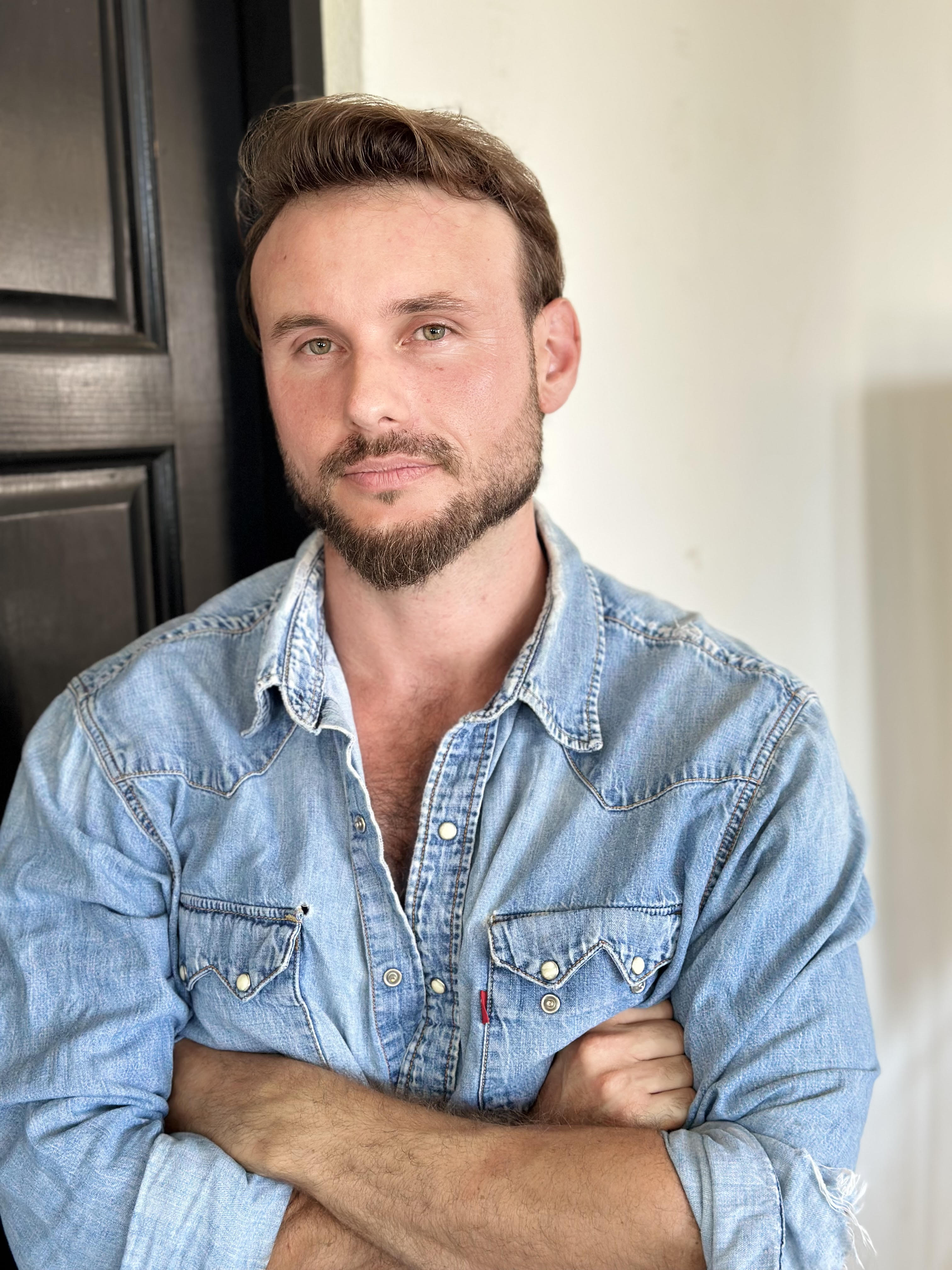
About this episode
Denis O'Shea left Nokia after 15 years, built a company with 250 staff, lost almost everything in the global financial crisis, then rebuilt it into Microsoft's global partner of the year. In this episode he breaks down exactly how being the best at one narrow thing changes everything.
Episode notes
- 00:00Welcome and guest introduction
- 02:11Denis's biggest breakthrough: Microsoft said we were pissing them off
- 03:00Saying yes to an immature product because of the power of partnership
- 04:00Setting the North Star: become the best in the world at one thing
- 05:00Winning Microsoft Partner of the Year and what opened up after
- 06:14How they got Microsoft's attention with provocative blogs early on
- 07:00How Denis would do it differently today: evangelism over provocation
- 08:30Telling the Microsoft story better than Microsoft tells it
- 09:30Win wires and case studies: how to stay top of mind with a partner
- 10:49Where the compete-to-win mentality came from: Nokia in its darkest hour
- 12:00Nokia going from number 11 to number one in mobile phones
- 13:00The Nokia playbook: vision, strategy, execution, and never wavering
- 14:00Dad's shop in Ireland and the lesson about surrounding yourself with good people
- 15:50How Denis handled the lows across 20 years of building a business
- 16:30The global financial crisis: 250 staff down to 15 in one brutal season
- 18:00Pivoting from smartphone training to managed services: how the rebuild worked
- 19:00Getting out of China: why nobody warns you how hard that is
- 20:44Non-negotiables: guitar, pickleball, running, and never watching TV
- 22:0014-hour days with high energy: how Denis sustains it
- 23:05Leaving Nokia: the moment a customer shamed him into starting something new
- 24:30Interviewing hundreds of people to find the recipe for the business
- 26:00Serving a million people across Australia, Brazil, China, New Zealand, and beyond
- 28:30Is technology accelerating or does it just feel that way?
- 29:20AI innovations are moving so fast even AI tools can't keep up
- 30:30AI agents and the mushroom cloud coming for enterprise technology
- 31:26What Denis would build if he started fresh today
- 32:37How Denis personally uses AI and what he sees changing inside companies
- 34:10Two universities, two different AI policies, and what that revealed
- 35:20One person with AI can now do what a team used to do
- 36:25Super optimistic: AI will create many millionaires and a few billionaires
- 37:49AI is magnifying the divide between the haves and the have-nots
- 39:00The endpoint ecosystem study: research as a moat and a marketing strategy
- 43:00Defining your own category and owning the language before anyone else does
- 45:00SEO obsession: measuring search rankings every Friday in the marketing review
- 46:43How to build a body of IP that sets your business apart
- 51:07Becoming narrow enough to be unforgettable: the Microsoft partner lesson
- 55:35The breakthrough challenge: what is the narrowest possible configuration of your thing?
Chapter titles and timings from the published YouTube description.
From the conversation
Excerpts from YouTube automatic captions. They may contain transcription errors. Play a timestamp to hear the original conversation.
Denis's biggest breakthrough: Microsoft said we were pissing them off
business. We were competing We were working with some of Microsoft's competitors, and they approached us in New Zealand and said, "You are really pissing us off." And that was the beginning of an interesting conversation because what they said was they were seeing us pop up in a lot of their major enterprise and government accounts working with their competitors. They were impressed by the work we were doing, but really really upset that everything we were doing was with their competitors. And they said to us, "Would you consider a different future trajectory whereby you stop working with ...
Win wires and case studies: how to stay top of mind with a partner
where we're where where we work today is unlocking the full potential of the Microsoft technology stack. And so, we find that we end up, you know, explaining to customers how to get great value out of their investment with Microsoft. Like right now that conversations are on co-pilot and AI and security and those things. And so for them to say that we're telling the Microsoft story better than they tell it themselves, that was a huge compliment. And so now we use evangelism and then we we use win wires. So where we get a big win together, ...
Pivoting from smartphone training to managed services: how the rebuild worked
Australia, Brazil, China, New Zealand. We were going gangbusters. Everything was going great. I had 29 shareholders because I had raised equity in the business and our business came to a screaming halt cuz of the global financial crisis. We started losing our contracts and our business. At the time we were doing we were working with a lot of the mobile carriers helping their customers set up and use their first smartphones. It was really cool service. And and the business came to a screaming halt and I had to downsize from 250 employees to 15, 1 5. That ...
Is technology accelerating or does it just feel that way?
now using more uh capabilities on their device. They were consuming more data. They were spending more money and their loyalty scores were way higher. And so we were able to then go to the carriers and say, "Here we go. We've got a formula. Let's scale this thing." And that's how we then scaled it and we eventually provided that service to a million people in Australia, Brazil, China, and New Zealand, and UK, Japan, Switzerland, and different places. >> Wow, the power of asking important questions, hey, to figure out exactly what the customer's looking for. That That's ...
Super optimistic: AI will create many millionaires and a few billionaires
they're going to kill it. They're going to kill it. And then there's going to be the have-nots, those who are later on in their career, and I'm I'm feeling very marginalized because I'm later in my career, and I'm struggling to understand, you know, all the implications of AI. I would hate to be 2 or 3 years older and just be lost in the fog. And I know a lot of people are, and that's where I think, you know, 2 or 3 years from now, some will just be, you know, totally left behind, and some will ...
Read the episode transcript
YouTube automatic captions. Names, punctuation and wording may contain transcription errors.
Welcome back everybody to the Breakthrough Moment podcast. We interview successful entrepreneurs and investors and ask them what is their biggest breakthrough moment in their career, the moment that changed everything and took them into the next level of success, impact, insight. And as they share that moment with us, us at home also have those breakthroughs. My name is Zack Dean with special guest Dennis O'Shea. How are you, Dennis? Where are you tuning in from today? >> All right. Thank you, Zack. I'm wonderful. I'm tuning in from Nashville, Tennessee. Say, hey, what's that saying? You're the only 10 I see. >> [laughter] >> Exactly. >> [gasps] >> Had to go there. I did a a big tour around the US last year. We did road trip with a friend and it was a amazing time. I went through >> You did? >> some of the there and it was beautiful countryside. But, let's talk about business today. For everybody at home, I'll give you a quick intro, Dennis, and we'll jump into it. >> Sure. >> Seriously, this is going to be a powerful episode, everybody. Um when we talk about embodiment of entrepreneurship, going from a professional into an entrepreneur, there's a lot of people that I think this episode will speak to. So, most people spend their career climbing someone else's ladder, right? The corporate ladder. But, Dennis spent 15 years as a global executive at Nokia working across Finland, Switzerland, China, Brazil, and Australia. And then at a point where most people would just keep climbing, he stopped. He walked away and started something of his own. That calling within that we have as like, "Ah, I should start my own thing." He actually listened to it. In 2004, he founded Mobile Mentor with one simple mission: to empower people to achieve more with technology. 20 years later, that company operates across the US, Australia, and New Zealand and has won Microsoft Global Partner of the Year. Seven countries, seven languages, 20 years in technology, and a breakthrough story that every founder in this audience or listening needs to hear. Dennis, welcome to the podcast. What has been the [clears throat] biggest breakthrough moment in your career? I am so curious. >> It was about 2015, Microsoft approached my business. We were competing We were working with some of Microsoft's competitors, and they approached us in New Zealand and said, "You are really pissing us off." And that was the beginning of an interesting conversation because what they said was they were seeing us pop up in a lot of their major enterprise and government accounts working with their competitors. They were impressed by the work we were doing, but really really upset that everything we were doing was with their competitors. And they said to us, "Would you consider a different future trajectory whereby you stop working with the competitors, you start working with Microsoft and help us take our immature, half-developed product to market." And they had a product that was doing mobile security that was competing with the more mature products in the marketplace. And of course, I went to talk to my engineers, and they their their their opinion was, "Hell no. That's a terrible product. That would be an awful idea.
That would be a huge step backwards because it's an immature product." And but I said, "Yes." And I said, "Yes." because of the power of the Microsoft partner ecosystem. Not the product, the partnership. And and I had somebody talk to me about what can happen if you embrace Microsoft as a partner. And if they learn to trust you, and how that can open up doors and blow the lid on your business and your ambition and your go-to-market strategies. And that's exactly what we did. We said, "Yes." And they embraced us, and we embraced them. And shortly after that, I moved from New Zealand to the US, to Nashville, Tennessee. So, I started really working with them. And I set a vision for the organization. It was really a rhetorical question. I said to our team, "Look, I know you're not happy about this because it's an immature product. But what if we were to become the best in the world with that technology, with that particular product? If we became the best at deploying that technology in large organizations, what would that mean for us? And we set that as our North Star to try and become the best in the world at one thing. Because Microsoft have 400,000 partners. 400,000. So, when you're a small organization in New Zealand, you're basically sitting on the second last rock before the edge of the planet. How do you get Microsoft's attention? How do you move the needle? How do you matter? How would you ever get them to walk you into one of their large accounts if you're just one of 400,000 nobodies? And so, the strategy was really simple. It was get their attention by being the best in the world at one narrow thing. Stand out. And and that was the breakthrough decision. And we did that and then five or six years later, we won their partner of the year award. And from that then, they walked us into the largest accounts in the world. You know, we work at the top three largest healthcare providers in the world, the largest education providers, some of the largest enterprises, some of the most secure government departments. And every day they walk us into more and more new accounts and they introduce us as their preferred partner. I could not have scripted this. I could not have asked for a better go-to-market strategy than to have Microsoft walk us into their accounts and and position us as their preferred partner. I could not have dreamed of it. >> That is fascinating. Congratulations. That is so so interesting and I can I can feel the passion and the excitement of of partnership where where some people would say as you said in your organization, "No, that's not a good idea." You're like, "No, this is bigger. This is a great idea. Partnership. We can do more together." So, that's really really interesting. I want to know for the other businesses out there today who are wanting to maybe make an impact a or piss off their competition. How do they do it? Real quick, before we continue, a brief message from today's sponsor. If you're an entrepreneur wanting to grow your personal brand, authority, and business through podcasting, then check out findapodcast.io. As you know, the biggest entrepreneurs in the world, they book these massive podcast tours before a big product
launch or an event or book because podcasts build trust faster than anything else online today. So, it's findapodcast.io and helps you connect with a specific podcast in your niche. It writes the pitch, it follows up in this easy CRM. It truly does save time. So, you just show up, do the podcast, and your business grows. If you're curious to learn more, book in a demo at findapodcast.io. Now, let's get back to the episode. I think what we did at the time was was we started writing some pretty provocative blogs. That was really kind of throwing stones. Um and I remember one of the ones I wrote, it was really provocative. I wouldn't do it now cuz hopefully I've matured a little, but but it was something around the lines of is Microsoft serious about mobile security? Or it was something cheeky and something a bit obnoxious like that. Um and and I kind of laid out this this this piece saying, you know, they've done this and it was terrible, and they tried that and it was awful, and and really they're not committed to this market, and and they they haven't really got a credible product. And it was something some very cheeky piece like that. And there might have been a few others that that my team wrote. And um and basically we were able to go into any enterprise in Australia or New Zealand at the time and have a conversation with the customer and then give them three options. And the three options were products that competed directly with Microsoft. And we just didn't talk about Microsoft. We were a bit dismissive in saying that their product really isn't mature. It's not worth considering. You should really be looking at A, B, or C. These other ones over here. They obviously got wind of that. And and realized that they they they were they were not, you know, getting a lot of airtime and the engagements we were driving and we were becoming a a significant player and winning a lot of RFPs to do mobile security at the time. Now, the business has changed a lot, but back in back in those days, mobile security was the thing we were known for. >> So, for someone today, you know, who is wanting to maybe ruffle the feathers, but maybe do it in more, you know, a bit more professional >> Professional way. Please. >> a blog a blog, you know, cuz yeah, you're right. If you do enough of them and you you get in the right circles of people, I guess you can really have your message get into organizations and you got to kind of be a little bit more provocative. Throwing any as you mentioned the throwing the stones. I like that. How would you do it today? >> I I I wouldn't do it the same way today. Hopefully, you know, what I've learned now is that doing positive things is probably going to be more impactful than doing negative things. Now, I know I I know how to get Microsoft's attention in a different way. And it's through evangelism. It's getting really good at telling the Microsoft story. We had one of their corporate VPs say something that I'll never forget. It was one of the nicest things I've ever heard said about me. He said Mobile Mentor is telling the Microsoft story better than Microsoft tells it. And and we do a ton of evangelism,
writing blogs and white papers and doing webinars and presentations and guiding customers on their technology strategy. And we're we're, you know, a shameless evangelist for the Microsoft technology solutions. And we generally find customers have done an okay job, but not a great job in deploying what they've got from Microsoft. And what we find we can do is we can help them get a lot more value without spending another dime. They can get a lot more value by using the technology properly. And so, that's where we're where where we work today is unlocking the full potential of the Microsoft technology stack. And so, we find that we end up, you know, explaining to customers how to get great value out of their investment with Microsoft. Like right now that conversations are on co-pilot and AI and security and those things. And so for them to say that we're telling the Microsoft story better than they tell it themselves, that was a huge compliment. And so now we use evangelism and then we we use win wires. So where we get a big win together, where it's, you know, Microsoft technology going into an organization with our services to do the design and build and deployment and maybe migration and all that. Developing a a win wire, a little case study around that and then sharing that with their sellers. They say, "We're winning together. We're moving the needle. We're having an impact. We're doing good things together in this customer segment, whatever." That kind of positive evangelism is not is way more impactful than poking them in the eye with some kind of an obnoxious blog. That's what I've learned. >> It sounds like you and especially early on and and still today, that's why we're here today. You're still doing this many years later, which we'll go into more of your story. But I'm curious, it sounds like you wanted to play to win. You wanted to ruffle some feathers and you you weren't afraid to be a obnoxious, so to speak, to to get out there. Where did you learn that? Is it in your nature? Is it is it nurtured? Do you have a mentor? How did you learn this entrepreneurial spark, sort of >> If you have a business on Facebook or Instagram, you need to learn about this new amazing AI automation tool. The question is, is your personal profile or business profile manually messaging your target audience every single day? If not, I highly recommend you do this. There's a massive ROI on that. But if you are, there's a more cost-effective strategy. So this is a unique AI software. It runs for you your friend requests, the messages, the likes, even the comments 24/7 in the cloud. So while you're watching podcasts like this or taking calls or while you're sleeping, it's running there in the background. Some of these people are pulling in another five to 20 extra qualified leads every single week on AutoPilot. You can experience the podcast special trial and try it yourself today. Check it out in the show notes below. >> Speak. >> It was Nokia. It was Nokia. I joined Nokia at a terrible time in their history. You know, they're about 165, 170 years old. I joined them in '89 just after the CEO committed suicide.
So, the the sequence of events was the USSR collapsed and that brought down the Finnish economy and that brought down Nokia, which was the largest company in Finland, and things were really dire, and the CEO committed suicide. And it was just It was a terrible time for the country, for the company, for the Finnish economy, and I joined and I saw how they came through that. And basically their strategy was, "We can no longer learn Oh, we can no longer rely on our domestic market and selling to the East." Cuz they had a huge business selling to the USSR, whole federation of all the Russian um states. And they said, "We can no longer rely on on that market for our growth. We have to learn to sell to the West." And they had to learn to develop solutions for the Western markets, and they got into the mobile phone business. And they came in at number, I don't know, I think it was number 11, and then number six, five, and then number one. And they set a target, "We want to become the number one player in the world in in in some in mobile phones." And I witnessed that. I was there for that. I've been 15 years part of the team that made that happen. And that was an incredible journey going from nobody to number one and embracing a market that never really been in before in the Western markets and learning how to grow at crazy rates. That was an extraordinary journey, and I learned a lot about setting a vision, linking that to strategy and an execution plan. And Nokia was maniacal about vision, strategy, execution, and linking those three things together in every annual plan, quarterly plan, KPIs that cascaded down to every individual. And that that was burned deep inside me, you know, how to do that. Set a vision. And align your strategy to the vision, and then execute against that. And hold hold the whole organization's feet to the fire that we're going to follow the strategy and nothing else. Nokia did that really well. And I learned that, and I guess I hope that answers the question. I've actually forgotten what the question was. >> No, for sure. No, yeah, that that's of course that's going to be a massive um part of your your learning. >> compete to win. Yeah. Compete to win. >> That was it. Yeah, that Yeah, for sure. And so, were your parents entrepreneurial? Um what what did your parents do? >> Dad had a shop in Ireland. He had a really cool tourism shop, lots of um knickknacks for tourists. It was great and he was very successful. And he retired at 42. And I thought, "Oh, I want to do that. I want to retire when I'm really young as well." And and and I failed cuz I I'm still working. But I love what I do, and I've no intention of, you know, Yeah, I love what I do. So, I wouldn't say they were entrepreneurial. They were They They were entrepreneurial in the sense of, you know, running a small business in a small town um in a small country. I learned a lot from them, and I applied what I learned probably in a different way. You know, I left that town as soon as I I think at 12. Went off to boarding school and then
university and Yeah, they were they were great in empowering me to go off and seek, you know, wider horizons. >> What What would you say is like the number one thing that they taught you for business? >> Oh, for business. It would be surround yourself with good people. Yeah, they were really good at hiring staff, and it was it was a big shop. They had a lot of staff. And they were really good at hiring good staff and setting them up for success and trusting them and they had some really good long-term players so that my parents could go on a vacation and leave the other people in charge. They talked a lot about the people at the dinner table, you know, what's going on and the dynamics and and of course they had some bad ass people who stole from them and tried all sorts of things. So I just learned a lot about, you know, getting the right people. >> Yeah, it's definitely super important, right? The team the team team work is is the key key to the whole thing. I can imagine through your whole journey it hasn't always been from one success to the next and the next and next or throughout your journey I'm sure there were some highs and some lows. How did you handle the lows? How did you handle the highs? You know, how did you stay so consistent um amongst I guess quite a competitive market in in technology throughout those and still today, you know, that's so relevant. There's so much competition. There's a lot going on. >> Pause, before we continue, the first way we as entrepreneurs introduce ourselves when we walk into a room it's our energy, right? People feel that. And secondly, it's our face. How healthy do we look? So for the entrepreneurs out there who care about how they show up I'd love to share with you personally I've been utilizing some Korean skin care products now just for over a month and I had no idea about them um up until, you know, even just two months ago. But it's by far one of the best investments I've made for my skin. I feel it's literally making me look younger and it has this like glassy super fresh look. And so this is the number one exported Korean beauty brand and skin care line in the world. The ingredients are second to none. Even pregnant women can use utilize them because out there there's so many products that have toxins in them that really make our face not healthy over a long period of time. And so if you're out there and you want to match the energy that you output with how healthy you look, you can try all these products risk free for 30 days. If you don't like them, send them back and get all your money back. If you're out there, if curious, check out the link below to learn. Let's get back to the episode. >> I wanted to reach over but my wife gave me this thing once upon a time. It says, "Never, never, ever give up." And it's usually on my desk or on my bookshelf. Um and it was one of the nicest things she ever gave me because she knew I was going through a hell a few a few different chapters of building the business like anyone building a business. There will be chapters. There will be phases where it's it's it's all going badly and you want to just give up and you know, go back to the corporate world and have a salary. Um but I always had that thing on my desk, never, never, never give up. And and stay the course. But we you know, we we had some brutal times. The the worst was the global financial crisis, 2008. We had 250 staff in
Australia, Brazil, China, New Zealand. We were going gangbusters. Everything was going great. I had 29 shareholders because I had raised equity in the business and our business came to a screaming halt cuz of the global financial crisis. We started losing our contracts and our business. At the time we were doing we were working with a lot of the mobile carriers helping their customers set up and use their first smartphones. It was really cool service. And and the business came to a screaming halt and I had to downsize from 250 employees to 15, 1 5. That was brutal. That was one of the hardest things I've ever done and you know, I cried in front of my staff a number of times when I had to go through those conversations and those decisions. Um but I I I made the business way smaller and I kept a core team and we pivoted from doing the kind of smartphone training we were doing way back then, it was 20 years ago, to becoming a managed service provider with a recurring revenue model. Much better business and that got us into mobile security and our first customer was actually the Bank of New Zealand. I remember they had 2,000 BlackBerry devices. With the old BlackBerry and and they need they were looking for a partner to help them manage all those devices and support all the users and deal with all the things related to having 2,000 devices. And that was the business we got into, helping large enterprises manage their thousands of mobile endpoints and all the security and help them develop apps and help them manage those assets and control the costs and support the users 24/7 and all that. So, that was a big shift. And and and downsizing first, take back control of the business. And I had to buy out all the shareholders. That was ugly. That was really ugly. Um because it was a very disappointing, you know, transaction for them. They just got cents on the dollar. But we were going through an existential crisis. It was either, you know, go bankrupt in China, and that was one option, and which would have probably meant I would be um you know, um eligible for a prison sentence um over there, or or save the business and and and pivot to um keep keep things alive and um navigate a healthy exit, a safe exit. So, we were in a precarious position for a while. You know, everyone tells you how hard it is to get into China. Nobody ever tells you how hard it it is to get out of China. If you have to close down a business in China and repatriate capital back to your home market, that's an unbelievably difficult task. Unbelievably difficult. I had to hire a Chinese accountant for two or three years to help do all the filings and all the paperwork and go through all the all the different departments and tidy tidy everything up in an orderly way. If I didn't, I would have been on a blacklist for life. Scary stuff. So, then there are some very physically, emotionally, you know, spiritually taxing experiences that happen through business. For example, that would have been incredibly taxing. What were your non-negotiables
that helped you maintain your energy? You know, what are the things that fill your cup up so that you can deliver at a high level? Cuz it's, you know, there's so many things that would be taking your focus, draining you. How did you maintain the hustle, so to speak? >> That's a great question. Um I'm a really high-energy person, but extraordinarily high-energy for my considering how hard I work. You know, I've worked about 14 hours a day on average for the last 20 years or so. But I still make time for some some personal thing every day. I'd be playing guitar for an hour or playing pickleball for an hour or two or going for a run. I've always had something which was a purely selfish endeavor, something for me, something for my mental state. And I'm also and that gives me energy and and I'm also very very selective about how I choose to use my time and my energy. Like I've never turned on a TV in my adult life, right? I just don't watch TV. I'm not on social media and I'm not a gamer. So I don't do any of the things that normal people do. >> [laughter] >> I don't watch TV, don't play games, don't do social media. Um but there are other things I do to to a fairly extreme level, which makes me happy and gives me energy and gives me the balance I need so that I can work 14 hours a day and still have high energy at the end of the day I want to do other things. >> An hour a day, that's brilliant. No, that's that's so important. >> Yeah. >> Yeah, I should probably spend more time playing a bit more pickleball or I don't know, you know, but in Australia I'd go to the beach or yeah, I'd >> Yeah. >> you know, spend time with friends and family. Traveling it's a little bit different, you know, I'm a bit more selective with who I travel with and and who's it who who's there. It's kind of like a bit more time with myself. I usually go to the gym, try different gyms or restaurants or cafes, get out of the house. Um I actually do a bit of cooking. I like to cook and you know, create some stuff at home. >> Yeah, just like something completely different to work, you know? Yes. >> Yes. >> Um it's good it's good for the soul. >> Yeah, and being in Australia, you got you know the gorgeous beaches. You know, going for a walk on the beaches is one of the most one of the most head clearing things you can do. It's amazing. I used to love running on the beach when I lived in New Zealand. Just just jogging on a on a on a long beach on the edge. And it's all good. So, good for the body. Yeah. >> Yeah. Uh so, I'm I'm curious about the transition from when you were working at Nokia and then you're like, "I'm going to do it by myself or I'm going to go out there and and start something new." I'm sure there were many many times that you were like, "No, no, no. I'm not listening to that." Maybe nudge to go do that. But what was that that moment of like, "Screw it. I'm going to do this thing." You know, cuz I think a lot of people out there are in that position. They're stuck between a rock and a hard place sometimes. They might really want to do something. Was there Yeah, take us into that moment. >> Just quickly before we continue, if you're an entrepreneur out there or a high performer who wants more clarity and direction in life or maybe you're
going through some kind of turbulent transitional phase. I want to share with you something that I co-built. It's called the Life Blueprint System. It's an AI-powered goal-setting process that helps you create a personalized life blueprint, kind of like an architectural plan or a business plan, but for your life. And so, it allows you to take and capture those big ideas, those those amazing thoughts you have and to turn it into a proven plan of action. And so, if you want to stop guessing and start building your future intentionally and consciously, go to the lifeblueprint.io to learn more. Let's go back to the episode. >> Yeah, I had a major setback in my career or a major disappointment, we'll say, that that really flipped my thinking. I was running Nokia's operation in Switzerland and I had a very close relationship with the CEO of Orange, one of the big European telcos. And at the time, I was in the Nokia's infrastructure business, building networks. The were 3G cellular networks across Europe. That's the business we were in, you know, selling big infrastructure deals, you know, big really big big high value deals. And I was in a board meeting um or in some kind of meeting with the CEO of Orange and we were talking about the next wave of technology investments. And he stared me down and he said something like, "Why would we commit to buying this latest um technology platform from you when our customers are not using the technology you sold us last year?" And it was some some advanced services we had sold them. And I was like, "Ouch." And I didn't have an answer. And I left the meeting with my tail between my legs. And it really forced some serious introspection about the rate at which technology innovation was happening and how it was actually getting ahead of what the end user was using and able to do. And when I stood back and looked at it, I realized that what was happening was um companies like Nokia were spending billions on new technology. Um almost too quickly and and the mobile carriers were spending billions on buying spectrum, but the licenses to run a cellular network. And building out all the towers and the infrastructure and all that. But back then um customers were buying phones and all they were doing was sending text messages and making voice calls. There was no mobile internet. There was no app store. There was no such thing as an app. There was no such thing as social media. They were just dumb phones. They were called smartphones, but they weren't that smart really. So people were just making phone calls and sending text messages. They had a lot of promise and potential in the marketing showed nice fancy colored screens and all that. And I thought, "Oh my god, somebody needs to do something here to catalyze the end users adoption of these so-called smartphones and start using them in a in a smart way as a business productivity tool." So I thought how how how how could that happen? And I took some time off and I did an MBA. And during the MBA I did a bunch of research and I interviewed hundreds and hundreds of people to find out what what it would
take for them to get more value from their smartphone. You know, I was asking some pretty simple questions. And one lady gave me the answer. She basically said, "I would need somebody to sit down with me for 1 hour and help me set up all the things, get my email working, sync my calendar, transfer my contacts to my old phone, help set up bookmarks, get my music working, blah blah blah blah blah." And I thought, "Oh my god, you've just given me the recipe. You've just told me exactly what I need to do." So then I went back to Nokia and I said, "Here's what I'm going to do. I'm going to set up a services company and we're going to sit down with every high-value business customer who buys a smartphone. We're going to sit down with them for 1 hour. We're going to help them get the technology set up and working. We're going to make every one of them super productive and evangelists and then they will want to do the same for all their staff." And Nokia said, "Okay, we will support you." Um with you know, and the with the very um typical Finnish response. And they actually gave me some money to go and um test this out. They were very good. And so did Vodafone. They were the largest carrier in the world at the time. They gave me some money as well. So I mean, Nokia did a pilot and I I provided the service or we I had a small team. We provided the service to 10,000 people and then we compared their usage um of their cellular devices to another 10,000 people who did not receive our mentoring service. And we were able to show this enormous gap. And the people that we had provided the service to were now using more uh capabilities on their device. They were consuming more data. They were spending more money and their loyalty scores were way higher. And so we were able to then go to the carriers and say, "Here we go. We've got a formula. Let's scale this thing." And that's how we then scaled it and we eventually provided that service to a million people in Australia, Brazil, China, and New Zealand, and UK, Japan, Switzerland, and different places. >> Wow, the power of asking important questions, hey, to figure out exactly what the customer's looking for. That That's a huge breakthrough moment. Wow. I'm I'm curious. You've been in technology for so long now, and you know, I'm 36. I'm going I've seen a couple of decades of technology changes and things like this. You've seen a lot more. When you said it's going so the rate of technology was advancing so fast, do you feel the same as it is now, or is it different? Because a lot of the time people like, "Oh, there's so much stuff happening." So but is it always been like this? And we're just noticing it more cuz of maybe marketing or social media, or is it always been advancing like this? We've just now able to communicate it better. >> I think it's I think it's accelerating. I do. I think it's accelerating. Like I can't keep up with the rate of uh innovation in AI. You know, my inbox is full of all these amazing breakthrough things that happened yesterday in AI. It's almost too much for the human brain to assimilate. I almost need a freaking AI
tool to summarize all the AI innovations uh cuz I just can't read all the stuff in my inbox. It's just astounding what's going on and how fast it's all moving. Um yeah, I can't keep up. My head's spinning. It's um it's phenomenal. I mean, I I can't think of a more exciting time to be in the tech space. Or if where we play is we play in the intersection of technology and people. You know, that's our that's our spot. Understanding how technology impacts people and how people use technology and helping to unlock the full potential of the technology. Started out as a smartphone, and then it became all the Microsoft tools like Microsoft 365. Now it's AI. But I feel like the rate of change continues to accelerate. The more technology we have, the more technology gets developed cuz, you know, we've got code writing code, and it's just all it's just all moving so quickly. It's and the next big thing, of course, is in enterprise space um developing agents uh AI agents. It's going to be a mushroom cloud. It's it's just going to be such a circus. You know, we're going to have agents building agents building agents. And no and and no governance or control or um oversight. It's It's There is such a huge opportunity right in front of us, you know, as a technology service partner or technology services company. I'm just salivating at at the size of the problem that we're going to have the privilege of solving. >> You mentioned two things there. You're This is so exciting with what's happening. Also, there's so much opportunity. If you were to start again and knowing what you know today, but start again. You're like, "Okay, I'm just I'm going to start afresh." What would you do? Where would you How would you rebuild your empire again? >> If I were starting fresh today, well, look, it would be it would have to be something to do with AI enablement in business. It have to be something to do with that. Um laying down a basic framework and foundation with one of the platforms, you know, whether it's OpenAI or Anthropic or Gemini or whatever. And then building an agent framework on top of that. And helping organizations manage that, secure that, govern that. I think I would be I think if I were starting fresh, I'd be doing something similar, but just with a super narrow focus on the AI piece. >> And so, you mentioned you've got a whole bunch of different AIs, and you've got a team, and you've got, you know, So, how do you personally use AI, you know? And and and how are you going about bringing that into the workplace? Because I know some people are saying this is taking people's jobs. There's lots of companies laying people off, but there's also these amazing opportunities and amazing career paths and roles getting developed. >> Oh, yeah. >> It's so and I think a lot of the time from social media or the news it sensationalized the fear of this layoff,
this layoff here, this layoff here. And it's quite as a consumer I feel like, "Whoa, like where are we going?" You know, especially in education for the next generation with university and things. I actually interviewed a a tutor yesterday and she tutors a lot of like uh lower school, middle school. And she actually found it's um it's helping the learning and it's it's going to actually bring more support to those that weren't able to learn effectively prior. So, actually it's helping the education and intellect of her students and it's also bringing the cuz some students like, "Ah, I'm not doing that. I'm not doing this." But it it gives the student who doesn't feel empowered a step in the right direction. And you know, at the same time she was saying that certain essays had come back it was obvious it was from an AI and she had to had to pull up on that. But what's your views? Is this an empowering time with AI and work in the workspace? Um or is it kind of like you're still unsure about it? >> No, I'm very sure that it is an empowering time, but it raises the bar for everybody. It really raises the bar. And where I saw this play out beautifully was I had a son and daughter in two different universities at the same time. My daughter's university took a view where they said, "No AI. You're not allowed to use any AI in your assignments." My son's university said, "This is open book. You can have your books. You can use AI. You can access to anything in the library. But the standard we expect from you is way up here. You need to be scoring like 98, 99%. It was my daughter's university this past mark was 70%. So, very different philosophy. And and I think, you know, in the enterprise now, if we're giving people AI tools that are grounded in their work data, can access all the files, all the messages, all the information of the company, they better produce a hell of a lot more than they ever did before. Because they've got all this tech and and all this capability. And if they don't, we're going to have to replace them with other people who are really good at using those tools. Because what's really clear now is one person who is very good at using AI tools, and very resourceful, can produce the same outputs as a team of people used to in the past. I'm I'm a I'm a chair of a a technology of of a SaaS company. And and the the the the change they're going through is extraordinary, where they've got fewer developers than ever before, and they're pumping out new code, new products, new capability faster than ever before. >> Yeah. >> They're spending a lot of money on Anthropic tokens, but that's a lot cheaper than paying for developers. And and they're just moving so fast, and they're having so much fun doing it. And I'm I'm thinking, this is great. This is where we need to go. This is where the you know, this is where the puck is moving. We need to skate to where the puck is going, and we need to lean into this. >> Super interesting. So, you're quite optimistic on the future with AI and >> where we're going business wise.
>> Super optimistic. You know, it's going to create It's going to accelerate a number of things. It's going to accelerate the digital divide. So, there will be the haves and the have-nots. And those who get it and learn to use those tools are going to be just so much more resourceful and so much smarter and so much better off. And from an entrepreneur entrepreneur perspective, the entrepreneurs who really lean into AI in a big way are just going to they're going to kill it. They're going to kill it. And then there's going to be the have-nots, those who are later on in their career, and I'm I'm feeling very marginalized because I'm later in my career, and I'm struggling to understand, you know, all the implications of AI. I would hate to be 2 or 3 years older and just be lost in the fog. And I know a lot of people are, and that's where I think, you know, 2 or 3 years from now, some will just be, you know, totally left behind, and some will be absolutely leading the change. And I think it'll be there'll be a greater divide between those who get it and those who don't than what we've seen with other digital technologies in the past. >> It's just accelerating. >> It is. It's accelerating. And it's also magnifying inequalities and problems in the workplace. Like we just finished our We just do what we do a large international study every 2 years to understand the relationship between people and technology. And a lot of what we're trying to understand is what it's like when an employee comes into a business and they're being onboarded as a as a new employee. They're getting their devices, they're getting access to all the things and all the applications and all that. And their onboarding experience really sets the tone and sets them up to either be super productive and successful or have a frustrating, painful experience. And we like we like to really understand that experience from a the perspective of setting up all the technology. And what we're seeing is that AI is magnifying the old problems. So, if you if your company already had a problem that was, you know, painful onboarding for new employees and too many passwords and and and and and a lot of friction around security and poor support for employees, guess what? It just got a whole lot of worse. Just got magnified because people's expectation now is so much higher. So much higher. You know, you can sit at your home computer and you can just log into chat or any uh any free large language model and be amazingly productive on your home computer. And then you come to work and you got all these guardrails and all this security and all this friction and and all this pain that's grinding you down, holding you back. In some organizations, right? In some organ- Others do a really good job of saying, "No, no, we're going to try and provide a really, really good employee experience." And they're laser-focused on that. Um and and the gap between those organizations who are really good at empowering their staff and those who are not, that's going to widen as well. So, that's why I say AI is going to magnify the inequalities and the problem and the friction and shine this great big
burning laser on the problems that were small problems in the past, they're going to be huge problems >> going forward. I hope there's people listening right now, the the entrepreneurs and the entrepreneurs of the future that like, "Huge problem means huge solution, which means huge >> opportunity. >> Yeah. >> Yeah. We we have the privilege of living through a transformation that will create many, many, many millionaires and quite a few billionaires. >> And probably very soon. >> And and there'll be one trillionaire within a couple of months, apparently, once SpaceX IPO goes through. >> Wow. >> Yeah. >> And this is this is the some of the circles that I'm in and I'm yeah, I'm seeing a lot of people who are coming out from companies with amazing skill set and now sharing AI news and AI skills and AI education, which is brilliant. And I've learned so much, you know, as much as we can feel behind, like I felt behind the AI thing a couple months ago and I was like, "Either I'm going to just going to completely let go, go off the the boat and just feel like I'm drowning >> [sighs] >> or actually, if I get into it, I can if I find the right coaching and the right tutorial, the right thing, I can learn." And I've learned my my skill set and AI has gone past the person who introduced me to some of these principles since I've been doing this work. >> Please share with me what what have you done to learn? >> I love to learn in a way of like I become obsessed. It's kind of like a single focused and I'll sit here for 10 so hours just like you know, I'll have my break, go to the gym, make some food, have a walk, you know, and then just and I just feel like I'm a kid in a candy store. This level of creation of thought to to thought to creation is sped up. It's like thought create thought create and it's I've never felt so excited for business actually and optimistic and like wow, this is so aligned more aligned than ever. >> Are you doing five coding? >> I'm doing five coding. >> [laughter] >> Right. Right. I have seen this play out with a bunch of people where they describe their creativity and their energy and the amount of fun they're having in the way you just did and the way you lit up over the last 60 seconds when you're talking about it. It is it's like being on drugs. It is phenomenal. I've discovered this amazing new drug and >> They say it's more dopamine than gaming. That's why. >> Wow. >> And I think it's it's problem solution idea complete, you know, dopamine dopamine end result. >> Yes. Yes, that I got I can totally see that. Yeah, cuz it the traditional coding process was quite frustrating and hard and recompiling and testing and trying to find your bugs and errors and all that and and now it's just so much easier and >> Yeah, instant gratification. >> Exactly. Exactly. And it's it's still not for the faint hearted. You know, I do feel like
sometimes AI gets a little bit wood dull. Over time this there's the things that are happening and like why did that like you missed completely obvious thing. So this it's not a complete but you know, that's going to get better. 6 months, 6 months even better. I got some friends that are developers and the vibe coding really is 10% of the real proper coding, but it obviously the vibe coding helps the it go hand in hand, but for some of the ideas that people have out there that want to like create something. I've shared it with a friend and he he's like, "Wow." He's like, "I know what you're talking about now. I can't sleep." >> [laughter] >> So how did you how did you ramp up your skills? What did you read or what did you listen to or what did you watch to to get to where you are now compared to 2 months ago? >> Yeah, I watched a YouTube tutorial. I had a friend of mine actually set me up properly on cloud code and he gave me an example. He's like, "What do you want to create? What do you need right now?" I was like, "Oh, I need a CRM to track some of the people in my network." It's like just an easier CRM. I was like, "Okay." So he built it on notion. I'm like I saw him do it. So I saw him >> He built a CRM for you? >> Yeah. Oh my god, that's so easy. >> [laughter] >> In 15 minutes. Just I'm not even, just 5 minutes. >> And it tracked, you know, all the projects I've got and all the networking I'm doing and da da da da da and he put it on a notion board and the notion board is a free plug-in that allows to put it in different pipelines and I was like Oh. I kind of felt shocked. I was like, "Okay." And then I slept and I and then he sent me a tutorial on YouTube and I watched the tutorial like a 3-hour tutorial, you know? And then I watched another like 3-4 hour one. I was like, "Okay. Okay, I get it." And then I just started coding my some cool things. >> Wow, that's impressive. >> [laughter] >> But that's kind of my nature though. Like I I I do pick up things quite easily. Once I I go ask so many questions and then I clicks I'm like, "Okay. I'll go do it." You know, but until then it's a very slow process to be honest. >> Yeah, yeah. But I'm impressed that you were able to, you know, carve out the time to do a couple of 3-hour tutorials. That's impressive. >> It took some time. That was over some some days and this and that and, you know, it's kind of it's one of those things. So you're on >> you're you're clearly on the drugs now and getting the dopamine hits [laughter] and >> Yeah, I want to be in rehab shortly. This is like coding vibe coding rehab. >> [gasps] >> There you go. >> I don't know. It's probably >> Never a bad idea. >> With the amount of things in the world that's just like >> There's a couple other questions I have for you, Dennis, and I any you call you you keep speaking into this uh even evangelism of a story. Evangelism of really just going above and beyond share and that's such a great way of going about like explaining it. If someone wants to start integrating to become more of an evangelist for their own business and their own industry and
really kick the gear up on this storytelling that you mentioned before, how should they go about it? >> Is there any tips? >> Great question. Yeah, I got a great tip from a friend of mine who runs a phenomenal marketing agency. And what I learned from her was if you really want to build a moat around your business and create a clear point of difference, doing some research and developing your own body of IP is a great way to start. And so we we we do that now. Every 2 years we do a a large international study to understand, as I mentioned before, how the relationship between people and and their technology. We sponsor the research, we pay for it, we own the data, we build an independent website, and we share all the results for free. Any analyst, any researcher can take the findings and use it as long as they give attribution to to the source. But when we then get the data back, we can then do webinars, podcasts, presentations, pull our customers together and say let let us share with you what the data's telling us, how people are feeling about the technology, how are they feeling about security and and friction in their organizations, what's holding them back, why are they working around your security and using tools you didn't provide to them. You know, what are the issues and sharing what's actually has happening in the world of the end users and sharing that with our customers who are basically the IT teams in large enterprises. So, we're sharing with them something they don't know. So, we're being we're we're we're educating them and sharing something and then interpret it and figure out what it means. And what do we all need to do then as IT leaders? You know, our customers are IT leaders and we're working with them to deploy technology. So, what does this mean? How do we make sense of it? And what are the things we need to get right based on what we now know about the user sentiment and user issues. So, that process of doing your own research, publishing it, sharing it with the world freely, and developing your own unique perspective helps set you apart or helps set us apart from all the other competitors. As I mentioned, Microsoft have 400,000 partners. We want to make sure that we stand out as the one partner that comes to mind when people have need help with a specific technology. And part of being the one is defining our own category. We defined our own language. Like we use the words endpoint ecosystem. Endpoint is a generic word that means any device. Can be a Windows machine, a MacBook, an iPad, an iPhone, any device that's called an endpoint in the industry. And so, we talk about the endpoint ecosystem. So, it's not just the hardware, the device, but it's the software that runs on it, all the applications you use, the security, your login experience, and the support you need to set it up in the first place, and you know, right through the whole of life. We describe that as the endpoint ecosystem. So, we've defined that language as our space. Nobody else was using that, so we bought every domain name you can imagine. endpointecosystem.com, .net, .biz, .org, all the rest of it. Published the research as the endpoint ecosystem study, and we use that
language everywhere. And it it really resonates. Now, we see Microsoft using the same language in some of their marketing collateral. They're talking about the endpoint ecosystem. And then and all the things that it means. And so, we have been bold in defining our own category and positioning ourselves as being the leader in that category, rather than just banging on about security or productivity, which are very jaded, overused, tired, meaningless words these days. We just don't want to use those terms, but we still talk about the tension between security and productivity, but we contextualize it by talking about the endpoint ecosystem. That's our that's our space. And we want to be the world leader in and what and and understanding users and their relationship with their devices and all the things that happen related to their devices. Um So, that's what we've done to build a moat and create some differentiation. >> That's the most incredible insight into Yeah, standing out, being just being disruptive and like forward-thinking, etc., etc. That's such a genius idea. What So, then how do you then So, then by continuing that narrative of the endpoint ecosystem, or then being even you've being evangelical to that and and building that following, which comes back to your business. >> Correct. Correct. You know, we want to be seen as the organization that's providing unique insights and a lot of good, useful, digestible content. And we're pumping out deliberately pumping a lot of pumping a lot of content, so that when people go and search for something online, we want to try and pop as number one in the organic rankings. And so, we're obsessive about measuring all the search terms we care about. We sit down in marketing review every Friday and we look at all those search terms. And and look at how many of them were we actually number one. And that's what we're aiming for is to So, if you go and search for specific things um like migrate from a certain technology to a certain technology, we want to show up as a number one um SEO result and and and that's what we care about. Cuz then we know when people are looking for this thing, they're finding us. They see a blog or a white paper or a case study or something and they look at that and that might bring them to our website and they see other things and and now now they're now they're at the top of the funnel and hopefully we'll keep moving down the funnel. >> Wow, that's genius. Absolutely genius. So, I'm I'm about to ask my favorite question one of my favorite questions from the podcast. Um but you know, if people are wanting to reach out with you, I'll put your links here around the the the podcast. What's the best way they can reach out? Is it just follow you on LinkedIn or >> LinkedIn is the only platform I'm on cuz I'm not on social media. But I but I am on LinkedIn. Um so, that's cool. And then otherwise, just Dennis with one end e n i s at mobile-mentor.com.
Dennis@mobile-mentor.com. >> Excellent. I'll put that here around everybody out there who is wanting to connect with Dennis and uh I guess yeah, be be on the forefront of an industry leader that you guys can learn a lot from, please reach out or or message me. I'll get get you in touch. Um my final question is you know, this >> I'm a bit nervous now. Yeah. >> [laughter] >> The theme I was it's harmless. The theme of the podcast is around breakthroughs, okay? We really want people to have a breakthrough today. >> Yes. >> Definitely from what you shared, there's so many breakthrough moments and ah-has and I've got a page of notes. But what would you challenge the audience, the people listening who are like, yeah, okay, I want to want to take my business to the next level. What would you challenge them with to help them also have a breakthrough today? >> I would encourage people to think about the narrowest possible configuration of their business. To consider what it would look like if you narrowed your focus right down so that you could genuinely become the best at one thing in your town, in your market, in your city, in your country. There's this concept of um I think it's called Hadrian's Wall. Are you familiar with that? Hadrian's Wall, there's this impenetrable wall and all these forces bouncing off the wall and not getting breakthrough to the other side of the wall. And the the the the way of getting through is having a super narrow beam of laser light kind of get through the wall. And that notion of being super narrow, super focused, doing one thing, and being the best at one thing. That's the thinking that I would encourage. Sometimes it's so easy as >> said than done, hey? Like it's just like oh yeah, I can do that. And it's just like but it's so powerful. I think it's probably that's I'm so glad you said that. It's such a great reminder. I find myself, especially with this coding stuff, I'm like, whoa, there's this like a world of possibility. But to to hone in and really >> Yeah. Yeah. What What what how could you do something super narrow and focused that would set you up as being the absolute best in a specific area or activity or market or service or product, whatever your business is. That's the way I like to think about it. That's the narrowest possible configuration of your thing. >> And that's not spoken about enough. I really don't think that's spoken about enough because >> [snorts] >> I don't know, but the companies that do the greatest, I feel like there's a problem and a solution and people get it and then they do that amazing well. >> Yeah. And what I know in reverse, I know it now cuz I've got a good relationship with Microsoft. They get bombarded every day by all these partners who come to them and say, "Hey, choose us as your partner. We can do everything for you." And right And that's where the conversation stops. We can do everything. Because now you're just one of 400,000 trying to do everything, and you don't stand out, and you're not memorable,
and you're You might have, you know, 40,000 people in India who can genuinely do everything in the Microsoft space, but you're in But you're doing everything. I feel like the organizations that are that get attention, at least what I see in the Microsoft partner ecosystem, are the small ones who are super focused and who say who who are like like we do. We say no to a ton of things. Microsoft say, "Can you do this? Can you do that?" We've got, "No. No. No. No. No. No. No." We say to customers, "No, sorry. We're not your We're not the partner for that. But, if you want to do this thing here, we're absolutely the best partner, and our mission is to try and be the best in the world at that." And we use those words very carefully. We're trying to be the best in the world. We're not arrogant enough to say we are the best in the world cuz that's the beginning of the end. Um but but saying, you know, we're trying to be the best in the world is our, you know, hopefully that growth mindset. There's always more to learn. There's always more to figure out. It's a journey, and we're never going to We're never going to reach a destination, but we're trying to be the best in the world every day at the things we do. And And we find that wins business. You tell customers, "There's a whole bunch of things we can't do, but there's this one thing. Yeah, we we we want to be the best in the world at that. Please, you know, that's That's us." >> You've connected so many dots for me. You've helped me have a bunch of breakthroughs on today's podcast. I thank you so so much. Everybody at home, if this allowed you to see the world differently, business differently, well, whatever your aha moment or breakthrough was, please put it into the comments. Please share this with somebody else who you want to help have a breakthrough moment today as well. Like, subscribe, all the things. Any final comments, Dennis? This I'm sure I could chat to you for hours, uh >> Yeah, I I could do the same. I then Thank you, Zach. You you've I guess you you've given me a a platform to share a few things here, which has been really really interesting for me to do some introspection as well through the good questions you've asked, but I would say to your audience, you know, get out there and crush it. Crush your market and try and be the best Try and be the best at what you do in in in in in one narrow area. And if there's anything I can do to help in any way, please reach out to me. Um love to share. And and help people on the way. >> This has been brilliant. Absolutely brilliant. Thank you again, Dennis. Thank you so much for your time. And everybody at home, we'll see you next time on the Breakthrough Learning podcast. Over and out.