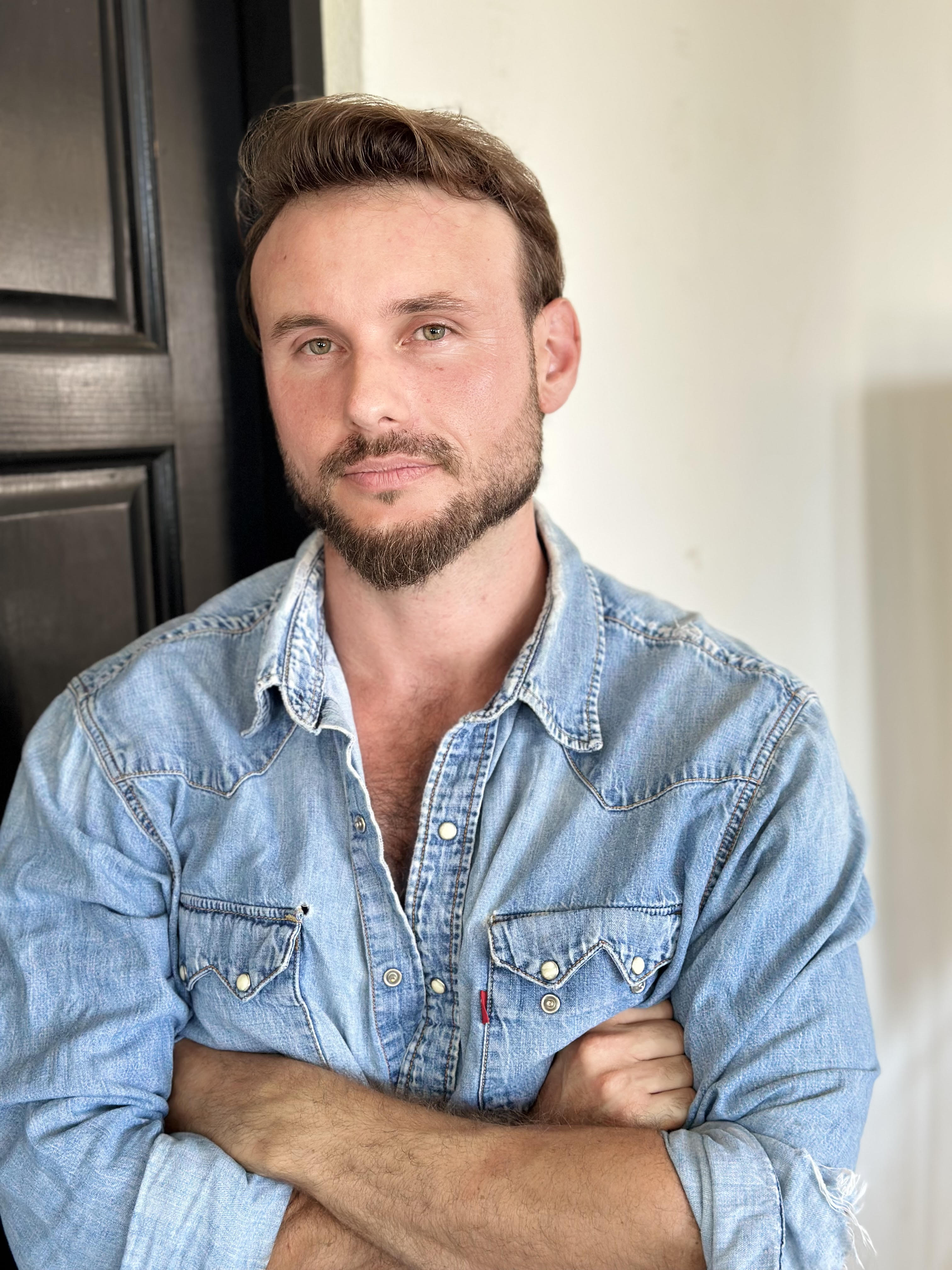
About this episode
What does success really mean after you've built and sold a company?
In this episode of The Breakthrough Moment Podcast, Zac Deane sits down with former CEO, entrepreneur, author, and speaker Jim Tracy to explore the lessons behind building a business from two people to nearly 200 employees.
Jim shares his journey through entrepreneurship, leadership, family, faith, and the power of building a company culture where people genuinely care about each other.
From handwritten birthday cards to life-changing mentorship, discover why Jim believes the greatest legacy isn't just what you build, but the people you impact.
Episode notes
- 00:00Meet Jim Tracy
- 01:52The father-son business that changed everything
- 03:50Why failure is the price of learning
- 05:34Jim's early entrepreneurial setbacks
- 06:53The mentor who taught him about reputation
- 09:08Why people buy from people
- 11:49The wisdom Jim learned from his grandfather
- 15:06How the Grampian podcast began
- 17:51Balancing family, business, and purpose
- 19:48Running again after a serious injury
- 22:13Why relationships matter more than isolation
- 25:46The mindset behind Jim's energy and optimism
- 29:27The problem with doomscrolling
- 31:05How Jim's definition of success changed
- 33:55Why he wrote 200 handwritten birthday cards
- 34:53The real job of a CEO
- 37:00Empowering employees to do the right thing
- 40:49Leadership lessons from Management by Cliche
- 43:50Setting high standards without losing your team
- 48:56Jim's books and Business Revival Blueprint
- 54:07The faith experience that changed his life
- 57:35Jim's morning routine and breakthrough challenge
- 1:00:08Final lessons and reflections
Chapter titles and timings from the published YouTube description.
From the conversation
Excerpts from YouTube automatic captions. They may contain transcription errors. Play a timestamp to hear the original conversation.
Meet Jim Tracy
Welcome back everybody to the Breakthrough Moment podcast where we interview successful entrepreneurs and investors and ask them what is their biggest breakthrough moment, the moment that changed everything and took them into another level of impact or insight, success. And as they share that moment with us, us at home have breakthroughs as well. I'm Zack Dean with Jim Tracy. How are you today? Where are you tuning in, sir? >> I am in Boise, Idaho, Zack. Thanks. What a thrill to be on your show, brother. >> Thanks for tuning in. Yeah, uh we connected a couple of ...
The mentor who taught him about reputation
>> Okay, um his name was Leroy Landoll, and and as I recall, I was sitting in his office. I was to move into sales because it was a sales organization. And he sat me down in his office. It was a a Friday afternoon. I was supposed to head out on Sunday on the road, and he said he called me JT. So JT, let me see your business card, and I gave him my business card. I was pretty proud of it, you know, your first new minted out of college business card, and he said he said, ...
Balancing family, business, and purpose
family? >> Yeah. Number one, marry well. I have a wife who has been beside me for 46 years, and she helps me with my calendar, she helps me with the books, she helps me keep my priorities straight. And um and so I would say number one is marry well, but number two, um if you give a little grace, people will give you a lot of grace. And so, if I'm running late, my my kids and my and my my daughter in particular will hold dinner and things like that, but I really don't buy into the ...
How Jim's definition of success changed
>> You know, I I get a lot of time to think about that especially, you know, when I'm flying um and and I don't think that my definition has changed um in the past 10 years, but it has but it has expanded. And um here again, I'm I'm going to be 68. So, uh I used to think of it in terms of some monetary things and then the size of your company and there's a lot of ways to keep score. And you know what I want? I want 20 grandkids circling around my grave saying, "Wow, ...
Leadership lessons from Management by Cliche
>> It is there is a there is a incredible opportunity for us when we look at at learning from people who've been down that road before. And uh you know, that's why that's where you mentioned the wisdom. Well, I wrote some of that down in a book that's coming out. It's called Management by Cliché. And those clichés are wonderful because it's just you you take a lot of those lessons and you distill them down into a single phrase. And um they they they come into play because they're so understandable. One that we developed at Legacy ...
Read the episode transcript
YouTube automatic captions. Names, punctuation and wording may contain transcription errors.
Welcome back everybody to the Breakthrough Moment podcast where we interview successful entrepreneurs and investors and ask them what is their biggest breakthrough moment, the moment that changed everything and took them into another level of impact or insight, success. And as they share that moment with us, us at home have breakthroughs as well. I'm Zack Dean with Jim Tracy. How are you today? Where are you tuning in, sir? >> I am in Boise, Idaho, Zack. Thanks. What a thrill to be on your show, brother. >> Thanks for tuning in. Yeah, uh we connected a couple of weeks ago and you're doing some massive big things and I am curious to know more about many parts of your story. So, let's let's dive straight into it. Let me do a quick introduction and we'll get into your breakthrough moment, hey? >> Go for it, man. >> So, everybody at home, most former CEOs retire, right? They've had their time, but Jim got his pilot's license. He had 20 grandchildren and started flying him himself himself around North America speaking on stages. So, if you're if you're presenter, if you speak on stages, we're going to dive into that today. He calls himself the Grampian, three decades of turning around, building, scaling, buying, and selling businesses across multiple industries, best-selling author, award-winning speaker, podcaster, and former CEO. This guy has done it all and is still going faster than most people half his age. So, I'm looking forward to to Jim bringing it today. Stick around where Jim Stick around at the end, Jim's going to reveal within his breakthrough moment, um what it actually takes to bring your dreams to life. Um anybody out there who's really wanting to start, this is the podcast for you to get the fire started for yourself. Jim, welcome to the Breakthrough Moment podcast. Let's start with your breakthrough moment and go from there. >> All right, Zack. Thank you again for having me on. Um my breakthrough moment happened at our at our dining room table. My son went to work for a tower contractor, a person company who builds cellular towers in these days and um, and I went out to their job site and I wasn't thrilled with their safety practices. So, uh, we came home and we're talking about it at dinner and I told him, "Hey man, you got to quit your job." And uh, he said, "No, I like my job. I don't want to quit my job." And so, uh, I I kept on him a little bit. I hopped on him a little bit like dads can do. And then one night he came home and he said, "Hey, if if you're so if you're so smart, um, let's do it ourselves." And we did. We started Legacy Telecommunications with just the two of us and it blossomed into, you know, uh, pretty good sizeable entity that was that was sold into private equity and away we go. >> Wow. >> Okay. >> Yeah. >> So, father-son business. >> It That's the way it started, yeah. For sure. >> Okay. >> For sure. And my wife did the books and
my daughter helped out too. Yeah, then we had lots of lots of lots of family business. But yeah, we we started that in actually in '99, incorporated in 2000 and then we sold it into private equity in 2018. We were four locations and uh, close to 200 employees by the time we got got into the private equity market. >> Amazing. So, what advice do you have for maybe someone who's in a similar position, they've got a skillset, maybe they can go out and do it themselves. They haven't made made that jump, maybe they don't have the courage or the confidence or maybe they don't have the great dad that you are or that you were to your son. What what advice do you have for them who are wanting to kickstart their own business? >> Well, you know, >> way. >> as I look back across my history I let a lot of mistakes and errors and failures pile up. And rather than to fret about those sometimes epic fails, I put them to use. Those are mistakes that you don't that you know you put them in the tuition bank. And then you don't have to make those mistakes again or again and again. And and you learn from them and then you make sure that you teach them so other people get that low tuition balance that you that you get to pay forward to them, you know? >> Well, well I I do know and that's definitely part of the podcast and and the awesome guests including yourself. Where did that come from? Are you a did you have parents who are entrepreneurial or had big hearts and wanted to make a difference as well or did you have a mentor or where did you get this entrepreneurial spark from? >> Quick, before we continue a brief message from today's sponsor. If you're an entrepreneur wanting to grow your personal brand authority and business through podcasting, then check out findapodcast.io. As you know, the biggest entrepreneurs in the world they book these massive podcast tours before a big product launch or an event or book because podcasts build trust faster than anything else online today. So it's findapodcast.io and helps you connect with a specific podcast in your niche. It writes the pitch, it follows up in this easy CRM. It truly does save time. So, you just show up, do the podcast and your business grows. If you're curious to learn more, book in a demo at findapodcast.io. Now, let's get back to the episode. >> Well, you know, I I had it since I was in college. I I was a welder in my in my future father-in-law. I told him I wanted to marry his daughter. He said, "Where are you going to school?" And I'm like "Wow, if that's the price of entry anywhere you want." And so uh so I went to college, and I got out of college, got a great job with a great mentor, and I had that entrepreneurial itch, and and that
resulted kind of in a in a failed business, so I had to go get another job again, and and uh got the itch again, and that resulted in um a down economy, which which kind of shut down the business, so I went up and got another job again. That took me over to the Pacific Rim and some other places where I just I just piled on learning from people who I'd worked for and who worked for me. And then at the end of the day, if I look if I looked at all those things together, they kind of culminated. That's what prepared me to be ready to build and grow a business. >> Oh, okay. So many questions there. So that first mentor, what what was that job, and what was the most What was maybe say one of the best or most memorable pieces of advice you got from that first mentor? >> Okay, um his name was Leroy Landoll, and and as I recall, I was sitting in his office. I was to move into sales because it was a sales organization. And he sat me down in his office. It was a a Friday afternoon. I was supposed to head out on Sunday on the road, and he said he called me JT. So JT, let me see your business card, and I gave him my business card. I was pretty proud of it, you know, your first new minted out of college business card, and he said he said, "Whose name is on this card?" And I said, "Boy, Leroy, mine is." And he said, "Um son, my name is on that card. And everybody in this company, when you go out on the road, you're carrying their name, our name, and our reputation as a firm. And I expect you to be a gentleman. I expect you I I you couldn't say it these days, but he said I expect you I don't ever want to hear of you going in a bar alone or stepping out on your wife. I want you to be a gentleman when you represent us in this company." And wow, we have uh taken that to heart and I've passed that story along so many times. I'm just so grateful that Leroy handed it to me when he did. >> What a great piece of advice. >> Yeah. >> Yeah. >> Yeah, it's a really good reminder. And whether it's a business or a family or I guess the community or a country or the world, you know, we're all >> Yeah. >> responsible for how we show up every day and we're influencing everybody or impacting people around us just from showing up and how we Yeah, I wish I wish more people uh could uphold how amazing it is to be a human, you know, I think the world has lost a lot of the values and ethics and traditions. You know, maybe for good reason with some of them, but what what do you think has been maybe some of the key fundamentals of of business that maybe have have disappeared over the years or you know, because with AI, it's changing the game. With technology, it changes the game and every little tech jump, there's there's a little bit of humanity that kind of gets left behind.
Um and so what do you think is one of the things that we should maybe bring back from the old and into the new that would really help business today for today? >> Yeah, well, one of the things that he told me um in that I'll I'll use it as a cliche. Um it's not about you, it's about us. And um and and that just takes it into the next portion, which is if you're in the if if you're in the business of producing or selling any goods, services or anything, um people don't buy from companies, they buy from people. Amazon might be the uh the part that that really that doesn't really hold up, but if the people from Amazon don't deliver on time, you're probably not going to buy from them either. So, people actually do buy from people even from Amazon. And if we take the time to build relationships, especially on a local basis, um in the community that we're in, in the community that we serve, you're we're going to have a better community for it. I was just in an event called 100 Men for Good in Boise. And once a quarter, there's 100 guys that get together and they hear a pitch from three nonprofits, and then we vote on which nonprofit gets it, then we all throw 100 bucks into the into the hat, and that nonprofit gets $10,000 to go do good in the community with. And those kind of things are the things that are going to keep us AI cannot duplicate that. It doesn't matter how hard it tries. So, focus on your community. >> For sure. Interesting. Yeah, there's there's a theme that's happening more and more on these podcasts. People are coming back to quality quality over a quantity. I think people are realizing that AI stuff is just taking the quality away, and the speed and things like this. But yeah, community is super important. I met some some super connectors, and they're doing some amazing things over in San Francisco, bringing people together. His podcast actually, and we'll chat about yours later, but it's like he does I think he gets like 20 guests, and let's say that's like 10 guests, and he does a 15-minute podcast, but gets them all booked in on one day. So, back-to-back-to-back-to-back-to-back, and then goes out for dinner and lunch, or you know, socializing with everybody afterwards. I'm like, oh, that's a great way to do it for that whole season. >> Very [laughter] cool, yeah. Yeah. >> But I think there's a theme here amongst the podcasters that I've interviewed and the and the entrepreneurs. It's this uh desire or high value for learning. I absolutely love learning. These podcasts, I learn every single day. It sounds like you have that as well. Where did you get that desire for for knowledge? >> Wow. I You know, I think my grandfather um uh I have a grandfather who was uh who was a small-town doctor. I mean, back in the Depression, he traded I
mean, this is a guy born in 1903. He traded his medical services for chickens and eggs during the Depression. So, he understood understood scarcity, but he also said, "He who He He who serves best profits most." And if you think about that as a as a um a theme, that really works. However, this was a guy who lived in the eastern plains of South Dakota and read the Wall Street Journal every morning. He was a voracious reader, not only of news, but of books and and uh you know, we obviously had no internet then, but but when you consume that much information, you become a dispenser of wisdom. >> Couldn't agree more. How many episodes have you done on your podcast now? >> Um on this one on the Grampian, I'm in 120 or so right now. And uh we've got a couple of couple of hundred that we did as a company and then as an industry podcast, but um yeah, that's hundreds years ago now. >> So, so you maybe got a a bit of the the growth mindset or or thirst or unquenchable thirst for knowledge from your grandpa. You think? >> Yeah, and not only that, it gets fed. When you When you do a podcast with somebody, you It doesn't matter who it is. You learn a great deal from them. You get You get an incredible amount of information, but it's dispensed usually in stories that are sticky. And those stories are what people remember. >> Yeah, 100% interesting. So, um you have been podcasting for a long period of time now. What what's is the like the vision behind your podcast? Why why did did you decide to start this new one? This grumpy and identity is something I've never heard of before. It's fascinating >> [laughter] >> and a bit humorous. But how did that come about cuz it really does seem like you're you're spinning the plates or not just spinning like like you know, really um playing the the instruments of life and all the instruments as as best you can. It's it's quite inspiring. So, um yeah, how did that all come about? >> If you have a business on Facebook or Instagram, you need to learn about this new amazing AI automation tool. The question is is your personal profile or business profile manually messaging your target audience every single day? If not, I highly recommend you do this. There's a massive ROI on that. But if you are, there's a more cost-effective strategy. So, this is a unique AI software. It runs for you your friend requests, the messages, the likes, even the comments 24/7 in the cloud. So, while you're watching podcasts like this or taking calls or while you're sleeping, it's running there in the background. Some of these people are pulling in another five to 20 extra qualified leads every single week on autopilot. You can experience the podcast special trial and try it for
yourself today. Check it out in the show notes below. >> Well, I as I said, I did one for our company and it was at first it wasn't even a podcast. It was a we did a conference call with 100 people on the phone because I wanted them to get what was in my heart, what was in my mind, where the company was going. You know, when you ignite people around a singular goal, then you got a team that's working together. So, we did that and then we merged into another company and and that became a video podcast and we did I don't know, 85 episodes of that and then and then um when I began the thought process of stepping down as CEO, this is the part This is one of the parts that I really missed. And my grandson Wesley was with me and I beat him in a card game and Wesley is a uber competitive kid and he stood up and he said, "You're not grandpa." And I'm like, "What?" >> [laughter] >> You can't tell me that. He says, "Well, you're not a champion, either." And uh and I'm like, "Come on, man." And he said, "You're grampy." And and that title has stuck with me and I actually I actually am humbled by it because uh it really became the you know, the earmark of a terrific podcast and and so now we say it's grandpa chats with champions because I'm not bold enough to call myself a champion. >> That is such a cute story. Oh my gosh. Has he ever been on your podcast? >> He was episode number one. >> Yeah. Oh, that's good. >> Episode number one. Yeah. And not only that, you know, um because of a really very bad I've been so blessed with a with a background that just spans so many different industries that whether it be politics, sports, business, aviation, um religion, you name it. We have such a wide variety of guests, but all of them really talk about some aspect of becoming a champion. And it's not that, you know, uh World Cup dopamine moment. It's the grind and the team and all the things that it took to become a champion at whatever they're, you know, really really gifted at. So. >> And you've got 20 grandchildren. Is that right? >> Correct. Yeah. Actually, the 20th will be born on October 5th, 2026. So, and one great grandson now. I think since we talked I have a great grandson, so. >> I can't keep up. Oh my gosh. >> Yeah. >> And you know, I find it hard enough to to manage my time and build a business and have a social life, let alone having such a big family, so it's quite inspiring. How do you juggle it all? How do you prioritize and and make time for business, you know, results, but also family? >> Yeah. Number one, marry well. I have a wife who has been beside me for 46 years, and she helps me with my
calendar, she helps me with the books, she helps me keep my priorities straight. And um and so I would say number one is marry well, but number two, um if you give a little grace, people will give you a lot of grace. And so, if I'm running late, my my kids and my and my my daughter in particular will hold dinner and things like that, but I really don't buy into the whole retirement bit. I think that all of the things that I've been given um in business and in life are nuggets of wisdom. And that's what I bring to the table now. And when I can dispense those at whatever forum is available to me, I'm blessing the people because they don't have to pay the hard price of you know, learning by trauma. Training by trauma as I call it. And so, if I can help them through that or help them with that, wow, what a blessing. And I just tell these young guys, man, just try to keep up with me. >> Okay, and what's your secret, Jim? How do you How do you have so much energy more more than The >> I don't know. I don't know. Just eat well, exercise, and keep your priorities right. And yeah, and run fast because when I die, I want a tired, old, worn-out body that just gave up, you know? I don't want to I don't want to I don't want to die uh barely able to swing a golf club. >> Sure. >> [laughter] [gasps] >> Um now, from this, uh what about spending time with a lot of these young rugrats and grandchildren? Does that keep you keep the spark alive as well? Cuz every time I see kids, it brings out the childish part of me, you know? The childlike part of me, I mean. >> One of the things that happened is I broke my leg very, very badly, and the doctor said, "Hey, you know, it The first he said you're going to lose your leg." And then he said, "Well, you we we, you know, we surgery was good. We saved your leg, but you're never going to run again. You're probably not going to be able to walk right." And I'm like, "Okay, I got my leg. That's good. I mean, that's a really good start. You wake up and you can see your toes." And then and then I started thinking about it. I'm like, "I'm not going to let a diagnosis determine what I'm going to do." And so, we started walking, and that turned into a very slow trot, and that turned into and and now, with my grandchildren, I run 5K terrain races so that we can I mean, and I don't run very fast. I am going to be 68 years old, but you know what? Nobody's going to tell me I can't do it. And uh if there's a way to have it have it be done, um you know, get up off your chair. If you if you're if you're younger than me, you ought to be beating me in that race. So, get up off your chair. >> That's good. It sounds like you've got a good relationship with um competition and teamwork, and you're very inclusive. I think a lot of the time some entrepreneurs get caught in
being uh isolated, you know, locking in behind the scenes, uh sometimes forgetting to eat or go out and socialize. As And And you mentioned prior in terms of, you know, the the event that you went to, the 100 men and the donating for charity, community sounds like it's it's been a important pillar. What are some other important pillars of your life that have helped um support you throughout the years apart from family, you know, you know, the community, is there anything else that that helps to fill your cup up? >> Just quickly before we continue, if you're an entrepreneur out there or a high performer who wants more clarity and direction in life, or maybe you're going through some kind of turbulent transitional phase, I want to share with you something that I co-built. It's called the Life Blueprint System. It's an AI-powered goal-setting process that helps you create a personalized life blueprint, kind of like an architectural plan or a business plan, but for your life. And so, it allows you to take and capture those big ideas, those those amazing thoughts you have, and to turn it into a proven plan of action. And so, if you want to stop guessing and start building your future intentionally and consciously, go to the lifeblueprint.io to learn more. Let's go back to the episode. >> Yeah. Um you know, a lot of people have uh have hobbies that are solo. And I I think of I don't have anything against motorcycle riding, but when you're on a motorcycle, you're sitting alone and you can't hear anybody, you can't speak to anybody, and you're going for a long way for a long time. Same with golf. I mean, you write ride in a golf cart with somebody, but you just you just shot 6 hours, and you're never going to get it back. And I think of there's a guy I know, his name is Brian Jorgenson, and he said, "I would I spend I spend um my quality time um working really hard so I can get home and spend it with my kids, but when my kids aren't up, I go and he'll have breakfast with somebody, like multiple days a week, just to touch them and to spend time with them and I think the same is true in in a family situation or business situation. When you break bread together, something something happens with community that just makes it makes it better and makes it more open and and people are way more transparent when you're spending time with them that's quality time. >> Yeah, for sure. Nothing beats a good meal and uh eating by yourself is not the same as eating with people that you love. It's it's night and day. You know what I mean? So, it's interesting. Okay. >> You know, somebody asked me um what what don't you like about speaking? And what I don't like about speaking is that it's it's eating alone. And so, like when I go to a conference, the minute I get there, I go and I meet the sound crew and I say thank you to them and I work with the sound crew, do a sound check and then I go meet with the wait staff
and make a friend who's, you know, these guys are hustling waiting tables for a living and then meet the or event organizer and and and hopefully have dinner with someone from if it's an association or company, have have dinner with them and then get to bed and get a good night's sleep and get up and hit her in the morning. And that makes that makes that makes life better on the road because you're sharing it with people. >> That's a really good reminder. And I what was coming through my head as you were sharing that, you know, in Australia and I'm sure in the US there's these wild high very sad tragic numbers of suicide. And I think this week is like national suicide week and awareness and things like that. And um I know for a fact that when I'm having a great time with people, new people or my good friends and we're laughing and talking and connecting, there's very little negativity in my mind. But if I, you know, have had a bad day or a bad week or some setbacks and things and I isolate and I kind of disconnect from the world, things like that, it's uh and then I watch the news, every you know, it feels [laughter] like the the heaviness and the weight kind of piles up and it's easier to have those negative thoughts. Uh even, you know, for the best of us. So, it sounds like your mindset is a big part of of what it is that's created your life. Do you have some key beliefs or maybe sayings or, you know, key questions that are running subconsciously as as we know the subconscious is run running a lot of our uh everyday behavior. What do you think it is about your mindset that's maybe separated you from from others? >> Mhm. Great question. Um You know, I grew up in a family where there were eight children and then we adopted two more. And so, there were and my grandma lived with us a lot of the time, so a lot of times there were 13 people around our dinner table. And when you have that many people who are around you, it most people think you'd crave to just get a little time alone. And I think it's just the opposite of it. I think you crave time spent in community. And one of the things that I have come to understand is I always do better if I'm not alone. And because when I'm alone, I'm focused on self. And if you focus your attention on doing something for someone else, my mom well, my mom uh she passed away when she was 89. Um but but uh she had this wisdom that was so terrific. She would she would tell you if you came to her and you said, "Mrs. Tracy, my name is Zack Dean and I'm just totally depressed." She would say, "Well, Zack Dean, you need to get up and do something for someone else." And that was her psychological psychiatrist answer was, "Go do
something kind and quit looking at yourself." And when you do when you take that kind of advice, all of a sudden you can't think bad things when you're doing something kind for someone. It's impossible. I called her and this is a great story. I called her and now that this is when she was 82 years old. And all my brothers would call her on Sundays so she would just pick up the phone and hang up the phone pick up the phone. So I just said, "Hey, I'm not going to do it that way. I'm going to call her on Tuesdays and Fridays." And so I called her on a Tuesday afternoon and she's out of breath and I'm like, "Mom, why are you out of breath?" "Well, because it's raining." "Mom, why are you out of breath because it's raining?" "Because I'm running because it's raining." "Mom, why are you running in the rain?" "Well, because I don't want to walk up the stairs." And I was like, "Mom, like stop it. Why are you running upstairs in the rain? You're 82 years old." She says, "Well, I'm delivering meals on wheels." And I said, "Mom, who are you delivering meals on wheels to?" She said, "The old people." I'm like, "Mother, they're all younger than you are." And she said, "Well, somebody's got to do it. Somebody's got to do it." And so when you have that kind of an example, you can't help but smile through life, man. You just can't help it. >> big shoes to fill. So it sounds like you've had some really beautiful examples of what is possible from the human spirit, you know? And it's this invisible thing, you know? How how do you how do you quantify that or measure that contribution? It can be as little as, you know, out here in Bali, um there's a difference between some of the locals who they have nothing and uh they're smiling. They've got this big grin on their face and you're like, this person so happy and it makes you feel good, you know? The the scooter comes, the driver comes and there's this like energy. And that's that's a that's a level of contribution, you know? And I was I was I was asking one of the guys, why do you think Balinese are so happy and the Western world are so unhappy when they have more? They have more money, more house, more this, more cars, but they have less smiles. You have less, less cars, less wealth, less opportunity, less possibility, and you have smile more. What's the difference? What do you think the difference is, Jim? >> People. People. I think they touch people. We don't doomscroll. I look at the if if if you go through an airport and you look at everybody, um I I see a bunch of people sitting on a stool or a chair and they're just flicking through and getting, you know, um mere seconds of dopamine rather than engaging in a conversation. I love There's a feature on my phone, I turn it upside down and it goes do not disturb and it is the most significant feature
on my phone. >> Yeah. >> [laughter] >> That's right. It's um My gosh, the smartphone has created a lot of unique parts of our reality, but also some challenging parts of of our reality. So So the ability So you think the difference the Balinese, for example, is that they're touching people, they're with people, more in community, more in family, and things like this? >> Absolutely. >> I think it's, you know, I also think there's a there's an also spoke to him about like, what are the expectations from your family or from the culture to want more or have consume more or be in that next level. And he said as long as you have your family and and some food on the table like that's success. And I think a lot of the time in the Western world the definition of success is not that. You know, there >> I want some more. >> Yeah, so What is What is your definition of success? How would you define success these days? >> You know, I I get a lot of time to think about that especially, you know, when I'm flying um and and I don't think that my definition has changed um in the past 10 years, but it has but it has expanded. And um here again, I'm I'm going to be 68. So, uh I used to think of it in terms of some monetary things and then the size of your company and there's a lot of ways to keep score. And you know what I want? I want 20 grandkids circling around my grave saying, "Wow, that guy loved us and boy did he love Jesus with all he's got." >> Thank you, Sheras. >> Yeah. >> When did that moment come to you? You said 10 years ago. What was the What was your definition prior to that and then what made it change? >> I don't I don't know. I think just it's the wisdom that that uh is available only through time. And and when you get when you get blessed with enough years behind you, um you know, I it was some time when I was probably a pretty vicious businessman. And um and I wanted I wanted more for my people. I wanted more for my customers. I wanted I wanted I I wanted I wanted to grow and it was a and it was an opportunity to build something meaningful and it wasn't all about me. It was all really about the team, but at the end of the day, you got a you got a bit of ego tucked in there, too. And that has to be kept in check. And so, one of the ways to keep it in check is to realize through enough calendar pages that you're you shouldn't believe all of your headlines. >> So, what was the change to you in terms of being less of a ruthless entrepreneur or having that that identity and
>> Yeah. >> I was I think my >> Sounds like a breakthrough moment there. >> [laughter] >> I think yeah, it was and it yeah, there's a lot of them, but I think that my competitors would tell you that I was pretty ruthless. Uh my employees would tell you that I was I was ruthless on behalf of them. And so, there there has to be a little bit more of method than just to to to win, there has to be a purpose behind it. And I'm really really big on purpose. So, but your purpose changes over time. And I don't know that it's a breakthrough moment where you like go, "Wow, I think today I'm going to make family more important." And yeah, one of the things that that really comes through though is like I had I had somebody ask me what my most important job as CEO was. And uh I was shocked they were shocked by my answer. Um I sat down and wrote a birthday card for every member of our family business. So, and at one point that's 200 birthday cards a year. Um but I wrote them by hand to that individual. And and sometimes I didn't even know them very well, so I'd have to go find out things about them to to write them a birthday card that was a little more meaningful. And that's really the most important thing I've done. I've had grown men come up to me and tell me, "Wow, Mr. Tracy, I've never had a birthday card before." And they would hug me. I've had guys like with their head on my shoulder weeping saying, "Nobody ever did this for me before." And uh cuz it was delivered to their house, not to the office. And and it really was a game-changer. >> That is super cool. It's those little things, hey? They really, really add up. So, what when you mentioned your role or job as a CEO, what was that? >> Wow. Um lead the team to do the right thing. Lead the team to always choose the right thing. And a lot people because we were in a high-risk industry, they were like, "Well, you have to have you have to have a system to control safety." And I'm like, "You cannot control people. If you want to control people, then you should get a uh a a couple of horses and and put and put reins on them because then maybe if you're lucky, you'll they'll pull your buggy in the right direction." But what you can do is teach people to love the people that they work next to by showing them what love looks looks like. And so, if you and I are working together and we're 150 ft or 30 or 40 m in the air, um you look at me and you're like, "Hey, buddy, you're not tied off and I don't want you to die, so you should tie off now." And that's how that's how we create a scalable workforce is by teaching people to care about themselves and about their fellow man. >> Yeah, for sure. We got to look out for each other. Interesting.
So, then >> And what could be more scalable than that? I mean, if if if if I had a safety mechanism that I put into place that was like an engineering stop, you always have the choice not to use it. But you're working with someone who actually does care about you. And you're teaching and training each other and then and then life is better when you're working together for the same goal, which is everybody going home alive. >> Playing a high Yeah, sounds sounds like you're playing a high stakes game and uh as much as we want to have a system or SOP or some kind of structured mechanism for for business and practice and spreadsheets and profit and loss, you can't beat the the people part of a business. [laughter] How do you control people? As you said, you can't. So, you just need to I guess Yeah, helping guide them to do the best best You mentioned doing the best they can and and the right thing. >> Mhm. >> You know, my my partner, my son Ryan, um so, he learned We learned from a high school principal. Every day, he would greet the folks with just do the right thing. Everybody walked in the door. He'd shake their hand, say, "Just do the right thing. Just do the right thing." And it got kind of old for him, but it impressed upon them the responsibility of what to do. Well, Ryan and I were in a meeting and we coached our people then just to do the right thing. Just do the right thing. We're in a meeting with a Fortune 500 company around this gargantuan uh conference room table and there's like 10 of them on one side of the table and us on the other and we're this little company and they're a big company. And one of the guys down in the end of the table was a young fellow and he wanted to make a name for himself. And he looked at my son, he said, "Well, you know, that's not scalable. How do you get your people to do the right thing?" He said, "Well, we just empower them to do the right thing." He said, "Yeah, but what if they don't know the right thing?" He said, "Well, we tell them to do the best right thing." And this guy isn't realizing that he's losing and he doubles down. He says, "Well, what if they don't know the best right thing?" And Ryan just kind of shrugged his shoulders. He said, "Well, we give them one of your phones and we have them call us and we'll tell them the best right thing." >> [laughter] >> And when you think about it, when you escalate problems down to the people on the ground who can best solve them, all of a sudden you empower them to bring you solutions rather than to bring you issues or problems or or things. And then, when they really can't solve a problem, then they're they're not afraid to go, "Man, I don't know what to do. You need to like give me a hand here. I'm I'm now over my skis and I need some help." And when people aren't afraid to come to you when there's an issue, all of a sudden you've created an empowered workforce that wants to do the right thing. And there's nothing that's more scalable than that because it stems from pure pressure. >> Yeah, so if you can have the culture all
wanting to raise the standards for everyone else to make sure everyone else doesn't look and and going back to that story in terms of the business card, you don't just represent you, you represent the whole team. >> Exactly. Bingo. That and and that at the end of the day is what built such tremendous value in our business where someone else thought, "Wow, that's the thing that we'd like to have." We We We They They bought the culture, they bought the growth curve, they bought the, you know, the hockey stick of revenue, etc., etc., etc. >> I can I can I'm picking up what you're putting down here, Jim. You know, these these mentors, whether it was your mom or or the other entrepreneur mentors and I'm sure there's there's other ones there as well. Um have all played a big part in the Yeah, in raising the value in people and culture. And over over Yeah, sort of people over profit. That's really what it what it sounds like. You've You've sent said a couple of times here, wisdom. Um Yeah, probably like two or four five times. What is What What do you What's your favorite um pieces of wisdom, I guess you'd like to share to to next generation of entrepreneurs or investors out there who are going to, you know, keep keep moving the economy and the world forward. >> [laughter] >> Are there any key pieces of wisdom you'd like them to to take on board? You know, even just doing the right thing is gold. You know, and I think that's what what that question was before. It's like what what from the old that we wish that was here today? Cuz the old way is become What do they call it? The new old? You know, it's like these old ways that are now new and you're like, what the heck? Um but you can't beat the basics, you know? So >> It is there is a there is a incredible opportunity for us when we look at at learning from people who've been down that road before. And uh you know, that's why that's where you mentioned the wisdom. Well, I wrote some of that down in a book that's coming out. It's called Management by Cliché. And those clichés are wonderful because it's just you you take a lot of those lessons and you distill them down into a single phrase. And um they they they come into play because they're so understandable. One that we developed at Legacy is we were working for the United States Navy and we were out on this gargantuan dock where they they take aircraft carriers and where I retrofit them. And we were out and and they said, "Hey, we need to understand more about your quality standards." And I happen to be on site and I said, "Well, our quality standard is this. Perfect is good enough." And he's like, "Well, that's not really a standard." I'm like, "Well, it is a standard and it's supported by an another standard that we use, which is the standard for tower, you know,
direction and maintenance." Which is American National Standards Institute, but I don't want to give you that book. I want to tell you what our standard is." And and he said, "You know, I'm going to think about that for a while. I'm going to come back." And he came back to me and he said, "And now this is the head civilian on a naval base." And he comes back to me and he says, "You're going to have all your people very very discouraged because your standard is impossible." And I looked at him and I said, "Our standard is our standard, not yours. And my people, if they hit epic when or awesome when they're trying for perfect, you're going to be a happy customer." And he respectfully disagreed with me, but then he hired us again and again and again. >> [laughter] >> So, that little phrase, "Perfect is good enough", is what the target for our people's performance was. And when that happens, they picked it up and ran with it. >> This is the person the other day said, you know, you know the saying it's like go go big or go home. He says, "No, it's not go big. It's not go home. It's go big or go bigger." And it sounds like the target [laughter] it sounds like the target that you guys set. You you normalized perfection, but also I'm guessing there was a you know, it sounds like when when you're saying you had quite a relentless attitude to everything to to really back your work and your clients, which is very you know, I think that's that's what we all need to have do for our clients. Um but yeah, having that as a perfection as the target. >> How did you communicate that? How do you frame that? You know, because a lot of people know that perfection is kind of it's like impossible. >> Unattainable? >> All the time. Yeah. >> Yeah. >> Yeah. >> So, it depends upon the audience. Number one, um if you're dealing with your if you're dealing with your office people who actually dispatch the crews or they bid the jobs or they do something where they're in support of the crews number one, you make sure that they understand that they're in a service role. If if we're serving the people who are actually doing the work, then we are in a position to help them look good, which puts them in a position to make us look good. So, my caveat with them was is that you're not required to be like 10,000 times better than our competitors. But, I want you to be 5% better than our competitors every single day. Because if you're striving to be 5% better than your nearest competitor, then um you're actually going to be on top of them most all of the time. To our senior management, it looked a lot different to them because our goal was not to be to be um
a driver of people, it was to be a driver of process. And the process is what allows us to engage the workforce. So, if you have uh senior management and and you tell them perfect is good enough, they don't have a lot to do with perfect every day. And if you tell them 5% as is uh better than the competitors is good enough, well, they don't actually interface with our competitors, so of our our field supervisors we do that. So, in terms of our senior management, you you don't give them those kind of marketing instructions. You say, "Listen, here's your target." So, if we have someone invaluable uh say safety, if your job is to be the chief safety officer, then then you have to be the best your target is to be the best and and by by the numbers the best performing company when it comes to safety. And and then we tie that into quality because if you do the little things well on safety, you're probably going to do the quality pretty well. And if you do the quality pretty well, you're probably going to do the safety pretty well. So, your key performance indicators for key management are always dedicated to the part that they're responsible for, but also tied into the other important parts of our business. >> Yeah, very intentional. Yeah. Then that's the system. >> Yeah. >> and that's that's really something that is duplicatable cuz you can connect it all together, but in the day-to-day, the people management or the people leadership. Yeah, and then having them have that frame of perfection is good enough. I'm that is so great. I love that. Perfection is good enough. 5% better than com you know, competition or what do they say? You know, 3% better today just in in in 1% better today, you know, and that >> 1% better every day is 365% every year. Isn't that amazing? I have a friend in California. He runs his business like that and he just preaches it every day. But you know what? When when you grab a hold of that and you don't let go of it as the senior leader in a business, people begin to believe it. And when your staff believes it and they train their staff that way and they believe it and they train their staff that way, all of a sudden you have an unstoppable force. As a team all looking in the same direction at the same don't goal. >> Yeah. Yeah. Yeah, I believe it. I believe it. So, Jim, um you've got a book, you've got a podcast, you've got a business. You know, I'm going to put all the links around here, but who should reach out to you? Um who do you serve the most now? Who are the types of What are the types of conversations you want to have with people who are listening today? >> Pause before we continue. The first way we as entrepreneurs introduce ourselves when we walk into a room, it's our energy, right? People feel that. And secondly, it's our face. How healthy do
we look? So, for the entrepreneurs out there who care about how they show up, I'd love to share with you personally, I've been utilizing some Korean skin care products now just for over a month, and I had no idea about them um up until, you know, even just 2 months ago. But, it's by far one of the best investments I've made for my skin. I feel it's literally making me look younger, and it has this like glassy, super fresh look. And so, this is the number one exported Korean beauty brand and skin care line in the world. The ingredients are second to none. Even pregnant pregnant women can utilize them because out there there's so many products that have toxins in them that really make our face not healthy over long period of time. And so, if you're out there and you want to match the energy that you output with how healthy you look, you can try all these products risk-free for 30 days. If you don't like them, send them back and get all your money back. If you're out there, if you're curious, check out the link below. Below. Let's get back to the episode. >> Yeah, um the books are available on Amazon. One is called Building Men Character Lessons is Character Lessons from Influencers. And those are the people this is my thank you note to all those people and the lessons they taught me. And the second book comes out on October 26th or 7th 7th, I think. And and that is Management by Cliché. And that's all those little nuggets of wisdom that uh sometimes old people and sometimes young people taught me over the years. And uh those are collections of mentors of mine. So, you're getting literally decades of wisdom. Um I also work with businesses when they want to reframe their culture. Uh it's called the Business Revival Blueprint. Um and that's on D Jim Tracy.com. And lots of speaking gigs coming up. Uh we'll see you somewhere in the US. Maybe Australia, you never know. >> There we go. There we go. Exciting. Will everybody please, you know, if you guys are benefiting from today's message, breakthrough moment, wisdom, please reach out. I want to put all your links around here, Jim. I have a couple of final questions before we wrap this up. Um you mentioned briefly that the definition of success is being around all your grandkids and family and and them sharing that you're a man of God and and father of Jesus. Mhm. Can you tell us a little bit more about that? You know, I personally saw a real life exorcism 9 years ago. And it was the word of the Bible and the word of Jesus that that literally was the thing that Yeah, my friend was was expressing some kind of energetic demon thing. And he was hitting himself and speaking in weird language. And my friend who was Christian said, you know, he said something from the Bible in Jesus' name. And my friend so from hitting himself, his arms went like this, his mouth and if his feet felt like forced together and he fell over. We had to catch him. And it was something from Harry Potter
and I was like, "Whoa, is this really happening?" So we went and caught him and then he was you know, and my friend asked him, "What is your name? How many of you?" like speaking to the spirit. And he didn't want to say anything. And then I was like, "You have to tell us in Jesus' name." He's like, and then like it said this name. And we'd never heard this name before, but we looked it up online and it was a documented medieval demon from the Dark Ages. And in that moment I was that was a breakthrough moment, let's be real. >> Yeah. >> And a few days later there was this exorcism Yeah, this exorcism that happened and long story short, he went to America. He went to a music concert and he felt, "I'm not feeling it. I'm just going to grab my bags and go hitchhiking." So he grabbed his bag, goes hitchhiking. He gets in a car and guess what? The person in the car was a believer of Jesus. And he went to a community and got baptized in the river there. And then so as that happened, I was over in the Gold Coast. I went to an event, and a lady said that she fell off a horse and broke her back. And she went to hospital. And as she was repairing before surgery, she was looking at this the television, and there was a sermon like a church service. And her back started to vibrate. Her body was moving, and she fell off the bed and was moving around, and then flung back on the bed. Something kind of very spooky. And she's telling me the story, and I'm getting goosebumps. I'm like, this lady's not lying to me. This is a real story. Tell me more. And she said that the next day her back was healed. It was a miracle healing. And so she shares this with me, and she says, well, it was Jesus. And if you want to come along, I'm going to this event down in Melbourne, another state in Australia, to go and be around 50,000 other people. I was like, that sounds like a once-in-a-lifetime opportunity. Let's do it. So I went there, and I I'd never been into church. I've never been to I went to a I was a cath- I was went all boys Catholic colleges a school, but I never resonated with church. I did study two unit religion because I I I'm fascinated with history and morals and traditions and things like this. It's always fascinated me. But I went to this event, and there was people saying, hey, can I pray for you? And putting their hands on, and people falling over and having these experiences, and mind-blowing. I was like, yeah, that's a really generous thing. I've never had anyone ask that they can pray for me before. This is new. So um and then at the end, they said, oh, we're going to go down to Melbourne River on the Monday after the event, and if people want to come get baptized, they can get baptized. And I said, yeah, I'll do that. And I asked one of the the pastors to do it. So I got baptized in the river in Melbourne the same weekend my friend in America got baptized in the river when he went um hitchhiking and met that guy. And we both sent each other the videos. Hey, I got baptized. I was like, what what are you talking about? [laughter] It was very synchronistic. And so, see that was 9 years ago and since then it's been my own journey and and kind of So, that was a bit of my breakthrough moment, but I think you got a story that
I'm sure you got many stories around it, but what was uh what's been one of the most pivotal stories regarding your faith? >> Yeah. My My wife actually got saved. And so, I was raised Catholic as well. And my wife was a Presbyterian. So, um but but she got saved when she was like about 25, 26 years old. And and I lost the person who I would I lost my I lost my friend. She was different and everything changed and she was so cotton-picking nice. It was It was awful. I couldn't even get in a good fight with her. And and every time I complained about it, she got nicer and she got kinder. And and frankly, I got meaner because I didn't want to change. I didn't like the change. I I I I kind of liked partying. I was chasing money and I didn't I didn't like and I was comfortable. And yeah. And so, one night I said, "Honey, you got to tell me, do you love Jesus more or do you love me more? Pick one cuz I'm going to divorce you. Like, pick one." And she said, "Jim, I have to tell you you were never number one. I was number one. And now Jesus is number one. You're still number two and I'm number three." And I'm like, "See, I can't even fight with you." I like I How do you How do you do How do you How do you even have a argument about that? And I got I was beside myself because I didn't want to get divorced. And so, I found myself one night sitting on the floor of my closet with my clothes touching my head. And I was just like I was just like God I give up. If you're real, if you if you're the real thing, I will follow you. I'll make a deal in my arrogance I said I will make a deal with you God. And and and I'm sure that he looked down and said oh boy we got a project here. Um but he's I said God I'll I'll I'll make a deal. I'll do I'll I'll do what you want if you'll prove to me you're real and save my marriage. And from that moment on I had a I had in the Bible it calls it a peace that transcends understanding. And I and I got that and um I started devouring the word of God and the Bible is sufficient for all of life's problems. And I would just tell you that it was the if you want to talk about big biggest breakthrough moment, that was the biggest breakthrough moment of my entire life. >> I love these conversations. Thank you so much for sharing that Jim. That's awesome. >> no, it's it's my honor. My honor. And you know what? >> Yeah. >> And and you know what? Um if you think about that from a business perspective, God tells us that we're to treat our fellow man like honor the Lord your God with all your heart, soul, mind, and
strength and then love your neighbor as yourself. So love your God, love your neighbor. Your closest neighbor you're probably working with them. So you probably ought to love them. >> Yeah. Yeah. No, for sure. So the the podcast is around you shared your breakthrough moments. You shared many now which is which is brilliant. So thank you so much. Now we want to help other people have a breakthrough. So my final questions, what would you suggest or challenge the audience to do today, this week, or this month to also help them break through. >> Um you know, when I I woke up one day and it was 4:54 a.m. And uh and I felt good. So, I set my alarm clock after that for 4:54. And for 30 years, I've got up at 4:54 a.m. And I didn't have to set an alarm after a while, it was just became natural. And I don't know why it was 4:54. It's a good Chevy big block motor, but I you know, I don't know why, but I did. And then and then I read the Bible in a year, which is the Bible broken down to 365 daily readings. And uh every day for that 30 or so years, I've dove into God's word and that's how I start my day. I start my day, I pray for my family, I read God's word, and then I get to go to work. And I do it early enough where I'm the first one at work. I make coffee for everybody so that when they come in, they know that that someone is there before them who cares about them. >> So many shivers here. You know, it's it's always confirmation. I'm inspired by that. Yeah, the first first in the office and probably last to leave. And uh yeah, having the for someone to feel like someone cares for them. >> Yeah. >> What a gift and in the workplace? Even more rare. >> [laughter] >> Yeah. >> And uh let alone, you know, how you start your day. So, the challenge is to to start your day at a at a morning time. Maybe doesn't have to be 5 4:54. >> Yeah. >> [laughter] >> For them to get up earlier and maybe start their day more intentionally. >> Yeah. Yeah, exactly. Exactly. And that quiet time? I mean, I I can guarantee you we're not always going to jump out of bed and flip open the Bible. Sometimes it takes to the second cup of coffee before we >> [laughter] >> Or or tea, if you're one of our friends from England. >> Yeah, yeah, yeah, yeah. So to to read the Bible in in a year, is that just broken down as mathematically per page or per per chapter? >> Yeah, it and it what I use is called the one-year Bible. It breaks down Old Testament, New Testament, Psalms and Proverbs. And it's just a little snippet of each. And hey, if you don't have time or you don't make time or you're not really up for it, just just read the proverb of the day. There's 31 Proverbs. And there happen to be 31 days in a month. I don't know how
that happened, but I think God's pretty smart and he kind of calculated our calendar. >> Fascinating. Very cool. >> Yeah. >> Thank you so much for sharing the wisdom here. I've had a bunch of breakthroughs just hearing you and I've can't wait to read your book and the first one as well, specifically for men out there. I think we definitely need >> Yeah. >> more wisdom as the world has diluted a lot of what what is is real and important in the world and for women too, of course. But everybody at home, you know, who do you know who would benefit from today's message? Please copy, paste, send it to one or two people. We'd really appreciate it. That's how the podcast is shared out there. And what has been your aha or breakthrough moment? Please put it in the comments. What is it from what we shared today and what Jim shared that was the you know, the thing that you're going to take home today. So, Jim, any final comments before we wrap it up? >> Sounds good. Bless you. Thank you for actually being able to share our faith on a on a platform that's so huge and international. Um love meeting you. Can't wait to see this. >> Likewise. It's been an awesome time. Appreciate it and uh look forward to staying in touch with you. So, everybody at home, we'll see you next time on the Breakthrough Moment podcast. And Jim, thank you for your time. Have an amazing night.