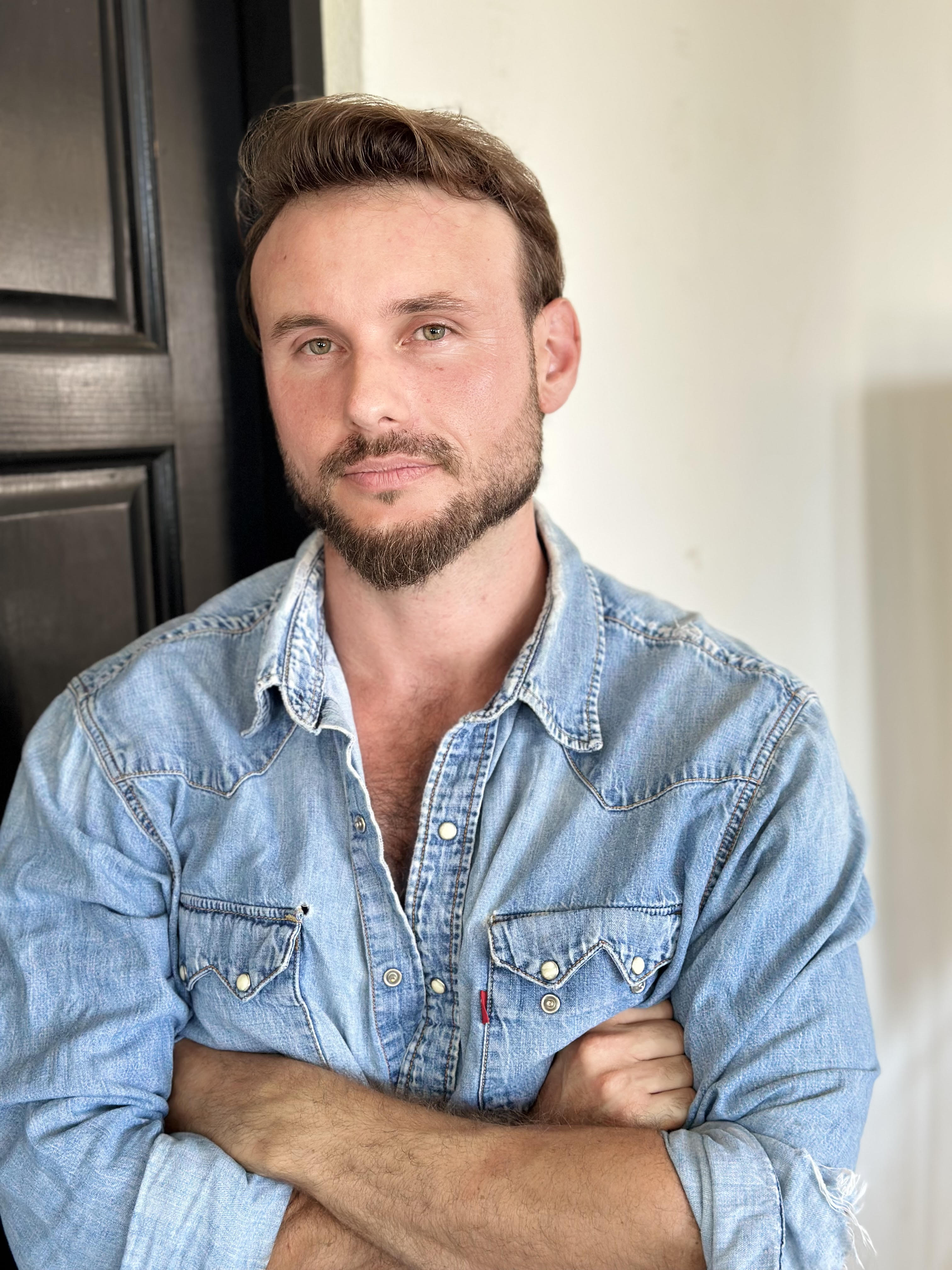
About this episode
Zac Deane interviews Johann Urkov, co-founder of Understanding Zoe, a neuroaffirming AI platform designed to support parents, educators, and therapists of neurodivergent children. Johann shares his personal journey as a parent of a neurodivergent child and how it led to the creation of a tool that provides clarity and guidance for families.
Episode notes
- 00:00Introduction to Breakthrough Moments
- 01:53The Personal Journey of Neurodivergence
- 06:06From Overwhelm to Action: Building Understanding Zoe
- 11:55Creating an MVP: The Process and Challenges
- 17:37Advice for Aspiring Entrepreneurs
- 19:37The Future of Understanding Zoe and AI in Neurodiversity
- 24:22Balancing Life as an Entrepreneur and Parent
- 29:23Final Thoughts and Call to Action
Chapter titles and timings from the published YouTube description.
From the conversation
Excerpts from YouTube automatic captions. They may contain transcription errors. Play a timestamp to hear the original conversation.
The Personal Journey of Neurodivergence
really curious to do is to pick your brain around that. And so without further ado, Johan, let you know give us the update. What has been the biggest breakthrough throughout your career? >> All right. Uh, thanks for having me, Zach. Uh, so yes, just for for the context, I have two daughters and as Zach mentioned, uh, Zoe, eldest daughter who's 9year-old was, uh, diagnosed with autism and ADHD 18 months ago. So when we walked out of that psychologist appointment with a 38 page assessment after two hours, we felt like we had this encyclopedia of information ...
From Overwhelm to Action: Building Understanding Zoe
and one that knew everything about Zoe. It could translate her reports into clear action, help us understand her behaviors, what she was uh going through and give us real guidance in the moment when we felt completely lost. So we really really built it because we needed it because and not because we're trying to create um a product and then something else um um something unexpected really started to happen. other parents like us uh were going through the same uh challenges started asking us to if we could build something similar for their children and their own ...
Creating an MVP: The Process and Challenges
complex um using AI etc. So the biggest learning wasn't technical it was that you can build something meaningful with very little as long the as as long as the purpose is strong enough. Such a great point there and this is a theme amongst a lot of the interviews that I have is that what you just shared there a problem worth solving. It was something that you're intrinsically inspired to get up early right before work do uh get up go home you know and do life and then probably before going to bed work more on it ...
Advice for Aspiring Entrepreneurs
Um, yeah, that's a great question. So, maybe three three advice. I think the the first one is to stop waiting for that breakthrough to um to arrive. Because in my mind, breakthrough, well, in in our example, breakthrough didn't show up as a big dramatic moment of clarity. Maybe for some people it does, but for us, it wasn't the case. Uh, for me, breakthrough come from getting close enough to a problem that you can really feel it in your bones, if that makes sense. And that's really what happened with with us. We leave the problem so ...
The Future of Understanding Zoe and AI in Neurodiversity
trust the ideas uh that pull you forward. >> Brilliant. Brilliant. I'm curious to know, you know, you're in this now. You're now a developer. [laughter] You've now got this tech startup and you've created this product and it's uh it's got a a market product market fit and it's it's working. What is the future of where you guys want to take this? What does it look like in 12 months, 5 years? And how do you see AI changing this industry which is the ability to selfdagnose or personalize uh communication for say the the neurodeiverse industry? >> ...
Read the episode transcript
YouTube automatic captions. Names, punctuation and wording may contain transcription errors.
Welcome back everybody to the Breakthrough Moment podcast. My name is Zach Dean. Special guest Johan Urkov. Are you there Johan? >> I'm here. Thanks for having me, Zach. >> Oh, you're so welcome. I'm so excited for this. Your product is amazing and I can't wait to tell everybody all about it. So, I'll do a quick little introduction and then we'll get straight into this. So for those of you who are joining us for the very first time, the Breakthrough Moment podcast is all around interviewing entrepreneurs, creators, and investors and asking them what is the biggest breakthrough throughout your career that took you into another level of success. And as they share their breakthroughs with us, us at home can have breakthroughs as well. And so let me do a quick intro and we'll dive into today's interview. For those who don't know Yan, he's a former GM of subscriptions at Woolworths. He's an ex strategy consultant and he's taken his passion, his experience and his lifestyle as a parent to create what he's created today. And he's a co-founder of understanding Zoey. Okay, so this is actually an Australian first. It's a neuroaffirming AI platform that turns reports, observations, and daily questions into clear personalized strategies for parents, educators, and therapists. And so, if you're out there, if you know somebody or if you have a child uh that has neurode divergence or maybe is on the spectrum, this will be a really powerful interview for you to to listen up to. So this actually sparked through Johan's real life experience as a parent uh whose whose daughter is neurode divergent. And what I really want to talk about today is in terms of business is that you took this as an idea as a concept and turned it into an MVP within one month. And so what I'm really curious to do is to pick your brain around that. And so without further ado, Johan, let you know give us the update. What has been the biggest breakthrough throughout your career? >> All right. Uh, thanks for having me, Zach. Uh, so yes, just for for the context, I have two daughters and as Zach mentioned, uh, Zoe, eldest daughter who's 9year-old was, uh, diagnosed with autism and ADHD 18 months ago. So when we walked out of that psychologist appointment with a 38 page assessment after two hours, we felt like we had this encyclopedia of information about Zoe but absolutely no idea where to begin. So simple things like how do we explain this to our parents? What therapy should we prioritize? Everything became super overwhelming and frankly we were quite terrified of making the wrong call. And then every day at school, Zoe's teacher was although she was doing the best she could do, she was also very lost. So she was she was almost kind of like harpooning us every single time u
telling us okay this is what happened today with Zoe. What should I do when when that happened and frankly we didn't have the answers uh either we're spending time on Google at night uh trying to stay one step ahead of the next question or mail out but frankly something was not uh working. were kind of like failing zone if that makes sense. And that's when it really hit us. The diagnosis really gave us a label but not guidance. It didn't really help us translate any of it into real life. So over the first few months what we did was we uh we went through kind of like a slow and thinking and thinking realization that the system wasn't really built for family like ours. it wasn't giving us clarity or direction. And as I mentioned, we felt like we were some kind of like failing Zoe a little bit. So the breakthrough really was realizing that no one was coming to help us to connect uh the dots. And if we really wanted to make things change for Zoe, we'd have to build the things that we wished existed when we walked out of that room with the report. And so then how did you go from oh gosh we're failing as a parent here to then saying let's start a business that's you know because that's a big commitment itself on top of life and your daughters and and you know being a human. So what was that moment like and then how did you what happened next? >> Yeah. So it wasn't one dramatic turning point. Uh it was really a series of small moments that kept showing up as the same truth like the real as I said the system wasn't built for for family like like I was but there was really one night that brought everything into into focus. So Zoe rushed into her room in a panic because she was overwhelmed with anxiety and in that moment everything else uh the reports the emails the therapy plans really fell away. What stayed was the realization that none of the professionals we had seen had prepared us for for this and we still didn't know what to do in real time and that's pretty terrifying as as a parent. So the real catalyst was accepting that no one was coming to connect the dot for us. Um we could keep coping surviving um or we could create the tool that we wish we had in that moment when they really needed us the most. So the shift from overwhelm into action is what really set everything else um in um in motion. Um and that breakthrough didn't just kind of like impact the business because we didn't have any business. It actually created it. Up until that point, we weren't trying to start a company. We were just uh two parents uh trying to uh to survive. But once we realized that no one was coming to help us connect the dots, we realized that we and we decided to actually build something for ourselves because we desperately needed it. So the first version was incredibly
simple. Uh but even in its simplicity, we realized that we had essentially built a child psychologist in our pocket and one that knew everything about Zoe. It could translate her reports into clear action, help us understand her behaviors, what she was uh going through and give us real guidance in the moment when we felt completely lost. So we really really built it because we needed it because and not because we're trying to create um a product and then something else um um something unexpected really started to happen. other parents like us uh were going through the same uh challenges started asking us to if we could build something similar for their children and their own family. And this was the first moment when we realized that this this wasn't just our problem. Um and the second moment came from Zoe's teacher. She sent us a long email explaining how much it had helped her. Uh she said that understanding Zoe completely reframed the way she was managing tricky situations. um with Zoe and she actually admitted herself that she hadn't been fully trained to support neurode divergent children like um Zoe and that message uh made it really clear that the gap wasn't just at our home but it was also in schools in classrooms and in every um interactions. So really those two signals were the turning turning points. They showed us that this wasn't just a personal solution. It was something that families, teachers, and actually the whole ecosystems really needed. So the breakthrough didn't take us like from to the next level. It really launched us uh launch business and gave it purpose, clarity, and momentum. really key point there that you just mentioned is that the breakthrough didn't I guess you turn the breakthrough into an opportunity and into a possibility that what what most of the time it's a breakdown that creates a breakthrough >> and so you guys felt like there was this breakdown and the parenting and the the leadership inside of you know helping your your daughter with what she's going through and through that breakdown you were able to start a business for one which is such an amazing feat especially with everything you're going through. And then secondly, you said that this is actually a child therapist, I guess, disclaimer in in your pocket that allowed your daughter's teacher to really feel supported in her role even more. And so, yeah, I can imagine those two moments must have been like, wow, this is this is something really special. So, so what happened next? Yeah. So, what happened next is that we um well, we really decided to actually create uh create uh create a business, my my my wife and I. So, my wife is the CEO of the business and I'm the CPO and and CTO. So, it's really kind of like a family u family business. We um decided to apply to textiles. So, that was u pretty 15 months ago now. So, textiles
is is an accelerator program. uh we got in uh in September last year and spent three months um in the program. At the same time, we decided to actually create um the product. Um and yeah, so I'm not an engineer, so I spent a few hours every morning to kind of like learn how to build um things. And after a while, I was confident enough to be able to um to build um our um our MDP that we launched in market in October, November last um last year. You just say it like, "Yeah, we had this idea and we launched it and you know it's an MVP." It comes off so like naturally, you know, it's like, "Oh, we just did that." But take us into the process like give us like the one, two, three, what what are the the ABCs of turning a concept into an MVP. >> Yeah. So look, I think for us it was almost obvious and it flew very naturally because as I mentioned earlier, we created that MVP for ourselves that we had been using for a little while. We also had clear signals from other parents, other families, Zoe's teacher that it was something that really was helping um helping them. So the next step was really for us to actually decide is that something that we really want to do. We know that there is a need because we are living that um that particular need. So is that something we really want to do? And so we decided to actually get um um give it a good go. Uh at that time I was still in my full-time senior leader role um at Woodworth. Um, so what I started doing is waking up every morning at 5:00 a.m. Um, and spend some time really learning uh how to build a product from uh from scratch. Um, and then so the funny thing is that I would be doing like from 5 to 7 working on learning and building the product, then switching into parent modes, preparing lunchboxes for for the girls, getting them ready, bringing them to school, etc. And then moving into my full-time job as a senior leader in a large organization. So frankly it was super intense. Uh but it taught us something that's super critical. Passion and discipline are really the greatest accelerators uh of progress. You don't need the perfect conditions. What you need is commitment, clarity, and a problem worth solving. And building this this way really fundamentally changed how I approach a business. It made me more resourceful, more focused and more willing to learn anything that's required to move uh forward. It really showed me that the constraints that we had um can be fueled if you use it u you them well. So we're just um two parents trying to build something um not engineers um at all but we did manage to actually build a platform that's quite complex um using AI etc. So the biggest learning wasn't technical it was that
you can build something meaningful with very little as long the as as long as the purpose is strong enough. Such a great point there and this is a theme amongst a lot of the interviews that I have is that what you just shared there a problem worth solving. It was something that you're intrinsically inspired to get up early right before work do uh get up go home you know and do life and then probably before going to bed work more on it work late and up early. And so having that problem that's worth solving is such an individual thing for someone. And I think this is the other challenge that entrepreneurs have. It's like we start to compare ourselves with other people's success and someone else's beginning or middle or end um with their own process and they don't know that you know this person's in their own just living their own life and working on their own set of values and and living from that place. But the the second we start to compare it creates this like thief of joy and oh I'm not as good as you or I can't do that and and things like that. So it's such a common theme but to have a problem worth solving is the is the road map really to to be able to do this long term and it's so close to home literally in in at home as to the problem that you were trying to solve which is really beautiful. You mentioned that you started developing the product. If someone start if someone's like ah I really want to develop an AI product or I really want to start developing a platform. What did you use? What did you start to learn? Like how did you upskill in that area? >> Yeah. So I spent um couple of weeks kind of like looking through different solutions that would allow me to deliver an MVP quickly and with the constraint that I mentioned that I'm actually not an engineer. Um and uh although I have some uh notions on how on how pro programming languages work, I probably would not be able to develop um everything from scratch. And I actually stumbled across a few platforms which are no code or low code uh platforms um which essentially allow you to build pretty complex um secure and safe solutions without necessarily having um programming or developer uh knowledge. So that's what I started um started doing. I used those um tools or solutions like no code solutions to build the first version of um understanding Zoe. And what that really allowed me to do is actually not have to rely on a full engineering team. Uh because as I mentioned, we did not have any funding. It was just kind of like the two of us uh building this um this product. So no engineering team, just me um at my desk um uh building the the product. What it also allowed us to do is iterate super fast um because there is no need to kind of like use programming language. You you actually
build uh with with no code. And I actually believe that is actually our superpower at the moment. We can build things super fast um without compromising security and safety uh and privacy of our of our users. Um so I think that we're going to keep using those tools um for the time being because it has worked in incredibly well for for us. This is so great like celebrating you guys and uh we'll definitely link to the platform and everything around this video, but I want to take you back to the beginning before you started understanding Zoe as a product. If you could go back to the beginning and start again, what would you do differently? Would you change something? Would you add something? It's interesting. Um, frankly, I don't think I would change anything. I think we're pretty happy with where we are at at the moment. The approach that we've taken is I think the right approach. We spent a huge amount of time listening to our users um and really trying to understand what were their pain points, what were they going through every single day, etc. and taking all of those learning in addition to ours to translate that into features that we knew were going to be super helpful for our users. So that customer centricity is really something that um has helped us actually go fast very uh very very quickly. Um so I don't think I would um I would change anything frankly. Um maybe the one thing that I would consider is um the number of signals that would tell us that one particular feature is worth building and not necessarily just starting to build something because a couple of people have told us that they would want that. So, kind of like really taking the time and making sure that we have all the the signals to confirm that is something worth uh building would be would be something that I pre-wood change. Oh, I can't hear you anymore, Zach. I think you're muted. >> Thank you. Uh I was just muted myself. Do you have any advice for someone listening who might have an idea? Maybe they've got that burning problem that they've been kept up late for to just, you know, they've been kept up late at night to try to solve. they can't get out of their mind. Maybe it's a new problem or an old problem and they're like, "Maybe I should turn this into a business. Maybe I should develop this into something." What advice do you have for them? Um, yeah, that's a great question. So, maybe three three advice. I think the the first one is to stop waiting for that breakthrough to um to arrive. Because in my mind, breakthrough, well, in in our example, breakthrough didn't show up as a big dramatic moment of clarity. Maybe for some people it does, but for us, it wasn't the case.
Uh, for me, breakthrough come from getting close enough to a problem that you can really feel it in your bones, if that makes sense. And that's really what happened with with us. We leave the problem so intensely that building became the only logical next step. The second piece of advice is to start before you feel ready. So as I said, I wasn't an engineer. I'm not technical background, but I woke up every morning and told myself how to build because the problem problem mattered enough. And if you wait for the perfect skill set, the perfect founder, the perfect conditions, I think the moment is likely to pass you by. And the third point is similar. It's to really embrace the constraints. having no funding, no team, and no time really forced us to focus on what truly mattered. So, the simplicity of our first version wasn't really a limitation. It was really um as you say, it's not a it's not a bug, it's a feature. Um and really allowed us to learn from our users very very early on. And finally, what I would say is is follow the pull, not necessarily the push. If you're constantly pushing yourself to believe in an idea or pushing it to your users, it might not be the right the right one. But if the problem keeps pulling you back and if you can't stop thinking about it, you know that you have something there. And if you're willing to learn entirely new skills to solve it, that's when that's where the breakthrough actually uh lives. So my advice is simple. Get close to the problem. Start earlier and feel comfortable. embrace new constraints and trust the ideas uh that pull you forward. >> Brilliant. Brilliant. I'm curious to know, you know, you're in this now. You're now a developer. [laughter] You've now got this tech startup and you've created this product and it's uh it's got a a market product market fit and it's it's working. What is the future of where you guys want to take this? What does it look like in 12 months, 5 years? And how do you see AI changing this industry which is the ability to selfdagnose or personalize uh communication for say the the neurodeiverse industry? >> Yeah. Uh great question. So on the fact that I'm that I'm a builder, I think it's the first point that I I'll jump on. Um it's really interesting because I really had to go through a big mindset uh shift because before this I was as I said a senior leader in in a large organization. I was used to leading teams setting direction relying on my team uh to be around me and and doing their job. So my job was to make decisions not to do every single part of the execution myself. What's interesting is that I've now moved into that founder builder role which flipped that completely. Suddenly I'm not uh delegating things. I'm actually the product designer, the engineer, the
quality uh tester, researcher, customer support all all in one. So that shift uh from leading a large team to being uh the person who actually built the thing was confronting at first I would say but it also became incredibly energizing for for for for me. So that's kind of like the first uh the first point I wanted to make. The second one on where to from here. So for us it's actually twofold um in the short term. On one hand we're actually going to keep doubling down on uh what we we started building shaping our products uh based on the learnings that we've we've had. Uh we're very close to uh to our user. Actually some of our users have become uh friends. That's kind of like how involved people are in our in our mission. Uh so that's kind of like the first thing like keeping improving the platform removing the friction, building new features that are going to help u make the biggest difference in in day-to-day life for for these um parents. At the same time, we're also working on much larger initiative that I can't really tell you a lot about, but it's going to be something that will help families understand their child much earlier and with far more clarity because we believe that understanding always comes before support. You need to understand your child better to be able to support uh support them and that new breakthrough is really going to help us with um with with that. um your question about AI. Um look, the reason why we've been able to build understanding Zoey so quickly and with the constraints that we've we've called out is because AI is there. Uh we've clearly built an an AI native business. Uh because our objective was to scale the business without uh scaling the number of people uh working under the business. So right now it's really the two of us and we have some fractional help here and there but Chad GPT Clo and Gemini are really our best friend. So really like part of the team and they're really helping us. So that really helped us not only understand how to build uh but what to build and it also helped us build the right automated processes so that we focus on what really matters. So we've created some AI agents that are in charge of kind of like bookkeeping um in charge of uh creating content and things like that. So we're fully embracing AI to make sure that we can focus on the things that really matter for our users. So that is kind of like how we'll answer that question. It is really the right time for anyone to launch uh a business. >> Fascinating times. I'm excited to see how this evolves. It's you know what can be done now some of the time when I think about even some of the things I'm doing with the life blueprint with our goal setting process which we utilize AI now it's uh we couldn't have done this
process a year ago because of the integrations and software and prompts and just the the whole the ecosystem of how this all communicates now it's it's creating so much efficiency for for what we're doing and so I'm excited to see where this goes if it's yeah if it's helping people now. Imagine where it's going to be in 12 months, 24 months. So, >> two last questions. My first question is um and I'd love you to share how people can get in touch with you and things like that. Your links will be around the video obviously, but I'm curious, you know, you're a husband, you're a parent, your father, and you know, you've got a startup. There's these like massive components that you're juggling so to speak in life. These are in in their own massive commitments. Do you have any advice for say the entrepreneur out there or someone who's wanting to start a business and they have full-time, you know, they have kids that they're juggling their careers and their startup and their their spouse. Like, how do you manage all of that together? Plus the added impact or stress from your daughter being neurode divergent. So, you know, that must be a lot to hold. Huh. >> It is. Um but it's also something that we really fully embraced um in our households. Um my wife is is also um autistic and ADHD uh lately uh lately diagnosed. So it is true that in our household uh it can become quite uh hectic and we have to juggle with with a lot of a lot of things but frankly we we're making it uh work quite well. We've managed to although the business is taking a huge part of our lives, we're actually managing to cluster it quite well. I think my wife my wife and I and we actually decided as well very early on that we didn't want to compromise our health or even kind of like the relationship that we have with with our children. So the way we're approaching it is that we are dedicating some times for our own mental health, being able to work out and spending time with um with our daughters. Really important for us to have that flexibility that I did not really have uh as much before when I was in a full-time full-time role um in a large corporation. Now I'm able to actually drop off the girls to uh to school, pick them up at 3, spend a bit of time with them, and then uh go back go back to work. So it's working quite well for us. I'm not saying that it's always easy, but we are making it work quite well because we've we've decided to have those principles set up from very very early on, my wife and I, that we don't want to compromise um on. And I think to to your point on what I would suggest for people who want to launch a business, as I said, it's kind of like the best type to to create something. We were lucky to be able to um not have two uh full salaries and and give give it a
go. So it's also conscious that we're in in in a position that made made that um possible. But I would I would suggest to people get started, do something. Even it's kind of like working in the evening, working in the morning if if if you like the mornings or in the weekends, but actually get started with with something. Don't feel blocked by, oh, I wouldn't know how to do that. Just get started and and and have a first version there. Talk to users who are like you. Uh and and I think you'll see that uh there will be that pool starting to to to happen. And if it does, you know that you have something worth worth building. >> Advice, Johan. How can people get in touch with you and uh who is it that this really helps? Just g give us the the real problem solution that you're providing here for everyone. >> Yeah, health is essentially anyone caring for a neurode divergent child. So whether you have a child who's autistic, DHD, OCD or or or anything like that, uh understanding it can be really really uh can really be a big help because it helps you it helps to bring everybody who's caring for the child under one single understanding and one single source of truth. So it is really for parents of neurodyiverent children, teachers and therapies caring for for for them. The way it works is that parents would be creating an account on understanding Zoe um inviting um what we call their support village and everybody would be able to access tailored insights and strategies that pip our AI uh coach is able to give based on the knowledge that parents are uploading into the platform but also because of the created and trusted knowledge that we've embedded into um into um into pip. Oh, great. If you're out there, please get in touch. If you have questions or you just want to, you know, try tri try try the software. I highly recommend it, guys. This is m a massive support and might be the missing link that you're looking for. Maybe who do you know that this might be beneficial for? Maybe you have a friend, a family member, someone at a school or church or community event that you've been to. Who could you recommend this to? Because these little shifts really make the biggest breakthroughs. My favorite question is, what is the challenge you'd like us to leave this podcast with? A challenge it could be for today, this week, this month, this year, this quarter. Uh what is that challenge that you want to just really impart on everyone listening at home today? Yeah, I think the most important message from from me is um what I want to leave people with is that no divergence is not something to fix. It's actually something to understand. At the moment, one in five people in the world is neurode divergence. Which means that this is not minority experience. It's a fundamental part of human uh diversity.
And for family like ours, understanding is what really change changes everything. And that's why we called it understanding zo because at first we wanted to understand our child better. Understanding reduces the overwhelm. It builds compassion. It helps teachers, parents, and therapists work together instead of in silos. And most of all, it gives neurodyivergent children the chance to be seen for who they are, not for who they expected to be. And if there is one thing that I want people to take away is that um life becomes better for everyone when we replace judgment with sperity and assumptions with understanding. >> Well said. 100%. I couldn't agree more. When we lean in with curiosity and the questions and the presence to to listen to what might have been an area of challenge or conflict or misagreement or separation. uh that's really where the breakthroughs happen, right? And so when we lean out, I always say when we lean out, we miss out. When we lean in, we win. And so that really backs onto that comment and that that that uh what you just shared there. So any final comments before we wrap it up. >> No. Um I mean you I'm just uh uh reemphasizing what you said. I would encourage listeners to think about someone in their own life, parent, a teacher, a career might be going through what we went through. uh uh touches so many families uh yet most of the time the challenge is is actually quite um invisible. So if someone comes to mind, share this conversation with them, let them know they're not alone and point them towards resources that can genuinely help overwhelmed and not sure where to start. Invite them to have a look at understanding Zoe. We built it for family like like ours and it might exactly be what they need uh to support their own child uh better. Amazing. Everybody at home, thank you for listening today. If you have any questions, put into the comments, like, share this around. And uh Johan, thank you for what you're doing. Appreciate the hard hard work, the early mornings, the late nights. you know what you're what you've been through as as you said you were you were failing and now you're helping not just yourself succeed and your family succeed but other generations of of and other families for generations to come as well. There'll be you know this ripple effect is uh is real because of what you guys are doing. So congratulations for your breakthroughs. Thank you so much for being a guest. We'll see you next time. Thank you for having me, Zach.