About this episode
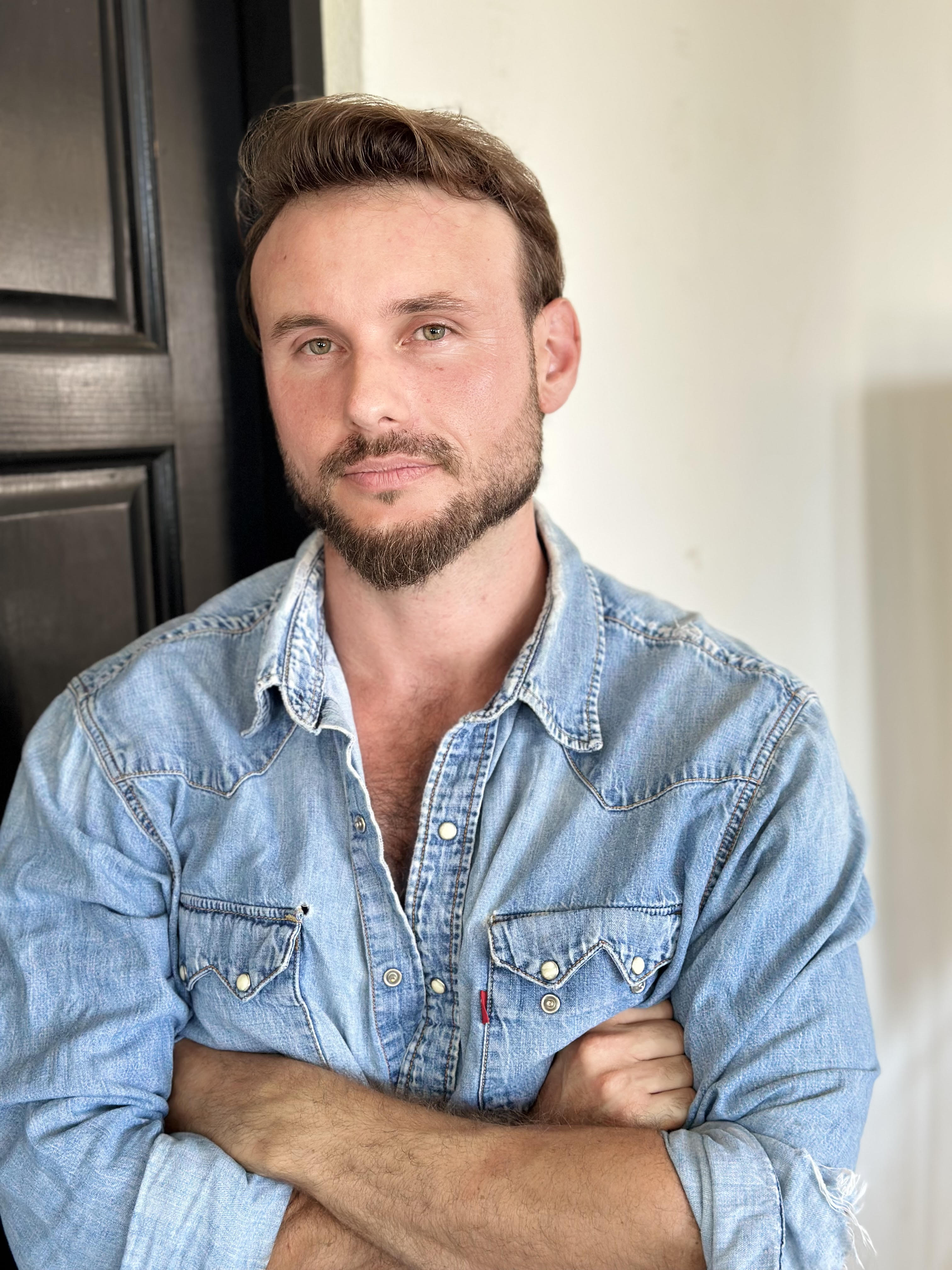
Tiankai Feng has spent 12 years at the intersection of data analytics and AI before most people knew what either of those things meant. Now he is a TEDx speaker data and AI consultant and author of a children's book teaching kids the do's and don'ts of AI called Robbie Just Wants to Help.
Episode notes
- 00:00Introduction
- 01:33The TEDx Talk That Changed Everything
- 04:11How to Share Your Unique Thoughts Without Fear
- 06:42Has He Always Been This Confident
- 08:26How to Reframe Anxiety Into Excitement
- 09:37The Breathing Exercise He Uses Before Every Stage
- 11:42What He Would Tell His Younger Self
- 13:50How He Caught the Entrepreneurial Spark
- 15:10From Bar Pianist to Data Leader How Music and Tech Combined
- 16:29Non Negotiables for Energy Focus and Consistency
- 19:56How He Sees AI Changing the World
- 23:02Cautiously Optimistic What That Actually Means
- 26:47LLMs Versus Agents Versus Claude Code Explained Simply
- 29:51Who Should Reach Out and What He Does
- 31:16Robbie Just Wants to Help The Children's AI Book
- 33:14Claude Code Hacks and the Prompt Library Strategy
- 36:07Why Coding With AI Feels Like Gaming
- 38:38What Happens When Everyone Can Build With AI
- 41:26The Challenge to Help You Have Your Next Breakthrough
Chapter titles and timings from the published YouTube description.
From the conversation
Excerpts from YouTube automatic captions. They may contain transcription errors. Play a timestamp to hear the original conversation.
The TEDx Talk That Changed Everything
come to mind, but if I'm really honest about myself, I think the biggest breakthrough moment was when I had finished giving a TEDx talk. And the reason why it's such an important moment for me is because for multiple reasons, right? I think giving a TED Talk or a TEDx Talk has is probably on the bucket list of many people and to be able to have that basic privilege to be on the stage and give one of those talks that everyone can see in the world and that is associated with TEDx is really exciting. But I ...
How to Reframe Anxiety Into Excitement
a coach at the time or >> Yeah, I mean, again, I think back to the TEDx Talk. Um the good thing about being a TEDx speaker is that you get a speaker coach as well as part of the package, right? And um with that speaker coach um I'm owing that much um gratitude to that person. I got a lot of advice not only about the content and the way how I would behave on stage, also about my mindset, right? About how I should think about my speech and what calms me down. Interestingly, it was on ...
From Bar Pianist to Data Leader How Music and Tech Combined
literally making me look younger and it has this like glassy, super fresh look. And so, this is the number one exported Korean beauty brand and skin care line in the world. The ingredients are second to none. Even pregnant pregnant women can use utilize them because out there there's so many products that have toxins in them that really make our face not healthy over a long period of time. And so, if you're out there and you want to match the energy that you output with how healthy you look, you can try all these products risk-free for ...
Cautiously Optimistic What That Actually Means
the sooner you can go with the flow and find your place in this new world. >> I I interview a lot of people and, you know, I think overall people are the experts are very confident. >> Yeah. >> And then everyone else is like either overwhelmed or fearful or like uh excited. Like there's there's some real extremes of emotions. There's some people are like, "Oh, I'm just you know, I'm not fussed." It's so interesting. I see this like world where I I've personally been getting into it with Claude Code the last few weeks and like ...
Claude Code Hacks and the Prompt Library Strategy
there any like tips that you have with Claude code like with cuz I've been getting into skills, long-term memory, um you know, token optimization to reduce the amount of tokens. You know, do you have any like hacks? Um cuz I Yeah, do you have any hacks of of ways of really optimizing or little secret tips you've learned in your, you know, >> Yeah. >> journey? >> I guess Yeah, I guess if you don't do it already, would be to keep a prompt library, right? Because I think the more you can blueprint how you prompt Claude ...
Read the episode transcript
YouTube automatic captions. Names, punctuation and wording may contain transcription errors.
Welcome back everybody to the Breakthrough Moment podcast where we interview successful entrepreneurs and investors and ask them what is their biggest breakthrough moment that took them into the next level of success. And as they share their breakthroughs with us, us at home can have breakthroughs as well. I'm Zack Dean with special guest Tian Kai. Are you there Tian? Kai? >> Yes, I'm here. Hi. >> Good to meet you. You're over in Germany, right? >> Exactly. Yeah, I'm a little a few hours behind, right? But yeah, it's very exciting to be here. >> Awesome. Thanks for staying up here. Well, I'm excited to do this. You You are on the cutting edge of education based on your experience and also building some amazing things for the next generation of of children who want to learn the do's and don'ts of AI. So, I'm really excited for this interview. Uh obviously AI is a hot topic and changing everything. So, let me do a quick little intro and let's dive into your breakthrough moment, hey? So, for those who don't know him, Tian Kai is a data and AI leader by day and by night he's actually a musician. I nearly said said magician, but no, you're a musician. Um he's an optimist at heart. He's had 12 years in data analytics, data governance, and consumer insights. And this is his third book that he's publishing in May. It's a children's book uh educating on the literacy of AI, the do's and don'ts. And so, plus you're a TEDx speaker and amongst other amazing things. So, yeah, thank you so much for your time. Let's dive straight into it. What has been your biggest breakthrough moment in your career thus far? >> Yeah, absolutely. I I think I mean, when I think about the question, a few things come to mind, but if I'm really honest about myself, I think the biggest breakthrough moment was when I had finished giving a TEDx talk. And the reason why it's such an important moment for me is because for multiple reasons, right? I think giving a TED Talk or a TEDx Talk has is probably on the bucket list of many people and to be able to have that basic privilege to be on the stage and give one of those talks that everyone can see in the world and that is associated with TEDx is really exciting. But I think in that moment it meant a lot more than only that because until that point I was also trying my way to be a little bit more let's say public about my thoughts and build a little bit my personal brand around my expertise around that AI. And when I basically got the opportunity to be able to talk about that and to take the human angle which was always my passion about it. That meant a lot to me, right? That meant that I deserve to be on that stage and that I'm able to basically tell my story and my thoughts about it to this big audience. Why I'm saying the breakthrough moment was after I finished it was because it was exceptionally hard to actually do that TEDx talk, right? For those who don't know, a TEDx talk or TED Talk has very little PowerPoint slides or any slides at all, right? Which means actually that the speaker needs to remember 14 to 18 minutes of speaking without any angle to it, right? Without any support on the stage.
Meaning I got really crazy about memorizing all of the things I wanted to say before that stage and I remember when my family said that I look like a crazy person just taking a walk outside and speaking to myself all the time because I was repeating the speech to myself all the time. So when I actually got that over and I successfully had been on the stage and it got recorded and everything live, I found also that a basically the intellectual challenge was something I mastered, right? That I'm able to actually give such a long talk without having to look at anything or any kind of anchor visually that I was able to memorize all of that. And why I'm saying also it's after the talk because after that talk I got so many more opportunities to work with clients, to also write books about it and everything. All that came from the moment of having been seen as someone who knows things about stuff, right? And being able to take that stage. So, I think I I'm I owe most of it to basically that moment of having been a TEDx speaker. >> I like that so much. There's so many questions I have, but like what advice would you have for other entrepreneurs or other people out there who have maybe a message they want to share, but maybe they're feeling like, you know, it's hard to to get out there, put themselves out there. What advice do you have for them to have that Real quick, before we continue, a brief message from today's sponsor. If you're an entrepreneur wanting to grow your personal brand, authority, and business through podcasting, then check out findapodcast.io. As you know, the biggest entrepreneurs in the world, they book these massive podcast tours before a big product launch or an event or book because podcasts build trust faster than anything else online today. If you're curious to learn more, book in a demo at findapodcast.io. Now, let's get back to the episode. >> Great through. >> Yeah, I would say that don't be afraid of being unconventional, right? I think that we always have that internal tension field, right? That if we think something that everyone else thinks, it's just normal, right? And it's not really unique. But if we think something that we feel like no one else has ever thought, we are doubting ourselves very easily, too, right? It's almost like there must be a reason why no one else thinks that. Maybe I'm the one who's wrong. Maybe I have some weird thought that is crazy. And the initial reaction, if you want to stay in the comfort zone, is keeping it to yourself, right? Maybe those are thoughts I shouldn't say out loud. I just keep to myself and let's see what happens. But I would encourage everyone, as long as it's not offending anyone or destructive anyway, right? To just talk like publish your thoughts, right? Let it out, see what people think. And what if you are the one who is the first one who has that kind of thought and that kind of opinion, and you're onto something, right? Why wouldn't it be sad to keep it to yourself? And I think even for entrepreneurs it's the same when you have services or products that you're creating for the first time, right? Like if you keep an idea just to yourself, no one else is going to see it. But what if that was the one idea that would make
you unique and successful and no one else has done it before, right? You will never know until you actually get it out there. So, I think in the end it comes down to that feeling of confidence, right? Am I confident enough to get it out there? And I would just say there's really nothing bad that can happen. As long again as you're not offending anyone or creating make life's worse for anyone, right? What is the worst that can happen? Maybe it doesn't resonate, then you get less feedback, but then you just tweak it until you get the right feedback and then your creativity really turns into something that is an outcome and an impact. >> You seem pretty confident though. Have you always been like this? Like, you know, it seems like give you give you the mic, you speak so well. It's like get out of the way, you know, you've got it. Yeah? >> That's a great question. I don't actually perceive myself as that confident. I would say that even I would say before this recording, I was pretty excited and a little bit nervous, right? And I realized that no matter how much I do public speaking, which at this point I've done a lot, right? Before any speech and before I go on stage, I will always have nervousness and anxiety, right? But I realized that I need to turn this into frame it differently basically, right? To see that actually as a sign that I really care about this. And if I really care about it, I'm really excited about this. I really get want to get my message out and I want to get it right. So, instead of seeing it as something like what if they judge me, what if anything goes wrong, I just frame it as I'm really excited and I'm really caring about this. So, I really want to get the message out. So, I'm taking that energy and I seem very confident, although I'm just very excited about it, which is a reframing of my anxiety potentially, right? So, I think that is how I'm playing and tricking myself into doing these kind of things. >> [laughter] >> Look, whatever works, whatever gets the job done. I think our brain is so amazing at keeping us playing in our comfort zone, playing small. You know, not putting ourselves out there because of rejection or or, you know, the fear of failure, but the fear of success as well. It's all so real. But yeah, what you just shared there is a reframe from the judgment or anxiety or nerves to just this is flipping important to you. This is This is really exciting. Like the feelings of nervousness versus the feelings of um uh excitement are kind of similar. So, that How did you How did you learn that? Was that your own aha moment or you had a coach at the time or >> Yeah, I mean, again, I think back to the TEDx Talk. Um the good thing about being a TEDx speaker is that you get a speaker coach as well as part of the package, right? And um with that speaker coach um I'm owing that much um gratitude to that person. I got a lot of advice not only about the content and the way how I would behave on stage, also about my mindset, right? About how I should think about my speech and what calms me down. Interestingly, it was on that edition of TEDx Nuremberg uh together with a sports
person uh on the stage, too. And that sports person actually gave me a breathing exercise as well, right? So, that was something where I was like, "If you feel really anxious, you breathe in all you can, and then when you think you hit your limit, breathe in one more time." Because that puts in all of the CO2 out of your lungs. And then actually you naturally calm down because the reason why you feel so anxious and you start breathing quickly because you don't have enough oxygen. But once you artificially bring that oxygen back, you automatically calm down. And that has been really nice. I'm doing that exercise now every time before I go on stage or before I'm nervous about anything. I just do that breathing exercise and it really helps. So, in a way, I think, yeah, I mean, I listen to a lot of smart people, I think, and um took their advice to heart and um I basically apply what I can to make my life easier, and then I can give that advice further back to other people as well. >> [laughter] >> That is Look, there's a there are patterns that I'm learning after interviewing so many people here, and like that's definitely one of them is listen to more smart people. The smart people listen to smart people. >> [laughter] >> Yes, exactly. >> And they just keep doing what works. Don't recreate the wheel, do what works, and hone in, lock in. Like, these are some great great pieces of advice. My question is like with with If you were to speak to your younger self, and what would you say to your younger self, or like, what would you do differently um to help you have this breakthrough earlier on, so to speak? Like, if you if you could have Like, what would have needed to happen for you to have this breakthrough earlier on, um so to speak? >> If you have a business on Facebook or Instagram, you need to learn about this new amazing AI automation tool. The question is, is your personal profile or business profile manually messaging your target audience every single day? If not, I highly recommend you do this. There's a massive ROI on that. But, if you are, there's a more cost-effective strategy. So, this is a unique AI software. It runs for you your friend requests, the messages, the likes, even the comments, 24/7 in the cloud. So, while you're watching podcasts like this, or taking calls, or while you're sleeping, it's running there in the background. Some of these people are pulling in another 5 to 20 extra qualified leads every single week on autopilot. You can experience the podcast special trial and try it yourself today. Check it out in the show notes below. >> Yeah, hmm. I think I'm a little I feel a little bit torn about it, because I think the TED Talk came in the right moment in my life. If I had it earlier, it might have not worked for me, I would say. Um and the reason why I'm saying that is because if I had basically done it earlier, I wouldn't have as much meaningful things to say on stage as I had at that time, I would say. And if I had I had done it later, maybe maybe I would have missed the boat, right? And I wouldn't have gotten the transformation in my career and in my life as much as I would have thought I would have taken then. Um but if there's any advice I would give my younger self, it probably would
be around confidence, right? It would be about um the feeling that you think you don't have anything meaningful to say is invalid. Um you have a lot of great thoughts, and even if they have been thought by other people, why not use that as a chance to connect with those other people that have the same amazing thoughts as you. But once in a while, once you actually get out your thoughts, you will notice some of them are unique and no one has thought them before, and this is where you can shine. I think I've been keeping a lot of things to myself, that's why I was um also addressing that in the beginning when you asked me that question, right? Um and it felt so um yeah, rewarding to finally get my thoughts out and have it um uh the privilege to have it on such a big stage, too. That um that motivated me really to think about why have I not done this earlier, right? Why not get my thoughts out earlier? Maybe I would have gotten different opportunities out there. And that is I think what I would give my younger self, right? Just to be more confident about getting your thoughts out and being enough. Um yeah, giving advice to others. >> That's awesome. That's awesome. Have you always been entrepreneurial? Like how did you How did you catch the entrepreneurial spark? >> Yeah, I think so. I would say that even uh during um elementary school and uh middle and high school, I always did some smaller side hustles, right? Um I had the unique opportunity to be good with tech in the beginning, so I I some um website development as a freelancer for example and IT admin stuff for like smaller companies, but I was also good at playing the piano. That's where the musician in my bio comes from, right? So, I earned money as a bar pianist for the longest time even during my study years, too. Outside of my day-to-day being more of an analytical tech person, too, right? And so, I was doing a lot of these kind of things, but I always found like unique ways to uh bring different sides of me together and I always saw entrepreneurism a as a way to be expressive in different ways of myself, right? That I I won't I don't want to be put into one box and my showing different sides of me and by earning some money this way, too, I can be um different ways of being myself and I can prove to the world that all of these sides are valid, too, right? And they're all having their different kinds of impact. So, I think it was a lot driven by my own um need to express myself in different ways rather than just looking for other ways to do it make money and that was always a part of it. >> It's interesting. How did you then make that transition into like how did it unfold from being a musician to then being an entrepreneur or was it always been going at the same time or like how did that unfold? >> it's probably the same I mean >> Pause. Before we continue, the first way we as entrepreneurs introduce ourselves when we walk into a room, it's our energy, right? People feel that. And secondly, it's our face. How healthy do we look? So, for the entrepreneurs out there who care about how they show up, I'd love to share with you personally, I've been utilizing some Korean skin
care products now just for over a month and I had no idea about them up until, you know, even just 2 months ago. But it's by far one of the best investments I've made for my skin. I feel it's literally making me look younger and it has this like glassy, super fresh look. And so, this is the number one exported Korean beauty brand and skin care line in the world. The ingredients are second to none. Even pregnant pregnant women can use utilize them because out there there's so many products that have toxins in them that really make our face not healthy over a long period of time. And so, if you're out there and you want to match the energy that you output with how healthy you look, you can try all these products risk-free for 30 days. If you don't like them, send them back and get all your money back. If you're out there, if you're curious, check out the link below to learn. Let's get back to the episode. >> So, when Once I had graduated from university, I took a job as a marketing data analyst, and I kind of hid the music musician side a little bit from my professional side because um we're all being told to be professional in the way or another, right? Which sometimes means you just keep things to yourself, um especially your hobbies. They're not part of your job, so just uh do um and do your job right, and that's all. I only learned then one more that I feel comfortable to share more about myself, and I showed my musical side, too, at that time. And it became a part of me, right? Even my TED Talk that I just mentioned starts with me singing and playing the piano, right? And the twist in the talk is that the song was written by AI, and then I address how the creativity of AI is not actually as well nice as we think it is, but that's a different story, right? But it became a part of my personal brand, right? That I'm the guy who does tech but also music, and I am able to combine these things together for storytelling, for example, and for impact. So, in a way, um yeah, being an entrepreneur was always about combining these sides for >> Interesting. Super interesting. One of the most important things in my journey with entrepreneurship is is to maintain the energy, maintain the focus, maintain the vision. You know, there's certain things I do for my health, and there's certain routines that I have in the morning and in the evening that help give me the foundation so I can perform in my business or businesses. What are your kind of like non-negotiables that you do or part of your lifestyles that gives you the energy or the focus or the consistency to keep showing up, you know, when times get tough. Like what are those non-negotiables? >> Yeah, that's a great question. I think um for me, there's a need for some downtime. And despite me being very extroverted at times and being very public about doing things, I do need my time for myself and to focus on things, too. And I use that time very consciously to learn things, to reflect on things, and to go deep into my own thoughts to validate them or to think how I would do things differently. And I think those times are very important because otherwise I'm just blindly testing out things, but if I never review and recap, right? I feel like I'm just
more doing it by luck than by actually doing conscious choices. And I think that helped me a lot to make this conscious choices. I also realized to uh not just pay attention to commercial things and to also address the human side of things a lot because the actual impact I have is very much on other human beings and not only on how much money I made on my bank account in the end, right? So, investing in the relationships with individuals, investing in the education, and being a great father and a husband for my family is important, too, because this is where my actual legacy is. Um and not just necessarily how many projects I did or how many clients I made happy, right? So, I think all of these things are also important to me and non-negotiables where I think the human relationship itself, I think is more important than the financial success only itself as well. And the last one I think is some kind of routine, I would say, into health, right? No matter if it's at sports or if it's uh the right quality of sleep or the quality of food. That's something I only realized now I think in the last recent 2 years um that I should be better to myself just from a health point of view. And I really noticed that when I eat better and I sleep better and do more sports, that my quality of life and my presence in my day-to-day is just better, too. I think that's something that I now take very serious, as well. >> Yeah, I like it. I like it. I'm sure your music you still play and things like this. >> that's of course. That That's something I almost already consider as part of my day-to-day anyway routine. Um but you're right. I wouldn't I would not actually see it as negotiable. I think that's something that will always be a part of my life. >> I think it's important to have these. I think sometimes there's been moments where I've been so focused on entrepreneurship and yeah, it will tire me out and then I'm not as creative. I'm not as like personable. I'm maybe more triggerable and more tired or exhausted. So, it's important that I think for people just listening is that there are What are those non-negotiables that are outside of our work and our business that allow us to to fill the cup up so we can pour from the full cup, not an empty cup. >> Exactly. Exactly. >> So, um obviously AI, let's It's a great little segue as, you know, figuring out, okay, the world is changing more than ever. Um you've been doing this for, you know, 12-plus years in in in this space. How do you see what is going on? Like, how do you conceptualize it in a way that like I'm sure you see it differently from the everyday person who has never been in the AI space. Like, are you optimistic? Are you pessimistic? How do you see this whole thing impacting the world? And yeah, take us into that. >> I would say, in a nutshell, I would see it as cautiously optimistic. And the reason why I'm saying this is because um the technology of AI has finally arrived in the mainstream. It was a very technical thing before, but now it's accessible and usable by everyone everyday at the tip of our fingers,
right? So, everyday in our phone, in our screens, everywhere you can use and engage with the AI very quickly. Um and because it seems so powerful, I think um there's a lot of overestimation and underestimation of the capabilities itself, and that polarizes people a lot, right? Where people have existence threats because they are afraid they can be replaced by AI nowadays, up to people thinking they can do everything now because they have AI, they have don't have to do anything themselves anymore, which also exists in the world, right? And I think all of that are a little bit too polarizing and too extreme because somewhere we are in the middle of this, right? The The real truth of how the future will look like will be in the middle, but that means we have to all be a bit more realistic about what's possible and what isn't. Um, I think in a way, right? The AI as technology has arrived and will become the default and the norm in the future, just like when in the beginning smartphones happened, right? And suddenly everyone could have apps on their phones. That was polarizing, too. Why would I need apps on my phone? I have a computer, right? And then it just got more and more, and now everyone has a smartphone. I think the same will happen with AI, where we just all get used to it. And just like with any of these disruptive inventions in the world, we will find our place as human beings, right? We will find ways to use it for the best of our abilities and for the good of humanity, hopefully, while we will find our place in being fulfilled in different ways than before, and we can avoid a lot of the things that AI can now replace, but we'll find new ways of being fulfilled. And I think um if there's any advice I'm going to give to one how to navigate the age of AI, it's about now thinking about what your place will look like. Because there are things that will always be uniquely human, especially the more it's about human-to-human interactions and empathy and feelings and emotions. All these things will never be reproducible actually by robots or AI, right? That will always be uniquely human. So, how do we build on that, right? How do we define ourselves in the world driven by AI? And the sooner you think about it, the sooner you can go with the flow and find your place in this new world. >> I I interview a lot of people and, you know, I think overall people are the experts are very confident. >> Yeah. >> And then everyone else is like either overwhelmed or fearful or like uh excited. Like there's there's some real extremes of emotions. There's some people are like, "Oh, I'm just you know, I'm not fussed." It's so interesting. I see this like world where I I've personally been getting into it with Claude Code the last few weeks and like inside. I'm more excited about AI than any time in history um in my life. I'm just like so blown away by what is possible and the problems that this can solve. Yeah, I'm just Anything I'm actually really excited. I'm really optimistic. And in interviewing a lot of experts, I'm noticing that if people really know AI, they're also not
pessimistic. They're more optimistic. >> Yes. >> It's It's like the the the theme of that it's I think there's a lot of fear pushed on us around like clickbait or news propaganda on the AI thing with the robot and taking and a lot of the movies that we've seen is and I think that might be I don't know my conspiratorial mind is like designed to make the public fearful so we don't progress into the next chapter of business and the world. So, I don't know. How are you How are you using AI? >> [snorts] >> Yeah, I mean, I'm using Claude Code a lot of course as well. I mean, as a tech person, I'm doing a lot of development and also trying out things as well. Um and basically building things, right? It has never been easier thanks to AI. No matter if it's live coding or just assisting me in productivity, it's just so incredibly fast to do things. But one other thing that I really when I look back into last year for example, what I used AI most for, it was actually for learning myself. And the reason why I I think it's really powerful, why I have never learned as much in that hyper speed as last year, was because you have like such a unique and tailored access to knowledge now, right? Because before, right, we Googled, we looked for search results, we hoped that the search results are relevant for us and we get some kind of value from looking at different websites. But now, the knowledge is so interactive with you that you can actually get summaries in different ways. You can ask questions uniquely to what you're missing and where you want to fill gaps. You can ask follow-up questions, you can create tangents to other areas of knowledge so easily within the same interaction that it's such a uniquely tailored experience to learn now that I hyper charge basically my own learning experience. I I learned so much more things for my life generally that I've never learned as much before. And that itself is the most fulfilling feeling, right? It's almost like suddenly I can be whoever I want to be because I can learn things, I can build things. What else do I want, all right? And this is also where my exciting comes from. And the only reason why I'm saying cautiously optimistic is because I believe in myself being a good person and me using all that that for good, but there are also bad people out there with different motivations to use it for the bad things, right? And these are the parts where we need to be cautious of because once the bad people that are experts get their hands on it and they start tricking the good people that are not as expert about it, this is where a lot of damage can happen. And this is These are things we need to avoid and we as experts and as an industry and society have the responsibility to avoid that, right? And to help the people to be more, let's say, confident and um knowledgeable about AI generally, but to also put in the right guardrails so no bad things can actually happen. >> It'd be interesting. So, like, can you just give us a quick overview, like, the last few weeks or even last couple of months has changed a lot with AI and can you help just to explain like the difference between chat AI versus co-work or even versus coding? Like, you
know, in Claude, for example, those three things is a different functions and different Then you've got open claw. Like, what is going on here because I feel like it changed more than it's like it's it's it's a whole new world in the last like few weeks or month. >> Absolutely. So, I mean, most of what I just described is based on LLMs, right? So, large language models are basically uh big AI models that are trained with language and are generating language, too, right? So, it both consumes text, so it's being trained with a lot of a lot of text from the internet and from whatever is digital, and it can output text as well. And now that LLM functionality can be used in multiple use cases, right? One is just being a chatbot, so you can use it for customer service, for example, and it's being basically uh trained with the data from your organization, so you use it for customer service, and it can replace, for example, or help at least your customer service, so it can delegate a few things to a chatbot. Others use it for coding, right? So, if it's trained with a lot of code base of things, now you can also ask an LLM to code it for you, right? And then to deploy it for you as well because it's being trained with those kind of things, too. Um now, LLMs are re- really just models, and agents um AI agents, right, are actually taking a next step from model to autonomous actors, meaning they can actually autonomous take actions and not just talk, right? And this is where I think um open claw comes in, right? Open claw is a really powerful uh agent framework that can hatch agents just by command and create how many ever agents it wants to do just to fulfill the objectives that you give it to. And this is why it's powerful at the same time as it is dangerous because you're using a lot of you're giving a lot of autonomy to a technology and what if it does anything wrong or misinterprets something that you didn't want it to do because you haven't specified what it should avoid doing, right? And this is where it gets crazy because agents are so easy to create now that once we move on to agents take actions on behalf of human beings, how can we stop it? What if those actions are not reversible, right? And what if those actions are faster than we human beings can even stop it? Who's accountable for it? And this is where I think that it gets interesting and this is what so feels I think so crazy from a technology point of view nowadays about AI. >> Wow, super interesting. So I guess with with that said, you know, who who from who's listening right now, who should reach out to you? Um you know, how can people get in touch with you? What are the problems that you solve and who should reach out? >> Right, I mean I I think anyone who wants to just discuss their own future or how to use AI for their own personal goals or organizational goals, um I'm happy to just be a sparring partner at all. Um in my consulting day-to-day work, I focus on strategy, right? That means it's a lot around usually enterprise clients
who actually want to use AI to have business impact and because it's big corporations, they have a lot of complexity, right? So many departments, many business processes, a lot of different goals. Um so basically finding a way to get started, generate actual value and not just experiment with it is really important to them and this is where I usually come in and then help them to prioritize, to develop solutions and to basically transform in the way they want it to be. So I saw a lot on bigger and smaller scales already and this is where I can bring my expertise in. >> Awesome, super cool. I'm going to put your links all around the video. Please reach out to Jan Kai if you're looking to to upgrade your insights on on IT and AI and and you know all the things. So, just to go back quickly, the do's and don'ts, right? You're building this Charles your third book. It's for children. You said, you know, you're going backwards and forwards with with cartoons or graphics and things like this with the publisher, which is exciting. So, what are just you know, a sneak peek of like what are some of the do's, what are some of the don'ts for everyone at home? And then I'm I'm going to ask my favorite question at the end. >> Yeah, sure. I mean, the book is called Robbie Just Wants to Help and the story basically is that two brothers at home they get a robot that has been brought from work by dad by the dad. And they're being told that they can use the robot to help at home, but they need to teach it how to do it. And one of the things that happened and for example is they tell the robot to clean up their room and to tidy everything up. And the robot starts cleaning up things, but it also starts taking apart all of the furniture, right? Because it was not told where to stop, right? Because cleaning up for interpreted as for the robot means it does everything it puts everything apart. And they basically have to tell it, "No, don't pull it basically don't pull apart our furniture." And this is where the lesson comes in for example that you have to not only tell what to do, but also what not to do, right? So, guardrails are important. So, you you can tell a robot what to do and what not to do. So, it's a lot of these kind of smaller stories in there that I hopeful hopefully are in a playful way teaching kids early on what it means to engage with AI and how to meaningfully actually do things with AI. Yeah, and this is kind of basically also what I'm trying to teach individuals and adults, too, right? like don't only focus on what it can do, focus on what it shouldn't do as well. And you need to be the one telling AI not to do it because there's no way it can come up with that well because it doesn't have a human brain and it doesn't have gut feeling and it doesn't have a common sense. It basically just does whatever you tell it to do and it can go very crazy if you don't tell it what to not do. So, yeah, that's that's kind of the background behind it and I'm really excited for a children's book to teach um young and old kids those lessons. >> Yeah, no, it's so important just as as we're I guess beginning our journeys or
getting into this some people have had bad experiences, some people have been I guess taken advantage of with AI as well and there is the dark side of of everything concerned. That's really important. Before I ask my favorite question, are there any like tips that you have with Claude code like with cuz I've been getting into skills, long-term memory, um you know, token optimization to reduce the amount of tokens. You know, do you have any like hacks? Um cuz I Yeah, do you have any hacks of of ways of really optimizing or little secret tips you've learned in your, you know, >> Yeah. >> journey? >> I guess Yeah, I guess if you don't do it already, would be to keep a prompt library, right? Because I think the more you can blueprint how you prompt Claude code as well, um the better and the faster you get there too, right? Because if you don't have uh references for prompts, you have to write that prompt every time from scratch, right? Which if you deal more with it, it takes a lot of time, right? To specify explicitly everything that you want from the result and takes a lot of time, but it doesn't have to cost you a lot of time, right? So, for example, I use now Claude the normal basically chatbot version to help me generate a prompt library and I save all of those libraries as markdowns now in a um kind of um a repository and whenever I know that I am prompting something similar as for the other project, I remember that part, I go to it, I copy paste it and just change a few parameters and I don't have to rewrite the whole thing. So, if you don't want become yourself to be the bottleneck, you can also start reusing stuff you have built yourself before. Then you can be more efficient, and of course, then you're supercharging efficiency with cloud code as well. >> So, this you're talking about like really big super prompts, you save them. Exactly. >> Yeah, in a folder or something, and then you're pulling them on pulling them back to then edit them for different clients or different projects. Is that what you're saying? >> Exactly. Because, I mean, you can the alternative would be you prompt first, then you get something, then you iterate on it, right? You go back and forth. But, if you all do it in one super prompt that you have validated up front already, right? Then not only do you save tokens, right? Because then actually you only do it in one go, and you don't have to have that repetitive iterative way of interacting with it. But, you also think things through a little bit earlier on, and that helps you to crystallize what you want in the beginning, and not only iteratively, and then only the could also be that you then realize, "Oh, this is not what I actually wanted." And you have to go back three steps again, right? So, it kind of forces you to be clearer in the beginning, and also it's more cost-efficient. >> Very interesting. Super prompt. So, yeah, I'm I've been like I I I used to do computer gaming as a as a kid, right? I used to game so I was so addicted. I'd play 16, 18 hours straight. >> Wow. >> World of Warcraft, and that was my life. >> Yes. >> I know the times, yeah.
>> Of course. I even played Warcraft 3 before World of Warcraft, so I was that nerd that also played the >> [laughter] >> the strategy game before, yeah. >> I like that game was life, you know, the the South Park episode of World of Warcraft hilarious. >> Yeah, that's so true. >> Um and you know, I sold my account for 850 bucks, right? So, it was my first kind of entrepreneurial I think it was before my first business. Yeah, like super entrepreneurial. Um but I'm noticing myself feeling the same feelings I felt when I was gaming to when I'm coding. >> Absolutely. It's so playful, too, >> be a crazy It must be a crazy amount of dopamine, uh problem-solving, you know, creation, connection. Like the the fact that I can create something that's going to be make me money and impact and oh man, like it's blowing my mind right now. I'm like excited to get home from dinner to like code, you know? Like whereas I would have gone to bed early, I'm staying up late. Where I would have got up, you know, and slept in or maybe or like I'm like coding. It's like [laughter] >> Yeah. >> I'm a coder now. It's and I and it's so amateur for me to say that, but I've built something pretty flipping cool. I'm building two things at the moment um for the Life Blueprint and then I've built this software that like helps people find based on their niches in business, find their avatar. So, find their ideal podcast based on their own >> Nice. >> scripts. Yeah, so it's like it's fun, man. It's so fun. Um >> Absolutely. Yeah. >> So, yeah. >> No, I mean, it's I think it's a really exciting time where people like you who already use AI for building stuff, too, you're almost ahead of the curve, right? Because most people are using it to find out things and ask questions and that's all great. People like us who actually use it to build things already, we are ahead of the curve. And at some point we're going to reach a critical mass where suddenly everyone can build things with AI. And then the question is what still makes us unique, right? If everyone can prompt the same things, then um the only thing that wins is the best idea, right? Not anymore the usual same stuff that everyone has, but who has the best idea is actually unique because then everyone can create copycats, but there's always going to be a first one out there. And this is where we won't going to be unique and where we will be successful. And which again reiterates the point of me before, right? Of being original and unique and having unique thoughts. You need to be the one accountable to bring out that things because you might be the first and then you're basically having the one with the hugest impact that you can in this world. Yeah. >> Yeah, it's so interesting. So my I don't I'm like I don't There's so many amazing things you're saying. I'm like I don't want to move on too fast because there's so many great questions there. I guess Do you Do you think Do you think that like Like what percentage of the world do you think uses LLMs? And then what percentage of the world uses like agent {slash} then cloud code do
you think? Is it, you know? >> Yeah, I mean, given that when we think about the world, we always think from a very privileged point of view, right? So access to technology is already the first threshold and not every country has it equally. So considering that already, it's a smaller amount of the world that has access to technology. And even from those that have access to technology, only a smaller part, maybe I would guess 60% of people probably have interacted with an LLM before at this point in time because I'm sure that there's a lot of older people and a lot of very young people that have not interacted with it yet simply because they don't need to or that you're young to do so, right? So that that always happens. And then agent must be a much smaller part of it all because even if cloud code feels very accessible, it wasn't that intuitive. You still had to get on board and do a few things until you finally got your hang with it, right? And knew how to interact with it. And not a lot of people are ready to do that yet, right? Not everyone feels the need to build things. They're still a little bit just hesitant with everything and just want to see how it works and first isn't there with LLMs, so it's a much smaller part of it. And this is why I think I mean, both of those percentages will increase for sure, right? But the building part will always be a going to be a much smaller part than the rest. It's just that even at some point the builder probably will become in absolute numbers a big part of the society. So, if a lot of people can build, then again back to it, right? What is the unique offering that everyone has? If we all can just build easily with the AI with a few prompts, where are we unique and what makes us still special in this world? And this is yeah, this is what I keep thinking about a lot as well, especially when I think about my kids because they're going to be adults in this new world. How can I prepare them for this new world that is fully AI native? >> Big things, important. What What would you say is the challenge you'd like to impart with everybody today? A challenge that's designed to help them have a breakthrough, right? The theme of the podcast is how to have a breakthrough moment. What would you say that we should do to really help us cross that comfort zone into a new breakthrough for today, this week, this month, this year? >> Right. >> So, it's good. >> I would say Mhm. I believe that everyone has different sides to them, right? And most people show one side at work and all the other sides somewhere else. So, I would encourage everyone to think about two different sides of yourself that so far were very far away from each other, but uh just to have a thought experiment, if you would bring them closer together, what could be the opportunity there, right? Don't think about what could go wrong, but think about what could go right if you bring those sides together. And maybe that inspires you and maybe that gives you an idea of how to actually be unique in this world because often times this is exactly combining two of your biggest passions that makes you uniquely suited for specific things. We just uh by default think they're very far from each other and we keep them apart that we often just by default
don't think that way, but I want to encourage everyone just to think what if you would bring them together, right? A hobby and your profession, two different hobbies that are very different from each other, your parenthood or your uh kind of non-profit work that you might do, your engagement in society, plus your hobby, all of these things, choose two sides and see what would happen if you bring them together. >> Super cool. This has been an amazing conversation. Everybody at home, please like, subscribe, share. This is all about having a breakthrough. If you think this is going to support somebody else to have a breakthrough, too, please send it to them as well. Any final comments before we wrap it up? This is the I've got to pay you note. This has been one of the fantastic conversation. Thank you so much. Yeah. >> Great. Thanks so much for having me. No, this was really inspiring. I really enjoyed all of your questions and everything we talked about. And yeah, I mean, everyone, if you want to connect with me, feel free to connect via LinkedIn, but also check out my YouTube channel and where you can find the music musician side of me, as well. And yeah, that's it. >> Thank you, everybody. Please, we'll see you next time on the Breakthrough Moment podcast. Bye, everybody.