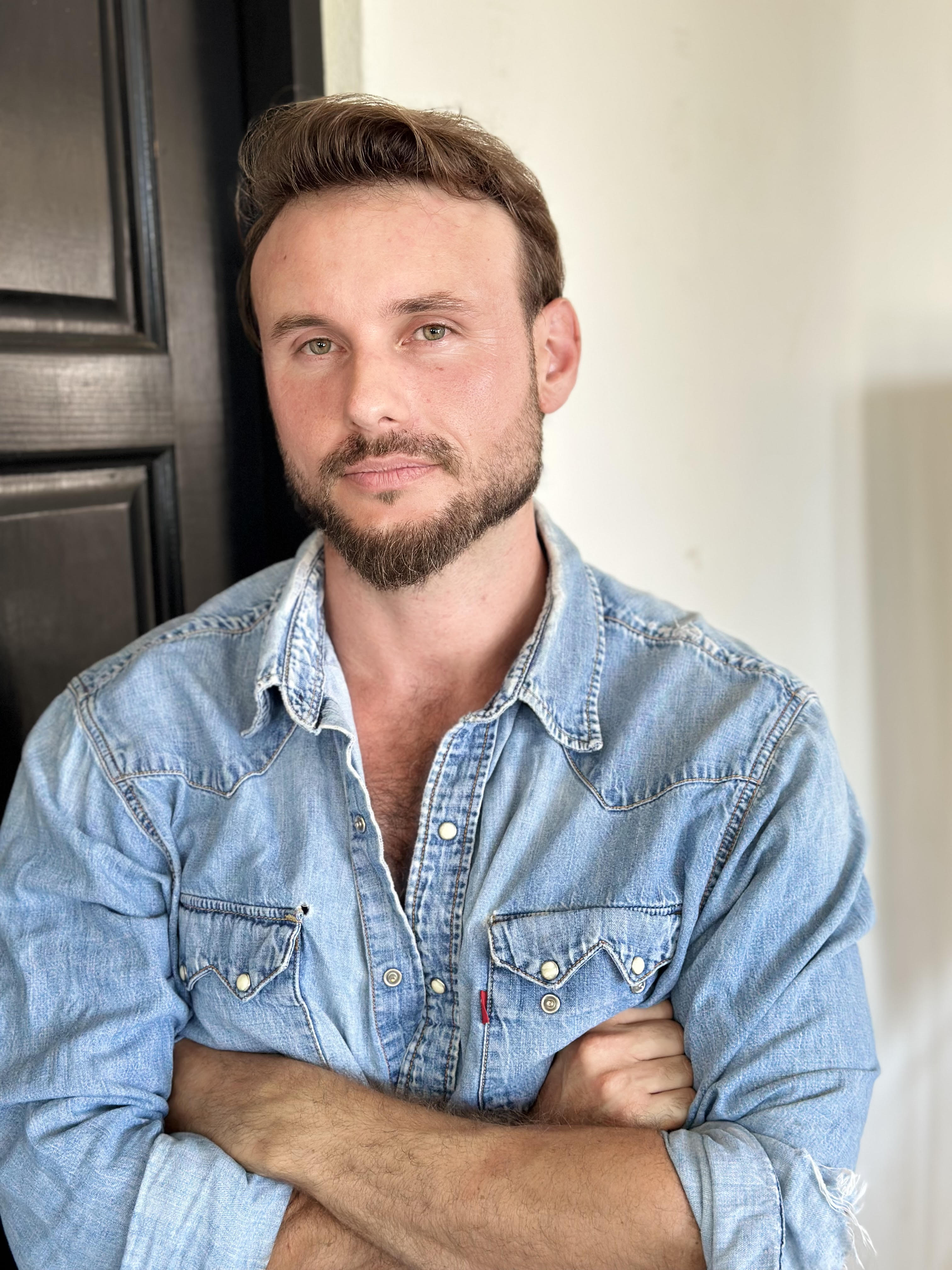
About this episode
Daniel Cox spent 30 years turning data into decisions for boards, founders, and global organizations. In this episode he breaks down why most data is beautiful garbage, how AI will actually develop, and the one mindset shift that separates high performers from everyone else.
Episode notes
- 00:00Welcome and guest introduction
- 01:40FindAPodcast.io sponsor message
- 02:28Daniel's breakthrough moment: hitting 35 staff and 100-hour weeks
- 03:30From Seattle farm kid to 23 years in Sydney
- 04:00The dot-com era and building a distributed storage network
- 05:00Left brain vs right brain entrepreneurs: two ways of thinking
- 07:00The breaking point: die, collapse, or change
- 08:00Choosing to be the visionary: an identity shift
- 08:45Bringing in a mentor as a board member and what changed
- 09:30DISC profiles: understanding the DC personality
- 10:30Learning to let go of the details and trust the executive team
- 11:32What advice Daniel gives to anyone mid-breakthrough
- 12:00Time management audits, skills audits, and energy audits
- 14:00Just because you can do it doesn't mean you should
- 15:17How mentors and coaches accelerate breakthroughs
- 16:00What Daniel would do differently: being more coachable earlier
- 17:00The biggest mistake most founders make with co-founders
- 18:17Starting fresh in 2026: what Daniel would build and how
- 19:00Building Green Parrot Collective: vision first, executive team second
- 21:00Is AI a bubble? A 30-year data expert gives an honest answer
- 22:30Hype cycles, troughs of disillusionment, and where AI actually lands
- 24:00AI workforces and AI employees: the next three to five years
- 26:00Why SMEs will lag and why that is actually an opportunity
- 27:19What interviewing Rick Hoffman from Suits was really like
- 28:42The Lamborghini family: what most people don't know
- 29:18What high performers have in common that most people miss
- 31:00I get to do this versus I have to do this: the mindset switch
- 32:37Data as leverage: where to start if you know nothing
- 33:15Start with the vision, then work backwards to the data you need
- 35:00Data quality, data lineage, and data literacy explained simply
- 36:30The most underrated data strategy: what can we delete today?
- 37:39What Daniel uses: Claude Code, private LLMs, Vid.io, and Manus
- 38:58Building the Green Parrot brain and AI employees
- 40:13Who Daniel works with and how to reach him
- 40:57The breakthrough challenge: is what you are doing now getting you there?
Chapter titles and timings from the published YouTube description.
From the conversation
Excerpts from YouTube automatic captions. They may contain transcription errors. Play a timestamp to hear the original conversation.
Daniel's breakthrough moment: hitting 35 staff and 100-hour weeks
um for a 3-month holiday project, as they termed it, when I was working with a company called Cognos, and I was actually supposed to move to Europe with them. uh and they said, "Hey, just come down and check this out and do this project." And 23 years later, here I am still here. So, [laughter] but my breakthrough moment was Yeah. after that um uh it was actually probably about six or eight months into my first real uh startup. I had done a lot of different things over the years. I was part of the.com boom and ...
Bringing in a mentor as a board member and what changed
>> Well, I wanted to be the visionary. Now, one of my one of my partners uh and I did bring in a a couple of partners. Um one of them was was a mentor uh for me at that time. So, I brought him into the business so that he could be a board member and um basically see me on a very ongoing basis. So, it wasn't necessarily daily, but uh at least a few times a week um cuz he was quite active as well. So, so he actually uh suggested quite often that um and he ...
What Daniel would do differently: being more coachable earlier
or do something different from the beginning. I know we can't do it, but like what would be that thing that you'd maybe do more of or less of? I'm so curious. Yeah, actually um uh because of my inherent nature of being a DC, uh I'm quite steadfast. Not that I'm not flexible and open, but uh it takes me a while to gather information or allow people to support their opinions uh to change my uh philosophies or or uh ideas. Now that's not to say that uh in our executive community um I don't promote all opinions ...
AI workforces and AI employees: the next three to five years
workflows for organizations yes there's there's going to be and there is a big uplift and that's going to it still happen for the next 3ish years, right? At least, right? Because [clears throat] there's just so much to implement and there's not a lot of implementers at the moment. There's a lot of developers uh as far as new technologies. Um there's a lot of people that love to use it or use it to build things but not actually to implement inside organizations for instance, especially in that theme space, right? um they just they're going to lag ...
Start with the vision, then work backwards to the data you need
>> Yeah. Yeah. Absolutely. Of course, we can use AI to help us with that as well, right? To weed through that. But we need to also know what we should actually know, right? What do we need to know? Uh and um whether it's a solar entrepreneur, whether it's a startup, whether it's a midsize company, whether it's a global international, right? um is the first thing I ask is what what's important and and not not what's important in data but what's important and uh what's the vision what are you trying to achieve and then we start ...
Read the episode transcript
YouTube automatic captions. Names, punctuation and wording may contain transcription errors.
Welcome back everybody to the breakthrough moment podcast where we interview successful entrepreneurs and investors and ask them what is their biggest breakthrough moment in their career. The moment that changed it all that took them into another level of success or insight or impact and as they share that moment with us at home have breakthroughs as well. I'm Zach Dean with special guest Daniel Cox. How are you? Welcome. Thank you so much, Zach, for being allowing me to come on your show and yeah, I'm doing great. Thanks. >> Awesome. Good to have you. You're a busy man. We connected about six months ago and here we are now. So, uh it's it's it's awesome to welcome you into the community. I'll give you a quick little introduction and then uh we dive into your breakthrough moment. Hey, so listen up everybody because most people drown in data. Daniel turns it whereas Daniel turns it into direction. With 30 years across finance, governance and sustainability, he has built a career helping organizations stop sitting on the most valuable asset and start using it to win. So lean in. Now based in Sydney, he is the CEO and founder of Green Parrot Collective, where they're on a mission to make sustainability something customers can see and trust rather than something customers just tick a box for, which yeah, that's how I think of it most of the time. He believes data is not just an asset, it is leverage. Welcome Daniel to the Breakthrough Moment podcast. I know you've got incredible story and we'll dive into some more of your accolades and things like that, but let's start with your breakthrough moment first and go from there. >> Yeah, absolutely. It was actually quite um it's probably quite early in my startup and entrepreneur career. Uh a little bit later after my corporate careers um but uh it was really during my first startup and I was building a data management consulting company here in Australia and most people sorry I I live in Sydney, Australia. I've been down here for 23 years. Uh but obviously I am an American. Well, some [clears throat] people might might think it might be a Canadian accent, but no, I'm from Seattle around Seattle. So, uh it is American, but um never thought I'd be down here in Australia. Never thought. And that's that's another story where I actually was brought down here um for a 3-month holiday project, as they termed it, when I was working with a company called Cognos, and I was actually supposed to move to Europe with them. uh and they said, "Hey, just come down and check this out and do this project." And 23 years later, here I am still here. So, [laughter] but my breakthrough moment was Yeah. after that um uh it was actually probably about six or eight months into my first real uh startup. I had done a lot of different things over the years.
I was part of the.com boom and um uh yeah, so I actually went together with a bunch of friends to do a technology that probably is somewhat similar to um the Dropbox type idea, but it was actually using uh capa expare capacity on uh private computers and being able to use that that memory. So there was no data centers back then. So we were trying to build a network of data centers based off of spare uh dispace on uh home computers basically and it actually did quite well but uh I did wasn't fundamentally one of the founders or the technologists at that point. So, um I kind of think of there's so many different uh types of entrepreneurs and you can slice them up all kinds of different ways. But if you want to make it very simple, there can be like the leftrainer and the righter type of um of entrepreneurs where uh the leftrainer is very technical and analytical and the right brain is visionary and abstract. Uh so almost polar opposites. Now you get the breadth in between, but those are those are kind of um the main if you think about it uh two different very s simplistic ways of thinking about them. So when you have an entrepreneur that's leftrain, it's very product focused. They see a see where they can actually build a solution, they build the solution and then they try to take it to market. Whereas the right brainer, they see a vision, they get a vision, they see a gap in the market and they don't know how to build it. um and they start selling it as a solution already. Right now, there's variants of those. Me, I'm actually both. [laughter] So, uh I'm I'm a leftbrainer by personality, very analytical, but I learned over many years uh to become more rightrained. And that's because I actually grew up on a farm uh in Eastern Washington State. And um my parents were very entrepreneur um but they required us to do basically everything right. Uh so you had to become visionary because you had to think of ways to make solutions and then actually build it. So when I started uh building my data management practice I I was doing the work as well as then managing a few apprentices as you will or staff but then also building the business as well. So, I was doing everything. So, when I got to about 35 staff, it was either going to collapse, I was going to die, or it was going to be stuck, right? Cuz I was doing 100 hours a week easy. Now, I loved it, don't get me wrong, but if you're going to build a business, there had to be a change. And that change had to come. Otherwise, I could still be there on 35 people or or collapse. So,
it was that breakthrough that I actually needed to address what I actually was. Was I a consultant that wanted to be uh a solar entrepreneur or a small businessman or was I truly going to be an entrepreneur uh building a business? And so, that's when I looked at it and said, "Well, you know what? I don't have all the skills that I truly need right now to go to that next level. And how can I get those skill sets and tools? Well, I did play professional baseball as well for two years. And of course, going through uh all the ranks, you had coaches. So, I thought, well, there should be something like that in the business world. uh but back then there really wasn't a lot uh business coaches etc. Yes, there were mentors who had been founders and so I sought after a few of those and that's when I needed to figure out okay it wasn't a mindset change in that I needed to change my role it was deeper than that who did I want to be and what did I want to actually do so that was that was when I had that breakthrough >> and so who did you choose to be and then what what happened as a result of that cuz it's this This is one of [clears throat] the most monumental uh and very clear shifts or patterns that happens in in the in a breakthrough which is where there's a shift of identity. It's actually like 100% of the these podcasts it's going from one direction in terms of life path and direction with business to this direction and in doing that is a whole shift of of identity. So it's really interesting that you say you say this. So, who did you choose to be and then what kind of unfolded after that? Real quick before we continue, a brief message from today's sponsor. If you're an entrepreneur wanting to grow your personal brand, authority, and business through podcasting, then check out finderodcast.io. As you know, the biggest entrepreneurs in the world, they book these massive podcast tours before a big product launch or an event or book because podcasts build trust faster than anything else online today. So, it's find apodcast.io. It helps you connect with a specific podcast in your niche. It writes the pitch. It follows up in this easy CRM. It truly does save time. So, you just show up, do the podcast, and your business grows. If you're curious to learn more, book in a demo at find a podcast.io. Now, let's get back to the episode. >> Well, I wanted to be the visionary. Now, one of my one of my partners uh and I did bring in a a couple of partners. Um one of them was was a mentor uh for me at that time. So, I brought him into the
business so that he could be a board member and um basically see me on a very ongoing basis. So, it wasn't necessarily daily, but uh at least a few times a week um cuz he was quite active as well. So, so he actually uh suggested quite often that um and he made us do uh disc profiles uh which I really actually like. They're simple. Um yes, there are all kinds of personality profiles you can do. Uh I actually like DIS. It's fairly simplistic and it's pretty accurate from what um I use. So So I'm a high what's called the high DC dominant and analytical. So, uh I'm kind of uh equivalent to um uh uh a few different prime ministers, not not here in Australia. Uh but the whole premise is that when I ask a question, I normally have the answer already. I just want to know if they know it. And so one of the things that um they wanted me to focus on was not asking those types of questions because those are kind of I got you type questions, but changing to uh that that visionary and leadership so that I can lead the executive team and allow them to get on with their job. So that that was a huge mindset change for me because I can do the work and I can and do know the answers. So it was quite um difficult for me to change that mindset of okay I I can't do the research before I have to rely on them to feed me and to allow me to um to let go of the details even though I need to know all my numbers. I need to know the the actual detail, but I don't need to do the research. I need to allow them to do it to feed me and to help um uh yeah to help uh provide provide that information to make the correct decisions or the best decisions at the time. So, and that's and that's so clearly articulated in this disc profile. I'm fascinated at how, you know, it takes a good bunch of time to go through like 30 or minutes or an hour, I think, from from memory going through it. There's different there's free ones online and things like this, >> but yeah, I remember doing my disc profile and uh I was like, "Wow, this is so crazily accurate. I think everyone in business should do it." I um what would curious to know what advice do you have for someone who's out there now kind of going through this transitional phase maybe at their own breakthrough and they're deciding which avatar or which identity or which kind of character to play next in in their life like what advice do you have for them? >> Well, I do think that definitely going out and getting a coach, a mentor. Uh, and I actually um support both somebody
that would do it on a proono basis, but I also re recommend that you pay someone. And the reason why is that with the person that you pay, you're going to be much more diligent in using their resources and their time. uh and they're going to be much more pointed in focused um focused areas that they want to help you to accomplish change in. Now, [clears throat] that's part of it, but it's also you need to do a couple of different things. One is a time management audit. You need to do a skills management uh audit as well. And you need to um when you do the time management audit you you record everything that you do throughout uh the day for a whole week and that includes uh nonwork time as well. Now you don't have to do 5 minutes or whatever but uh that will help you to actually structure your day as well. Are you better in the morning? you know the whole whole thing of you know when is your best time so that you you can actually start learning more about yourself as far as awareness of your time um but also energy management and what you like to do. So when you start doing the time management you also put in uh what's necessary what's required as well as then um uh what what isn't and what you actually enjoy doing. So then that's very datadriven for yourself to actually see okay well actually I'm quite good at this but it's not utilizing the true capabilities uh that I should be or I actually am good at it but I hate it. Uh so should I be doing it? Well maybe not. maybe, you know, great, you you're really good at bookkeeping, but uh shouldn't you hand that off to somebody or let an actual accountant do that? Um that's one thing that I I I love to do bookkeeping, [laughter] believe it or not, because I like to get the transactions just right. Um but that's something that is not value ad for me, right? Well, there is for some of the grants and some of the like research and development stuff to make sure it's right, but it's better for me to actually do, let's say, a video uh and then that explains it or loom or whatever and then then I can delegate it off. But, um doing that time matrix, that energy matrix and that skills matrix helps you to understand who you are, what you're good at, what you enjoy, what you don't enjoy. And then your coach can also help you to focus on that change of okay well uh you should be doing this because that that's something that only you can do as the founder the entrepreneur etc. Now maybe um you need to you don't like doing sales but you know what that's one thing that you've got to do at the end to actually close because you're passionate but you may not like sales but you're
passionate people follow you for that. So there are those things that um a coach can help you uh after you've done those types of uh assessments and audits which I think are really necessary especially when you're in this time of uh potential breakthrough and >> 100% for sure. I think the times where I've jumped in in results or outcomes or had a breakthrough or transition through a breakthrough a lot faster, more elegantly, so to speak, um was when I had a mentor, a coach, uh someone that I was able to get advice from, for sure. Someone that I trusted. Super important. It's it's definitely not step number one to to having a breakthrough for sure. Um you've been through many years of entrepreneurship. You've you've you've been around tens of thousands of people, I'm sure, or millions of people. And I want to know if you could go back in time and and change one thing around or or do something different from the beginning. I know we can't do it, but like what would be that thing that you'd maybe do more of or less of? I'm so curious. Yeah, actually um uh because of my inherent nature of being a DC, uh I'm quite steadfast. Not that I'm not flexible and open, but uh it takes me a while to gather information or allow people to support their opinions uh to change my uh philosophies or or uh ideas. Now that's not to say that uh in our executive community um I don't promote all opinions and ideas uh and uh and actually ask people to do that. That's that's that's different. But for me um there are certain things that I do like to do. But if I were able to change that earlier, I would have been more flexible and open to change and mindset changes, capability changes, etc. uh not that I wasn't coachable but I would have been more coachable and able to accelerate faster. So that's that's one thing if I was able to change. But truly I think uh one of the biggest things that many founders do is bring in and I'm not talking about the same partner but to bring in partners or co-founders that are wrong because we want to accelerate because they they're the opposite of us or we think they're the opposite of us or we think they're good. There is yes you need to trust but you need to validate heavily heavily because a good partner will support you and it'll be the air under your wings or it can be lead weights on the top of them and struggling all the time and I've had both. So take your time. Uh now that could be old old friends and old buddies. It could work out uh sometimes
and actually most the time it doesn't right. So pick and choose your co-founders or or partners very diligently. Take the time do the validation do the research test them as well and they should test you. >> No for sure. If you were to hypothetically start your journey again with 2026 being the beginning of your entrepreneurial journey and uh you had to start a start a fresh, build a business, what would you do? What would you launch? Well, [laughter] um I I actually have three startups at the moment. So, I've just started an AI agency and I've also started a fintech. Uh at the moment, both of those are solarreneurs. Uh, so I'm doing them all by myself. Um, Green Parrot, it's actually not that old. It's only a couple years old. It's still really in the startup phase. We're actually moving now into the scale up and growth phase and we're going out for our funding uh now for a round. But uh so it's quite relevant. I mean there is just so much one person can do right now with AI, right? So if you're using uh you know kind of the right tools there's definitely a mix but um you definitely need to know exactly what you want to do and if you can focus on that outline it and then uh you can very quickly build whatever if it's a software right if it's uh uh bricks and mortar that's a little bit different um different industries let's say science etc that's a little bit different but uh what I actually did very differently when I started Green Parrot was I went out and I got my executive community first. So yes, I did a bunch up front as far as you know the vision built that out as far as what I want. Uh and then I found the individuals that wanted to go on the ride with me and to build it with me, right? not just um a development person or you know a BDM or something like that but I wanted Green Parrot to become a global brand and we're working on that but uh from the get-go. So I wanted to bring in an executive community that knew how to do each of those and um wanted to drive and had and were passionate about what that vision was. So that makes it much easier for me because it keeps me in the things that I need to do and what I want to do and allows them because of their dedication, their passion and their experience to actually accelerate the growth and take over those areas. I didn't want newbies um that but that's me um as well. You know, most entrepreneurs, what they really should do is find people that are
better or more skilled than they are because then it's it it's so much easier to grow, build, and get things done. >> Yeah. No, for sure. We live in a wild time. Very exciting time with AI. I'm >> the edge of my seat daily as to the new >> app drops and you know updates and things that that anthropic and open AI and and cool just all the all the different Gemini and everything that are doing uh you know I'm doing a bunch of vibe coding as well and I'm been blown with the speed to to execution and idea and oh my gosh it's incredible. So, you know, you have a background in data. I know that AI is a hot topic right now. So many questions around AI, but I guess my first one is is do you think this growth with AI is sustainable or do you think it's a bubble? I know that the the dot had its own bubble and it burst. And I know that um Michael Barry who was in the the the big short movie he actually you know went against a lot of the financial markets um 2008 crash I think he predicted it. >> Um is that something that you cuz he's put he's he's uh shorting on on AI. >> Oh is he? So he's he's >> well it depends on which ones, right? I mean he he's extremely intelligent, but he did his research, right? He did extreme research and he found specific funds that he was shorting. Uh not all funds uh were as tragic as the ones that he identified, right? Um and the same thing, you know, with every every hype cycle, right? So if you look at the hype cycle of any new technology, it's always going to be, oh, right, yay. And then there's the trough of disillusionment, right? And then it starts to come back up and then it and it tailor off, right? We can look at just about anything, whether whether that's data warehousing or data centers or uh RPA, which most people don't even remember what that is anymore. It's a precursor to AI really. Um and and AI is going to be the exact same now. Will it actually have a bubble like most technologies? Probably not because there the thing about AI is that it's learning from itself as well and there's just so much learning and training going on. Uh will there be some stagnation? I think in certain sectors for sure like the the daily usage of uh AI like Google right that's going to stagnate and um uh there's not going to be a massive amount of up uh in value ad in that those types of areas right but when we start um looking at you know
workflows for organizations yes there's there's going to be and there is a big uplift and that's going to it still happen for the next 3ish years, right? At least, right? Because [clears throat] there's just so much to implement and there's not a lot of implementers at the moment. There's a lot of developers uh as far as new technologies. Um there's a lot of people that love to use it or use it to build things but not actually to implement inside organizations for instance, especially in that theme space, right? um they just they're going to lag behind like most times unless unless they're flexible enough. So I think that's a huge area that still going to be trending for 5 years is converting all kinds of existingmemes over to include AI in a number of different areas. Um I think AI workforces so like AI employees is going to be extremely um good over the next um 3 four years as well. And that's just starting to come out. Um, and most of that is because you need to train it on humanity and train it on internal information because um most of the big AIs are what's available publicly, right? But if you want um your AI to be you know whether it's a salesperson or HR person or or a marketing individual and you want that cultural aspect to it your LLM or or a large language model needs to be trained specifically for your culture etc. and then additionally train there's a lot of work there and then put the workflow uh and work um yeah the work workflows uh in place and um so I don't think there's going to be a bubble as such I think there are going to be a lot of little bubbles on a lot of the different technologies that um not necessarily overpromise um because everybody is quite understanding that AI is continuing to uh develop. So they're continuing to add value uh all the time. So is it overpromising? Not really. Not really. People are quite cautious still. So I don't think there's going to be a big bubble. I think there's going to be little bubbles and um plateauing of different type of technologies uh in each different kind of sector of uh area. So, you know, AI is a little bit different than your normal software or technology because normal software and technology is geared towards an industry sector or a particular outcome where AI doesn't have that limitation. It's very diverse and there's just so much coming out. So, yes, I think if he's targeting
certain AI, yes, he's definitely going to be on the money as far as being able to short because they'll Yeah, they're going to have somewhat of a bubble and then I think it'll come back up as well if that if that particular um technology area of AI is relevant. >> Interesting. It's a wild >> wild time to be alive. Very exciting. And uh it's one of those moments. It's ah, you know, when we first found out about Bitcoin, we all wanted to start earlier. Ah, I wish I bought Bitcoin earlier. I wish I bought Bitcoin. I was like, oh, I wish I started AI earlier. I wish I started AI earlier. It's because the skills, the speed, the ability to save time and the access for the everyday person now to have a higher output of result or proposal or just saving time. There's just so many benefits for it and I really think the teams that are able to integrate at least some AI are really going to shoot light years ahead. Um, >> absolutely. >> Yeah. It's uh apparently you've interviewed Torino Lambini and Rick Hoffman. Is that right? >> Yeah. Rick Hoffman who uh is um Lewis Lit from from uh Suits. Yeah, he's uh he's so funny, so hilarious. And uh he he actually did get into character a little bit. Um so that was fun. He uh got to berate me a little. I got lit up, [laughter] which is what I so that was fun. Um, yeah. And then Torino Lamborghini. Yes, he uh I didn't get to interview him solo. Um, but uh cuz he doesn't speak a lot of English. >> Uh so primarily Italian. Well, yes, Italian. Um but uh man, what a what a story. Because of course you know that uh Lamborghini doesn't own Lamborghini anymore, the cars, the manufacturing, right? They own the brands and they own the accessories and merchandise. Uh but the actual manufacturing of Lamborghini um they don't own anymore and haven't for quite some time now. So >> well, one of my questions I had regarding that is, you know, these are some pretty high performers in the world. You know, they're operating at a very high level. What is it that [clears throat] you see that they have in common that say people who are not high performers or people who are trying to be high performers but unable to achieve it. What is it that they're doing differently do you think that helps them operate at such a high level and achieve so much? I think there are a couple of different a aspects of that and I think it's really good because you can a really good question because you can definitely see it especially in the corporate culture um as you as you climb the ladder in your corporate culture right you hit that middle layer and then you hit the senior
layer and then you hit the executive layer the the areas below the senior executives nothing I'm not being disparent But it it's very difficult for people to carve out their um worth, their uniqueness. So there's a lot of competition, a lot of politics and a lot of close-mindedness. So that is one area especially in larger corporates that uh that I have a friend specifically that that's all she does is is do team collaboration and uh culture dynamics within organizations so that that type of thing does not happen as much. But as you get past that, the the mindset and openness of the idea that everything is an opportunity, that it's not a problem, right? That's not a challenge. It's a an area that we can have an opportunity to either resolve it or find something that's going to um uh accelerate us. So that mindset switch of I need to do or I must do to oh I get to do this and I get to figure out um something that's going to make uh that problem go away and the idea is that well if I've got that then someone else does so I'll make it into another business. the idea, you know, that their flexibility, their openness, their experience of calmness to see through the forest, right? Um, and not the trees, but the whole forest and say, "Right, that's an opportunity. Everything is an opportunity." And if you have that mindset then um there's less stress less um uh worry less anxiety that everything is oh I choose I get to do that and I think that's a huge change uh as you move up that tree of network and high performance. >> Exact like yeah 100%. It's the perspective on on those experiences. Some would see it as risky, some would see it as opportunity. And you know that's the the wild uh journey we have as entrepreneurs is to is the perspective um you know one would see AI as bullish and one would see it as as bearish you know it's just like what it's so so fascinating. Um you you talk a lot about data being leverage and I think in a world where there's so much information out there and it's so tricky to figure out what's real. You got AI news and people making videos and things just like that are going viral. It's like especially on social media. It feels quite overwhelming, you know, especially as the world is so chaotic as well. Plus the stress and the time and like all these shifts in in every area
of life are so unprecedented. But how can how can the everyday entrepreneur start to see data as a more valuable asset or leverage to help them with their business? Yeah. Are there any strategies on that? >> Yeah. Yeah. Absolutely. Of course, we can use AI to help us with that as well, right? To weed through that. But we need to also know what we should actually know, right? What do we need to know? Uh and um whether it's a solar entrepreneur, whether it's a startup, whether it's a midsize company, whether it's a global international, right? um is the first thing I ask is what what's important and and not not what's important in data but what's important and uh what's the vision what are you trying to achieve and then we start breaking that back into okay what data do you actually need in order to monitor the progression of that particular narrative right so I talk about stories all the time and what what is that executive story what are they trying to achieve what's the targets that the that they need. Okay. It might be that um we are we are overly profitable and we want to uh show that we care. Okay. Beautiful. All right. That's a that's a very um philanthrop type type of idea. But okay, what data do we actually need underneath that? Right? Uh so so we then start to break that back. Okay, we need this type of data and this type of data. Okay, where are we going to be able to get that data? Okay, we can get it from financials or we can get it from a report over here etc. So once we start doing that then we know what we don't need as well and because there's so much data out there and we could collect it all we could try to analyze it all but it's not actually value added and it's not helpful. So the first thing is to know what data you actually do need based off of the support of trying to monitor what you're trying to achieve. So um I actually talk uh to organizations a lot about their data governance and that does include you know AI governance as well. And many people think as well that I'll just throw my data into AI and it'll do it for me. And yes, it will. But it also depends on the quality of information that you give it. And uh still to this day, you can you can have a beautiful intelligent dashboard and be very confident in that it's wrong. [sighs] So I used to have a board member as well say, "Oh, that's beautiful garbage. It's a great looking graph, but uh it's meaningless because they can't actually make a decision on it, right? So quality is certainly one thing that uh um entrepreneurs as well as uh business
owners need to to know uh and have. So uh data quality gives you clarity. Data lineage is very important because that gives you defensible data especially if you're in a regulatory um type of industry or if you're going to be audited or need to make sure. So uh lineage and then of course um data literacy which is the ability to understand what you're looking at and that gives you the ability to make decisions and make judgments. So that those three are really important. So what you put into AI does matter. Now you can use AI to help you to clean it up if you know uh how to do that as well. Um but just throwing it into AI or throwing it into a spreadsheet doesn't necessarily mean it's going to be the right data. Uh and um one of the things I I tended to to tell people as well especially boards is what can we actually delete today? What data and data sets can we delete today? And that reduces risk because if we're able to delete data, it means we can get rid of it. We don't have to store it. It also reduces cost, right? So we don't have to store it. We don't have to worry about regulatory compliance with it. Uh we don't have to monitor it, right? And so there's no data breaches for it. And if we have sens sensitive data, we could be in compliance risk and potentially fines, etc. So um deletion or archiving of data is ex is just as important as collecting data and creating data. >> Super important, super practical >> for sure. How are you using AI behind the scenes? Have you got any any specific ones that you use utilizing more than others? >> Uh I use um cloud code is our our main for building applications. Uh and Green Parrot is primarily built with um cloud code. Uh we use um we do have some L uh LLMs built on a private um a private uh technology uh with a group of us that have built that technology and that's how we're actually building our AI employees and later this year we'll actually uh start to onell that to uh other people as well. Um, so we're so I'm using that extensively internally because we've built our own brains as we uh like to say um the green parrot brain. Um and also I've built uh a couple different uh brains on algorithms for the fintech. Um so I also really enjoy uh V.io that for a lot of my videos um uh marketing content etc. Uh, I also use Manis quite a bit as well. >> Very cool. No, it's fascinating what's
happening. And, uh, it's good to know that there there's a couple that I've found recently as well that are that are changing the game as well. Um, what's it called? Hermes. >> Oh, yeah. >> Hermes. Hermes with open router. Setting that up is uh has been quite helpful. connecting it to Telegram and having my own personal assistant and like accountability coach and it's it's super interesting what what it's what it's helped me with which is great. [snorts] >> Uh Daniel, I'm going to put all your links around here for people to get in touch with you but from who is listening today who should get in touch >> and who do you question? >> Yeah. >> Yeah. I I I do a lot of advisory work for boards um uh and CEOs uh CFOs, COOs, but I also uh mentor startups as well. Um anything in the sustainability uh data or fintech space um I also help as well. So, anybody in those areas and but if you're very interested in uh what what we do at Green Parrot or or uh any of the other uh companies I've got, we can I'm happy to have an open door discussion. So, >> amazing amazing everybody reach out click on Daniel's links here get in touch with him to take your data and mentorship and business to the next level. Uh at the end of the day, it's we're one conversation away from a breakthrough as well, right? with the right person, it can save, you know, years and years and years of our own figuring it out. We can really compress the timeline with the right mentorship. So, uh, the the theme of the podcast is around the breakthrough moment, right? You've shared your breakthrough moment. Uh, and now be great to to ask you if we were to help the audience have a breakthrough today. What would you suggest? What would you challenge them to do today, this week, this month, this year to also have a breakthrough? Everybody should have a breakthrough almost every day, right? You you should have those aha moments. No, normally I I have those aha moments uh in the shower, but um as far as a real fundamental uh breakthrough, question yourself, what I'm doing now, is that going to get me to the stage that I want to get to? And if it's not uh then then be very direct with yourself on making a choice to make changes because most entrepreneurs go through multiple lives uh during their span of career because they've wanted to change from uh startup mode to scale up mode to uh maintenance mode to uh large organizations etc. Now, some people might actually really favor doing startups and only for that that period. Uh, which is great, but you can only know that if you've got that self-awareness. But if somebody wants a breakthrough,
get a mentor, get a coach, pay for someone, and that's going to be very diligent with you and be direct with, okay, let's look at this particular element because that if we change this aspect, this mindset, this change, maybe using a a recalibration for this area to really see how you're doing, that's the way to do it so that you can actually set a process to move yourself from this step to that step. >> For sure. For sure. The right questions create the right answers and sometimes we're asking the questions to the wrong people or the wrong room of of of experts and they're giving us information that is completely wrong. >> Yeah. >> So, yeah, choose your mentors w w w w w w w w w w w w w w w w w w w w w w w w w w w w w w w w w w w w w w w w wisely everybody. So, this has been a uh a powerful conversation, some fundamental parts of of business and entrepreneurship that I wish more people would would learn about. Thank you for sharing your story and everything. And uh you know, it's it's exciting. Maybe one day I can be on a photo with with you in the background there as well. >> Yeah, absolutely. That'd be great. >> Yeah. When I come back to Australia, no, it'll be great to meet up. But, uh everybody at home, please, who do you know who would benefit from today's message? who would benefit from hearing today's podcast and to help them have a breakthrough moment as well. And what was your aha moment? Please put into the comments. We'd love to hear from you. Daniel, thank you so much for your time. Any final comments at all before we wrap it up? >> Definitely use your data because it can change into profit. Make it active. It should be a living organism within your organization and you should leverage it. >> Yeah. Awesome. Awesome. It's it's as you mentioned the right side of the brain, the left side of the brain, they are, you know, we all have our skill sets and it's I think a lot of people have no idea how to do this data thing, you know, but it is so so important. We we can't what did someone say the other day? We don't uh history doesn't repeat, but it rhymes. So, if we can know and do our deep research, you know, we can not just predict the future in a way, but we can kind of make sure we jump onto those those correct trends uh in our own business and our own lives. So, appreciate for the insights, Daniel, and everybody at home. We'll see you next time on the Breakthrough Moment podcast. Over and out. Bye.