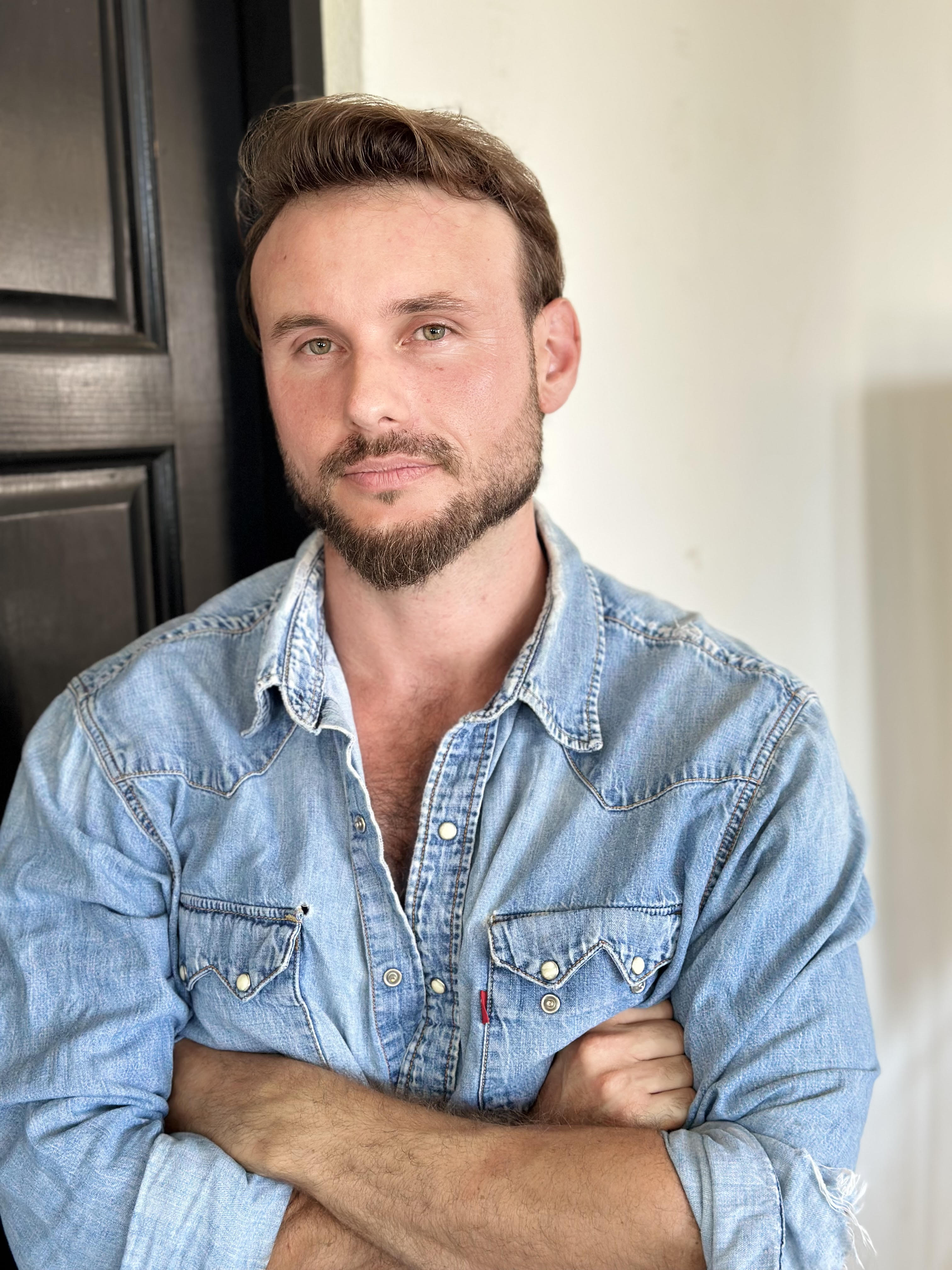
About this episode
What if working harder is actually costing you more than you realize?
Zac Deane sits down with financial advisor and investor Jeremy Britton to unpack the heart attack that completely changed his relationship with money, work and success.
Jeremy shares what happened when he cut his working hours dramatically, why financial markets move in cycles, and the lessons decades of investing have taught him about money, happiness and designing a life you actually want.
Episode notes
- 00:00Welcome & Jeremy Britton introduction
- 01:28The heart attack that changed everything
- 04:04The dangerous trap of working more for more money
- 06:10Jeremy completely redesigns his lifestyle
- 07:20Cutting work hours by 60%
- 08:14Why Jeremy changed his diet
- 13:44Experimenting to find what works for you
- 15:00How meditation changed Jeremy's thinking
- 19:53The belief system that kept him overworking
- 21:30The hidden cost of chasing money
- 23:24“Happiness can make you money”
- 24:16Jeremy’s advice for workaholics
- 27:55What he would do differently today
- 29:36Jeremy’s warning about the AI boom
- 32:27Why he believes many AI companies could fail
- 36:48Market crashes & Michael Burry
- 38:25Learning how financial cycles work
- 41:00How Jeremy says he prepared for the 2020 crash
- 43:58Why history rhymes
- 46:39Question everything
- 49:13Where to find Jeremy & his free book
- 50:06Who Jeremy works with
- 52:08Jeremy’s breakthrough challenge: Start with why
- 54:58Final takeaway
Chapter titles and timings from the published YouTube description.
From the conversation
Excerpts from YouTube automatic captions. They may contain transcription errors. Play a timestamp to hear the original conversation.
The heart attack that changed everything
life, in my career, in my personal I think one of the one of the biggest ones would have to be uh when I was I was financial planning and I was financial planning working 70 to 80 hours a week, usually 72 to 70 76 hours a week and I actually had a heart attack. There were some warning signs. Um, I was only in my 30s. I was 33 when I had a heart attack. Um, but I'd been ignoring illness. I'd been ignoring the things where I was sort of working too hard, working long hours, [clears ...
Why Jeremy changed his diet
>> Yeah. First of all, I gave up red meat. I was still eating chicken and fish. And then I I didn't know anybody who was a vegetarian. Like I was I was very sheltered. Um I'd never heard of tofu. I'd never heard of a lentil. So I'd just go shopping. I'd buy whatever I feel. I just walk down the fruit and veggie aisle and go, "Oh, the capsicum looks nice and I'll go home and I'll eat this." Um, so I was I was cooking a lot of like stir fried, you know, just warm vegetables and ...
The hidden cost of chasing money
you taken on without question um and without testing them as well. And that's a big thing. I'm I'm all for sort of making yourself your own guinea pig. Experiment on yourself and see what works. Like for me, working 76 hours a week was not sustainable. Not for my health, not for my physical health, my mental health, not for my relationship. Cuz obviously I was thinking, I'm buying my my wife and my kids the best things that money allows. And they've got the PlayStations and they got the Xbox and they got the seven-bedroom house. And I'd ...
Why he believes many AI companies could fail
going to be able to buy the ones at a massive, massive discount. So, in the tech wreck, obviously, Pets.com, Jets.com, a lot of the other.com companies disappeared. At the same time, Apple stock went down by 80%. And Apple made products that you could actually pick up and play with. Microsoft stock went down by 60%. And again, Microsoft had been making the Word and the Excel and all these programs that we use. But it was the contagion because people panicked. And when a few tech companies started to go down, they went, "Oh my god, all all ...
Why history rhymes
get attached to it, you know? So, don't be only an expert on the stock market. Don't only be an expert on AI. Don't only be buying property because there's swings and roundabouts. Things move in cycles. And it's better to be a generalist and get out early rather than being one day late. You know, you don't want to try and sell your stocks the day after the planes hit the Twin Towers or the day after the pandemic lockdown. Right? Get out 6 months early. And I've done that a few times in my life because I've I've ...
Read the episode transcript
YouTube automatic captions. Names, punctuation and wording may contain transcription errors.
Welcome back everybody to the Breakthrough Moment podcast where we interview successful entrepreneurs and investors and ask them what their biggest breakthrough moment is in their career. The moment that changed it all and took them into the next level of success or impact. And as they share that moment with us, us at home can have breakthroughs as well. Today's special guest is Jeremy. Are you there, Jeremy? >> Thanks, Zach. Thanks for having me. >> Thanks for joining me. You're you're a busy man. It's up, you know, it's the afternoon and sit. Where are you? Brisbane. >> Brisbane. Yeah. >> Breezy. Good space. Good spot. Well, let me do a quick little intro for you and then uh let's dive straight into your breakthrough. So, for everybody at home, listen up. This is going to relate to everybody because we're talking about money. Who here appreciates and loves money? That's all of us. So most people spend their whole life changing chasing money without ever stopping to ask what they actually want their life to look like. So Jeremy has been a financial adviser since 1992. He's a co-founder of the world's first diversified crypto mutual fund and has helped people achieve returns most investors only dream about. But his message goes way deeper than just numbers. Jeremy, welcome to the breakthrough moment. Let's let's start there. What what has been your biggest breakthrough moment thus far? >> I've had so many breakthroughs in my life, in my career, in my personal I think one of the one of the biggest ones would have to be uh when I was I was financial planning and I was financial planning working 70 to 80 hours a week, usually 72 to 70 76 hours a week and I actually had a heart attack. There were some warning signs. Um, I was only in my 30s. I was 33 when I had a heart attack. Um, but I'd been ignoring illness. I'd been ignoring the things where I was sort of working too hard, working long hours, [clears throat] hearing the the voices of complaint from my my family and friends saying that I was never available. Um, but I continued to chase the money. The more you work, the more money you make. And when you're lying down on an operating table about to undergo heart surgery and you go, "Yay me, I've got all the money. Um, but I'd give it all up for good health." And the surgeon who's about to do the surgery says, "You need to change your lifestyle. Otherwise, you'll be back here in 12 months time, but you'll probably be dead." Second heart attack generally kills you. And I need to change some things in my life. [laughter] I got young kids in primary school. I' I'd actually like to spend some time with them. I'd like to see them grow up. Um, so that's a pivotal moment in my career where I decided I needed to change a lot of things, not just, you know, waking up and having a couple of cups of coffee and a cigarette to get started and having a couple of shots of bourbon to get to sleep at night because I'd been thinking and and race mind
racing all day. Um, but also really designing who I wanted to be, how I wanted to show up for my kids, and how I wanted to show up for my clients. So, [snorts] it was a a radical transformation where I basically changed everything that I could possibly change. Well, it's a miracle that you're here. Cheers to that. [laughter] And so, I'm so curious. There's a there's a lot we can go down here and I'm fascinated. My background is health and wellness. So, this is a great topic especially as us entrepreneurs are busy busier than ever, right? and probably more stress than ever, more mental illness than ever, more heart attacks than ever. Like, we think we're the most advanced civilization, but we're kind of going backwards in a lot of things, right? So, tell me, what were you doing prior to having a heart attack? Like, what were the what were the things that you were doing that were causing the issue? And then what did you do to kind of turn it around to make sure you you got back on the right path? Yeah, I mean I I started out sort of, you know, uh late teens, early 20s, you know, working 40 40 hours a week like most people do. And then you start to put in some extra effort working 45 50 hours a week and you start to see like extra promotions, extra bonuses, extra opportunities come up and you get caught in this trap because, you know, before my my career, I was a mix soldier, right? Flipping burgers and taking orders through the drive-thru. And as as a wage slave, you get paid by the hour. So the more hours you work, the more money you money you get. Um, and that was sort of programmed into my head. All my friends and family with a similar similar thing, the more they work, the more money they get. And in a career, in business, that's not necessarily true. Sure, you can work 60 hours a week and you'll probably make more money than the person working 40 hours a week. But when you start to work 70 75 hours a week, you're not really making that much more and it starts to take its toll on your health and your wellness and your lifestyle and your waistline and everything else. And so the realization at the other end of that is, you know, the real world rewards productivity. It rewards those who are actually having the output, not necessarily working 100 hours a week because there's billionaires in the world. they're not working, you know, 10,000 hours a week. They've only got the same number of hours. And some of them work significantly less than a lot of your friends and family work. So, that was that was a revelation for me. I mean, when I was when I was told that I was going to have a second heart attack and I would probably die. Um, and the surgeon said, you know, you need to change something about your life, I said, what do I need to change? He's like, I'm not I'm not a life coach. I can't tell you what you need to change. [laughter] So, I sort of went back and sat down and went, "Okay, well, cigarettes probably not good for me. Coffees, I'm having six to 10 a day. That's probably not good for me." Um, but rather than cutting out, I rather than cutting down, I just
cut out and went, "Okay, no more cigarettes at all, no more coffee at all, no more alcohol at all." Um, I was I was cooking one night and when you fry up meat, the and the pan goes cold, that the fat in the pan goes solid, right? and the salad in the bottom of the bowl had this liquid oil. And I sort of looked at that and went, hm, I wonder if I'm eating a lot of meat, will the fat be solid in my body at room temperature? Whereas the the vegetable oil is is liquid at room temperature. So I thought, maybe I could give up meat as well. Um, and I was working too many hours. Um, I I quit that, moved to a new town. I sold my seven-bedroom mansion, moved to a little beach shack to a town where I didn't know anybody. And I made up my mind I was only going to work six hours a day. So I'd drop off my kids at school in the morning. I'd see my first client at 9:00, see another client midm morning, see another client at lunchtime, and then I'd finish up work. I'd pick up my kids at 3:00 in the afternoon and we'd go to the beach together. And so in my head, I was thinking if I slash my working hours by 50 60%. I'm going to slash my income. But that's okay. I sold a couple of cars. cuz I downsized to the little beach shack and thought I could live on half of my income. That's fine. Um, and what I didn't realize, Zach, is, you know, 6 or 12 months into this experiment of spending more time with my kids, going to the beach more, being happier, um, my income only dropped by about 10%. And I didn't realize cuz I was doing the, you know, doing the marathon along the way and I got to the end and doing the financial reports on my own business because I'm obviously concentrating on everybody else's. and looks at my own and went I slashed my hours by about 60%. My income went down 10%. That's amazing. Like what's going on here? It just didn't compute because again, you're taught brainwashed as a wage slave that the more hours is the more income. But it's not necessarily true. >> So many great little nuggets there, Jeremy. And uh just just a quick one there. There's so many cool things that you just shared that I want to unpack. But did you say that you gave up meat? Is that what you meant? >> Yeah. First of all, I gave up red meat. I was still eating chicken and fish. And then I I didn't know anybody who was a vegetarian. Like I was I was very sheltered. Um I'd never heard of tofu. I'd never heard of a lentil. So I'd just go shopping. I'd buy whatever I feel. I just walk down the fruit and veggie aisle and go, "Oh, the capsicum looks nice and I'll go home and I'll eat this." Um, so I was I was cooking a lot of like stir fried, you know, just warm vegetables and things like that. Um, until I I met um some guys when I was in the gym and working out trying to get healthy. Um, and this guy was just huge. He was enormous. I'm like, "Hey, how do I get to do that?" And he's like, "Would you believe I'm vegetarian?" I said, "Absolutely not. wouldn't believe that
because I know, you know, in my limited life experience as a [laughter] as whatever the hell I am, I know that you have to eat three chickens a day to be like Arnold Schwarzenegger. And this dude's like, "No, don't eat meat or dairy." Um, and this is the body that I've built. And I'm like, "Okay." Cuz I'd already gone halfway by giving up the the red meat. Um, and so I, okay, let's try it. Um, try it for a couple of weeks. And so I did like no meat and no dairy for a couple of weeks. And I think I felt a little bit better, but after two weeks of not doing it, I missed the meatlovers pizza that I used to enjoy. So I got the meatlovers pizza with all of the meats on top of it and the cheese. And I ate the entire pizza. Like that was my reward for going no meat, no dairy for 14 days. And then the next day I woke up and my head was throbbing, my nose was blocked up. I felt I had the worst hangover as well as the worst cold. And I was like, "Oh my god, I didn't realize." And so I went back onto the no meat, no dairy. And in in my head, it's like the thing with the with the fat congealing in the saucepan, but not in the salad bowl. I I sort of thought, well, okay, so lions and tigers eat meat and they kill a gazelle and they eat and then they sleep for 20 hours a day. Whereas the gazelle's got to run all day, otherwise it's going to turn into dinner. So maybe based proteins and plant-based food is actually going to give me more energy and more get up and go. So like let's try the experiment. I experimented on myself. You I don't go around telling everybody else what they should eat or what they should do. You can be vegetarian, you can be carnivore, you can do whatever you like. >> So this this is really important and and look, I'm not I'm not totally against veganism and vegetarianism. I was vegan vegetarian for six, seven years growing up. Um I feel like I had the most health challenges during that time. I had uh I feel like it the development of my learning I had a lot of learning difficulties. I wasn't able to read and write very well or remember or retention. >> Maybe it was ADHD. Maybe it was emotional chaos growing up as well. But I think everyone is unique and everyone needs to find what's unique and authentic to them. >> Yeah. >> I interviewed someone Mikey Breathes the other day. He hasn't eaten food for 280 something days, hasn't done exercise, and he's growing muscle. And so the whole premise of what we think we need to do as as you mentioned, and this leads into what you mentioned around entrepreneurship and business is these belief systems that we've been bought into around input output. You know, do more busy. >> Yeah. >> Do action equals results. And as you know with these billionaires, what we mentioned and we'll get into this this insight is around leverage and they figured out the money equation. >> Yeah. >> Um and uh and yeah, there's there's so many so many things going through my head right now, but I think that's the main message I want us to just kind of like wrap up here or like move through
is this importance of of our belief systems that literally create a reality. And so what I'm curious to know >> capital B capital S belief system BS >> BS totally [laughter] and at now I I do eat meat. I do eat vegetables. I'm a vegan that eats meat. But like I think yeah I think it's important that we got to find what's unique to the individual. And I think now we can do a lot of tests, blood tests and things like that to find out >> whenever we try and follow other people's diets cuz some people might go away from now and go, "Oh, I'm I'm going to get off meat and get in to be a vegan, but it might not be beneficial for them." So, it's important to >> experiment. Always experiment. Like, yeah, try try 10 days, you know, 10 days, 14 days with plans. >> Yeah, absolutely. >> Real quick before we continue, a brief message from today's sponsor. If you're an entrepreneur wanting to grow your personal brand authority and business through podcasting, then check out finderodcast.io. As you know, the biggest entrepreneurs in the world, they book these massive podcast tours before a big product launch or an event or book because podcasts build trust faster than anything else online today. So, it's find a podcast.io. It helps you connect with a specific podcast in your niche. It writes the pitch. It follows up in this easy CRM. It truly does save time. So, you just show up, do the podcast, and your business grows. If you're curious to learn more, book in a demo at find a podcast.io. Now, let's get back to the episode. And and some people like I've I've had I've had some of my clients where, you know, we get into the discussion about health and wellness and blah blah blah. And I tell them my story. And I've had several of my clients who went home and went, "Oh, I'm going to do what Jeremy said and give up meat and dairy." And there's probably 60% of them had more energy and felt great. 40% of them felt worse and had more lethargy and this sort of stuff and go okay well it doesn't work for everyone but at least you tried it you gave it a solid go and then works for yourself I mean you know if you're going to say my lifestyle is the best and my upbringing is the best and I live in the greatest country in the world and you know I'm whatever like well you know if you were born in another country you'd have a different language you'd have a different religion you'd have a different a different diet so it's just luck of the draw that you are what you are and you can't really judge anybody else. So, you can't really recommend it to anyone else unless you've actually given it a solid go for yourself. I mean, I I used to think meditation and and this sort of stuff was woo woo and you know, it's like why would I do that? You know, I'm I'm here to make money. I'm here to help my clients. I'm here to do my thing. I don't need to to do any of this woo woo mystical magical cut and paste stuff. Um but once I tried it and tried it solid like for 10 days and of a
passion course where you do nothing but eat, sleep and meditate like oo this is lifechanging this is really lifechanging you know and so I've done it for the last 15 years on a daily basis and I've followed the the precepts that I learned when I was up in the mountain doing the the 10day meditation. So, you know, while while you're up there, it's silent retreat. Um, you don't eat meat, which was I was okay with. Um, and there was no sex and there was no killing of anything. And you go, well, fair enough. I didn't know anybody at the retreat. I'm not really going to make out with someone on a meditation retreat. Um, but there was the no killing thing and you just sort of don't even think twice about swatting a mosquito or a bug or whatever. But that's something I thought, I wonder how long I could do this for. After I've done 10 days meditation up the mountain where someone's cooking and cleaning for you, it's it's easy to do. But when I get back to real life in the real world where I've got to do my own dishes, it's a bit harder. But I wonder how long I can do it for. So for the last 16 years, I haven't killed a mosquito. I haven't killed a cockroach. But it's just like that recovering alcoholic. It's just one day at a time. I didn't decide I'm going to do daily meditation or I'm going to do this. I wonder how long I could keep this up. And obviously if it's working for you after you do it for 10 days, keep doing it. If it's not working for you, you go back to your your other thing. >> Do you think they should do more than 10 days? Because I think the body might, you know, after 100 days or 500 days might be a bit different to just 10 days. Cuz the only reason I say that is because I know there's a lot of my friends are vegan, vegetarian that I grew up with. I grew up, my first stepdad was a yoga teacher. I love meditation and yoga. My mother's a naturopath and uh healthy, you know, all about healthy holistic living. And I've noticed there's been a pattern where I used to run these events called broth night. And I used to make bone broth, but I also made vegan vegetarian stew. >> Yep. >> Super delicious. And people would come to these broth nights. And there were a lot of vegan vegetarians. And then they would actually break their 10year whole life like diet of veganism, vegetarianism for um the broth. It was amaz and it was quality organic like homemade like it was incredible these moments of like people going I just feel like I need to my body's cra like the smell and you know like so I think what's important is is even us right and you've been doing a long time every year every certain time do blood tests >> do but like good quality blood tests not the ones from the doctor cuz they typically are just general make sure that we're alive but there's other there's other like deep deep blood tests that can be done, VNA now, mitochondrial tests that I think it's important to look at. And I and the more that I go on, the more that I realize the more someone is in their purpose, their passion, doing what they love, um contributing, having good quality people
around them, reducing toxins, eating clean, whatever that is to them, um the more that they are healthy and vital. And I I I think food is for my list eight or sixth to eighth on the list. You know what I mean? In terms of the hierarchy. So um but yeah, I want to ask there was a shift in your belief system from having that heart attack to then reducing your time maybe quite considerably having more time doing what you loved, right? bit near the beach, your kids, your diet, everything was more of this like intentional living which was beautiful. What was the belief system that you had prior to that? Was it like work equals work equals money or time? You know what I mean? And then what was the belief system that you have now or that you shifted it to? Because that seems like it's it's changed your life for the better. And you're obviously here today. So, I'm super curious what what would you say your belief was and and is now? If you have a business on Facebook or Instagram, you need to learn about this new amazing AI automation tool. The question is, is your personal profile or business profile manually messaging your target audience every single day? If not, I highly recommend you do this. There's a massive ROI on that. But if you are, there's a more cost-effective strategy. So, this is a unique AI software. It runs for you your friend requests, the messages, the likes, even the comments 24/7 in the cloud. So, while you're watching podcasts like this, or taking calls or while you're sleeping, it's running there in the background. Some of these people are pulling in another 5 to 20 extra qualified leads every single week on autopilot. You can experience the podcast special trial and try it for yourself today. Check it out in the show notes below. Yeah. I mean that you hear the mantra all the time. Hurry up. Hurry up. Time is money and that's one that's that's said out loud that's spoken out loud. Um but for most other people it's not spoken out loud and you just see, you know, my my dad I' I'd describe my dad as as a workaholic. You know, he's always working. Even after he'd come home, he'd still be working and working. even after he retired, he's working and, you know, taking on multiple multiple volunteer roles and things like that. Um, so I just saw it exhibited by people around me, not just my parents, but other people in the community. I've got to go to work, you know, got to pay the bills, got to make the money, got to feed the family. Um, and it was just this thing like the more you work, the more money you make. It just it made sense on some level. Um, and it's only when you actually get outside of that and you start to realize, oh, that's not true. You know, if if you're brought up in a specific religion and all your friends and family are that one religion, you're going to think that you're in the right religion until you go overseas or until you hang out with a whole bunch of other people and you go, "Oh,
maybe their idea is better than my idea or maybe a mix of the two or maybe none at all." Um, so you kind of have to have that stepping outside of the matrix experience where you just get time to think about the things that you've seen and think about the things that you've learned. And meditation is a great way to have some of these breakthroughs because you just silencing the chatter in your head and you can get down to the deep deep thoughts and start to realize that a lot of these belief systems that you taken on without question um and without testing them as well. And that's a big thing. I'm I'm all for sort of making yourself your own guinea pig. Experiment on yourself and see what works. Like for me, working 76 hours a week was not sustainable. Not for my health, not for my physical health, my mental health, not for my relationship. Cuz obviously I was thinking, I'm buying my my wife and my kids the best things that money allows. And they've got the PlayStations and they got the Xbox and they got the seven-bedroom house. And I'd send my wife on overseas trips. You know, she'd go overseas for a month. I'd stay home because I was working and looking after the kids. And she was off having a having a great old time. Or so I thought. But who knew that she married me because she wanted to be with me. I just thought she wanted all the shiny things and all the trips and all the diamond rings and that sort of stuff. You know, you have a have a heart attack followed by a six-f figureure divorce because she hadn't been happy this entire time. I'd been neglecting her and neglecting the kids while I was concentrating on buying them shiny things. And at the end of the day, what she wanted was time with me. What the kids wanted was time with me. And the less I worked, the more I could actually prioritize the family. this is interesting and I become a nicer person and I attract more clients and more business and I make more money in less time. Go h. So my my new belief system I'd say you know they say money can't buy you happiness but I found through my own experimentation happiness can make you money. people wanted to deal with me rather than somebody else because I had the same skills, the same knowledge as every other financial planner on the block, but I was genuinely happy and fun to be around. [laughter] >> That's so great. So, what was the new belief system? Happiness can make you money. Was that the new belief or what's the new belief that Yeah. >> Yeah. Yeah. >> What a game changer. What a game changer. I would take and I'm sure that most people would take a dip of income >> for a 10% dip for uh 80% I don't know maybe 100% boost in fulfillment and time with their loved ones. So that's that's amazing. What other what advice would you have for someone who's maybe in their in that belief system that you mentioned before the hurry the hurry
money time equals money. if they're in that right now and they're doing the 70 80 whatever amount of week hours per week that the workaholics they've got that pressure from the family. What advice would you say to them? >> Slow down. Um don't think that you're different from every other human being on the planet. Um, you know, regardless of whether you're vegetarian, whether you're Hindu, Buddhist, whatever the hell you are, um, we're all human and we're all powered by the similar similar inputs, right? So yes, you can be eating whatever you eat, but if you're not serving others, if you're not meaningfully giving back to society, if you're not in a relationship where someone loves you and you love them, and even if it's your mom or your god, if you're single, doesn't matter. Um, if you don't have those inputs, you are going to fall. And my my life balance was seriously out of whack because I was just chasing after the money and pleasing the clients and pleasing the boss. and I would be working Tuesday nights, Thursday nights, Saturday mornings, um, instead of being with my family, you know, instead of being with myself after, you know, after the split from my wife and I sit down and go, okay, well, I get I the kids through the week, she gets them on the weekends and I'd sit down on Saturday night and go, I don't even know what to do. Like, I literally don't know what to do. Like on the weekends, I'd usually order a pizza because the kids like pizza, you know, or I'd have a stir stir fry with my MS cuz that's what she liked and then we'd sit down and we'd watch a romantic comedy because that's what she liked. Or we'd watch cartoons because that's what the kids like. I don't even know what I want to watch on TV. I don't know what I want to eat for food. I had no idea because I'd spent so much of my life living for everybody else and forgetting about myself. like, "Oo, I need to do some serious thinking about this and and spending some time with me." Cuz at the end of the day, even if you are in the middle of your career and your family, that sort of stuff before you go to bed at night, when you wake up in the morning, on the way to work, everywhere you go is you. And unless you're pleasing yourself, you're going to be a very bitter, angry person who's trying to keep everybody else happy. And you're the little cog in the machine. And if that overheats, everything falls apart. So Rupaul says, "If you if you don't love yourself, how can you love anybody else?" And I think that's a it's a pretty cool thing. >> 100%. And I think what you're talking about here is is this. We learn mostly from the people around us through example. And it's such a common theme after interviewing so many awesome people and living through my life and reflecting on my own upbringing. I learned the things that the people around me were doing when I was younger. And that imprinting the first seven years or so is this printing phase where
then today you're like well why do I see the world like this or why do I do that? Well, I was imprinted. And so if we don't spend that time to be silent, to to reflect, to journal, to meditate, to pray, to connect with other people, to do that inner work, we're just going to keep chasing other people's models of the world, right? And that typically leads to disaster. Wow. It's such an interesting thing that uh and a great way that this whole message that you're sharing is just like so beautifully explained and I think it's such a great example. Um, if you were to hypothetically, Jeremy, go back in time, right, to the start of your entrepreneurial journey, apart from buying more Bitcoin, which most people say, what would you do differently? Like, you know, knowing what you know today, what would be what would be the key things that you do different or at least one thing that you do different? >> I think, [sighs] yeah, it's a good question. I think I' I'd want to start with the end in mind. And when I was chasing after the money all the time as again, you know, I neglected time with my kids, neglected time with my wife, but I also didn't catch up with with friends. I didn't catch up with family. And you know when you're 103 years old and you finally decided to to exit the place um do you want to be that old guy lying or old woman lying in the hospital bed and no one comes to visit or do you want to be surrounded by friends and family and I had spent all this time sewing into my clients and the big corporate machine but you know if I was hit by the truck none of the clients came to visit me in hospital, you know, none of the people from work came to visit me. Um, it was only the friends and the family that I that I'd signed into. Um, so again, it's it's it's about balance, but also thinking like, where do you want to end up? Because for me, making all this money and going, "Ah, great. I've got all this money and now I'm sick and you know, I'm losing my family. Maybe I was chasing after the wrong shiny object and maybe I should have actually stopped to smell the roses." But you don't realize that unless you think what do I want to have at the end of my life? What sort of legacy do I want to leave? Uh what sort of example do I want to be for my family and for other people who see me? So that's probably a good exercise just to sit down and say >> brilliant. >> Where do you want to be in the end? And then work backwards from there. >> So good. So good. Jeremy, um, as as we all know, AI is infiltrating and in meshing with every area of life, and I don't think it's stopping. I'm super curious how AI is impacting your industry and what you think the future of it will be. Well, um, I'm old, so I've seen a lot of stuff. Uh, right now, we are in week 11
of a golf war. Um, but I'm old enough to have been around for the previous golf war and the previous golf war before that. Um, so I've seen this seen this happen time and time again. Um, I've I've seen these things. I I was around in the late '9s where we had the tech wreck and if you don't know what that is, then Google it. Um, because Google was around back then and Google stock went from $10 to $140. But Google didn't have ads. Google wasn't actually selling anything. Google was not a profitable company. Um, and there was pets.com and Jet.com and something toys.com and all these.com companies who were coming out cuz the internet was a brand new thing. And they're like, we're going to shake up things. We're going to revolutionize things. We're going to make things really, really exciting. Um, but there was still Toys R Us. There was still pet stores on the on the local block. And so to get market share, these internet companies were buying toys and goods for $10 and selling them for seven. And of course, people are going to buy online because it was cheap. And they're like, we're massive market share and this huge market share. And then once we've got all the market share, then we can put the prices up. But obviously, they'll just losing money, losing money, losing money. And sooner or later, you crater. So, the AI companies, you know, Grock is is losing $6 billion a quarter or a year, I'm not sure. Um, Open AI, Chat GPT is losing about a billion dollars a month. Um, and they're going to lose more next year than what they did in the previous year. They've just done their their additional round of funding. And people who invested in the first round are looking at the second round and going, "No, no, not putting any more money into this." So my feeling with the AI companies, we we sold all our AI stock and all our AI cryptocurrencies probably about eight or nine months ago uh because they was just burning through so much cash and go, "Yeah, everybody's using chat GBT. Everybody on the planet that you know is using chat GBT, but who do you know who's paying for it and how much are they paying for it?" you know, because I pay $20 a month, but that's not offsetting their billions of dollars in in data centers and and their spending. So, these companies are losing money like crazy. I think it's going to end badly for about 80% of them. And the one or two that are left are going to be able to buy the ones at a massive, massive discount. So, in the tech wreck, obviously, Pets.com, Jets.com, a lot of the other.com companies disappeared. At the same time, Apple stock went down by 80%. And Apple made products that you could actually pick up and play with. Microsoft stock went down by 60%. And again, Microsoft had been making the Word and the Excel and all these programs that we use. But it was the contagion because people panicked. And when a few tech companies started to go down, they went, "Oh my god, all all tech companies are are rubbish, so we
have to sell." But obviously if you'd bought Microsoft and Apple in 99 you did better than if you bought it in the 1980s because it was basically cratering. So AI I don't think the AI is taking our jobs in the way they say it is. There's been a lot of fraud in the AI companies. Um people probably won't know but there was a company called Nicola after Nicola Tesla um that was self-driving trucks that was going to revolutionize the transport industry. and you put the stuff on, the trucks drive themselves and they don't have to break and they don't have to stop and they don't have to eat and blah blah blah. And there was an amazing investment video where they had this truck and it was just, you know, going along the highway with no driver. Um, I can't remember how many billions of dollars in funding they got, but what they'd actually done is they'd taken a truck with no engine, no load in the back, put it on the top of a hill, tilted the camera so it didn't look like a hill, and then they let the truck go. and they filmed this truck that was rolling down the hill and looked like it was driving itself with no driver, but it was a complete scam. Absolute complete scam and all the investors lost their money. Um, more recently, we've had um Lizzie Holmes with Theronos, the little, you know, prick your finger and get one drop of blood and you can do all the blood tests. She took $9 billion out of Wall Street, you know, just making up this stuff and people lost money. So, I think the AI thing is going to end badly for most of the companies because they're burning through cash like nobody's business. It's not profitable. It won't be profitable for a very long time. But there's going to be a couple of cashed up companies who can jump in and buy these things when they're 80 or 90% off. I' I've been fooled as well. I was in the US two years ago um and there's the Whimo taxis, if you've seen those, the self-driving taxis. And I was like, "Oh my god, I got to try I'm going to try this out. I haven't I haven't seen this before. Um so I got the app and I called the Whimo to my hotel and I got in and the Whimo took me to the airport and I was sitting in the back and you know it's driving and I could see the LAR and the radar and go this is great. This is amazing. You know how much computing power is in this little car that's driving me to the airport only found out in the in the last couple of months that they were being remote controlled. So, the Whimo taxis, the self-driving taxis, there was a kid in Sudan or Nigeria with a little PlayStation controller looking out and he was driving the car and they paying this kid like one or two dollars to play the driving game. Um, and he didn't care whether I lived or died. It's just like for him it's just he's playing the game. But it wasn't a self-driving car at all. And you go, "Oh my god, there's so many scams in the stock market, not just in the crypto market." And you've really really got to be on the ball. >> I am. So, that was such a good surprise. I had no idea, but it makes total sense. Whether it's I don't know, as a kid, you know, you think Nike shoes are really great and cool and then you find out that was like that was like child labor
or something, right? And you're kind of like or or or like recently around smartphones and these uh metal or whatever like mines or graphine oxide mine, heavy metal mines are mined by kids and people die every single day doing and that's the smartphone that we use every day. Like >> I know >> what are these scams of consumerism and propaganda and sensationalism of what's possible. That's such a great one. And also Michael Bry, as you probably know, Barry, Michael Bur, yeah, >> from the big short, he's he's totally against AI. He thinks it's a bubble. There's multiple articles even just the last 24 hours talking about how he's shorting the marker. >> Yeah, absolutely. I mean, I I read some some of Michael's work this morning. He and I there was there was four people in the world who called the the global financial crisis in 2008 before it happened. Michael was one. I was I was another one. Michael didn't tell anyone. He made the big short, made a billion dollars and got to be, you know, the star of the movie. I wrote a book in 2006 and said, you know, stuff's going to go down. Property market's going to collapse. Stock market's going to follow it. I was warning everybody. I did not make a billion dollars, but I warned a lot of people. So did a lot of people. But yeah, it's absolutely right. Michael's article this morning was called The Boy Who Cried Wolf because he's warned people a few times and people just go, "Oh, I'm not listening anymore." And like if someone's yelling out iceberg dead ahead and they're wrong 40 50% of the time, it's still going to save your life the other 50% of the time. And so what if you stop and you pull out and it doesn't crash, you're still okay. So yeah, super interesting. Oh my gosh, that's super interesting. So what advice do you have for the everyday person today then? like you know if you were giving that advice back then knowing what you know now what's the what are the things to look out for who should we follow obviously your your work how can people get in touch things like that if you have a business on Facebook or Instagram you need to learn about this new amazing AI automation tool the question is is your personal profile or business profile manually messaging your target audience every single day if not I highly recommend you do this there's a massive ROI on that but But if you are, there's a more cost effective strategy. So this is a unique AI software. It runs for you your friend requests, the messages, the likes, even the comments 24/7 in the cloud. So while you're watching podcasts like this or taking calls or while you're sleeping, it's running there in the background. Some of these people are pulling in another 5 to 20 extra qualified leads every single week on autopilot. You can experience the podcast special trial and try it for yourself today. Check it out in the show notes below.
>> Yeah, follow my work cuz I'm brilliant. >> Um, [laughter] but when I was 19, that's why you're on the podcast. Of course, I'll put your links all around here. People can follow Jeremy. >> Please go follow him. >> I didn't know anything when I first started. Like, I was literally growing up in my family. My my mom and dad never owned stocks. They never bought an investment property. uh none of their friends and and other associates as far as I knew were into it. So I didn't even learn about the stock market until I was I was 18 and left home. And when I was 19, I felt like, you know, Dorothy over the rainbow. I've gone out of the black and white world where you just go to work and you pay off your house. And now I'm in this technicol world where there's stocks and there's bonds and there's this and there's that and there's derivatives. Like, oh my god, this is amazing. so many different ways of making money apart from working because you can buy stocks and the stocks go up or you can buy bonds and the bonds pay yield and I was so excited by I wanted to learn as much as I could and I wanted to teach others but I didn't know enough so I would follow the 50-year-old guys around the office and I'd be writing notes and going oh and then what happened in 1987 and then what happened in 1963 um and eventually these guys just went you know what you need to read some books you need to look at some charts you need to study some stuff and I'd look at I had a stock market chart that was 200 years of the stock market and you could see there's the bore war in 1899 where the stocks went down and then it took a while to recover but then this happened and this happened and then there was a housing crisis and then this happened and then there was the great depression and you see these things happening that obviously I wasn't around for but [snorts] after a while you start to see it's the same thing happening again and again and again and again but right now 2026 we've got government saying Australian housing is unaffordable and kids can't get into the housing market and they want to put the interest rates up and take out the negative gearing for landlords thinking that's going to fix the problem. Well, guess what? This is exactly what they said in the late 80s, early 90s and ask your grandparents about when the interest rates were 16 and 18%. Not five and 6%. Because they did the same thing back then. housing market got overheated, jack up the interest rates, collapse the housing market and between 92 and 99 in Australia, housing market didn't move like for seven years it was just flat, you know, or down in some areas and meanwhile the money moved out into the stock market and you've got this thing where the stock market collapses, property goes up, property collapses, stock market goes up and it's just this cycle that changes every four to 5 years and so you get like a 7 to 10 year cycle where it's you make a lot of money in a short space of time. So once you you start to study this stuff and you know I'm not Robin Robinson Caruso here. I can't remember the name of the guy who in who created the economic clock. Didn't invent it because it's always been around. Um and back tested over 300
years because in Europe they can go back to the 1600s and tell you what the stock prices were in the Dutch East India Company, you know, when the pirates were around and they could tell you what the property prices were in the 1600s in Holland and comparing these and going this is what's happened over hundreds and hundreds of years and you see the same patterns emerging. So this was what my first book was based on was the economic clock and I could confidently say 2 years before the global financial crisis I could say this is going to happen based on the number of times it's happened in the past and of course I thought it was going to happen within the next 6 months but it took 2 years and then boom collapsed. um you know in in our free newsletter I put out September 2019 saying we're watching this, we're watching this, we're watching this economic indicators, there's going to be a big stock market crash in the next 6 to 12 months. Now, we didn't know about the Corona virus. We didn't know about anything to do with China, anything about the labs or blah blah blah. We just knew the indicators were there. All it's going to take is one little, you know, one little push and the entire stock market's going to fall over. So we called it 6 months in advance and we said to our clients get the hell out of stocks. Buy gold, buy silver, buy bitcoin because in the past when the stock market collapses, governments don't want to go into a recession or a depression. So they print cash and when they start printing cash everything goes up in price, particularly the things that are very very scarce like gold, silver and bitcoin. So, gold went up 50%, silver went up 100%, Bitcoin went up 400%. After we published that, and obviously the stock market went down with the um with the pandemic crisis. So, everything that's happening now has happened before. Like, this is the third Gulf War that I've lived through. There's there's been other ones u throughout history. And it's just important to know and not get attached to it, you know? So, don't be only an expert on the stock market. Don't only be an expert on AI. Don't only be buying property because there's swings and roundabouts. Things move in cycles. And it's better to be a generalist and get out early rather than being one day late. You know, you don't want to try and sell your stocks the day after the planes hit the Twin Towers or the day after the pandemic lockdown. Right? Get out 6 months early. And I've done that a few times in my life because I've I've held on too long and I've lost it all. But by getting out a little bit early and then you watch it and it goes up another 10% goes up another 20% you go I should have held on should have held on and then bang it just drops you go good [laughter] time to rotate moving to the next asset class. Yeah. You have been so ahead of your time. It's really clear to see that there are patterns that and someone said this on the podcast the other week. It's that history doesn't repeat but it rhymes. Would you agree? Absolutely. Absolutely.
I mean, my my book I wrote literally 20 years ago. We're just doing the 20th anniversary edition now. So 2006, I wrote that saying there's going to be a property crash. There's going to be a stock crash. And because everything was going wonderfully well at the time, people didn't want to believe it. But even though that book's 20 years old and you can get it for free now because it is so old, but it's still timeless advice because the cycles still continue. Exactly the same things happen. You know, AI has taken over from the dotcom era. This is exactly what was happening in 93,94 95 96 and then it's all going to end badly and then something else will come over. Something else will be the new exciting thing. NFTTS were a big thing a while back. All all the Hollywood celebrities were spending millions of dollars on NFTs and now they're worth what like five bucks, 10 bucks. $69 million Bele artwork. You could probably get that for 20,000 now. You know, like imagine being the guy who bought that at the top. >> You sound like you sound like a fortune teller, right? And especially you would have been so ahead of your time and now you're you're predicting the future. You've done it already. You're in this this world as you said like for many many years. Your book, you've had that book for so long. This is so so fascinating. I could learn about it forever. And like I think what I'm really picking up from what you're sharing here, Jeremy, is the fact that everything has cycles and it also has there's a clock. And I really like that metaphor as a clock because my background being health and wellness is like we have a body clock. We have a clock of hormones throughout the day. And men are different to women. Women have a one whole month clock with the hormones. We have a 24-hour clock. And so what you're saying is that there's clocks in economic, financial, what do you call these? Uh fats, trends, >> cycles of just where the world's at. And you can it's it helps us to know the future if we can look back. >> Um and I think that's really really important with anything in life, looking at our history, looking at what has happened. It not that history repeats, but it definitely rhymes. And so, wow, it's so so so interesting. What else do people need to know today that's going to help them prepare themselves for this next what you're saying is a crash? Correct. Pause. Before we continue, the first way we as entrepreneurs introduce ourselves when we walk into a room, it's our energy, right? People feel that. And secondly, it's our face. How healthy do we look? So, for the entrepreneurs out there who care about how they show up, I'd love to share with you personally. I've been utilizing some Korean skin care products now just for over a month and I had no idea about them um up until, you know, even just two months ago, but it's by far one of the best investments I've made for my skin. I feel it's literally making me look younger and it has this like glossy
super fresh look. And so this is the number one exported Korean beauty brand and skincare line in the world. The ingredients are second to none. even pregnant pregnant women can utilize them because out there there's so many products that have toxins in them that really make our face not healthy over a long period of time. And so if you're out there and you want to match the energy that you output with how healthy you look, you can try all these products risk- free for 30 days. If you don't like them, send them back and get all your money back. If you're out there, if you're curious, check out the link below to learn. Let's get back to the episode. >> Yeah. Yeah. Yeah. Um I I I would say An important skill is to question everything. Um, I mean, I I keep up with a with a lot of international fund managers because we do crypto and there's there's like five or six crypto fund managers in the world. Um, so it's a pretty exclusive club as well as, you know, Tradfire, the the stocks and shares which I've been in for many many years. Um, and I saw someone post on on LinkedIn feed talking about how, you know, the situation in the Gulf War, either America's going to win or America's going to lose. This was an American guy posting and he said,"I think America's going to lose. Here's why." Um, and he was talking about Vietnam war, how America had gone into Vietnam war, underestimating the resilience and the resistance of their en enemy. Can't just say, "Oh, they're poor little hole country that we're going to beat them." Like, no. Some of these guys are willing to die just to take out one of your soldiers. Um, so this guy was saying, "America's going to lose and Iran's going to get everything they And of course all the Americans are pulling and saying, "Oh, how could you say that? America's the greatest nation in the world and you know we're going to be forever and US dollar is going to reign supreme forever because it's a world currency." And I couldn't resist like the guy who was going on about how great America was. I just posted underneath, I'm sure the Romans and the Egyptians thought the exact same thing. I mean, you go back a little while and there was the British Empire, right? You know, Britannia rules the waves and they were the greatest greatest economic superpower in the world. We didn't have the US dollar back then. There was the pound sterling. The British pound was backed by silver and the British were the biggest economic superpower. But seasons changed. They had a war. They debased their currency and they lost their power. Rome was fighting wars all over the world trying to conquer other nations. They debased their silver coins by putting more and more and more lead into them. And you start to look and go, "What's happening with America? America's 250 years old this year. The average empire throughout eternity has lasted exactly 250 years on average. America's fighting wars in other nations. They're debasing their currency. Maybe it's going to be a fall of Rome situation. But watch history, learn from history, and be prepared for what comes next. Wow. Oh gosh. So, how can people stay in
touch with you, Jeremy? What's the best way? I'm going to put all your links around the video. I have one last question. It's my one of my favorite questions before we wrap up. >> Sure. Uh so to find me, go to bostontrading.co. Your phone will try and put the M on the end as if it's.com. It's not. Bostontrading.co. Uh you can get a free copy of my book. Again, it's 20 years old now, but it's still timeless advice and the examples and the exercises. It's kind of like learning how to play chess. Like you don't have to be a grandmaster. You can learn from a 10-year-old how to play chess and you can play passable chess, you know. So, you don't have to be an absolute investment expert. You can learn enough to get by. So, get the book for free, boston.co. You can sign up for the crypto newsletter if you're interested in crypto. Otherwise, we still talk about property and shares as well. So, hit me mate. What's your question? >> Yeah. And just on that point is who's your perfect client? like who from who's listening who should reach out say like I really want to work with you Jerry. >> Um well it's it's a managed managed fund for for Boston that we've had for the last 10 years. So it's like if anyone's used to the host plus and the histers and the superanuation funds or the black rockck funds anybody who wants to invest in crypto anyone who wants to invest in stocks but doesn't have the time they go to a fund manager. If you want to read a couple of books, including my book, which will teach you how to do it for yourself, um, if you want to do it yourself, if you've got time to do your own research, absolutely do it yourself. No one's going to be better at it than you at looking after your own money. But if you simply don't have the time because, you know, of work or you've got a boat or you like fishing or you like reading fandom comics or you've got 12 children, then you'll probably pay someone to do it for you. So, only cost you 2% a year to have someone else look after your money. But for some people, they go, "I'd rather do it myself." Cool. Learn how to do it. Do it yourself. Um, get better at it. Get better with practice. Otherwise, outsource it. 2% seems like a no-brainer when it comes to potentially predicting the future. So, everyone at home, please reach out to Jeremy, download the book. I'm going to put it here in the show notes and everything like that. And, uh, my final question is, and this is so great. I think it's so important that people even go back and listen to this podcast multiple times and and definitely get your work because it's it's the basics are the basics. You can't beat them. And it's important to wake up to this before what do they say? Wake up and smell the coffee. Wake up and smell the coffee to what's going on in the world. And and as what you're saying, it's the right information at the right time is really important. And so let's not hear about this in 6 months or 12 months. Um my final question is this theme of the podcast right is around having a breakthrough and so what could what would you suggest what would you do to challenge the audience to have that breakthrough moment for themselves in their own life whether it's around health whether it's about time whether it's about finances what would you say is that one thing that they can do today
to help have a breakthrough >> Simon Synynic said start with a why so you know for for every young kid for me as a teenager like I wanted to be a millionaire. Uh because I'd grown up watching shows like Miami Vice and and you just seeing fast cars. Like my parents and friends and neighbors didn't have fast cars and a lot of money. So I wanted to have money so I could have the flashy things cuz I was a teenage boy, right? Very immature, very superficial. But whatever it is you're working towards, whether it's working towards that big promotion or whether it's like I'm going to have the ultimate fantastic partner or the greatest job or going to have another billion dollars or whatever, ask yourself why. What is it about that that's really appealing to you? And if it's because that's what your parents wanted for you or that's what society wanted for you, but it's not actually making you happy, then start to ask, well, what really lights me up? And for some people, they might actually choose a different path. They might start doing something differently. I I I know for myself, cutting back on my costs and cutting back on my hours, um you know, instead of renting the the massive office at $30,000 that I used to, um I just worked from home, started my little business from home, and I'd go and see clients at a coffee shop. And sometimes I'd be sitting there waiting for the client, and they didn't show up. But I'd be sitting there at 9:00 in the morning and the place is usually abandoned by then because everybody's either, you know, had their coffee before work or they're going to have a lunch meeting or something like that. There might be five people in the coffee shop, but there the people who don't need to be at work at 9:00 in the morning. Like I went to the gym today at 10:30. The gym's empty at 10:30. Right? So when you can choose your own destiny and choose what makes you happy, you start to find a few other people that you align with. And there might be like four people in the gym or three people in the coffee shop. Talk to them because they're not part of the the mad crowd that's always in the gym between 6:00 and 7:00 and rushing off to work between 7:00 and 8. Everybody's doing the same thing. No one's questioning, does this make me feel good? Is this what I really wanted for my life? So, probably again coming back to the start with the end in mind. Yeah. Why do you want the fast car? Because it'll make me feel good. Because it'll attract the ultimate partner. Why do you want the ultimate partner? Cuz that's going to make my life sorted out because I'm a bit of a mess myself. [laughter] Like, why do you want these things? And sometimes it might be, what do I really, really want? I want to be able to knock off at 3:00 on a Friday afternoon and just turn the phone off, go to the beach, read a Batman comic. and live a simple life that makes me happy. Whatever it is for you, find that. Words of wisdom. Thank you so much for your time today. This is uh been one of my favorite conversations. So
interesting. I'm I'm fascinated by this. And uh everybody at home, please, who do you know whose message who's who would benefit from today's message and podcast? Please share it with them. like this podcast, reach out to Jeremy, download his stuff, and comment below. What has been your aha moment? What's been your breakthrough moment listening to the podcast today? We'd love to read it in the comments. Uh, any final comments, Jeremy, before we wrap up? I had no idea where this was going to go today. I wasn't prepared for any of the questions and I love it just flowed. It was beautiful. Um, so thank you for bringing out some of those things that I hadn't even thought about. It's all good. >> No. Well, you're welcome. And thank you everyone at home and who's listening will definitely be very grateful for today's message. So uh we'll see you next time everybody. Thank you Jeremy. We'll see you next time on the Breakthrough Moment podcast. Till next time. Bye.