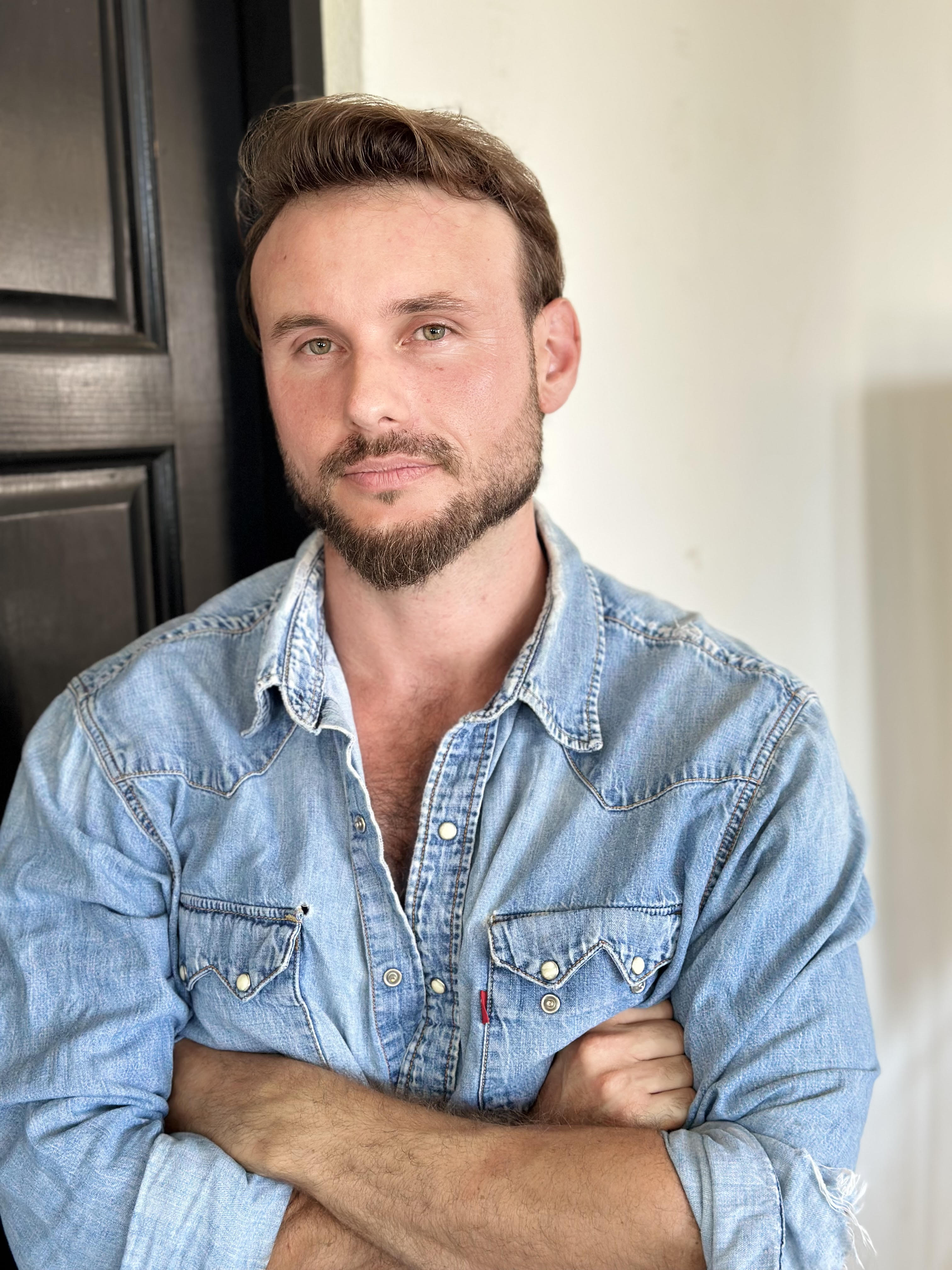
About this episode
Mike Adams attended over a thousand networking events, invested in 22 startups, and flew first class for free using 89 credit cards. In this episode he breaks down the intro economy, why cold outreach destroys trust, and exactly how to start travel hacking from scratch today.
Episode notes
- 00:00Welcome and guest introduction
- 03:11FindAPodcast.io sponsor message
- 03:59Mike's breakthrough moment: the first networking event that changed everything
- 05:00Discovering professional networkers and the secret society of super connectors
- 06:30How the intro economy works and why referrals are worth millions
- 07:30Why Mike built Introstars: making introductions transparent and scalable
- 08:41How to build trust fast and what destroys it instantly
- 09:30Why AI cold outreach spam is killing personal brands right now
- 11:00Stop cold outreach. Build a referral program instead.
- 12:37The best question to ask anyone you meet at a networking event
- 13:03Never say what do you do: better questions that open real conversations
- 14:30Start with your why not your job title
- 16:00What would you have done differently: going to the gym earlier
- 17:40Sound baths, walking in nature, and where the best business ideas come from
- 19:24Where the entrepreneurial spark came from: parents and surrounding yourself with founders
- 20:50You elevate your ambition by elevating who you are around
- 22:26Investing in 22 startups: what separates the ones that win
- 23:22Three ways to define success and why money is only one of them
- 25:00Purpose-driven founders who can also make money: why it is rare
- 26:38The number one trait of successful founders: grit above everything else
- 28:00Shit hits the fan every week. Here is how to keep going.
- 29:08Who should reach out to Mike and how to become a super connector
- 30:30The Super Connectors podcast: 15-minute episodes, live studio recordings, drinks after
- 32:00How to join Introstars for free and start earning from introductions
- 34:07Travel hacking: how it started with a first class flight from London to New York
- 35:30The credit card points loophole that generated 450,000 points from recycled money
- 37:0089 credit cards and millions of points: how far it went
- 38:30How to start travel hacking from scratch in baby steps
- 40:00Flyertalk and the secret WhatsApp groups of first class travel hackers
- 41:37The one rule that ruins travel hacking: never leave outstanding debt
- 43:21The breakthrough challenge: present yourself as a connector not a seller
Chapter titles and timings from the published YouTube description.
From the conversation
Excerpts from YouTube automatic captions. They may contain transcription errors. Play a timestamp to hear the original conversation.
Mike's breakthrough moment: the first networking event that changed everything
another one, another one and very quickly I ended up going to 15 events a week, three events a day every single day for two and a half years. Went to a thousand events, drank way too much red wine, read met so many random strangers and had lots of fun. But then something really crazy happened. I started meeting a bunch of people on a regular basis who defined themselves as professional networkers and they had a business card which said networker and that fascinated me. I thought what is a networker? What does that even mean? And these ...
The best question to ask anyone you meet at a networking event
Genius. No, it's it's a really great genuine approach and uh who doesn't who is not going to open up to a conversation where someone starts, hey, who is the best introduction for you? You know, I'd love to potentially find some great referrals for you. I think that's a great introduction. Um what about the question of like what do you do when people at networking event like what do you do? Do you have any tips on that? Yeah. So, if you go to lots of in-person events, you're going to hear that same question 50 times like, ...
Sound baths, walking in nature, and where the best business ideas come from
also having more mental energy. I think being physically active also helps your mental energy as well. Uh so really I would have started my whole health journey I think much earlier in life in terms of sports, nutrition, fitness. Um I think that's really the one regret I have is that I started a bit late in my in my personal journey uh going to the gym, working out uh etc etc. I think that's my biggest regret for my my younger self. I would have told my younger self, you know, go to a gym when you're 15 ...
Purpose-driven founders who can also make money: why it is rare
idealistic and don't know how to make money or are 100% money driven and couldn't care less about helping others, right? And and again, finding that middle ground is a rare trait. It's not so common. It's it's more rare than you think. And >> I I've been to lots of startup pitch pitching competitions where you hear the know founders pitch their startup >> and I'm always very surprised by the super niche stuff people are pitching. Like how can someone be interested in that topic but yet they're dedicating years of their life solving that one problem that ...
The credit card points loophole that generated 450,000 points from recycled money
It's so cool. If only I could do it." And my friend said, "Why don't you sign up to a credit card which gives you points?" So every time you spend money, you get points and then you can collect those points to eventually travel, you know, with those points. But I thought, "Oh, it sounds too difficult, too complicated. I'll never have enough points to travel, you know, it sounds like a bit too too complicated." So my friend kind of pushed through, said, "You should do it. You should do it." So I said, "Okay, I'll do it." ...
Read the episode transcript
YouTube automatic captions. Names, punctuation and wording may contain transcription errors.
ever. Welcome back everybody to the Breakthrough Moment podcast where we interview successful entrepreneurs and investors and ask them what is their biggest breakthrough moment in their career. The moment that changed it all and talk them into another level of success, impact or insight and as they share that moment with us, us at home have breakthroughs as well. I'm Zach Dean with special guest Mike Adams. Where you tuning in from today, Mike? Are you there? I'm actually in London, UK. Uh, back in my home base, even though I spend half of my time around the world, always traveling like crazy. Uh, today I'm back in London. Like, that's the home base for now. Been there 20 years. So, I feel like I'm a Londoner now. You know, I've deserved that title. >> Yes. And but you're from Belgium, correct? >> Correct. I'm a French-speaking Belgian. My dad is from California, from LA. So, I've got the California sunshine and rainbows inside of me. And my motors have German, so I do have some German, you know, rigor inside of me as well. I love the following the rules. >> Oh, yes. Okay. I've got a bit of German as well. You're you're definitely a global citizen. You were just in San Francisco. You just did some events, didn't you have you just did backtoback 15 podcasts in two days? >> 15 podcasts over three days and three rooftop parties I organized for 250 people. all of that over three days in San Francisco last week uh for the big expansion of my startup over there. So we'll we'll talk about that. But yeah, we're building a community of super connectors in London, New York, and now San Francisco as well. And so I wanted to do a big splash, bring lots of amazing super connectors together. So I got 15 of them in a podcast to do it to record 15 podcasts and then three rooftop parties as well. So, you know, I couldn't have made a bigger splash over such a period of time, such a short period of time. So, you know, I'm excited and hopefully we're going to do many more cities with a similar Big Bang approach. >> Super cool, Mike. I'm I'm really pumped to interview you and pick your brains all around this. We've got a lot of things in common and you're doing some big things. So, uh let me introduce you to everybody and we'll start with your breakthrough moment. Okay, so everybody at home, today's guest, Mike, is a super connector, startup, founder, investor, podcast host, travel hacker. This is something that if you guys stick to the end, we're going to talk about traveling first class and business class for free. This is wildly, wildly cool and possibly the only person who's attended over a thousand networking events without losing his mind. After 30 years in tech, Apple, HP, Zoom, and beyond, Mike founded Intro Stars to create the world's first intro economy where people get rewarded for helping others through valuable business introductions. Love that. With over 31 LinkedIn 31,000 LinkedIn followers, investments in 22 startups, and a passion for connecting great people, Mike has turned networking into both an art form and a business model. And as I said, stick around to the end. and we're going to talk about travel hacking. Oh my gosh, I'm pumped
for this, Mike. >> So much to talk about, right? >> So much to talk about. Welcome to the Breakthrough Moment podcast. Let's start here. What has been your biggest breakthrough moment thus far? >> My breakthrough moment was my first ever networking event in London. It's about 12 years ago. Went to the London Chamber of Commerce and I had never been to a business networking event uh where people are just there to network. So I just went to the bar to order a glass of water, start to chat with the guy next to me at the bar, then another one, then another one. And very quickly I worked the entire room and I I kept know asking people what are what are they looking for? What would be the how could I help them in the best possible way? And I very quickly realized everyone's looking for introductions to their ideal customer or their ideal investor or their ideal business partner or someone they want to recruit. So I really realized the value of introductions and I made made something click in my brain that I could easily introduce people to each other. So I went to another event, another one, another one and very quickly I ended up going to 15 events a week, three events a day every single day for two and a half years. Went to a thousand events, drank way too much red wine, read met so many random strangers and had lots of fun. But then something really crazy happened. I started meeting a bunch of people on a regular basis who defined themselves as professional networkers and they had a business card which said networker and that fascinated me. I thought what is a networker? What does that even mean? And these people are highly paid, highly skilled individuals who go to all these networking events all the time to find potential leads or potential bits of information which could really bring them a lead, a new customer, and then would meet up the next day for coffee to send leads to each other. And so it's kind of this closed circle of trusted super networkers who send referrals and introductions to each other. And so I spent a lot of time to build sufficient trust with them so that they could bring me into their trusted circle, this mafia of super connectors, of super networkers. And I became one of them. And it was incredible. I completely blew my mind that there was this secret society of professional networkers and connectors who spend all their time networking to literally find high value leads, like million-dollar deals, right? and they would literally spend time sending referrals to each other, helping each other, and paying each other referral rewards. And so that made something click in my brain that people are very happy to pay each other referral rewards. If you introduce a new client to someone and they close a deal, they'll be happy to pay you five or 10% of the deal. It's very common. Everyone does that. However, a lot of it is based on a a handshake, you know, gentleman's agreement on trust, a bit of kind of an under the table brown envelope. You know, that's kind of the approach to it.
There's no rules. It's kind of a bunch of emails back and forth. Sometimes people sign a referral agreement, sometimes not. You know, it's kind of this vague gray area among people. And so, I realized there's money on the table. I need to build a platform which captures that existing business model but makes it completely transparent, completely scalable and tracks every introduction to guarantee the introducer gets rewarded on success. And so that's exactly what I built with my startup today intro stars which is a community of super connectors in London, New York and San Francisco for now. we're going to go to more cities where that is all literally using that existing business model what I learned. So really to answer your question the breakthrough moment for me was going to lots of in-person networking events finding out that everyone was looking for introductions and the fact that everyone is happy to pay for introductions if you bring them a customer. So that was the breakthrough said you know I need to build a global economy around this which I call the intro economy for millions of people to literally start earning money by introducing people to each other because they create value for each other. And also the other breakthrough for me was that I elevate this to a spiritual mission. It's not just about the money. It's about helping others connecting the dots connecting people bringing people together to make the world a better place. Every time you introduce people to each other, you create a new opportunity. You create something new, something, you know, where everyone's a winner. Everyone's in being introduced is a winner. And the introducer is a winner because they can help someone elevate their personal brand as a personal as an introducer and potentially earn money as well. So again, I want to create this beautiful world where everyone's a winner, everyone helps each other, and everyone earns money. So it's it's kind of this win-win win-win-win experience. So that's that's really the breakthrough. Super interesting. You mentioned some key elements there around value and trust. Uh what have you noticed to be some of the things that build trust fast and some of the things that break trust fast? Because at the end of the day, I think that's such a crucial element, the foundation of any relationship is trust. And I think a lot of the world unfortunately there's so much trust that's been broken in many different ways. in business, in health, you know, in the government or just like different different things online. You see, it's just like there's so much corruption all around the world. Um, it's hard to trust, but yeah, these relationships are so what does this what does it what do they say? It takes a lifetime to build a reputation, but you know, one conversation to kind of break it. And so, what would you say around that? Real quick before we continue, a brief message from today's sponsor. If you're an entrepreneur wanting to grow your personal brand, authority, and business through podcasting, then check out finderodcast.io. As you know, the biggest entrepreneurs in the world, they book these massive podcast tours before a big product
launch or an event or book because podcasts build trust faster than anything else online today. So, it's find.io. It helps you connect with a specific podcast in your niche. It writes the pitch. It follows up in this easy CRM. It truly does save time. So, you just show up, do the podcast, and your business grows. If you're curious to learn more, book in a demo at find apodcast.io. Now, let's get back to the episode. I I think trust is really the key of everything. That's the the key you should be focusing all of your time on is building building your personal brand, relationships, and trust. And for me, the best way to elevate trust and to elevate your personal brand is to always try to help other people by making introductions for them. So if I meet someone at a networking event, as an example, I will always ask them as part of our conversation, what is the best introduction I could make for you? And then actually follow through and make those introductions. Not just say it, actually do it. Um, and that will definitely elevate the the trust people have towards you. who they trust you as an introducer, as a helper. It will elevate your personal brand and your reputation to go out of your way to always make introductions for other people. So, my advice to everyone looking at watching this podcast or listening to it is to go out of your way to make as many introductions as possible for other people. That will definitely elevate your personal brand of trust. On the other side, how do you destroy trust really quickly is by using automated AI spam bots to spam a million people. Where you some kind of AI automation tool to do cold outreach where you send a million AI written messages to a million random strangers saying, "Hey, here's your product I'm selling. Do you want to buy it or do are you interested in my product?" And you use AI spam bots to spam a billion people. That is the best way to destroy your reputation. to destroy trust because people will perceive you as a spammer and not as someone they can trust. So my advice is do not use cold outreach AI spam bots. Uh that will just really not help you in any way possible because the response rates of these AI spam bots is so ridiculously low. You're going to spam a million people to get one potential response. And what you've done is you've destroyed your reputation for these million other people. And so really don't focus on cold AI cold outreach. Focus on onetoone warm messages to people you trust and know. And if you don't if you don't know someone, find someone who knows them so they can introduce you. You know, make a warm introduction. I think we're in a world where people are fed up with AI spam bots. You know, whether it's your LinkedIn message, your inbox, you get a million cold messages per day. So the only way to get through is to have someone you trust and know introduce you to that person. That is the game
changer. And so focus all your efforts and energy on trusted referrals and introductions where you make introductions for others or you ask others to make introductions for you. Partner with super connectors, people with a big network who are who are really generous with their introductions. I think that's the way forward, right? So, if you work in sales or you're a startup founder or you're a consultant and you're looking for clients, don't do cold outreach. Instead, build a referral program where you incentivize other people to send you referrals and warm introductions. That's the way forward. That's the way to do it. Genius. No, it's it's a really great genuine approach and uh who doesn't who is not going to open up to a conversation where someone starts, hey, who is the best introduction for you? You know, I'd love to potentially find some great referrals for you. I think that's a great introduction. Um what about the question of like what do you do when people at networking event like what do you do? Do you have any tips on that? Yeah. So, if you go to lots of in-person events, you're going to hear that same question 50 times like, "Hey, what do you do?" And and then you have the inert natural inclination to ask that same question to other people, right? And so, you really want to avoid that question as much as possible because what happens is you go in autopilot mode, right? You have this autopilot mode, the other person goes in autopilot mode and and you kind of you want to break that. You want to break your autopilot mode. And so one way if someone asks what do you do? Instead of saying hey I run this business so this is what I do. Try to start with your mission in life. I want to help people be the best version of themselves. I want to help people lose weight. I want to help people make more money. I want to help people my spiritual mission is to connect a million people. And start with the bigger why instead of the nitty-gritty detail of what you do. Right? So, so always start with a bigger picture which is more interesting, a bit more mysterious as well. Maybe it's not super clear, but at least you have like that bigger picture. What what drives you? What motivates you? Um, and then they can ask a follow-up question, what do you mean exactly? What what do you actually do in your day-to-day? Then you can go into the more nitty-gritty detail. But really start with a bigger picture. I think that's always more intriguing and interesting than the nitty-gritty detail. So if you run, let's take an example. You have an AI startup which does data analytics, right? I've met 500 founders over the last couple of weeks who have an AI data analytics platform, right? So, it's so boring. If I ask them, what do you do? Hey, an AI data analytics platform. That's super boring. I don't want to hear that. So, instead of that, say, you know, I want to help fintech companies have super happy customers and, you know, solve their whatever problem, right? and really start with that bigger picture because that really motivates you based on your personal experience working for a big fintech whatever and then you can go into oh yeah by the way
it's an AI data analytics platform to achieve that but but don't start with the the the detail of what you do start with maybe the why the bigger picture but if you can go go even be beyond that and start with what do you do talk about stuff you're personally interested in so stuff you're really passionate about like what do you nerd out about you know if you nerd out about spec specific topics like ancient civilizations or altered states of consciousness or the nature of reality or whatever you're personally passionate about. Start with that before you talk about your job. That's so much more interesting, right? Because it allows people to open up about what they're passionate about without going straight into work mode. Um, so I think that's also something which changed a lot. Now, if you want to ask the other person what they're doing, don't ask what do you do. Instead ask them what is their number one focus this year or what is the big thing they want to achieve in the next 12 months and or what is their personal goal for you know for this year for next year you know those are better ways to ask that question instead of saying what do you do so so that's the way I usually approach this like what are you passionate about what is the next big thing for you what is the your your the the biggest achievement you've had in the last 12 months or what is your number one priority right Now th those are typical questions I would ask. >> Brilliant advice. So good. So good. I've never gone to a networking event and said and [snorts] when someone's asked me what what do you do? And I say really passionate about ancient civilization, but I think I'm going to try it out. [laughter] I think that's going to work a lot better than saying, "Oh, I do this. I do that." So now this is this is really practical. Uh Mike, you know, you've been meeting so many people. You've been doing some incredible things all around the world. With all your awareness now, hypothetically, I know we can't do it, but if you could go back in time and change one thing at the beginning of your entrepreneurial journey, what would that one thing be? >> For me, it would have been uh going to the gym earlier in my life. I started going to the gym about two years ago with a personal trainer, etc. And uh you know, I'm in my late 40s now. I wish I would have started that in my early 20s going being becoming much more sporty going to the gym every day having more discipline. Um I think that would have helped me a lot uh in all aspects of life. It's not just about looking good. It's also about your discipline for your personal life and your work life and also about having rigor and and having also having more mental energy. I think being physically active also helps your mental energy as well. Uh so really I would have started my whole health journey I think much earlier in life in terms of sports, nutrition, fitness. Um I think that's really the one regret I have is that I started a bit late in my
in my personal journey uh going to the gym, working out uh etc etc. I think that's my biggest regret for my my younger self. I would have told my younger self, you know, go to a gym when you're 15 years old. Start lifting weights. Like that would have made a big difference in my life. I think uh in all aspects of my life. That's the only regret I have. But, you know, it's never too late. No, I go to a gym every day. I live across the street from a gym. Uh I enjoy it, you know, but again, it it took me years and years and years to get there. So, I think that's number one. Um and then one one thing I realized recently is when you you put your mind at ease, you get new ideas for your business. So, I do lots of sound bath. You know, if you're people don't know what a sound bath is, it's like when you're in a room is like 30 people, closing your eyes, lying on the floor like on yoga mats or whatever, hammocks, and there's like a a guide in the room who plays like super soothing music instruments like crystal balls or flutes or whatever and and people in the room are kind of half awake, half asleep or kind of this in between state. Uh you are much more receptive to new ideas. And I'm talking business ideas. I've had the best ideas for my startup when I was in a sound bath. So my gym across the street, they do sound baths like four times a week. Many gyms are doing this now. It's a thing, right? Um so for me that's that's a great way to get new inspiration for your startup, for your business or for your personal life obviously as well. Uh so that's a great inspiration and then walking in nature, going have a walk in the park. That's the best way to get new ideas. Yeah. >> Excellent. No, I recently a friend of mine uh we started training together and uh and then three months later he's like, "Zack, I'm still training. I feel amazing. I've lost 20 pounds. I've got all this muscle. My abs are finally starting to pop, you know, and he's like, "Ah, why did I take so long?" But yeah, it's it's uh it's such a great foundation to have a healthy body. It it strong strong body, strong mind, right? And so, yeah, that's really interesting. And I love sound baths. I love sound healing. you know, all those all those ways of resting the nervous system and as you said, those ideas start coming because the body's like given that space. Um, >> yeah. >> So, Mike, what I'm curious, have you had mentors or was it your parents or grandparents or books or characters from movies or something like who who inspired you to be entrepreneurial growing up? >> Yeah, so my parents were entrepreneurs. My my dad and my mom had their own business. Just the two of them was which was a licensing and merchandise merchandising business where they had like you would work with artists and take their artwork and and talk to lots of manufacturers doing different products to put the artwork on those products. Uh and so I grew up in that family business. So I always had this entrepreneurial spirit that one day I would be running my own company. Uh but then you know I I went through the whole corporate ladder thing. I worked for nine different companies. Um and going
to all these networking events 10 12 years ago. I started meeting more and more entrepreneurs, startup founders who had launched their own startup and I started I started surrounding myself with these startup founders more and more and more because I really enjoy the energy. I love the vibe and all these startup founders are so ambitious and optimistic and full of positive energy and you know the sky's is the limit and they could achieve anything. And I by spending lots of time with those startup founders, I realized I could do it myself. I thought if they can do it, I can do it, right? And so it really motivated me to launch my own startup by just surrounding myself with other ambitious startup founders. And so that really made a big difference. So I would say my mentors would be my my parents obviously having their own startup, their own business, but also just going to loads and loads of networking events, meeting lots of founders. That's really the best thing you can do to elevate your own mental energy and you know potential thinking if they can do it I can do it. You kind of you elevate you know your your mental barriers that you think it's only for other people like no if you surround yourself with those ambitious people that will elevate your own ambition as well. Uh so yeah so I don't have a specific mentor I could pinpoint to but all these people really helped me in my career. Um and then yeah I I think just uh attending lots lots of events where I had a chance to meet lots of founders that really inspired me. Um yeah for sure. Yeah as you know podcasting diving into people's stories and mindset. It the more that I do this the more I'm like learning so much about the world and that would be definitely one of my things I wish I started sooner. Well, I did do I started podcasting 10 years ago, but not as focused and as dedicated as I am today. But yeah, if I had started 10 years ago, you know, oh my gosh, maybe it would be a thousand events like you. >> Uh you've met so many founders. You in the notes here, you you've invested in 20 over 20 startups. >> Y >> what has been the pattern? What are the similarities? What are the common traits of the successful ones? Now, not everyone's going to be successful, but I I I I would say that there are some certain traits that allow founders to be successful. What would you say are the top say two or three traits that they might share? >> Now, it obviously depends what you define by success. If it's just money in your bank account, that's one measure of success for sure. The other measure of success is of course impact on other people, helping others. And the third measure of success is your personal satisfaction and happiness. And those three success factors could be completely separate from each other. You could be successful person helping others but not making much money or you can make shitloads of money but actually not feeling lots of personal satisfaction or not really helping others. And so really success can be defined in different ways. Uh when I invest in a founder, I'm looking for founders who truly have who are purpose-
driven and missiondriven, who truly want to make the world a better place and help other people, but who are also very much feet on the ground understanding how to print money, how to actually make money properly. So I have a very strong business sense because you meet a lot of founders who are very idealistic about changing the world but they have no clue on how to make money and they'll never make money. And then you've got other founders who are very clued up on how to make money. They can print money very easily. They've got you know lots of success making money but their startup is only about making money. There no, you know, bigger mission or purpose to make the world a better place, right? And and that's fine. Again, I don't judge them. It's fine either way. But but I'm more interested in the intersection of those two things. I want to meet founders who are purpose- driven but know how to make money. And it's quite the exception, not the rule. You'd be surprised so many founders are are no very smart but just are either too idealistic and don't know how to make money or are 100% money driven and couldn't care less about helping others, right? And and again, finding that middle ground is a rare trait. It's not so common. It's it's more rare than you think. And >> I I've been to lots of startup pitch pitching competitions where you hear the know founders pitch their startup >> and I'm always very surprised by the super niche stuff people are pitching. Like how can someone be interested in that topic but yet they're dedicating years of their life solving that one problem that for them is so interesting for me sounds super boring or uninteresting or whatever which is right it's fascinating just the the the variety of founders in so many different verticals or different problems they're solving etc. But again finding that intersection of a founder who knows how to pitch uh you know on a purpose missiondriven value system and also know how to really make a lot of money. It it is quite different difficult to find that combination. I was at an event once, a business event and a lady got on stage and she was in a incubator and she was really interviewing and and researching the startups, founders and and entrepreneurs and she said the top two traits was one um curiosity and two grit. >> What would you say regarding that? Or do you out of the 20 or so and all the founders that you've met, do you say that they have a high level of curiosity for the world or they're problem solvers, like there's a high level of curiosity and a high level of grit? Like perseverance? Would you say that's something? >> It's 99% grit. Let's be clear. It's 99% grit. Like you have to never give up. Never give up. Never give up. Because as a founder, you are literally being thrown obstacles in your face every single week. And these obstacles come from every direction you haven't even thought about whether it's legal issue,
people issue, recruitment issue, product issue, technical issues, uh found anything like it just comes from all directions and they're all being all this stuff is being thrown into your face all the time. So you have to be extremely perseverant, never give up, and always keep your smile, always keep your head up high, and just keep on going no matter what. Because is going to hit the fan. That is for sure. Like a 100% you will get thrown at you day in day out, all the time. And so whatever happens, always smile, always keep your head up high, just go for it. Solve one problem at a time, and just don't never give up, right? Because the moment you give up, your startup is doomed. That's the end, right? If you never give up, at some point you will be successful. The question is how long will it take you? Will it take you one year, two years, 5 years, 20 years? But at some point you will be successful if you never give up. But once you give up, that's that's the end. That's it. That's the game is over, right? So really the the difference between a successful startup and a nonsuccessful startup is grit. grit, determination, never giving up, uh keeping your head up high no matter what is thrown at you. And you know, in my own startup, Intro Stars, you know, we've had some really interesting successes, but we've had so many things thrown in our face, like things we did I did not see coming. Like, I couldn't expect how could I have an issue here and here and here and just cames from all just comes from all directions all the time. And so, right now, I'm in a mindset where I know shit's going to happen and it's fine. I I'll deal with it, right? I'll just be I'll just smile and keep on marching and and figure it out. But since I've got this bigger mission, that spiritual mission to connect millions of people and to inspire people to become super connectors all over the world, that bigger mission never changes. That is very stable. So whatever happens below that, you know, this could be lots of pivots and issues and problems, whatever, but that bigger mission remains my north star. And so with that in mind, it's it's easy to to stay focused and still, you know, go for that goal. So that's why it's important for every founder to be missiondriven so that they never give up. >> Well said. Absolutely. [laughter] Everybody should listen to what you just shared there on autopilot, you know, five times a day. That's going to get people jacked up and motivated. Let's go. Um, so before we get into the travel hacking, right, I just would love I'm going to put all your links around the video, but Mike, from who's listening, who should reach out to you, who should really, you know, get in touch after listening listening today from those who are listening. So if someone's got a passion for connecting people, if you just love to meet new people, introduce people to each other, you naturally love to make lots and lots of introductions. Now you can consider yourself a connector or even a super connector. Now it is actually a term to call yourself a
super connector. If you go to LinkedIn, you just search super connector is a search term. You're going to find 10,000 results of people who define themselves as super connectors. Uh and I'm my message is that everyone could become a super connector. It can actually become a path for your life, for your career to help people on a regular basis just making lots and lots of introductions and every time you meet someone new, it just pops into your head who could introduce these people. I know someone I could introduce to you, right? And so I want to help all these people inspire each other and inspire more people to join the movement of super connectors. So for that uh I have a podcast which is called the super connectors and we have 31,000 followers. We've done 90 episodes in London, New York, San Francisco. Uh, and we always we record our episodes in that kind of interesting way. We always bring five or six guests all together. We record backtoback episodes in a studio. Each episode is 15 minutes long and then we all go for drinks together with the guests. So, it kind of creates this mini movement of super connectors getting together. Uh, and then we do dinners together, we do events together, etc. So my advice to anyone listening to this, listen to the super connectors podcast where you can hear all these stories of people who became super connectors. How did they enjoy know their purpose in life connecting people and how do they monetize that? How do I actually make money doing that? Uh so go and listen to the podcast. It's on all the podcast platforms. And then you can also join our community of superconnectors which is called intrars intrars.com. It's free to join. You can join right now and become one of one of the super connectors on the platform helping each other with introductions and potentially earning money from that as well. So you can help others be purpose- driven, missiondriven, you want to really make the world a better place and at the same time you can earn a lot of money by helping others. So that's really the the the movement we're trying to create here is a movement movement of superconnectors. Now if you're not a super connector yet, you're still shy, introverted, you don't go to a million events, that's great. That's fine. baby steps. You can start very slowly going to one event, another event and ask everyone you meet who could I introduce to you and start slowly making introductions one after another, one after another and slowly build up to become a connector. You know, that can become a a a path for you. Imagine if you just lost your job or you're you just came out of university or school and you try to find purpose in life. You're a bit lost. You're a bit bored like what should I do with my life? I'm a bit bored in my job. What could you do? Well, you could become a connector. It's actually a really cool job. It's a side hustle or it's a full-time job. Anyone can become a connector. It's fun. You know, you're you're literally introducing people to each other. That that's fun. You're a matchmaker. Uh everyone loves that. It's in our human nature, but you can actually earn money from that. So, that's really the the secret to success is to do something you love that gives you passion and purpose and earn money from it, right?
Everyone's a winner. Uh so, that's what we're trying to achieve with intrars.com. So hope hopefully we're going to build this movement of millions and millions of super connectors. That that's the vision. >> Super cool vision. I'm I'm so with you on that. My background is in affiliate marketing, network marketing, and I've built my whole career on networking and connecting and and referring, you know, asking those questions. So this is so you've blown my mind. I just looked on on LinkedIn. If you put in in a vertic super connector, there's there's yeah, I don't know how many are here, but there are thousands, tens of thousands. That is really interesting. A whole, as you said, in a in a secret society of connecting people. Super cool. Seriously, I'm I'm so jacked by that. So, uh, everybody at home, please, who do you know who would benefit from being connected with Mike, right? Is it yourself? Is it someone you know? Who do you know? Click on the link, get in touch with him. I'll have the links around the video here. Now, let's talk about travel hacking. Seriously, [laughter] you since I spoke with you a month ago, I have had other people, two other people say to me the same thing. You know how like one idea comes in into your world and then other people say the same thing. And that's like the first time those ideas have ever ever originated in your in your experience in life. That's just what happened through and you started it, which is I thank you for. Um, so in travel hacking, being able to travel the world, uh, business class, first class for $0. Now, I understand there's a full master class that's required to to understand this. There's probably many details, but what would be the high notes? How did you find this and how do people start this journey cuz this sounds like just an absolute hack to reality? >> Yeah, I mean, everyone loves to travel, right? That's not a secret. Everyone loves to travel. If only you could do it in first class and for free. It seems like a triple whammy. like wow how does this work right it sounds too good to be true and so about 8 years ago before 8 years ago like before that I always travel in economy always tried to find the cheapest flight possible the cheapest hotel possible cheap cheap cheap cheap you know that that was my optimization was make it cheap that was all I was interested about but then one of my friends got me to fly in first class from London to New York by using what's called a companion voucher on British Airways so you can bring a friend for free and they can fly first class. That was my first time ever flying first class. I was like, "Oh my gosh, it's so amazing. It's so much fun. It's so cool. If only I could do it." And my friend said, "Why don't you sign up to a credit card which gives you points?" So every time you spend money, you get points and then you can collect those points to eventually travel, you know, with those points. But I thought, "Oh, it sounds too difficult, too complicated. I'll never have enough points to travel, you know, it sounds like a bit too too complicated." So my friend kind of pushed through, said, "You should do it. You should do it." So I said, "Okay, I'll do it." And I just signed up to this random credit card
which gave me every time I spend $1,1 I would get a point or a point and a half, whatever it was. And then very quickly, I found a loophole. I said, "There's actually a loophole here that if I open this virtual bank account, I can put money from my credit card to this virtual bank account and it counts as a purchase. So, it looks like I'm purchasing something, but I'm not. I'm just transferring money really. And then I get the points, of course. And then I could empty this virtual bank account into my normal bank account and then pay back my credit card. So, literally just recycle money. And I realiz and I I just tried it. Oh, this seems like a bit too good to be true, right? And I only put a small amount of money. I put like a 100 pounds or dollars, whatever it was, like very small amount. And I So, it worked. You know, I didn't get any extra charges. It just worked. So, I put a bigger amount and a bigger amount, a bigger amount. And very quickly, I recycled like $300,000 and got like 450,000 points. That was absurd. Like, oh my gosh, I just won two free first class flights to Asia. This is crazy, right? And and then and obviously that loophole was just one loophole. So, I thought if there's one loophole, there's probably more loopholes. I can find more, right? And then I just looked at other online trading trading accounts which allowed you to use a credit card to put money on those accounts and I realized there's a bunch of them and and just doing lots of research and like googling and trying and testing you know there's lots of experimentation there uh trial and error I found there's loads and loads of loopholes. There's loads of online trading accounts where you can top them up with your credit card or you can transfer money to a friend via another account and you do that with your credit card and get points for that. And so I I found this whole kind of niche uh travel hacking world where there's loads of hacks you can play. Then I I tried start hacking uh referral links where you could use referral links on yourself or on other friends and do transfer bonuses and referral bonuses. And so basically, there's all these different levers you can pull to really hack the system and get many more points than you would get by just your normal day-to-day spend. There's, you know, spending your normal shopping at the supermarket. Like, you can earn many more points by playing all these other games on top of your normal day-to-day spend. And so by doing that consistently over a bunch of years, I ended up signing to 89 credit cards over a couple of years and basically getting all the signup bonuses, the welcome bonuses, the transfer bonuses, the referral bonus, all this stuff and ended up getting millions of points just playing all these different tricks and games. And so I kind of went to an extreme level of travel hacking. Now, I'm not suggesting that everyone listening to this podcast should do that and sign up to 89 credit cards right now. I'm not at all suggesting that. I'm suggesting you can start with baby steps. Just have at least one credit card which earns you points every time you spend money. So, you start earning
points even slowly ju just to begin. You have to start somewhere, right? And make sure you use someone's referral link when you sign up to the credit card. So, you get an extra welcome bonus from the referral link. So, that's an extra bonus. uh and start know slowly start doing that and then look out for credit card promotions. Credit cards keep changing their signup bonuses every month. They have different promotions. So keep an eye out for that. So sign up when there's a big referral bonus or signup bonus, right? So so really just keep stay on top of that. So you can very slowly can start building your porn system by by doing that. Um and so there's a bunch of travel hacking websites where people exchange that kind of information. There's a website called Flyer Talk. So Flyer Talk is similar to Reddit but specifically for travel hackers, right? Where they share all this information. Now to be honest, if you go to Flyer Talk right now, there's a million chat groups and it's very complicated. It's all very nerdy. There's loads of acronyms. So you know, it's kind of hard to get into it. Just going to fly talk right now. I' I'd recommend first starting the basic stuff like looking out around uh on online guides on travel hacking, signing up to one or two credit cards to start getting points and slowly building your confidence and your knowledge before you go into the super nerdy stuff, right? But yeah, it's a rabbit hole. You can spend a lot of time in there. Um I spent about 6 months, you know, really studying travel hacking to an extreme level. So now I can feel confident I know what I'm doing. But it took me a while to get there. you know, it's not something you can learn in five minutes. It's probably a few weeks or a few months of training, of playing around with it, uh, and understanding how it all works. Um, but it's a fascinating world really. You you meet other travel hackers. They do events, conventions. There's like there's a whole secret society of travel hackers, right? I'm in a bunch of WhatsApp groups for travel hackers where we exchange tips and tricks and exchange pictures of each other flying first class, guzzling caviar, you know, that kind of stuff. It's super fun. It's kind of very cheeky. Um, so there's this whole world of travel hackers, right? And it's uh it's open to everyone. Everyone can join it if you understand how the system works. Well, if you think about it, every time you spend money to buy anything, you should always earn something back. Whether it's a cash back or points, one or the other. If you're not earning cash back or point cash back or points on every purchase you make, you're effectively losing money, right? So, so whatever you do, make sure you have at least one or two credit cards which earn you cash back or points. So, every time you purchase something, you get something in return, right? That's that's kind of the basic basic rule. >> Wow. Two mindblowing insights today, Mike. You know, among the other pearls of wisdom, this is super super valuable. Thank you so much for sharing this stuff. This is incredible. What would just be while while we're here, what would just be the biggest do not like red flag? Make sure you don't do X just in case someone goes to do it today and fully. >> Yeah. >> So, the one thing be very careful is
that when you sign up to any credit card, no matter what the credit card is, every month at the end of the month, you must pay your entire debt in full. Do not leave outstanding debt because then you you have to pay massive interest rates to the credit card companies and that defeats the whole purpose of earning points and and cash back because if you have to pay interest to the credit card company that interest you're paying basically is much much higher than the points or cash back you could get. So so the number one golden rule is never ever leave outstanding debt on a credit card. You have to pay back the full amount of debt at the end of each month. That means do not spend more than you can afford. Right? That is the golden rule of travel hacking. If you leave any outstanding debt, let's say you've got $2,000 of outstanding debt and you only pay $200 and leave $1,800 outstanding debt at the end of the month, the credit card company is going to charge you loads and loads of interest rate on that. Then you're going to lose out on the whole game. And then the credit card company is winning, right? They're winning your money. So that's the way to lose the game is to leave outstanding debt. The way to win the game is to pay back your entire debt in full at the end of each month and earn all the cash back and and points. Then you win the game, right? Instead of the other way around. So all about knowing the rules of the game, this is so great. My last question, you know, this this podcast is around the breakthrough moment. You've shared your breakthrough moment and now we want to help other people have a breakthrough moment as well. So what would you do to challenge the audience to break through, right? Something they could do today, this week, this month to to go to that next level. Next level would be to present yourself to other people as a helper. Instead of selling a product or a service, present yourself as an introducer, as a connector, as someone who loves to help other people. And put that on your LinkedIn profile. When you meet someone at a networking event, go out of your way to ask them who you could introduce to them so that people perceive you as a helper, as a connector, as an introducer. That will elevate your personal brand, will elevate your trust and reputation, and people will want to do business with you and you'll get more clients and you'll be more successful. So really, my advice to everyone listening out there, always present yourself as a connector, as an introducer, as a helper. uh and again put down your LinkedIn. Use that when you introduce yourself at a networking event and uh potentially join a community of connectors like intrars.com or another community of helpers of people who just love to help each other, right? It's all about community and helping people around you. And I think that's that will make you successful in however you measure success, you will find, you know, that will push it in the right direction. >> 100%. we we we can't how do we grow a business without people, you know, like it's it's it's not the most important
thing, but it definitely is one of the most important things, you know, within the business. So, this has been so great, Mike. Thank you so much. Everybody at home, please share this with somebody else. Who can you help have a breakthrough today by sharing this podcast? And what was your breakthrough moment? What was your aha moment? What was the one thing you're going to take away? Please put into the comments. Any final comments or or share, Mike? Anything else you want to mention? We've covered a lot. It's been >> You covered a lot. Uh again, go out of your way to go to natural events, meet new people, and try to start creating those connections of all the people you've met because you're going to enjoy it. You're going to have fun. I think connecting people is super fun. It's in our human nature to want to connect the dots and that means connecting piece of information and people, right? Connecting the dots meaning creating order out of chaos, right? That is really what it comes down to. uh and connecting the dots means also connecting people and I think that will move the needle to help people around you to help yourself to make the world a better place uh and create a vibe of positivity that butterfly effect where you help two people and that's going to help more people and more people and more people um so every every success in your life is one introduction away. >> Yes, one conversation, one introduction. Yes, that's so good. Well, thank you Mike. This has been an amazing podcast. Appreciate your time. And everybody at home, we'll see you next time on the Breakthrough Moment podcast. >> Thanks so much. Appreciate it.